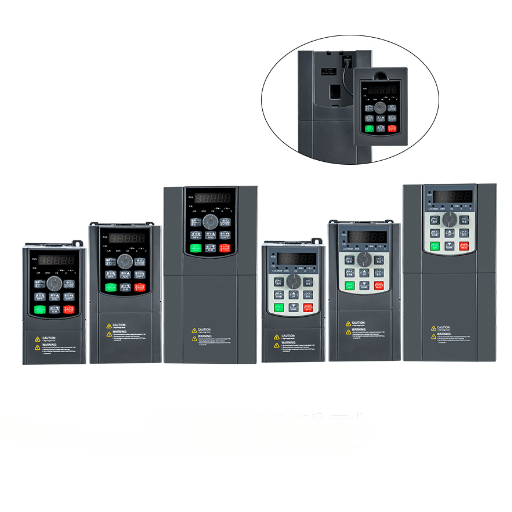
Ready to Get Your VFD Solution?
Whether you need a single drive or a complete system, we have the VFD products and engineering support to ensure your project's success.


Variable Frequency Drives (VFDs) are crucial in contemporary industrial installations which may restrict distance of construction and influence. This is due to the fairly exact nature of the control of motor speed and efficiency, which they perform. Nevertheless, when they work they will introduce some level of harmonic distortion which can be detrimental to the performance of a system through overheating, equipment failure and degradation in dependability. Therefore, the possibility of implementing appropriate harmonic filters has not been discarded. This paper concentrates largely on this issue. It covers active and passive reduction methods: who needs such methods, why they help to reduce the harmonics in some cases, and the necessary information about special measures related to the voltage quality in systems such as voltage utilization.

Harmonics are distortions caused by variations in the current and voltage in Variable Frequency Drives (VFDs) due to switching actions within the VFD. These distortions result from devices possessing non-linear loads, which generate frequencies that do not occur in the standard sinusoidal wave. Overheating of equipment, increased energy costs, and power quality deterioration are common side effects of harmonic distortion. Measures that could be taken to reduce these effects include the installation of devices such as harmonic filters, which could either be active or passive, and compliance with the criteria for maximum allowable harmonic distortion in IEEE 519 lines.
In the environment of electrical systems, harmonics refer to the waveforms of either voltage or current which have frequencies that are a whole number multiple of basic frequency, usually 50 Hz or 60 Hz, depending on the locality. These waveforms are distorted and are mostly caused by non-linear loads such as drives, computers, LED lighting, and other power electronics. Harmonics are a disadvantage to the use of a power system in a number of ways.
For instance, components, particularly the third harmonic (at 180 Hz for 60 Hz systems), as well as those higher-order harmonics, are known to be the most damaging as they cause transformers, neutral conductors, and electric machines to heat abnormally. Effective modern mitigation techniques have been put in place such as the use of multi-pulse rectifiers, phase-shifting transformers, and sophisticated harmonic filters which are aimed at rescuing the situation. It is important to ensure continuous monitoring and to observe the set harmonics limits for quality of power and lengthy operation of electrical apparatus.
The emergence of the Variable Frequency Device (VFD) in Electrical industries all across the world has reinforced the critical role the technology has played in contributing to harmonic distortion in power systems. The operation of a VFD has harmonics as the predominant aspect which arises out of the rectification process involved in the conversion of the alternating current (AC) signal to be a direct current (DC) signal. The Non-linear characteristics in the conversion of the signal resulting in the current wave shapes being on harmonics from the sinusoidal shape expected. Emphasis is placed on the six and twelve-pulse rectifications in VFDs that contribute to harmonic contents because the lower pulse counts suffer from a worse case of distortion.
Equally, the operation of insulated-gate bipolar transistors (IGBTs) should be noted as it also affects the reduction and suppression of harmonics. The problem is that the high frequency harmonics, even though they are problems of a higher rank, are such that they could end up causing problems to other applications and communications, hence the need for effective design and filtering. In order to increase input range of synchronous boosting, or step-up circuit, electronic circuit, it will be apparent as the voltage output of the increase in the circuit, a frequency wave can be made.
Lastly, chances are that there is variation in the amount of harmonics at several levels of measurement such as harmonics and volts; bandwidth on the scope and current; number of Vm and Iem and per unit fundamentals; and harmonic indices at the second level, reliability is not achieved as there are so many other problems preventing it. Furthermore, the load technology plays a part and thus the amount of harmonic distortion emanating accounts for some losses in the network under consideration and warrants a properly designed VFD system.
The electrical systems’ harmonics are so bad and have far-reaching consequences on both equipment performance and the reliability of the whole system. High harmonic distortions could lead to heating of transformers, motor, and cables which are detrimental to service life of the equipment. Moreover, harmonics increase the losses in the power system thereby lowering the overall efficiency of and increasing the running costs owing to an increase in the power consumed. There are also some power quality concerns, for example, voltage unbalance, which may have an impact on sensitive equipment, guaranteeing them a failure-free state.
There is a setting where this harmonic can be so high in a 3-phase diagram to have increased neutral current disturbing conditions, such as reverberations, that lead to further amplification of distortions. In such cases, it is important to employ mitigation techniques, which include the use of various remedies such as active harmonics, passive filters as well as reactors that are of the right capacity. Even in modesty, the new IEEE 519-2014 and other new standards give very explicit levels beyond which system integrity and operation capacity will become distorted due to tremendous distortion.

Active filtering means significant electronics developed to alleviate as well as characterize the frequency distortion existing in any power system. Such a device injects compensating currents in order to counter the harmonic distortions lowering the waveform. It is very useful for loads that have frequency changing elements such as VFDs and also other nonlinear loads to prevent overloading to the point of violating norms like the IEEE 519-2014 standard. These attributes which are grouped in their flexibility, performance and accuracy, recognized them as a good option for control of power usage and ensuring energy consumption and durability of the electrical components.
Advanced sensing and control algorithms are used by Active Harmonic Filters (AHFs) so that current of the electrical system’s load is constantly monitored. The previous devices, particularly Active Harmonic Filters (AHFs), perform this correction by analyzing the harmonic content present in the existing current waveform, injecting anti-harmonic current of exactly similar magnitude and opposite angular position to do away with harmonic distortion. This is necessary in order to maintain the proper waveform of the supply current as well as its excellence in terms of residual harmonics. Standards such as IEEE 519-2014 regard that the supply current should be harmonics restricted.
Advanced AHFs take into account the capabilities of modern electronics. These are in terms of dynamic response times of a few milliseconds. It is precisely such high adaptability for any current generation change that guarantees the high quality of the products which can be easily assembled. This technology is able to work in all system configuations and here is achieved the highest imperfections. Semi-conducting plastic over for cables and transformers prevents the overheating of the capacitor and hence reduces the risk of system breakdown, as well as saves electricity efficiently for the particular region where it is applied.
Active harmonic filters are electronic devices specifically designed to minimize the total harmonic distortion (THD) drawn from the utility supply. By injecting currents within the waveform itself that flow in the opposite direction to the line harmonic currents, disturbances are suppressed, meeting the IEEE 519 and IEC 61000-3-4 harmonic norms and ensuring that no problem arises as far as environmental controls are concerned in an accessible, high-quality power supply. It was observed that the use of active filters reduced the total harmonic distortion from around 30% to less than 5%, thus improving the power quality to a great extent.
Whenever there is an attempt to improve issues of harmonics power quality in the system, such filters prevent the consequences of excessive wastage in electrical devices like transformer losses under ideal conditions and overloading of electrical conductors. Thus, less energy is wasted and the efficiency of the system improves, frequently attaining an energy saving of up to 10% of the excessive systems.
Active filters also have the ability to lower the stress both thermal but electrical on impacting equipment such as motors, capacitors and transformers. This eliminates problems associated with overheating and acceleration of wear and tear or failure due to harmonics which in turn expands the life span of the equipment by up to 30% and cuts down on the repair and continuation expenses.
With active harmonic filters, electrical systems are characterized by lower electric power fluctuations. This contributes to higher level of system operation reliability which in the end limits costs incurred for lost production due to periodic service maitnenance of facilties. Operational facilties, there are no breaks even where the number of turns is greatest under load.
The use of active harmonic filters enables power networks to add or fine tune the active filter to the desired load without causing any disturbance to the existing power network. This makes them especially beneficial for companies carrying out expansions or shifting to smart grids and verts.
These filters are able to enhance shape of the waveforms of voltage and current, decreasing the apparent power intensity from the grid. A power factory improves, typically approaching a value of 1, and discourages or mitigates penalties for low power factor in industrial power systems.
Prior to the set-up of the equipment, a proper examination is necessary to set the environmental conditions and other related. Comprehensively examine it to determine the factors required for compatibility, like the ambients temperatures, humidity, as well as the available spaces in order to assess the installed equipment.
An Analysis of the pattern of the loads in the system is very important in order to ensure the right degree of the filters and the magnitude of the reactive power compensation. This helps in improving performance and stops the filters from under or over compensating.
Of utmost importance to safe and efficient operations is compliance with national and international electrical safety standards–IEC 61000 or IEEE 519 to name just a few. These standards provide guidance on allowable levels of harmonics and overall EMC requirements.
Another issue is seamless integration with the existing power distribution system. This includes the need to size voltage ratings, make connections, and set a sealing, and penetration the protective shell for monitoring and control connections.
Considering the maintenance of the equipment and change of components, the installation must be designed in a way that it is not difficult for people to access filters within the cleanroom. It assists in minimizing any disturbances due to malfunction and helps in preserving the apparatus.
Such quick feedback is not possible in every installation. It is important, that in the process of a breakdown of the system, you could simply shift or increase power for new load demands that may come with time, or improve quality of the output energy.
Another device that reduces harmonic distortion in the electric system is linked to passive harmonic filters, which are universally built into various systems. Such elements make use of an inductor, a capacitor, and a resistor such that computed frequencies are able to be made less significant. These kind of filters reduce the problem harmonics and in turn stems other potential damaging issues to the equipment or the system such as overheating, less use of the equipment and immediate failure. They perform best in systems with relatively stable harmonic levels at the points where static and dynamic loads of power system are expected. They render a cost-effective solution in many industrial sectors as well as in commercial facilities.
In passive filters, elements such as inductors, capacitors, and occasionally resistors, when connected in a manner that gives rise to resonance in a particular harmonic signal, forms specific frequency filters. These components are installed either in series, parallel or in a combination of both configurations to either protect or divert irrelevant signal harmonics from the desired signal path. Concerning the inductive-capacitive filter itself, and when such a nuisance form powered apparatus and installation, their frequency-dependent impedance causes a certain behaviour of the components’ impedance. At certain points the circuit sees itself furnishing a short circuit effect or open circuit effect in order to respectively shunt or pass the input harmonic.
Passive filters must be fine-tuned to comply with various international harmonics standards such as IEEE 519. This involves embedding the filter’s performance parameters, such as quality factor, resonant frequency, and power rating, to be the same as those of the electrical network. Furthermore, in order to control possible amplification of resonances, damping resistors may be applied during the design stage for the filters which will also lead to improvement of the system. None whatsoever, all embodied in the system power quality.
Passive Harmonic Filters decreased the harmonics in the network but not as efficient as active filters. Its main purpose is to lower harmonics at some frequencies to ensure total harmonics within the limit of IEEE-519 sometimes going as low as 5% in compliance.
Passive filters improve power quality by reducing harmonics thereby improving the voltage and current waveforms. Consequently, this hampers the development of transients and ensures that power systems are supplied with high quality power. This is the primary reason for using such systems to prevent flicker, sags, and equipment overheating.
Different from active filters, passive filters do not have any ongoing costs after installation and guarantee a longer and less problematic function. Passive filters are also very suitable for industrial use and capable of withstanding changes in load.
In comparison with active harmonic filters, cost of implementing passive filters for harmonics elimination is significantly lower. It is an advantage in the freight efficient implementations and in remote supply or a low cost benefit.
Passive harmonic filters aid in eliminating impurities in the line voltage generated due to harmonics thus allowing equipment like VFDs, transformers and capacitors to perform better for long time and without repairs.
Harmonic distortion means that electrical vices consume more energy, which builds up causes high temperatures, or and reduces the output power, passive filters reduce such losses, improve energy efficiency and reduce operational costs.

Active filters use power electronics to monitor and provide compensation for eliminating different harmonics. Passive filters employ fixed elements to sort out specific harmonic components.
Active filters are more superior in research mode as they can operate at any power level. To the extent that power limitations are in place, passive filters are more advantageous only when it is a question of eliminating known harmonics.
Active filters during operation exhibit heightened power consumption owing to the utilization of performance-enhancing components. Passive filters do not use any active electronic components, but rather rely on passive components, which means there is no extra current consumption.
In general, the passive filters will be less costly than the other, mainly due to their simpler design. On the other hand, so that active filters may reduce the cost of the harmonic mitigation process in a more fundamental way, in most cases they have a higher initial cost.
Active filters are more effective in most systems which can undergo load or harmonic variation when compared to passive filters. Stable systems with continuous load and harmonic fluctuation on the other hand are best served by passive filters.
Both efficiency and performance parameters make a relevant contribution to the assessment of the adequacy of power quality enhancement options to concreate problems. Enhanced systems, which encompass emitting as well as flux active filters ensure over 97% efficiency rate due to semiconductor technologies progressiveness and control algorithms introduction. Such systems can also operate in response to changes in harmonic distortion they are required to work in, thus giving the desired performance even at varying loads.
Dispassionately speaking about the efficiency of such systems, passive filters user efficiency ranging between 90-95%. Other forms of losses in the elements like inductors and capacitors contribute largely to this efficiency degradation. While these often prove effective in addressing harmonics in set systems, they may not effectively be applied in industries characterized by fluctuating loads given the difficulty of making changes to the system. It is also important that the performance of the system post-implementation is evaluated using the change in the total harmonic distortion. In that regard, a THD of 3% or less is normally assumed to be satisfactory and satisfactory performance of the current practice in energy efficiency.
Many industrial companies require the use of equipment modules for voltage stabilization and optimal system performance, as well as safety of equipment in a relatively long period of its operation. Such technologies are obligatory not only for, for example, refinery and engineering plants with acute motion technology controlled by drives, but also for such facilities as sewage treatment plants and water supply systems where operations are directly related to the control of the frequency controlled drivers of electric motors – all these use the help of neutral filters on motors, variable speed drives and VFDs.
Moreover, data storage centers are one of the primary areas of concern where total harmonic distortion (THD) control should be maintained at its limit in order to withstand considerable and often unbearable load of servers and Uninterrupted Power Supplies (UPS) caused by high temperatures and irregular voltages. Furthermore, in an effort to ensure the grid system is stable and fulfills power quality standards, renewable energy installations like wind or solar farms have also been designed to incorporate advanced harmonics control methods to a certain extent. As such technologies are being adopted, organizations do not only meet IEEE 519 requirements, but also begin reaping benefits that come with higher energy efficiency and lower levels of breakdown.
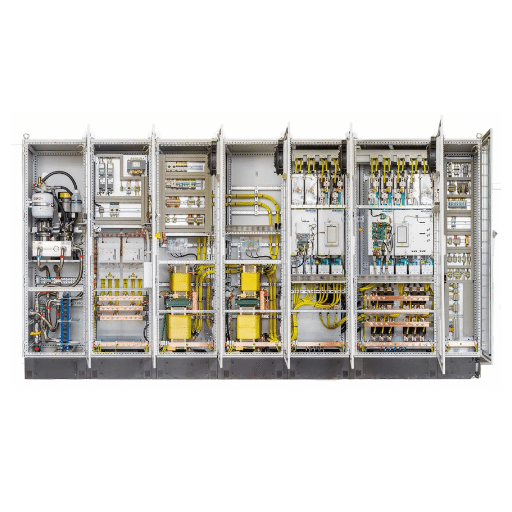
Active Front End (AFE) drives can be described as an up-to-the-minute solution in the management of energy quality challenges within industrial sectors, as well as juggling with alternative current energy sources. These drives actively participate in combating the limit. When one engages these systems, there is no fear of any serious harmonic distortions as witnessed above. This is due to the application of the insulated-gate bipolar transistors (IGBTs) which ensure accurate regulating of order of the input currents by the system. This has the effect of minimizing total harmonic distortion (THD) significantly to less than 5% which means that, when the system is sinusoidal, one can fully apply the IEEE 519 standard without the need of any passive filters
Significant benefits that can be derived from the use of active front end drives include its energy recuperation feature, that is, the possibility of regenerative braking – returning the excessive energy to the network, which greatly enhances the effective use of energy. As well as maintaining nearly perfect power factor so as to reduce the need for reactive power and enhance the use of total power in a system. Moreover, AFE drives are characterized by response to various load levels, making it their best feature, especially for industries such as manufacturing, HVAC, and renewable energy, among others.
In power conversion systems, Active Front End technology (AFE) has been designed extremely efficiently, in order to enhance the output quality. Especially in new industrial and commercial installations. What makes AFE drives unique is that they isolate the harmonics that satisfy continuity of service. In most cases, the THD is actually less than 5% and the quality of the power is improved consequently making the design meet global as well as IEEE 519 standards. In other words, classes of application can be served without any fear that the equipment will be destroyed.
This technology helps save energy by converting energy during breaking and increases the potential of the grid to supply more substantial requirements by saving every biddable watt-hour. The latter aspect is accompanied by the process of rapid development in the field of materials used for construction, as a result of which the ultimate energy efficiency of buildings is enhanced. Many AFE systems provide such possibility and have advanced control algorithms for accurate voltage and current control even under hard operating conditions.
Additionally, integrated fault diagnostic systems enable the very swift solving of system operative problems thus further enhancing the efficiency of the system as a whole. At the same time, a growing use of AFE technology can be viewed as a reflection of its importance in achieving energy efficiency targets, reduction of greenhouse gas emissions and realization of the full potential of renewable energy technologies in the existing power generation system. Needless to say, it can only be categorized under the sustainable perspective, but it also plays an important role in prospective design.
Regular VFDs are problematic because they generate significant harmonic currents, which can degrade power quality and may damage users’ equipment. AFE systems are very useful given that they have active rectifiers included in them, which help to limit the total sum of harmonic distortions caused to a level below 5%, thus achieving quality power and IEEE 519 standards compliance.
AFEs are more energy efficient than the conventional VFDs and are able to improve energy consumption by 2-3%. This is partially achieved by reducing the conductive and Non-Conductive heat losses and indirectly contributing to reducing the operational costs and carbon emissions of the business.
When standard VFD regenerative energy is dissipated as heat through resistors, AFE motor driven equipments able to recover this energy and put it back into the network. Up to 30% of the absorbed power during deceleration processes can be recovered under this technique, which offers much potential for saving energy especially in the applications of lifting and moving equipment revealing periodically turning profiles of moment.
In contrast to typical VFDs, there is no constraint regarding energy flow in AFE systems, as there is no power getting lost dissipated as heat which makes it possible to consider all energy generated by the source in case of any energy injection. In fact, it addresses an emerging need for energy systems and transportation including electric vehicles, defining a movement toward a more resilient and efficient use of energy.
Simple VFD installations are not in common use due to the necessity of additional features such as harmonic filters and brake resistors. Yet, AFE technologies solutions absorb these requirements into the motor and drive system, thereby reducing the size of the overall system and overheads typically experienced in a building.
The AFE control schemes further ensure standardized DC bus voltage because of the variable nature of the ground conditions and load supply conditions. These drives can extend machinery life by maintaining DC bus voltage within specified limits, preventing overheating during sags and swells.
1. “Variable Speed Solutions for Data Center Reliable, Efficient and Cost-Effective Cooling”
2. “Performance Investigation of Induction Motor Mechanical Torque Limiting Method”
The principle of minimizing the effects of harmonics can take different forms, but in most cases it helps reduce or remove the disturbances that are caused by the operation of variable frequency drive (VFD) and thereby improve the quality of electrical power in a system. The aims includes voltage harmonics limit, power losses in motors and in transformers plus the aim of avoiding tripping of protective relays. The following techniques are often used in active filters, as well as their passive counterparts and both have been put together in one project. This is the new age of harmonics in power system with advanced solutions such as filter adjustment applications, LC and other filters and also reactors or active front-end drives.
Active filtering involves using power electronics so that compensating currents are injected which negate harmonic components produced by VFDs as changes in load occur. With active filters, certain harmonics are selected and total harmonic distortion (THD) is reduced actively based on the principle whereby there are no risks of resonance due to the passive network. These are good if used in systems with variable loads and also can be used alongside passive components in filtration using a combination.
Passive filters can be used when the sources of harmonics and the impedance of the system are known and are also relatively constant, the main means being providing tuned LC-filters and a reactor to absorb or remove harmonics with a pre-set frequency. In comparison with active harmonic control, passive filters are cheaper and easier to maintain, but they exhibit resonance and cannot respond to the changes in the loads. Such passive filters are usually quite enough to use, with fixed-frequency systems, or in combination with active filtering in mixed solutions. Harmonic amplifications are not usually desired in these cases, thus filter adjustments and the correct consideration of network impedance are foremost.
The design and application of passive filters include the estimation of dominant harmonic orders, the system short-circuit capacity, and the choice of proper L and C values for achieving resonant frequencies. The filter should be properly detuned in order to minimize the amplification effects specifically at the problem harmonic and also should take into account such techniques as additional detuning reactors or damping resistors in order to keep the Q factor under control. Before commissioning, protection study based on harmonic scanning, as well as impedance studies are recommended.