Ready to Get Your VFD Solution?
Whether you need a single drive or a complete system, we have the VFD products and engineering support to ensure your project's success.

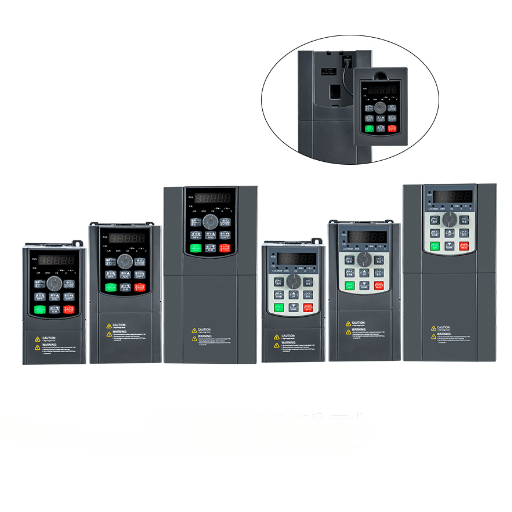
When designing and operating an industrial system, it is the VFD that transforms most of the automation concept into reality. Regardless of your goal – optimizing the motor control, cutting back the overall costs or ensuring the reliability of the equipment, the choice of appropriate VFD for the objective that you have is what makes the difference. This document is prepared particularly for businessmen, shelf engineers, and anyone else in management, relatively describing fair assessment to be made. Whether spotlights, exhibitions, researches or periods, we shall provide real constraints in guiding any other correctly sought initiatives in the best possible manner. At the finish, you should be concerned enough to measure industrial VFD systems objectively against each other and choose the most suitable one that will help your operations proceed effectively.
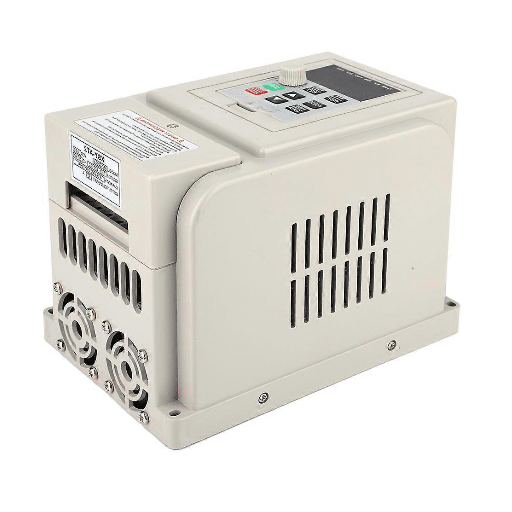
In engineering, a Variable Speed Drive, also given as Variable Frequency Drives (VFDs) is deemed as a machine that is used to govern the speed and also the torque of electrical motors by adjusting the frequency and voltage of the power source to be fed to the motor. They are basically used in order to improve motor performance, energy utilization and control within systems. One of the major strengths of the VFDs is their sturdy operation, causing less power consumption in instances where the motors are not used particularly in high speeds. Additionally, there are additional advantages like modification of parameters of VFDs, immediate stop and braking, reduction of mechanical wear, etc. All of these advantages as a whole allows the users to be able to save on the daily running cost of the equipment.
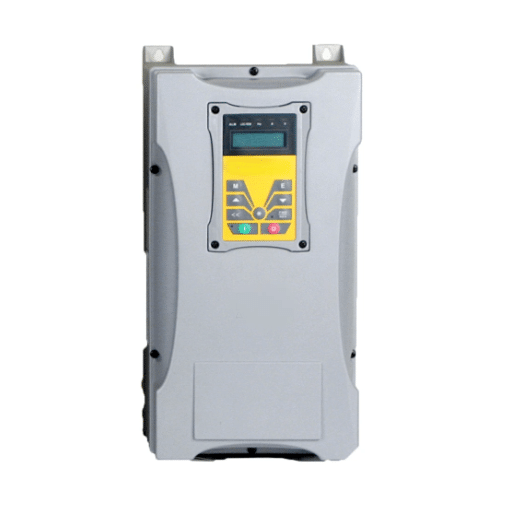
A Variable Frequency Drive (VFD) is a method for controlling the speed of this motor by varying the power supply frequency and voltage. This allows for more accurate control of forces and speed of the motor under this system. The operations of the Variable Frequency Drive are usually divided into three major unit stages: rectification, D. C. Bus regulation, and inverting. It all starts when the incoming AC power is turned into DC power, a process performed by a rectifier. The DC bus then neatly packs the said power without any up-down of the voltage or any abrupt switches. Again, the inverter is engaged to convert the power back to AC power whenever needed at the rated frequency and voltage, thereby being able to control the speed of the motor according to the system requirements.
The advanced semiconductor technology and microprocessors employed in contemporary variable frequency drives (VFDs) help deliver accurate and efficient results. An added benefit is the ability for VFDs to communicate with automation systems to effect certain motor control tasks. The mentioned features have a strategic importance in energy savings, reduction and wear and tear telemetry in commercial and industrial settings.
The Variable Frequency Drives or VFDs as they are alternatively known are used in industrial applications where they control the speed of an electric motor by adjusting the motor voltage and frequency. In the operation of a VFD, first, the power is input as AC. This is then latched to DC on the rectifier stage. The DC is used to feed a new block known as an inverter. The inverter synthesizes AC output and provides the generated wave with variable voltage and frequency. By increasing or decreasing the wave frequency, the VFD then makes the motor turn at the desired speed to cope with the load efficiently.
The need for such experts is particularly felt in more progressive areas in such branches as manufacturing, HVAC systems and energy such as engineering of industrial water treatment plants. For example, in systems such as conveyor belts or pumps, variable frequency drives are used to ensure that the energy consumed is the amount required and no more by altering the speed to the load that is being handled. VFDs in addition enable the reduction of low voltage applied at which a device restarts by providing a slow start ramp control limiting the number of cycles during which components mechanically degrade reducing repair costs.
The Variable Frequency Drives (VFDs) are one of the best technologies for the precision control of the motor as well as the correction of any imbalance on the loads. This is important in situations where a specific speed is necessary, such as conveyor belts that function smoothly, cooling and heating systems, and high-speed manufacturing in plants. However, VFDs do other things besides matching a motor’s speed to the desired value. Excessive process control is enabled and enhanced by the variable frequency drive, which is, in most instances, absent in line shaft drives, making these kinds of drives appropriate for use in production since they ensure improved quality through more accurate control.
The latest VFD technology entails the use of VFD and PLC communications discussed earlier with a focus on Modbus, Ethernet/IP, Profinet and other communication protocols. These enhancements guarantee smooth harmonized operations alongside industrial automation covering extensive areas. The inbuilt control- and data-rich feature is also helpful in performing predictive maintenance tasks, such as gauging voltage, current, and temperature at any given point of time and ultimately system dysfunction.
Moreover, with improvements in the voltage source inverters technology, the power electronics have been enhanced and now produce VFDs which have minimal harmonic components and losses. With this feature, the smooth motor operations also help in reducing consumption of power in most applications. This makes the application of modern VFDs even more essential in any industry looking to improve energy usage as well as operational costs.

Variable Frequency Drives (VFDs) have been developed to be compatible with almost all types of engines or control systems and are used in a wide variety of industries. If the drive and motor voltages, currents, and power ratings go well together, the VFD would work in both the old and new installations. In this age of technology, there is no VFD manufactured today that doesn’t appreciate the abilities of the other. This includes communication protocols which can be quite common such as Modbus or Ethernet/IP which help connect the drives to existing automation or monitoring systems. Perfectly laying the VFD in the automation control applications requires invariable assessment of specific parameters and evaluation whether the VFD is crosswise the motor and the target application in general. Moreover, most of the manufacturers also supply software aimed at reducing the time used for setup and integration exercises.
Please arrange a meticulous inspection of electrical and mechanical systems for the purposes of ensuring compatibility with the installed equipment. The voltages, currents, and frequencies should be equal in the motor and variable frequency drive (VFD). It is important to make sure that the electrical ratings do not vary as this may affect the performance of the electrical equipment, cause overheating, or damage the system. In addition to assessing mechanical issues, the safety of the bearings, loads, and coupling integrity is of great importance due to the high level of flexibility and dependency created by the laws of physics.
Aside from the hardware, it is also crucial to attend to the communication standards which are used in the automation architecture. Use of Modbus, EtherCAT, or Profibus technologies provides an easy way to share data among devices. Change of the hardware systems will not create additional communication delays or traffic blocks in the network. In addition, industry outlook helps in preventing system unavailability and communication failures inside the system.
Variable Frequency Drives (VFDs) are very essential for achieving very fine control and energy efficiency in industrial machinery. When introducing VFDs into the system, prerequisites aimed at proper selection, interfacing, and fulfillment of system performance are of importance. When choosing a VFD, one should be careful to select a drive that matches the specification of the motor, taking into consideration all aspects such as voltage, current, torque requirements, and their changes as the system load varies.
The need to work in automation systems requires, in most cases, availability to use standard, industrial network protocols such as EtherNet/IP, PROFINET, and Modbus TCP/IP. This guarantees the seamless flow of information between the PLC or other devices within the network and the Variable Frequency Drive. The Variable Frequency drives are also designed differently and besides driving, they offer advanced capabilities in diagnosing drive condition and monitoring usage to enable utilization optimization over time as well as carry out predictive maintenance.
Custom Variable Frequency Drive (VFD) solutions are what is required when the setup for ordinary industrial applications is too inefficient to fulfill the conditions or performance that is expected. These special industrial sectors primarily oil and gas production, water treatment, electronics production commonly require the preparation of variable frequency drives to satisfy their needs. Also, as a substitute for the aforementioned example of VFD systems, the installations found in the oil and gas industries require extra stringent VFD systems for use in aggressive climate conditions; the enclosures of the VFDs undergo additional explosion-proof treatment and advanced cooling is incorporated. Similarly, water treatment facilities also require VFD kits made mainly for variable torque applications which are aimed at increasing the efficiency of the pump and hence cuts the energy usage to a possible minimum.
Advancements in Variable Frequency Drives have allowed one to incorporate AI predictive algorithms with the Internet of Things (IoT) and also real-time processes for managing performance and predicting the equipment behavior so that interventions may be provided in advance. These smart characteristics allow improved operation and such offers energy power optimization by assisting in anticipating the occurrence of problems and preventing such problems. Owing also to available features, the areas in fine manufacturing are not left out as advanced VFD settings allow for rapid synchronization and control in torque ensuring that the performance of products and equipments are maintained at a given high-efficient level.
The penetration rate of VFDs has increased a lot in recent times, majorly due to their potential in energy conservation with the incorporation of variable frequency drives that adjust the speed and power input of the motor. This is very effective as energy is not wasted, especially in load conditions where it is a function of demand, energy sub processes such as HVAC, pumps and many other manufacturing processes. By cutting down usage of electricity, VFDs not only capitalize on cost cuts in operations but also contribute towards meeting the set environmental standards in an attempt to support environmentally friendly causes.
In another sense, they are able to save the much-needed equipment downtime and enhance the life of the organization’s asset, hence bringing about reduced costs. All these advantages emerging from utilization of the VFDs are so weighted to the extent that no organization aspiring to be economically and conservatively viable can opt to forgo this technology.
Mainly, the energy reasons for installing Variable Frequency Drives (VFDs) is the type of what they are serving, the load of the motor, and the motor system itself. VFDs are usually devices that allow the regulation of motor speed under various circumstances by changing the frequency and voltage to the motor. The most common use of variable frequency drives is on centrifugal machines such as pumps, fans etc where most of energy use changes to efficiency hence energy used is inversely proportional to the square of speed of the motor. For instance, if the motor speed is reduced by 20%, the energy consumed will reduce by close to 50% which indicates the potential that is available for improvement in energy consumption from the intensive sectors.
Moreover, technologically advanced VFDs are designed to feature real-time energy monitoring, improved control strategies, self-tuning, and PID controllers, and all optimized parametric settings. These innovations in industrial applications can make industries follow the optimum speed operation of drives which enhances energy conservation. A research conducted by the International Energy Agency shows that if all motors used in industries were fitted with VFDs, it is possible to achieve 10% savings in electricity consumption worldwide. Industrial facilities use technologies such as this to enhance their efficiencies and attain sustainability vision and cost at the same time.
Including essential costs in a budget provides a complete idea when shopping for a Variable Frequency Drive (VFD). Primarily, the first cost concern relates to the initial purchase of the VFD and consists of the unit price which can be quite different depending on the quantity, voltage and the brand name. The rate could be as low as a few hundred US dollars and drive up to several thousand US dollars, depending on the order size. Another associated cost beyond the VFD, though, accounts also for the installation aspects like fabrication of panels and alteration in wiring as well as labor costs that are charged.
Moreover, let’s evaluate the extent of energy savings that the VFD will induce in the long run by reducing consumption and lessening damages in active equipment. It is suggested in the recent industry analysis that availing a VFD to businesses helps reduce annual costs on energy by as much as 20% to 50%. Arguably, such costs need to be maintained within the susceptible balance, including the cost of services as well as the cost for replacements in various instances. Lastly do not forget to look for any available reward or tax credit opportunities for energy saving solutions. Taking all of these components into account, your funds put into a variable frequency drive not only addresses your requirements perfectly but also generates returns for years which are very good.
The use of VFDs can promise a broad financial savings in the end. In particular, they save cost in terms of operational efficiency as well as the lifetime of the equipment. With the help of VFD, it is possible to control the speed of the rotating motor to the required load. This means that VFDs minimize wastage of energy, which may pose a threat to as much as 70% of an industrial energy bill. As a consequence of the programmed speed controls, wear and tear as well as damage caused by the forces of friction are assured to decelerate.
There has been a study on the sector of production where there were VFDs that demonstrated energy savings of 20-50% on average, which leads to costs lower than other industrial facilities during the life of the system. The soft starts and operation the VFDs provide also save exposure of motors and other connected equipment to significant wear and tear. For this reason, equipment facilities as well as other systems under this practice tend to operate longer without the need to incur such capital expense as equipment replacement. When computed over the usual 1 – 3 years payment window, the savings that might be achieved include both the energy savings and the maintenance expenses to be reduced as such making the VFD cost advantageous.

It is necessary for the judicious choice of Variable Frequency Drive (VFD) to consider the right aspects to ensure adequate compatibility and effective performance between different components. Firstly, it is necessary to find out the power demand of the motor which includes voltage, current and horsepower. This stage involves also matching the requirements of the motor to the VFD. Remember, always take into account the type of work. At times certain features of ventilation and pumping systems as opposed to transporting and compressing applications will require different types of controls. Make sure that the VFD will work with those control systems and protocols that are already existing on the site, for example, Modbus or Ethernet.
Also probe into the area in which the VFD will work as other conditions such as temperature, humidity and the presence of dust might need additional casing or protection. Lastly, make sure that the VFD is equipped with protective measures such as overload and fault current in order to sustain performance of the process. Balancing of these factors with the demands that have been set in place will consequently improve the VFD performance and longevity.
In the light of choosing a variable speed drive, it is necessary to make a precise analysis concerning the compatibility with the requirements of the motor and the load, in order to implement right control and efficiency measures. Check up on such control features of the drive as motor voltage, current, and power rating that coincide with the engineer’s specifications. Modern drives on the other hand are currently designed with many built-in functionalities such as, energy saving algorithms, harmonic filters, multi-motor control and location capabilities, among many other operational features which assist in the attainment of specific application goals and objectives.
The issue of VFD usage has also to do with the particular control method as there are many and they are different in their applications and complexity; such methods: Volts per Herz (V/f), vector control, or direct torque control (DTC). By the way, recent VFDs are provided with the capability of things such as the Modbus, the Ethernet/IP, or the PROFIBUS. These protocols are designed to ensure the flawless operation of these drives in an environment enmeshed in the Industry 4.0 framework.
Examine the Cooling systems and the temperature range of the HDD in the device itself, in view of the impact that overheating can have on performance and the life of the device. In addition to this, the conformance to the most popular certifications and norms (such as UL, CE or ISO 9001) is also of paramount importance to address safety, quality, and regulatory components specific to certain geographical areas. Proper attention to the appraisal of the set of technical features, will warrant the choice of the right VFD modified to fully cater to the industrial expectations.
| Parameter | Variable Torque Drive | Constant Torque Drive |
|---|---|---|
| Primary Applications | Pumps, fans, HVAC systems | Conveyors, crushers, mixers |
| Torque Demand | Varies with speed | Remains constant at varying speeds |
| Energy Efficiency | High at reduced speeds | Moderate across all speed ranges |
| Motor Sizing Requirement | Lower due to partial load | Higher for full-load performance |
| Power Consumption | Lower at low speeds | Consistent power regardless of speed |
| Overload Capacity | Limited | High for heavy-duty cycles |
| Cost Impact | Lower operational cost | Higher due to constant torque needs |
| Drive Sizing | Smaller for less demanding load profiles | Larger for handling heavy-duty loads |
| Typical Speed Range | Moderate to wide (e.g. 10%-100%) | Typically broad but within load constraints |
| Maintenance Demand | Lower due to reduced stress on components | Higher, based on heavy-duty operations |
One must do extensive research on how the system will be used and the performance it is expected to achieve before calculating the size and HP of the equipment under consideration. Understanding the working conditions in the system ensures that the operations are carried efficiently and without any handicaps. In short, for occasional loads and duty devices that operate infrequently, smaller frame sizes, as well as less powerful motors, would be enough. Provided they do not work full-time in any given period, such systems prove very efficient, and their installation cost is also lower.
If you take as an example the equipment utilizing conveyor belts or industrial pumps, it is often necessary to use larger drives that can withstand variable loads without performance degradation. When it comes to choosing these elements properly, it is strongly advised to help oneself with the advanced computational tools which provide for generating load cases and afterward optimum sizing of the system under consideration. In compliance with standards available such as NEMA or IEC enables the electrical and mechanical equipment to be safe and reliable under different operations.

For the proper installation, you had better constantly verify that the unit complies with the required specifications compared to the original design, which includes the standards of the power consumed, the libraries, and the speed. At the same time avoid and unpleasant movements of the drive by attaching it using antivibration washers. Wiring of the fan should be connected according to the detailed wire diagram and in a such a manner that electrical safety practices are not only maintained but also compliant with NFPA-70.
At regular intervals, the drive will require a thorough review of its mechanical and electrical systems. Users must also inspect for any deterioration or excessive warming, or even for any cables that have become detached. Check the communication system. Try to clean up vents and milking machines regularly in order to avoid running hot. For optimal performance, always verify that movable elements are sufficiently lubricated in accordance with maintenance procedures.
Setting up complicated mechanical or electrical systems might invite issues that implore efficient planning and accuracy. Quite a common trouble in this undertaking is making the system, technology-wise, compliant with the existing technology at the site. This, for instance, may correspond to the requirement of the technology, which in this case is the need to reduplicate the voltage of any system to be installed in countertops or avoiding heavy line drawing to show all the mounting and the parts of the equipment. Also, considerations regarding the environment, such as extremes of temperature, humidity, and dust, among others, will require the application of specialized covering and screening techniques for the smooth running of the plant.
Another significant concern is ensuring that all the elements are aligned and calibrated during installation to prevent any unnecessary tear and wear or lack of efficiency in the operation. This usually entails the use of specialized instruments like laser alignment systems plus sophisticated measurement instruments. Similarly not having the right manuals, or the ones that are there being ambiguous, can cause mistakes or in some cases further postponements, or alternatively care has to be taken when doing the installation or expert assistance has to be resorted to.
Safety is key to ensuring the safety of personnel and equipment when it comes to performing tasks that involve electrical and mechanical objects, some of them being heavy dwellings. It is imperative for the installation team to go through thorough training and carry out a pre-installation risk assessment to help in reducing these risks. It is understood that the entire system installation may most likely require synchronization with other building activities and operational procedures after constraining it to the agreed time frame.
On a more operational level, however, it is crucial that regular maintenance of installed systems is not only mandatory but also a very good practice. It also involves scheduling maintenance tasks that involve precise technical equipment, medical diagnostics, and other activities for conducting the stress tests on the equipment in order to avoid sudden breakdowns or improper use. This is useful since in the process it is possible to also identify wear and tear or corrosion or even damage to some of the parts and take necessary repair measures.
Current monitoring solutions, including those subject to the Internet of Things (IoT) are of great relevance in ascertaining the level of degradation and maintainability of the system. The advent of such systems facilitates the preventive maintenance measures as defects can be identified early before becoming critical. Also, the adherence to the recommended maintenance procedures and industry specifications helps a lot in improving the performance and serviceability of the system as far as the expected life of the system is concerned.
When specifying the VFD on the pumps and fans for industrial purposes, market surveys must be undertaken first which will help in the understanding of the intended application and the system requirements including the classification of the load as well as the type of application under consideration: whether the pump or fan calls for constant torque control or variable torque control. Also, refer to the electric motor nameplate and what is available on site checks to see if the power supply of the VFD is the same one that the equipment requires as well as the type of connection of AC motor and AC inverter.
Adjustable frequency drives are able to provide torque at any spinning speed, but those specifically meant for VFDs that deliver torque at all times also may deliver torque every time, irrespective of the spinning speed. However, both the VFD and motor controller need to be a perfect fit for the torque profile and load requirements stated. In addition, for pumps and fans, energy consumption under variable-torque control is lower than under constant-speed conditions, underscoring control as an important consideration in the purchase decision.
One has to take the rated current of the motor on the motor nameplate and the rating of the available supply voltage to ensure the VFD drive is not less or more than the site’s operating frequency and 3-phase power supply. Selecting a VFD with the right voltage rating will ensure that over or under voltages will not be met and VFD and motor will operate effectively in industry. A VFD rated voltage and verification of it can be crossed off the list while purchasing one. Rated power of the VFD should be assured. Devices are owing to be operated properly within variables above or below loads, speed. One must place great emphasis when selecting a VFD, considering parameters such as the payback period to ensure the VFD operates under optimal conditions.
When it comes to evaluating different fines for industrial use and specific custom needs of a VFD, optimum and progressive motor management solutions should be considered in case the application includes AC motors. Also, it should be makerscope-programmable VFD systems. This helps keep VFD effective easy to use in case some problem occurs. Many control technologies include hardware and software foi auto-sat intersect with VFD technology. And almost a matter of time until this technology becomes fully commercialized. Thus, it is essential to focus the attention of the enterprise on the activities of even customer groups, tasks, and prospects that are not related to a specific product or range.