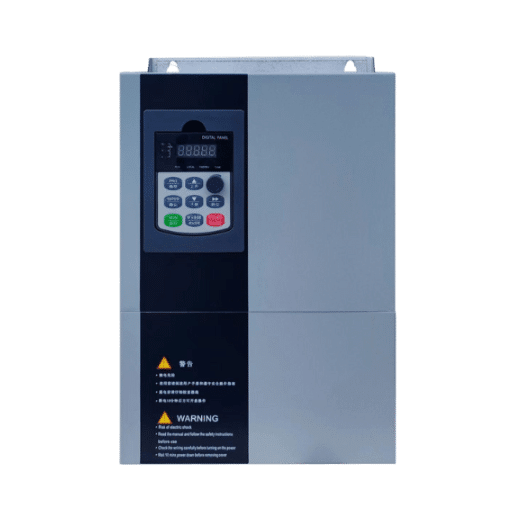
Ready to Get Your VFD Solution?
Whether you need a single drive or a complete system, we have the VFD products and engineering support to ensure your project's success.


Variable Frequency Drives (VFDs) are the very heart of contemporary industrial systems, giving a drive for motors that is uncannily precise and opens the door to energy efficiency. With the many and diverse benefits of the technology, VFDs are still machines, and malfunctions are something they can suffer from. The malfunction causes may vary in different equipment and installations thus services must be performed on-line. Troubleshooting in this case is a real challenge and the reason why VFDs are referred to as complex products constituting such errors as accessories are:- oscillation, operational problems, control circuit damage, and so on. If neglected or not taken care of, possible damage could be even higher than the investment costs.
In the case of the Variable Frequency Drives (VFDs), the automation engineers have designed to use them to control motor and torque with changed frequencies and voltages. The industry and the business sector are the ones who favor this solution the most most of the times to enhance the power efficiency, minimize the mechanical stress, and permit efficient handling. VFDs do their work by taking in an input where the frequency from a power supply is fixed, and then they change it into an output of different frequencies; hence, motors can be operated in speeds that exactly correspond to the operational requirements or conditions. In short, the use of the VFDs makes the manufacturing plants consume lesser energy and the equipments to last longer; hence the systems of modern automation are highly dependent on the VFDs.
| Component | Description |
|---|---|
| Rectifier | Converts AC input power to DC output. |
| DC Bus | Stores and filters converted DC power. |
| Inverter | Converts DC back to variable-frequency AC output. |
| Control Circuit | Manages speed, torque, and operational settings. |
| Input EMI/EMC Filter | Reduces electromagnetic noise from power input. |
| Cooling System | Regulates temperature to prevent overheating. |
| Protective Circuits | Safeguards against faults and overcurrent. |
| Microcontroller | Processes control signals and adjusts performance. |
| Feedback Mechanism | Provides real-time monitoring and control signals. |
| Communication Interface | Enables integration with external control systems. |
Variable Speed Drives (VSDs) are the collective term for several types of drives that are used to control the speed of an AC motor by adjusting, among other things, the frequency and voltage of the power supplied to the motor. The name “Variable Speed Drives” is mostly connected with the ones using VFDs (Variable Frequency Drives) which work by converting an incoming power from a fixed frequency to a variable frequency that defines the machine speed of rotation. Among the numerous advantages of running an operation by means of the VFD-based motor systems are high energy efficiency, smooth running, and operation with reduced wear and tear of the machines and processes.
Also, the case with induction motors is similar. So, besides the power factor advantage in the case of the motor with a synchronous one, the motor branch consists of an induction motor and a VFD, which demonstrates less wear, and the energy usage decreases remarkably. As a result, both induction and synchronous motors can be direct recipients of a high drive payback as far as the blade systems go.
Higher-order factors including the feedback mechanisms, microcomputers, and safety circuits contribute to the VFD’s effectiveness. Feedback systems give instantaneous drive performance data like motor speed, load and torque, which the microcomputer used to dynamically adjust output parameters. Safety circuits protect the motor against overvoltage or overcurrent and hence enable the motor being operated safely even in very tough conditions. Besides, having communication interfaces makes the drive readily connect to industrial control systems which eventually allows for remote monitoring and control.
Variable Frequency Drives (VFDs) are a key factor in increasing overall industrial efficiency by granting motor speed and torque control with great precision. This contributes to reducing businesses’ energy use by having a custom-made motor operation base which is really close to the specifics of their cases. An instance is the HVAC scenario where VFDs are put in control of fan and pump speed adjustment that goes well with the system requirements resulting in a great cut of the operational energy bill.
Besides, variable frequency drives (VFDs) serve as a guarantee of process stability and product excellence as they do away with mechanical strains present during the starting and stopping phases of the motor which, in turn, reduces the wear of system items. It is in this context that the manufacturing, water treatment, and material handling sectors are empowered by the use of VFDs because they are able to keep the production rate and accuracy at a steady level, thus, not losing any revenues. A contemporary VFD that boasts of cutting-edge algorithms and artificial intelligence can possibly be smart enough to point out the maintenance needs, therefore, breaks can be avoided and the system will be even more efficient. The entering of industrial performance and sustenance driving technology is what the mentioned enhancements represent.

The overcurrent faults take place due to exceeding of the specified limits by the current passing through a variable frequency drive (VFD), potentially endangering the drive and its connected motor. The major causes of these faults usually pertain to the high motor load, short circuits, wrong parameter settings, or sudden changes in the load dynamics. Upon detection of an overcurrent fault, the VFD ceases operating immediately to safeguard itself and the motor.
If we want to avoid current overload problems, we must tune the most important drive parameters such as acceleration and deceleration rates which prevent the drastic increase of current. Besides, the motor and load pairs must be checked for the issue to be solved before the motor is put under too much stress. Checking the cable as well as the connections is a necessary step over the period of time as the removal of insulation or a terminal being loose can cause short circuits and finally overcurrent errors. The fancier VFD models usually come with fault registering tools as a part of the built-in diagnostics that can be used to take a closer look at the recorded event data for the sake of better preventive measures. The preventive maintenance combined with the configuration of the parameters in the best possible way greatly diminishes the chance of an overcurrent fault.
When the voltage given to a system is higher than the maximum permitted by the equipment or circuit, it is called an overvoltage, an event that puts the apparatus at a high risk. There might be several reasons that could lead to this happening: abrupt power loads, power supplies with poor regulation, lightning strikes, or feedback from impedance to fixed frequency drives. In the case that overvoltage occurs, it can mean bad news for the sensitive electronic components, and even the insulation may yield a complete system crash if a solution is not found quickly.
Voltage waveform monitoring is essential for preventing and solving overvoltage problems, and so it is important to monitor the voltage waveform for that purpose. Technicians can use power quality analyzers and oscilloscopes as the basic tools for detecting anomalies, voltage spikes, and transient surges within the system. As a device, modern VFDs and programmable logic controllers (PLCs) come with overvoltage protection features that are activated either by alarms or by activating braking resistors to absorb the excess energy. Particularly, high-inertia applications are in great need of well-configured braking resistors, because in this case, regenerative energy can easily create hazardous voltage surges.
Overvoltage can be kept out by stopping it right there with the help of some strategies. One such method is to see to it that the system for earthing is made and kept in good shape which in return will lessen the effect of the Lightning-induced surges. Also, the system will protect equipment against transient overvoltage events by using Surge Protection Devices (SPDs) installed at critical locations. In addition, by keeping a watch on the feed voltage levels during regular maintenance and verification, the system will remain safe and in accordance with the tolerances of the source power.
Several things can cause electrical systems to overheat. Some of the reasons are excessive current flow, lack of ventilation or poor insulation. Monitoring of key factors such as temperature rise, current load, and component performance is required for the early recognition of overheating situations. The scanning with thermal imaging technology is the most accurate way to find hot spots in circuits. By doing so, the possible failures in the system can be identified. For example, transformers, capacitors, or connectors are the most common components with high temperatures before they break down. Moreover, safety regulations such as the IEEE guidelines for equipment temperature limits are represented as practical available levels for the industry. Through constant thermal audits and real-time monitoring systems, the first signs of excessive heat can be easily detected, thus avoiding any possible equipment damage or fire incidents. Steps like this will facilitate the establishment of an absolutely reliable and safe system.

A multimeter is an indispensable diagnostic gadget for diagnosing electrical problems within Variable Frequency Drive (VFD) systems. First of all, make sure that the multimeter has been adjusted appropriately to the function to be used, whether measuring the voltage (AC or DC), the resistance or the continuity. For voltage test, do it carefully by measuring the VFD, the input, and the output terminals to check if each phase has the proper voltage supply. A slight deviation from the manufacturer’s specifications might indicate that, besides a supply problem which can be solved, the device inside the VFD is likely to have a fault.
When dealing with resistance or continuity problems, the VFD power has to be cut off to prevent the multimeter from being misused and also to ensure safety, the motor windings will be tested for resistance and the cable insulation against continuity. The resistance of all motor windings should be nearly the same; large differences may indicate winding failure or short circuits. The continuity check is supposed to show that the connections are complete and that there are no other paths being made.
In addition, the DC bus voltage must be measured to make sure that the capcharger is working correctly. A “breaking down” of the capacitors or the rectifier bridge may occur because of the technical errors in the DC bus and incoming power supply. The tech service can easily and quickly find and fix the problems by using a multimeter to test the magnitudes at different points. They will also be certain that the VFD and its accompanying systems are operating under the correct customer specifications.
Diagnostic tools are a significant way to detect and correct Variable Frequency Drives (VFDs) problems. The diagnostic tools of today have excellent built-in features, like live monitoring, parameter tracking, and error log analysis that make it easier for technicians to locate inefficiencies or faults since they have more precision failure detection. These diagnostic and software packages, when there is a time for one-to-one interpretation or human examination, are of great help to save time and to a very low degree of needing human involvement. Also, data and systems modeling have improved greatly, therefore, the integration of data is smoother and more effective, diagnostic software will help and at the same time, it will don’t for performance metrics measurement, besides, it will be helpful for anomalies and inconsistencies detection also.

One of the main causes of acceleration and deceleration issues in the power and velocity programming of Variable Frequency Drives (VFDs) is set up parameter error, limitations in the mechanical system, and load shifts from the outside. A definite issue is the reference mismatch between the acceleration and/or deceleration ramp settings and the inertia of the load. If the ramp time is not long enough, the motor will be unable to reach the commanded speed and can develop an overcurrent trip. On the other hand, too long ramp times will adversely affect system response time and may lower the operational efficiency.
Another primary factor, such as big inertia mechanical loads, also has a huge input in this operation. A good illustration of the same is that large industrial equipment, e.g., big compressors, may have such a high inertia that their starting torque can be equal to the full load torque. Custom tuning of VFD parameters, like S-curve profile for a smoother and more energy-efficient operation, may be necessary. Lack of adequate regenerative braking capability could potentially mean a dissipation of power during deceleration, especially for dynamic systems that are required to manage energy more freely.
Through and through examination of the system’s parameters, that is, the limits of torque, profiles of acceleration, and settings of the carrier frequency can be of enormous assistance in the solution of these problems. Suitable combining of the braking resistors or regenerative modules with the precise adjustment of the parameters is a must to have the VFD and motor operating optimally at different load conditions.

In the case of the proper functioning and the wide durability of Variable Frequency Drives (VFDs), regular cleaning and an extensive process of inspections are essential. When the VFD enclosure and some of the main components catch the dust, soil, and some other airborne particles, then the problem of equipment overheating and poor thermal performance rises fast. Dual-grade bristle and nose gun are the recommended methods of cleaning the VFD. They will not only make the component look good, but the air flow will also be better thus cooling the component much effectively.
One should take note of wear and tear or the likes, inspect the wiring for fraying, check the corrosion of the terminals, and look for damage to the connectors. Further, make sure the area of the cooling fans is clean and unblocked, which means you will not have to think of heat-related problems and lose time by such action. Finally, it is essential to check the tightness of all electrical connections using a torque wrench, and this has to be done over the whole period of time. The scheduled maintenance and checks are great preventative measures against possible failures and at the same time, they are the best way to have the VFD working at its best in terms of the system’s reliability.
Long-term performance and reliability of Variable Frequency Drives (VFDs) can only be assured through the thorough monitoring of operating conditions. It all starts with capturing and evaluating critical criteria like the input voltage, output current, and motor frequency to check for any irregularities that might be a sign of potential problems. The most suggested way is to place a temperature sensor both in the interior and the surrounding space where the VFD is installed since the VFDs can easily catch fire and this can greatly minimize efficiency and also lead to the damage of the inner parts. It is also very important that sometimes the harmonic distortion should always be checked considering the significant harm that can be attributed to the overheating of the electrical components.
Diagnostics that are well advanced as well as modern monitoring software can add to the potential of tracking and self-deducing operational data more effectively and that too in real time. For instance, maintenance alerts can be turned predictive when the systems of the plant bring up the issue of current draw increases and frequency output variations as a developing trend. These maintenance activities, as such, can stop, or at least lessen risks if tracking and optimizing operations are done correctly with the help of automated systems.
The investigation process should begin with examining the fault code and fault history saved in the VFD as most of the general fault codes often indicate problems with overcurrent or overvoltage. Next, it is recommended to carefully inspect the DC bus, diodes and IGBTs for visible damage and to examine the presence of input voltage fluctuations or under-voltage events. The electrical motor connections and the contactor status should also be scrutinized to eliminate the possible failure of external equipment or wiring issues. Maintenance tasks being run as per the schedule are very crucial in reducing the downtime and in prolonging the life of the VFD.
Should an overcurrent trip fault occur, it is important not to disregard this and the first thing you should do is check the motor current and compare it with the rated value so that you can identify overcurrent causes like high inertia of the machine, stalling, or a stuck machine part. Moreover, inspect for overcurrent causes within the VFD, e.g, shorted IGBTs, diode faults, or a faulty bus fault condition; refer to the VFD’s fault history and fault code for assistance. Make sure that the acceleration and deceleration parameters are the best fit for the load, especially with big pumps and fans or whatever are high-inertia loads. Regular checks and maintenance of VFD help avoid these common issues and decrease industrial and commercial downtime.
One of the main causes of over-voltage faults is the regenerative energy during rapid deceleration or during the supply surges, verify both the acceleration or deceleration settings if necessary and consider applying braking resistors when the inertia of the machine is high. Look for fluctuation of the supply voltage and be sure the mains voltage is always within the rated limits so that no over-voltage fault and simultaneously, under-voltage problems will be given a chance. Inspect the DC bus, capacitors, and diode assemblies for cracking or any other signs of aging, and also, check the fault history of the VFD for recurrent patterns.
Symptoms of motor overheating can be related to different things such as too much current, inadequate cooling, high room temperatures, or wrong VFD’s frequency and speed settings. Make sure that the VFD does not make the motor to run at the wrong speed step and also see the ventilation, fan working, and thermal protection settings. Fault codes associated with thermal overload need to be checked, and the presence of running at high load conditions, which reduce the life of the motor, can be improved, and the maintenance schedule observed can prevent the equipment from failing.