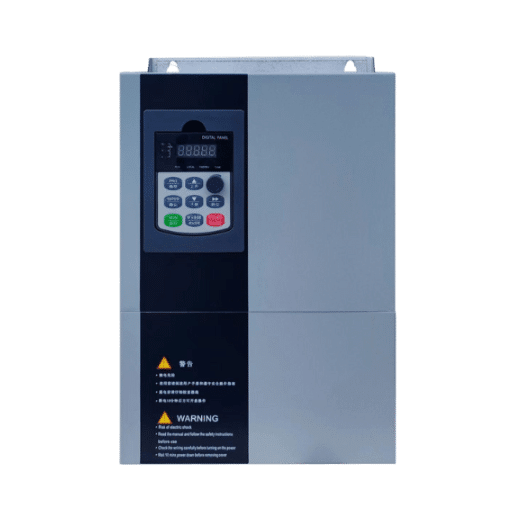
Ready to Get Your VFD Solution?
Whether you need a single drive or a complete system, we have the VFD products and engineering support to ensure your project's success.


Variable Frequency Drives (VFDs) are one of the most important components in modern industrial systems and provide big opportunities for motor performance, energy efficiency, and operational control. ABB, Siemens, and Schneider are the market leaders in VFD technology and have all been at the top when it comes to quality and innovation. Nevertheless, the industry is now full of small and large VFD makers, who all have their place. So, how are these VFD behemoths doing against the competition? Now, this essay will conduct an exhaustive study of ABB, Siemens, and Schneider VFDs with the help of other manufacturers and thoroughly analyze their qualities in terms of performance, reliability, safety, cost-effectiveness, and technologies. Consequently, at the conclusion, you will be able to draw a very clear picture of which companies are the best in the market and by what means they become part of the larger VFD solution industry.
The innovative and robust Variable Frequency Drive (VFD) solutions of ABB, Siemens, and Schneider are well-regarded as they become the trendsetters in the industry. Here is why they are outstanding:
Performance and innovation are the key focuses of the three aforementioned companies, which always offer the best solutions for a broad range of industrial needs.
The past ten years have witnessed a strong and steady growth in the variable frequency drive (VFD) industry mainly because of the industrial automation evolution plus the demand for energy-efficient systems. The rise of the global realization to cut energy consumption and to reduce carbon emissions has resulted in VFDs being indispensable in the process of optimizing motor performance and energy usage control in various industries. Current news tells that there is a change moving towards digitalized and IoT-enabled VFDs, which combine smart factories and predictive maintenance systems seamlessly.
Sectors such as HVAC, oil and gas, water treatment, and food processing are the leading followers of the VFD technology, with the market data till now, of course, indicating this. The main drivers for this are the need for precise motor control and enhanced operational efficiencies. Even Asia-Pacific’s regional markets are on the move and are even leading the global expansion pretty fast, owing to industrialization and governments encouraging the implementation of very sustainable industrial practices. In general, the industry is now seeing more and more money spent on R&D to get the drive to be more reliable, reduce system size, and at the same time, be more compatible with emerging energy systems, e.g., renewable power sources. Having said this, the VFD industry is at the very center of the world’s smartest and greenest technologies movement.
Key manufacturers in the VFD market are ABB, Siemens AG, Schneider Electric, Rockwell Automation, and Mitsubishi Electric, dominating a significant portion of the market. ABB has a leading position in this market segment with a wide range of VFD products that serve a wide range of uses, from low voltage to medium voltage applications. Siemens AG comes next and is able to maintain its competitiveness through a combination of powerful automation know-how and worldwide presence. What people say about Schneider Electric is its prodigious effort in transforming its products so that they now provide energy efficiency as well as digital connectivity, exactly as the market is becoming more prone to smart industrial products.

|
Parameter |
ABB |
Siemens |
Schneider Electric |
|---|---|---|---|
|
Specialization |
High-efficiency VFDs and motor control |
IoT-enabled connectivity, data analytics |
Sustainable and eco-friendly solutions |
|
Main Applications |
Industrial automation, robotics |
Energy management, IoT integration |
Building automation, HVAC systems |
|
Energy Efficiency |
Top-tier efficiency standards |
Advanced energy-saving technologies |
Strong focus on energy efficiency |
|
Innovation Focus |
Smart sensors and diagnostics |
Digital Enterprise initiative |
Cost-effective, user-friendly interfaces |
|
Product Durability |
Rugged, designed for harsh environments |
Highly reliable, long-lasting products |
Robust for diverse applications |
|
Ease of Integration |
Flexible, modular designs |
Seamless IoT and digital integration |
Simplified installation, standardized design |
|
User Support |
Global network, technical training |
Comprehensive customer support ecosystem |
Accessible tools, online resources |
|
Market Recognition |
Leader in industrial VFDs |
Renowned for automation technology |
Pioneer in energy management solutions |
|
Digital Features |
Real-time data from drives |
IoT-ready monitoring and diagnostics |
Intuitive dashboards and analytics |
|
Sustainability Focus |
Renewable energy integration |
Green manufacturing processes |
Energy and resource sustainability |
Siemens Variable Frequency Drives are an embodiment of form and function in the industrial equipment market since they come with the latest technology and the best performance and efficiency. Also, they apply PWM in the most advanced way and make the drives capable of the best motor control with the least harmonic distortion. As a result, system reliability is increased with the use of these drives. Mechanical parts in their design and efficiency are also a focus of Siemens engineers. Moreover, in the market, these drives are more effective due to the savings they bring to the user in different applications such as elevators, hoists, and pumps.
Moreover, the company Siemens is using the technology of digital twins installed in their VFD systems. As a result, there is a possibility of the simulation of the motor’s performance in real-time, and this, in turn, makes it possible to foresee breakdowns and hence, prevent them. The enhanced communication methods, including Industrial Ethernet and PROFINET networking, allow very fast and smooth stage VFD integration with the existing automation network for a complete monitoring and control system. All these new features, on the whole, assure Siemens’ prominent position in the advanced processes of the industrial drives development.
What sets Schneider Electric’s Variable Frequency Drives (VFDs) apart is that they excel in energy management, have highly customizable settings, and are tailored to wide-ranging industrial applications. By means of smart technology that integrates with the VFDs, Schneider has the ability to optimize energy usage through the active motor speed control that corresponds to the demand, and in this way, they make the process more effective, resulting in less power used and significant cost savings. The VFDs are exposed to the EcoStruxure platform that grants instant monitoring, data analysis, and remote management as well as the base for predictive maintenance and operational continuity. Besides, the VFDs are highly compatible with a multitude of communication protocols including Modbus and EtherNet/IP. All these are significant environmental and economic benefits of VFDs, which can help promote adoption among end users.

Other top position holders in the variable frequency drive (VFD) industry are companies like Siemens, ABB, and Rockwell Automation. The versatile VFD versions by Siemens are popularly known for their advanced features and the heavy-duty performance that they grant in industries, mainly the SINAMICS series. The ABB drives are also a good choice in respect of energy efficiency and they can be put in a wide range of applications with good customer service worldwide. The drives of Rockwell Automation’s Allen-Bradley are your best option for integrating them with the automation platform, and they offer the best user-friendly experience and control capabilities. The companies mentioned above are in a cut-throat competition and each one is pursuing the route of innovation, reliability, and energy optimization.
Danfoss is a very important player in the market with its big array of VFDs, which are going to the limit of the applications in the industry. What makes their top ranges, VLT and VACON, stand out is the excellent energy efficiency and the highly sophisticated motor control algorithms. This gives users the opportunity for the most precise operation imaginable in very different industries like the HVAC, water treatment, and food processing industries. Danfoss’s main point is that the solutions they provide are modular and, thus, easily adjusted to the needs of the customers & the applications they are used for.
Being focused on the environment, Danfoss stands out as one of the most environmentally friendly companies. The eco-friendly policies of the company cover even the reduction of the carbon footprints of industrial systems while minimizing energy consumption. Equally important is the fact that Danfoss drives are made using intuitive software applications like the MyDrive® so that a user can commission, maintain, and monitor the performance of the drive simply, and then his/her corresponding operations become accessible and flexible in the background.
Comparing Danfoss to other well-known brands such as Rockwell Automation, Siemens, and ABB, it is visible that Danfoss mainly focuses on the offering of customized and industry-specific solutions. Danfoss stands out in terms of delivering drives that are highly adaptable to various environments, from the simple to the complex, while competing brands generally stress the issue of fit within their automation ecosystems. Their drives are compatible even with multiple different protocols, as they can adapt to the new protocol with just a reflash and without requiring any additional hardware. This flexibility, coupled with their commitment to bringing in new solutions and to the sustainability of their products, makes Danfoss a major player in the drive technology market.
Yaskawa is a manufacturer of Variable Frequency Drives (VFDs) that are recognized worldwide and stand out for the quality, efficiency, and dependability of their products. Purchasing a Yaskawa VFD means obtaining not just a device but a complete package with an assortment that can be applied in different fields such as manufacturing, oil and gas, HVAC, and water treatment. Yaskawa VFDs are manufactured precisely to bring about the highest control accuracy and energy efficiency among all the players, thus taking a lead in cutting operational costs significantly for the end-users.
The robustness of Yaskawa drives is an important aspect that provides long-term performance and minimal unplanned stops even in conditions where operation is harsh. Moreover, the drives have built-in advanced control algorithms, thus making them plug and play in any application requiring different types of motors and thereby resulting in an optimized system performance. Yaskawa is also customer-driven technology-wise by putting intelligent diagnostics and intuitive interfaces at the disposal of the user to make the drive system installation, commissioning, and maintenance simple and easy.

Among the key aspects of industrial automation, one of the biggest ones is an increasing focus on energy efficiency. This change is the result of high energy prices and strict laws that make even the most energy-efficient businesses operate in a sustainable manner. The technologies that work the best in terms of energy efficiency, including the regenerative VFDs (Variable Frequency Drives), are now very famous and the main reason is that they facilitate the capture and re-use of energy which otherwise would be lost.
Moreover, with IoT merged into motor control systems, there will be a different approach and also a more careful one in energy monitoring and in the prediction of the system’s failure. These features not only prevent loss of time but also reduce the amount of electricity used by the production sector. Companies that are the first movers in the adoption of such smart devices face a big deal of their expenses concerning maintenance, and at the same time, they can have it. The result is the issue of the environment being taken care of, and this trend is gaining popularity in the industry as it is a step towards the very smart and very green factory.
IoT has been integrated seamlessly in most Variable Frequency Drives (VFDs) due to the breakthrough in, and it seems to be a technology that is transforming the latest information of industrial entities with the aid of data analytics and a whole new level of connectivity. Such real-time data capture and the accompanying advanced analytics features are among the ways VFDs are totally getting control of motor operations. Through the use of IoT, VFDs are now busily updating main performance metrics like speed, torque, and consumption of energy; then, these are transported through cloud-based platforms to give users the needed outcome. Together with this, the connection between the devices is what then makes the run-of-the-mill matching of the condition of the equipment possible for the industrialists.
In addition, IoT-enabled VFDs can be easily connected to industrial communication protocols like Ethernet/IP, Modbus TCP, and PROFINET, giving them great flexibility in data exchange with central management systems. As a result, they become a part of the network where monitoring and diagnostics are done remotely, even with complex network topologies. The present state of innovation goes beyond mere monitoring to the extent of implementing AI-driven techniques that automatically monitor motor performance and adjust the motor for the best efficiency. Apart from that, these developments have augmented the process of automation as well as the energy efficiency and the environment, and in this way, regulatory and market forces have been met.
The energy efficiency standards for VFDs, that is Variable Frequency Drives, are becoming very strict, and this is due to the environmental policies and also the push towards more sustainable industrial practices. The major standards International Electrotechnical Commission (IEC) 61800-9 and the U. S. Department of Energy (DOE) require manufacturers to adhere to certain energy performance levels at least. Accordingly, they are highlighting the need for electric motor-drive systems that are highly efficient and often the requirement is the use of IE3 or higher efficiency class motors coupled with VFDs for the purpose of minimizing the energy losses.
Moreover, the requirements have changed to concentrate on the efficiency of the whole system, not on the parts that make it up individually. As an example, the Ecodesign Directive of the European Union talks about the use of energy in a lifecycle perspective and requests designs guaranteeing not only high operational efficiency but also conservation of materials and prevention of negative environmental consequences during production. Wide-bandgap (WBG) semiconductors, silicon carbide (SiC), gallium nitride (GaN) and others are now a part of the VFDs in which the emerging technology is still at an early stage, but significant improvements can be made in terms of efficiency, particularly in the higher-frequency and high-power fields.

The warranty terms of the VFD (Variable Frequency Drives) issued by the best manufacturers are vital in assuring their durability and support in the long run. Most of the very best brands have warranties that are of 1 to 3 year terms as a normal case, with some issues through which it is possible to extend the warranty to a higher period. For example:
It is very important to read the instructions of every guarantee with great attention to detail so as to find out all the restrictions, such as the wrong installation or modifications without permission, that could just cancel the deal of the guarantee. Besides, some producers can give the buyers some additions via extended warranty, like online monitoring tools, or priority service contracts, which are not obligatory. Professional surveys for VFDs should be compared so that they get the best support from the extended warranty plan.
An all-encompassing customer care policy still plays an essential part in the list of customer preferences in the market of industrial automation. A lot of customers prefer providers who not only sell products but also offer after-sales services that are strong and reliable, for example, active technical help, regular maintenance, and instant troubleshooting support. The support-oriented features like remote diagnostic tools and predictive maintenance tools are found to be more than just options; actually, they are sought after by the industry because they help in cutting downtimes and, in the long run, saving on operational costs.