Ready to Get Your VFD Solution?
Whether you need a single drive or a complete system, we have the VFD products and engineering support to ensure your project's success.

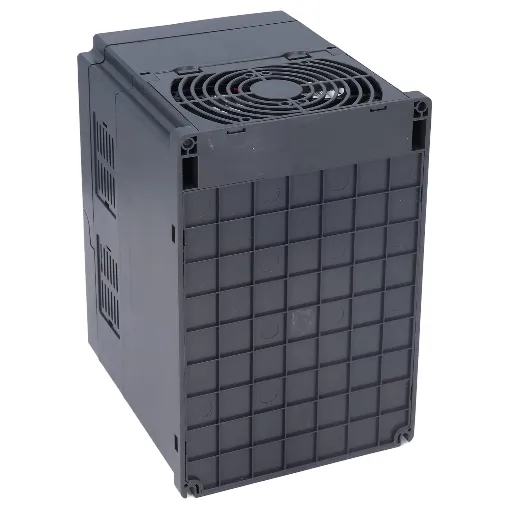
It is very important to manage the heat well for the Variable Frequency Drives (VFDs) to perform at their best and last a long time. VFDs, no matter whether they are used in industrial machinery, HVAC systems or other applications, produce a lot of heat while they are working. If the heat generated is not allowed to be lost or if proper cooling is not provided, the excess heat can cause wrong functioning, lower efficiency, and even the death of the equipment, which, in turn, will cost a lot. This article uncovers the thermal management of VFDs, starting with the generation of heat and ending with the precise cooling solutions. You will be equipped with the knowledge and approaches that can be applied to increase the reliability and longevity of your VFD systems.
Variable Frequency Drives (VFDs) are electronic devices that allow for the control of electric motors by modifying the frequency and voltage being fed into the motor which in-turn will control the motor’s speed and torque. They are a very important part of today’s industrial and commercial applications that are mostly about consumption of energy and to a lesser degree about control of different processes. When the motor runs at different speeds that match the actual load, the energy savings will be great as opposed to running the motor at a constant speed.
The working principle of VFDs is to change the fixed-frequency AC power supply into a variable frequency supply with rectifiers, DC bus components, and inverters. That way, they not only reduce energy use but also support the motor in its specified operational range; industries such as HVAC, manufacturing, water treatment, etc have widely accepted them. For example, in HVAC systems, VFDs are utilized for controlling fan and pump operations, which leads to the benefits of reduced energy consumption without any performance issues.
VFDs have a major impact on decreasing the total energy consumption of the plant by adjusting motor speed to match the needs. The U. S. Department of Energy estimates that the use of VFDs might lead to a reduction of energy consumption in HVACs and pumps by up to 50%, which will result in significant cost savings. For example, in pump systems, reduction in motor speed by 20% leads to the consumption of the same amount of energy as with the case of 50% reduction in speed.
VFDs, by reducing mechanical stress on motors during startups and running periods, can slowly eat away at the life of the motor and other connected equipment. This is because they help to avoid starting currents that are high which is a major contributor of wear and tear, thus maintenance costs along with downtime are reduced.
Speed and torque of the motors can be controlled very accurately with the help of VFDs, which makes it possible to use them in different applications. This increased control is translated to higher output and better quality. For example, industries that use conveyors or production lines are going to get the most out of the smooth acceleration and deceleration that VFDs can provide, thereby minimizing product waste and raising the production overall efficiency.
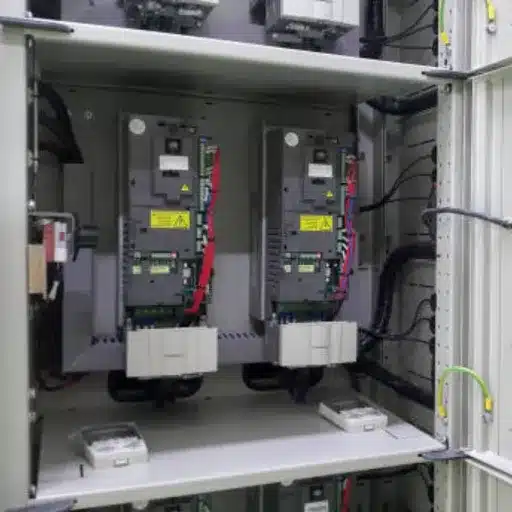
Heat production in Variable Frequency Drives (VFDs) is an essential factor that can either improve or deteriorate the performance, reliability, and lifespan of the device. During the process of controlling the motor speed, the VFD loses a certain amount of energy in the form of heat, which is caused by the power loss in the dissipative components like Insulated Gate Bipolar Transistors (IGBTs), diodes, and capacitors.
Key Insight: The IGBT’s switching is one of the important sources of heat generation. The VFDs are constantly turning on and off at a fast rate to control the speed of the motor; hence, the losses due to electrical transitions are massively. Research indicates that up to 2-4% of the total drive power may be dissipated as heat, depending on the VFD’s efficiency and the load it is operating under. For example, a 100 kW drive with a 97% efficiency will produce about 3 kW of heat during the full load operation. These losses become more pronounced as switching frequencies are increased and at lower voltage operation.
Temperature is a determining factor of efficiency and performance in Variable Frequency Drives (VFDs) machines. The generation of excessive heat not only leads to the shortening of the lifespan of the VFD but also to its great inefficiency. Studies have shown that for every 10°C increase above the recommended operating temperature, the energy loss in a VFD may double or triple. The main reason for this is the fact that the power electronic components have a higher resistance and consequently, they dissipate more heat leading to further deterioration of the efficiency.
Moreover, the internal cooling fans and heatsinks may not be able to remove the extra heat quickly enough, and thus the system is forced to work harder and consume more energy. According to the studies, the best performance of VFDs is usually achieved at a temperature range of 10°C to 40°C. If the temperature exceeds this range, the thermal derating takes place, where the power of the drive is reduced in order to protect the components from overheating, thus causing a reduction in productivity.
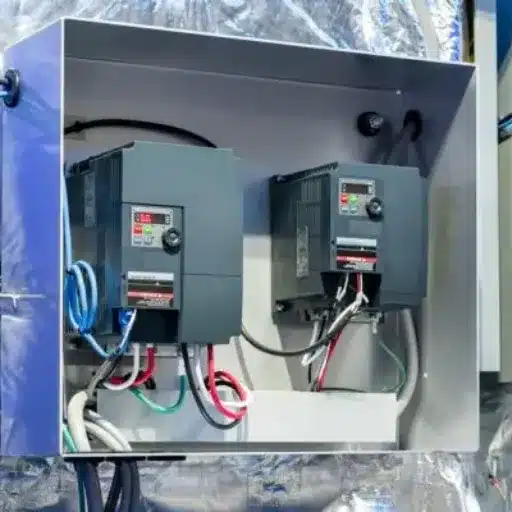
The cooling by air is still the method that stands out in terms of heat management for VFDs, at least in terms of its common use and efficiency. The method generally includes parameters such as the fans, heat sinks, and controlled airflow for the heat dissipation of the components of the VFD. The industry statistics say that a well-designed air cooling system can increase the operational life of a VFD by as much as 30% and at the same time avoid maintenance-related downtimes.
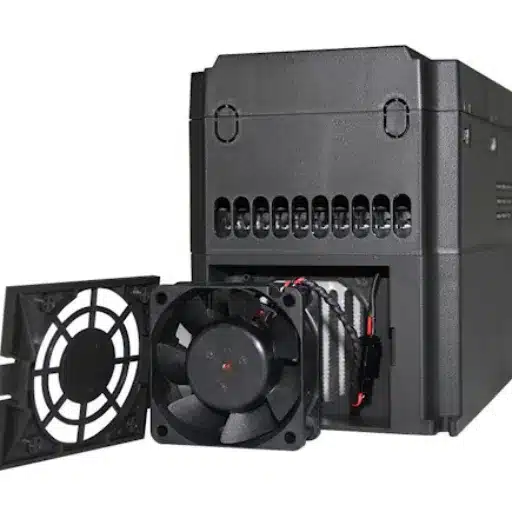
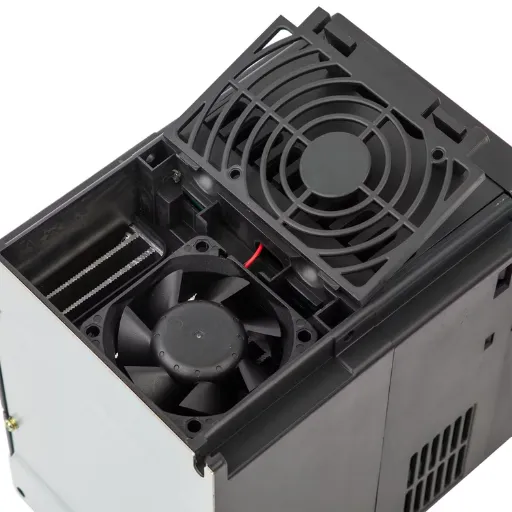
Usually, it is a matter of mounting cooling fans either inside or outside the VFD, depending on the design of the VFD. The operation of these fans is synchronized with the heat sinks composed of highly conductive materials, for example, aluminum or copper, which take away heat from the critical parts of the VFD. A research paper published by an influential electronics manufacturer revealed that by using a high-efficiency fan, the operating temperature could be cut down by 15% in total, thus the performance of the VFD and the energy efficiency would be enhanced.
Hybrid cooling systems integrate air-cooling and liquid-cooling technologies to produce a cooling system that is both energy-efficient and high-performance. The hybrid systems are very practical for cooling purposes in high-demand situations like data centers and heavy industrial plants, where the requirements for cooling need to be met in a manner that the operation is not only cost-effective but also sustainable.
Performance Data: The hybrid cooling system operates by first air cooling for the normal activities and then liquid cooling for the high-heat generating components under peak load. The latest hybrid cooling systems are said to consume up to 60% less energy than their traditional air-cooling counterparts, which makes the former a preferred option for businesses looking to be eco-friendly.
The modern cooling systems sector has undergone a lot of, and one of the main factors driving this transformation is the advent of advanced technologies intended to yield better energy efficiency, sustainability, and performance. Liquid immersion cooling is one such technology that has obtained considerable attention and is being widely adopted in data centers. A recent report by Research and Markets indicated that the liquid immersion cooling market would experience a staggering 22.5% compound annual growth rate (CAGR) from 2022 to 2028. With this innovation, servers are submerged in a thermally conductive liquid which not only leads to cutting energy but also to great heat diffusion.
In addition, the industry is seeing another revolution through the technology of AI-assisted cooling systems. By utilizing the power of forecasting together with algorithms of machine learning, the systems manage the cooling process by predicting the times of highest demand, regulating the temperature, and thereby conserving energy to a minimum. The reports coming from the companies who have already implemented AI-supported cooling systems indicate that they have been able to save as much as 30% energy when compared with the classic systems. Surprisingly, this change is felt most in the industrial fields where the chilling needs may vary from one moment to the next.
The enclosure cooling market is changing rapidly thanks to the introduction of new technologies, the rise of industrial automation, and the push for ever more energy-efficient systems. Enclosure cooling is undergoing major transformations largely influenced by the emergence of new technologies along with the expansion of industrial automation and the growing concern for energy efficiency. A market analysis revealed that the global market for enclosure cooling is likely to be growing at a CAGR of about 6% during the years 2023 to 2028 period. The demand for precise temperature control that spans the entire industrial and IT sectors is the main reason for this growth.
One of the most important trends is the incorporation of IoT (which stands for “Internet of Things”) technology into cooling devices. Solutions for “smart” enclosure cooling harness the power of sensors and data collection to manage in real-time both temperature and electricity use, thus both cutting costs and increasing reliability of performance. As an illustration, IoT-driven predictive maintenance removes the chance of system downtimes by confronting problems before they get too big.
The industrial and commercial operations have made it their highest priority to improve energy efficiency in enclosure cooling systems. A recent study has revealed that modern cooling solutions such as exhaust fans with a very high efficiency and options with varying speed can lower the consumption of energy by about 30%-50% in comparison to the old systems. The advances in motor technologies and intelligent control systems which allow for delicate changes and the reduction of superfluous energy consumption are particularly responsible for this trend.
ROI Highlight: The other big improvement is the using of energy recovery systems. Companies can get not just energy cost savings but also reduced CO2 emissions by reusing heat and using it in other processes. The Department of Energy report states that the industrial plants applying cutting-edge energy recovery techniques usually have their investments paid back in less than three years, which is thus a financially attractive scenario.
The establishment of power-saving enclosure cooling systems can lead to great savings in operational costs for the companies. Recent research has indicated that the use of the latest cooling methods can cause a reduction in electricity consumption of up to 40%, which will then be a very considerable amount of money in savings. For instance, variable speed drives in cooling solutions have shown savings of about $3,000 per unit annually, depending on the entire operation and the scale of the system.
On top of that, the cooling systems connected to the Internet of Things (IoT) are very vital in cutting down on the maintenance costs. One of the main reasons for this is that real-time monitoring and predictive analytics allow these systems to spot potential problems before they grow into costly repairs or an extended period of downtime. According to a McKinsey report, predictive maintenance techniques can reduce the costs of equipment maintenance by 10%-20% and at the same time increase the equipment’s uptime.
DataM Intelligence
This source provides a comprehensive analysis of the global Variable Frequency Drive (VFD) market, including its applications in cooling systems, energy efficiency benefits, and market dynamics. It highlights the growing demand for VFDs in industrial and HVAC applications.
Source: DataM Intelligence
IMARC Group
IMARC’s report offers insights into the VFD market trends, including its role in energy efficiency and industrial automation. It discusses the adoption of VFDs in HVAC systems and their impact on reducing energy consumption and operational costs.
Source: IMARC Group
AKCP
This article explains how VFDs are used in cooling systems to optimize motor speed and energy usage. It provides practical insights into the benefits of VFDs for cooling efficiency and their role in reducing energy costs.
Source: AKCP
The basic problem with VFD cooling is that variable frequency devices are not only consuming electrical energy but also generating heat losses and the outer casing will be thus internally heated. The heat loss needs to be continuously removed from the VFD in order to keep the temperature within the limits of safe operation. Moreover, cooling capacity is essential in deciding between the two methods: passive or active ones for heat evacuation.
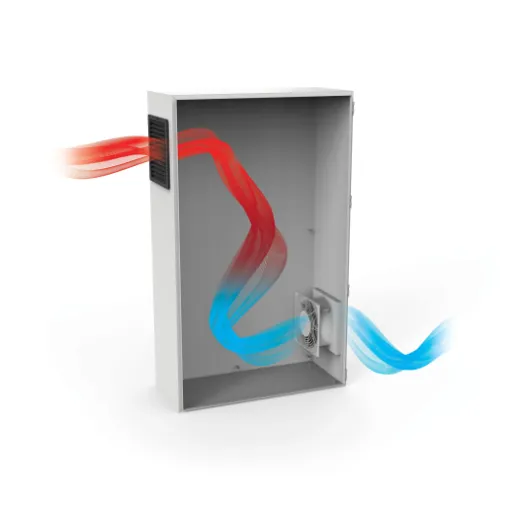
To start with, passive cooling relies on the use of natural convection and enclosure design to silently dissipate heat without the use of moving parts. On the other hand, passive air cooling with fans significantly improves the cooling performance through forced convection—small fans that increase the airflow across heat sinks and enclosures—and thus obtain heat dissipation.
Active cooling and passive cooling are the two main approaches. Active cooling with air conditioning becomes a must when the ambient temperature, the size of the enclosure and the heat load are more than passive or fan-assisted can handle. Air conditioning and water cooling are chosen when the exact temperature control and the higher cooling capacity needed to safeguard delicate VFD electronics if the heat generation is high or surrounding conditions are harsh.
Water cooling and fans and heat exchangers have higher thermal removal rates than the solutions using only air. Water cooling takes heat away to a liquid loop that is then cooled via a heat exchanger; in combination with fans, heat exchangers have improved transfer of the heat from the liquid to air. These methods demand effective and reliable cooling solutions, especially in the case of high-power VFDs where the benefits include smaller enclosures and longer electronics life due to the cooling effect.