Ready to Get Your VFD Solution?
Whether you need a single drive or a complete system, we have the VFD products and engineering support to ensure your project's success.

Variable Frequency Drives (VFDs) are now considered as the main element in the modern industrial and commercial applications, providing accurate motor control and energy efficiency. On the other hand, their growing usage brings forth problems concerning Electromagnetic Compatibility (EMC) and Electromagnetic Interference (EMI) as well. These problems can if not managed properly at all, affect the performance of the system, disrupt the nearby equipment, and thus result in expensive downtime. The current post handles the most important points of shielding and cable management as the solutions to EMC and EMI in VFDs. It does not matter if you are an engineer looking for practical solutions or a facility manager who wants to make the system more reliable, the article will still be full of helpful insights and best practices for you.
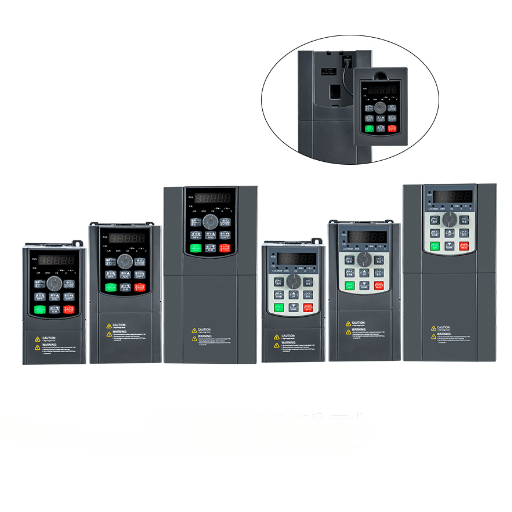
A Variable Frequency Drive (VFD), which is also known as an adjustable-frequency drive or inverter, is an electronic device that can control an electric motor’s speed and torque by changing the input frequency and voltage of the motor. The use of VFDs in industrial and commercial processes is extensive as they can help to save energy, advance processes, and add years to the machines’ operating life.
The main goal of a VFD is to make sure that electric motors always work at the most efficient speed for their specific task, instead of running continuously at full speed. For example, in a warm-up or fan system, where rarely full-speed operation is needed, a VFD lets a motor run at slower speeds and gives at the same time significant energy saving. The U. S. Department of Energy has presented recent figures that demarcate that in some instances, up to 30-50% of the energy that would otherwise be consumed by motor-driven systems can be cut down by taking advantage of VFDs.
VFDs are indispensable in manufacturing for applications such as conveyors, robotics, and machining. Their contribution through electric motor speed control comes in the form of accurate operation and energy savings to a great extent. It is reported that compared to conventional methods of motor control, VFDs can save as much as 30% of the energy, making them one of the most important devices in energy-efficient modern locations such as factories.
VFDs are widely used in heating, ventilation, air conditioning (HVAC) systems to control airflow and temperature in large commercial and industrial spaces. The applying of VFDs in HVAC systems has proven to effectively decrease energy consumption by 20% to 50% thus bringing down both the operational costs and the carbon footprint significantly. Plus, the use of VFDs contributes to the personalized comfort of the environment and ensures the longevity of the HVAC components.
VFDs find application in the water and wastewater sector for pumps, fans, and blowers. They help the operators by facilitating the process of adjusting the water flow rates and optimizing energy consumption as per the demand. For instance, through the application of VFDs in water treatment a saving of 25-40% in energy bills has been realized which becomes a big plus for city and utility expenses.
Electromagnetic Interference (EMI), which is sometimes referred to as radio-frequency interference (RFI), denotes the disturbance to electronic devices and systems that is due to the presence of electromagnetic fields, either from natural or human-made sources. The existence of these fields can significantly impair the performance of electronic equipment or render it completely inoperative. EMI is a common issue that is faced in industrial environments, primarily where there is a close operation of sensitive devices and machines under harsh conditions.
Various factors including electrical motors, power lines, wireless communication systems, and variable frequency drives (VFDs) are among the major sources of EMI. A good example will be the VFDs which widely recognized for their generation of harmonics and high-frequency switching noise that can affect the performance of the nearby electronics. The resulting interference could then affect the transmission of data, readings from sensors, or other functions of the system.
Electromagnetic interference (EMI) of the radiated type happens when the electromagnetic waves are transmitted through the air and cause disturbances in other systems. Some of the main factors that contribute to EMI in radiated form are the devices that communicate wirelessly and radio transmitters and industrial machines such as motors and welding machines. For example, a study has shown that the high-frequency radiations are very much beyond 30 MHz can go a long way and impact the electronics that are sensitive to such conditions.
In contrast to the radiated EMI, conducted EMI passes through physical mediums such as power and signal cables. This EMI is caused by switching power supplies, variable frequency drives, and energy-saving LED lighting. Data coming from field surveys indicates that the phenomenon of conducted EMI is common in modern industrial environments as a result of increased use of high-speed switching devices.
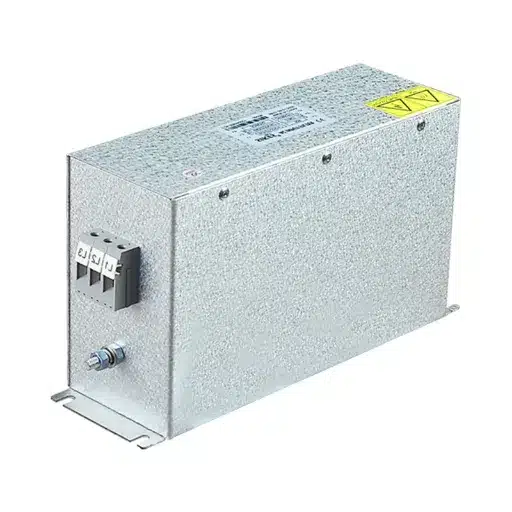
Variable Frequency Drives (VFDs) are a fancy way of saying electric motor speed controllers. They have many uses in the industry and commercial fields and they are very efficient and precise. But in most cases, their use leads to the problem of electromagnetic interference (EMI) which can cause other machines and systems nearby to stop working or behave erratically. The rapid-switching operation of the power semiconductors that are used in VFDs is the main source of the EMI. The most commonly used power semiconductors are insulated-gate bipolar transistors (IGBTs), which switch on and off at very high frequencies, usually between 2 kHz and 20 kHz, producing notable high-frequency noise.
The noise basically goes out through two main routes—one is so-called conducted emissions that go through the power supply cables and can create disturbances in other connected equipment while the other is the radiated emissions that can interfere with wireless communication systems and even affect sensitive electronic devices. Studies have found that in places where VFDs are lightning the equipment most probably will experience either signal distortion, communication failures, or hardware damage unless proper EMI mitigation measures are taken.
The issue of EMI from VFDs is taking on the proportion of a serious concern in various sectors. HVAC systems would be probably the most affected since the pumps and motors that control air circulation and the whole system efficiency are usually VFD-driven. Inadequately shielded or grounded drives have caused EMI to invade building automation systems or communication networks and disrupt their operations in many cases, particularly in installations where VFDs and sensitive equipment are in close proximity. An example of the above is when uncontrolled EMI would be in fire alarm circuits, leading to either false alarms or poor performance being the case.
Real-World Case Study: Among other things, a high-rise office building was one such case where VFD EMI got the control panel of the fire protection system mixed up. While probing into the matter, radiated emissions were found to be through the roof due to poor cable shielding practices, thereby emphasizing the need for adherence to proper installation guidelines. The problem caused significant troubleshooting delays and financial loss due to the constant malfunction of critical safety systems.
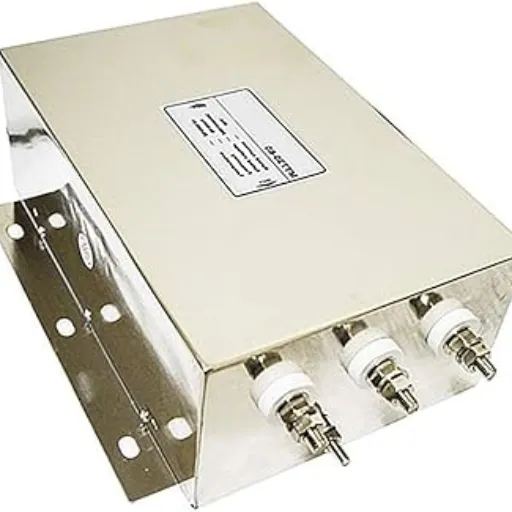
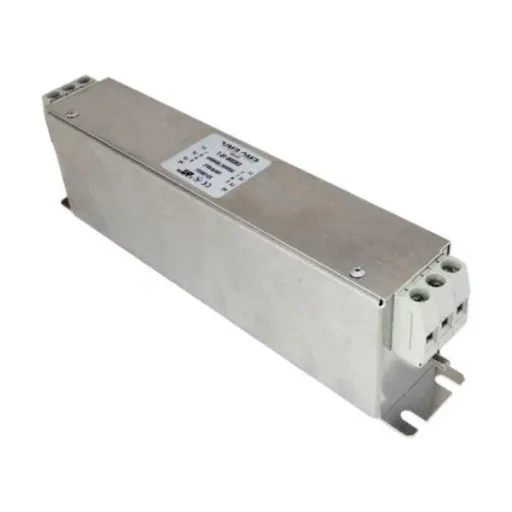
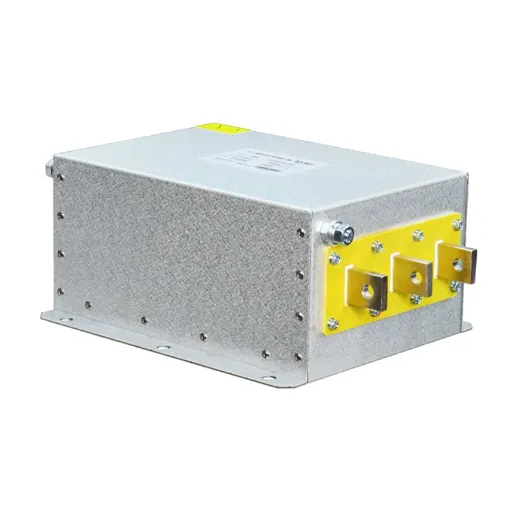
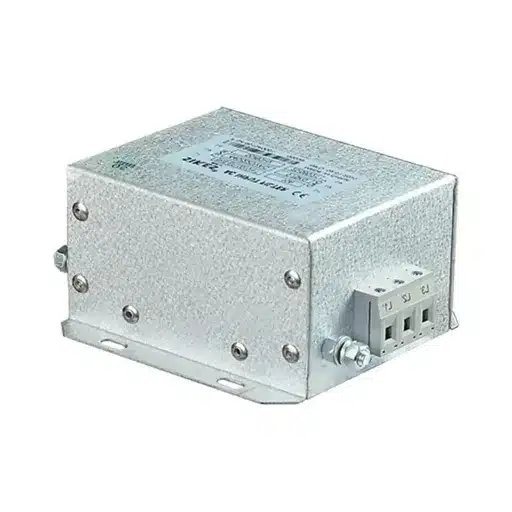
Behavioural adaptation of VFD systems is not complete without the incorporation of EMI filters and VFD cables as they hinder the introduction of electromagnetic interference(EMI) to the VFD systems. EMI filters are purpose-built to trap high-frequency noise from VFDs which is not made part of the electromagnetic compatibility (EMC) standards of the system. Their job is to block the frequencies that are disruptive and generally fall between 150 kHz to 30 MHz, by being installed in-between the VFD and the power supply. The latest guidelines recommend that the filter be placed as near to the VFD as possible for maximizing its efficacy in noise reduction that would otherwise affect the neighbouring equipment.
By contrast, appropriately designed VFD cables further diminish EMI problems by cutting down on noise that escapes from motor cables. Such cables generally possess strong shielding, braiding or foil type, which makes it impossible for the disturbance to create the environment of radiating. It has been reported that using shielded and properly grounded cables can result in a reduction of up to 80% in radiated emissions when compared to unshielded cables. Furthermore, it is suggested that minimizing cable lengths and avoiding looping would help with inductive coupling and noise distribution and thus should be practiced.
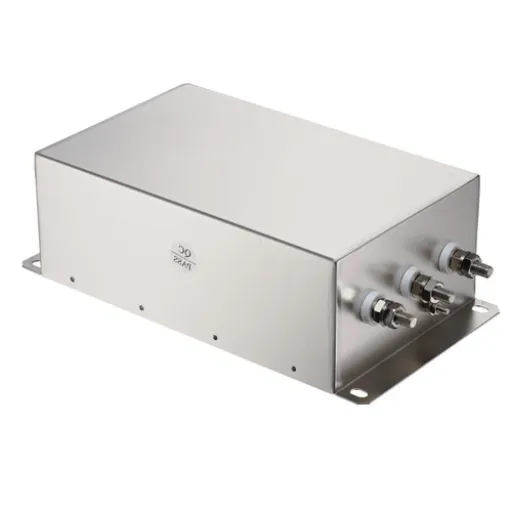
A very important method for the prevention of electromagnetic interference is the use of shielded cables in both power and control wiring. Ground the shields correctly at the two ends, thus, allowing the EMI to dissipate through the continuous path. Effective shielding is said to have led to a 50% reduction in the radiated emissions and by that, the compliance with certain EMC standards has been improved such as EN 55011 and EN 55032. Furthermore, the low impedance of the ground helps to not let the common-mode currents flow, these are one of the major sources of interference.
The first issue to be solved with cable separation is cross-talk and power cables interfere with sensitive signal cables. A basic rule of thumb says that it is good practice to keep power and control cables at least 8 inches (20 cm) apart and, if ever necessary, to cross them at 90-degree angles. Research indicates that wiring with proper spacing reduces electromagnetic coupling and the consequent data transmission errors by 30-40%.
EMC filters, including line filters and output chokes, are among the most essential VFD noise suppression methods as they are able to eliminate high-frequency noise that comes from VFDs. Smoke from these filters may be less than 1 m, in terms of ICE 61800-3 industrial equipment limits, which is significant mitigation. For very long cable run applications, line reactors can be installed to eliminate harmonics and improve voltage control, so that both the VFD and the motors it connects are still safe.
Advancements in the handling of Electromagnetic Interference (EMI) for Variable Frequency Drives (VFDs) are mainly technological innovations plus the growing demands of the industry. The most noticeable trend is the application of artificial intelligence (AI) and machine learning (ML) algorithms for the purpose of predicting EMI monitoring. It is by the use of an AI system that the industry can get to analyze real-time data and even predict and get rid of the EMI problems before they actually occur thus leading to fewer disruptions and higher operational efficiency.
By the same token, the usage of sophisticated shielding materials and schemes is another development that is hard to overlook. VFD systems placed in very unfriendly industrial environments could be given very effective protection by the high-performance materials such as carbon-based composites and nanomaterial coatings that are presently being commonly used as the shield against EMI.
Intel Market Research
Kapton Parts Blog
MHW Filters
VFD EMI stands for variable-frequency drive electromagnetic interference (or electrical noise) that is caused by pulse-width modulation (PWM) switching occurring in inverters and ac drives. VFD EMI can be both conducted and radiated through a broad spectrum of radio frequency (RF) and frequency range, impacting electrical devices, control signals, radio frequency interference (RFI), and precise measurement instruments utilized in industrial automation.
A well-designed grounding system minimizes the flow of ground currents and offers a low-impedance return path for the common-mode currents arising out of the insulated gate bipolar transistor (IGBT) switching. Grounding executed excellently reduces the EMI noise propagation, brings down the reflected wave on motor power cables for PWM, and assists in regulating the capacitive coupling between the inverter’s output and the chassis.
To minimize the electromagnetic interference from a VFD, it is advisable to practice installation techniques such as making the drive-motor cable shorter, using motor power cables for PWM AC with controlled capacitance, secluding the routing of power and control signals, fitting the input filter or output filters, and securing tight grounding and bonding. Use screened or shielded cables, proper termination of shields, and keep phase conductors closely positioned to each other to reduce the loop area.
The testing of power cables in PWM AC drives involves evaluating eight different cable constructions to measure their capacitance, insulation, and shielding proficiency. PWM AC drive cables that feature low capacitance and good shielding lead to a reduction in capacitive coupling and common-mode currents which in turn produce less EMI noise.
The VFD ground currents originate from the common-mode voltage between the inverter and ground, which is returned via the grounding system as well as the cable shields. These currents can produce RF radiation over a frequency range leading to radio frequency interference to nearby equipment. One way to mitigate the issue is to ground the shields at one or both ends according to the manufacturer’s instructions, use an earth reference plane, and incorporate common-mode chokes or input filter components alongside the AC line and control networks to limit RF conduction.