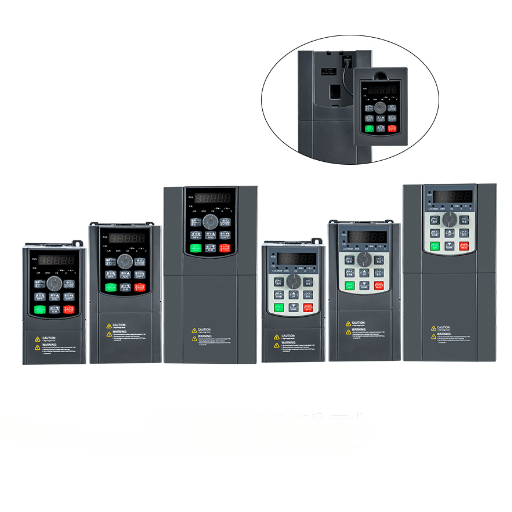
Ready to Get Your VFD Solution?
Whether you need a single drive or a complete system, we have the VFD products and engineering support to ensure your project's success.

Variable Frequency Drives have changed the way business is done in heavy industries like mining, oil, and gas, where the bottom line for operations is efficiency, precision, and reliability. These rugged machines are a motor’s dream come true by enhancing performance, saving up on energy, and providing better control over the most critical of processes, thus making them a necessity in the harshest of industrial climates. This article will discuss the use of VFDs in mining and oil & gas operations extensively, demonstrating how these systems are used in each of the paths like energy efficiency, equipment life, and yes, the best of all, operational safety. A deeper understanding of the efficiency of the technologies in these industries will guide you whether your goal is to simplify operations, to reduce costs, or even to be more energy-efficient. See how Variable Frequency Drives are progressing and what are their roles in industries that are the pulsating centers of the world wherever the reader lives.
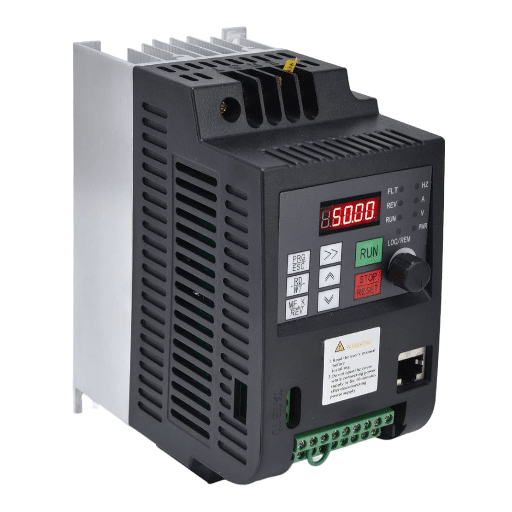
A Variable Frequency Drive (VFD) is a type of electronic device that changes the speed and torque of an electric motor by modifying the frequency and voltage of its power supply. VFDs are capable of managing all the drive components (DC to AC inverter and AC motor) and are mainly used for two purposes: to increase the energy efficiency and decrease mechanical stress on the conventional controllers. The mechanical stress from the conventional controller is one of the factors affecting the lifespan of the equipment. The most frequent applications of VFDs are conveyors, pumps, compressors, and ventilation systems in industries when shifting load requirements call for adaptive motor speed.
The Variable Frequency Drive (VFD) is a new type of motor controller that manages the speed and torque of electric motors by changing the frequency and voltage of the power supply. By transforming fixed-frequency input electricity to variable-frequency output, VFDs allow for very clear and precise control of motor performance that is adapted for a particular system’s operational needs. Present-day VFDs come with the very latest in technologies such as the use of super-fast digital signal processors, sophisticated predictive maintenance algorithms, and the connection of the VFD control with the Internet of Things (IoT) for real-time tracking and diagnosis. These capabilities are not just for better energy efficiency but also for more reliable and flexible operation, the VFDs have really become indispensable factors of modern automation and industrial systems. What is more, the VFDs can also cut down on the harmonic distortion and improve the power factor which could even be taken an extra step further to support these devices as truly sustainable energy solutions.
The operation of Variable Frequency Drives (VFDs) consists of the exact management of the frequency and voltage that go to an electric motor, which leads to the option to change the motor’s speed and torque output. The very heart of a VFD is the three-phase input single-phase output converter, which is a process that is commonly referred to as power conversion or rectification. The incoming alternating current (AC) power is first changed to direct current (DC) with the help of a rectifier during the power conversion. The DC power is then injected into a unit called the DC link which is a system of capacitors or inductors designed to even out voltage peaks and troughs.
The ultimate phase in the operation is characterized by the use of an inverter which changes the stabilized DC power to AC power with adjustable frequency and voltage. Insulated-gate bipolar transistors or similar electronic switching devices that swiftly switch on and off to synthesize a waveform at the desired frequency are the devices that make this possible. The VFD varies the frequency of the output AC power so that motor speed can be dynamically controlled with high precision.
In addition, the modern VFDs are programmed with an array of advanced software and loaded with Pulse Width Modulation (PWM) circuits and other circuit techniques for the purposes of higher efficiency and lower energy losses. More particularly, these new techniques, among others, give greater motor performance and other benefits which include stress reduction on mechanical parts, long life of the equipment, and operating costs. Incorporation of digital control systems and feedback sensor technology will result in further improvements in performance by means of continuous monitoring of motor parameters and adjusting outputs according to requirements in real-time for the most appropriate operating conditions.
Variable Frequency Drives (VFDs) are at the heart of automation because they possess the ability to control motor speed and torque very precisely, thus significantly enhancing operational efficiency and reducing energy use in various applications. The research shows that the use of VFDs could decrease power consumption in systems like HVAC, pumps, and conveyors by as much as 50%, making them a key element of environmentally friendly industrial practices. Another advantage of a VFD is that it can boost the plant’s capability to be more flexible and so to keep up with the utilization and the demand for products at a high level or even through a sudden change in the market. Industrial Internet of Things and smart systems which are integrated with VFDs also play a significant role since VFDs provide real-time control and monitoring capabilities that further improve predictive maintenance, avoid sudden stoppages and general system dependability. The versatility and energy efficiency that VFDs offer play a significant part in automated operations today, making them a top choice for industries looking to become more environmentally friendly and, at the same time, benefiting from energy savings.

Variable Frequency Drives (VFDs) are highly important components in the oil and gas industry since they not only optimize equipment performance but also ensure energy efficiency. They are regularly employed for the control of pump speeds, compressors, and drilling equipment that has a high need for power and, as a result, energy-efficient operations are called for. For example, VFDs are what make the pump speed fluctuate and be precisely aligned with the flow requirement. Consequently, this lowers energy wastage and equipment wearing down. Additionally, they are the ones that are also responsible for the proper starting of the motor, which is very much unlike the sudden mechanical stress that the starting of the motor itself would have during one of the abrupt changes of the system.
One of the most important components that improve the effectiveness and adaptability of pumps and compressors in different operational conditions is Variable Frequency Drives (VFDs). They enable the systems to meet changing requirements by regulating motor speed, hence, fine-tuning the complete process. Pumps, being one of the most common process equipments, have a lot to gain, namely the reduction of cavitation hazard and energy waste when run for less than full load. Compressors, on the other hand, VFD is the key technology that permits the accurate control of the system pressures, which in turn not only reduces energy consumption but also decreases the component wear and tear by preventing the damage that comes with too high or too low pressure.
Recent breakthroughs in VFD technology usually make use of sophisticated feedback algorithms and real-time data processing abilities, hence facilitating precise control and diagnostics by the operator. A good example would be the addition of predictive maintenance functionalities which would result in early detection of mechanical problems and ultimately minimize the chances of unplanned stoppage of pumps and compressors. In some instances, energy savings can even go all the way up to 50%, which translates into a considerable economic gain and the application of VFDs as a rule is not only a technical enhancement but also a significant boost to the financial status.
The incorporation of Variable Frequency Drives (VFDs) presents an amazing chance for energy saving through the smart move of adjusting the motor speed just to the point that fulfills the process needs. A really good example is given by centrifugal pump and fan systems which are subject to the affinity laws. The affinity laws show that a mere reduction of 20 % in the rotational speed leads to less energy consumption by almost half. This is so because of the cubic relationship between speed and demand for power. Consequently, VFDs are actually most effective in situations with variable load profiles, where the flexibility of operation, by itself, results in huge energy optimization.
Various and specific examples have shown that there are real savings in industries where efficiency is one of the top goals. For one, motors retrofitted in HVAC systems with Variable Frequency Drives (VFDs) have reported a regular reduction in energy consumption of 30-45%, according to the maintenance and control issues that these systems are subject to. And what is more, the force of the VFDs in stopping energy-losing throttling devices, such as control valves or dampers, is the main reason for their higher efficiency that leads to the savings. These savings from different areas not only affect costs but also enable the facilities to comply with the strict environmental rules, through the dual impact of money and nature, highlighting the truth about two sides of the same coin.

VFDs or Variable Frequency Drives are a critical factor in making mining operations better through their double benefit of efficiency and reliability. They are usually installed in conveyors, crushers, ventilators, and pumps. With the help of VFDs, the machine can be run in the best efficiency by giving the control of speed very precisely, thus, less energy is wasted and there is less wear on the mechanical parts. Moreover, VFDs have the ability to provide softer starts and reduce the impact of a sudden mechanical jolt; hence, the equipment life is extended. The essential role of VFDs is even more evident due to their capability of changing the motor speed according to the changing operational demands which in turn decreases energy use and enhances production efficiency in a broad sense in the mining sector.
Variable frequency drives (VFDs) are central to the optimization of contemporary conveyor systems through the administration of precise control over the speed, torque, and acceleration of the motor. Such a good level of control lets the conveyor systems adjust their operational parameters according to the changing load conditions, due to which material flows are constant and energy use is very low. It has been found through studies that the use of VFDs can lead to a decrease in the energy consumption of conveyor systems of up to 50%, hence the costs of operation will be drastically lower besides the engagement to sustainability efforts.
Moreover, VFDs come with sophisticated monitoring and diagnostic features, which make it easier to develop the maintenance strategies based on the condition of the machine. Operators are able to pick up the faults, which could have been motor overheating or bearing wear, before they turn critical, and as a consequence, they can raise the reliability and uptime level of the whole system. Integration of VFDs with intelligence-based control algorithms can lead to the synchronization of multiple conveyor lines and thus once again ensure the smooth transfer of materials and the reduction of bottlenecks in the most demanding operations.
On the whole, VFDs are the ultimate solution that brings highly efficient, very low maintenance, and greatly adaptable conveyor systems to the mining, manufacturing, and transport industries. The more companies that start to use this kind of technology, the more it is the case that the still-increasing demand for energy-saving and high-performance conveyor operations will be met through the use of these advanced technologies.
The transition to Variable Frequency Drives (VFDs) is linked to an enormous factory, energy, and quality improvement in the crusher systems. In mining, quarrying, and recycling industries, crushers are the machines on which the material to be milled is dumped. Instances where the material feeding rate is irregular, the device is overloaded or wearing out fast are very common. It is the VFDs that are the antidote in this case, as they help to adjust the motor speed and torque accurately and as a result, allow to slow down the machine slowly rather than in one step, thus reducing the mechanical stress and damage on critical components to the minimum.
The most emphasized point is the crushing process which will be more optimized than ever before. By tuning the motor speed of the crusher at the very moment according to the load and the material characteristics, VFDs prevent the machine from getting overloaded and at the same time ensuring that the output particles are of a consistent size. Productivity increases and downtime decreases with this constant modification to the process. In addition, the use of VFDs could cut down up to 30% of energy costs on some cases by not using too much electricity when the machine is on light load.
Modern VFDs have state-of-the-art monitoring and diagnostic capabilities, which increase the security of the whole system even more. Predictive maintenance is possible thanks to such functions as vibration analysis, thermal monitoring, and fault detection, downtime is cut down, and the life of the equipment is prolonged. Very importantly, businesses dealing with VFD-controlled crushers have high numbers to back up the lower maintenance and better operation claims. These recent developments have brought to the fore the critical function of VFDs in the outstanding performance of crusher systems.
Variable Frequency Drives (VFDs) are now an essential part of the mining industry, as they enable better control of electric motor operations in many applications, which leads to increased energy efficiency and ultimately, cost reduction. When we use VFDs to adjust speed and torque in a precise manner, the result is higher energy efficiency which is very noticeable especially in processes like conveyors, crushers, and pumps. For example, driving ventilation fans with VFDs has been proven to be able to reduce energy consumption by up to 30% through the optimization of the airflow according to the demand rather than at fixed speeds.
In addition, the flexibility of mining equipment is increased by VFDs. To ensure that the equipment lasts longer, the VFDs by making the motor start guarantees start-ups that are as good as the running of the motor at full speed. In addition, they overlooking the mechanical stress that is a result of the high starting current by a direct switch on of the equipment. Hence, the benefit of wear ad tear protection is very important for costly equipment. In addition, the ability of the modern VFD system to directly access the motor performance in real-time leads to more accurate motor operation needed to start predictive maintenance. As a result, it not only saves the expenses resulting from “nonfixable” time off but also, in a small way, lessens the total cost of ownership (TCO) for the mining company.

Using variable frequency drive (VFD) systems greatly reduces the energy cost by allowing the motor to run at optimal speed and torque. The energy consumption accordingly will be cut down to half, which means huge cost savings and green practice to a better environment.
VFD systems slowly start and stop the motor to keep the mechanical stress at its minimum during the operation. This means the motor remains in good condition and hence the equipment lasts longer and is more reliable.
VFD systems, by their accurate control of the motor, provide the way to operate more flexibly and efficiently under any load demand. Such flexibility is of great importance in industries where the performance requirement is very dynamic, like mining, manufacturing, and HVAC systems.
The integrated real-time monitoring features of VFDs facilitate predictive maintenance. Early detection of potential faults means that interventions can be made more timely thus, reducing unplanned downtime and lowering maintenance costs.
VFDs are core to more energy-efficient systems and at the same time, lower the operational costs for a hospital’s variety of tasks. The precise control of the motor speeds and the torque made by VFDs makes the drastic reduction of energy waste, especially in the systems which have an inconsistent demand. The pumps and fans found in the industrial setting, for instance, would always run at a lower speed than the theoretical full one and therefore consume excessive energy if no speed control were in place. The VFDs, through the fine-tuned output and the system requirements matching, can lower the consumption of power by even up to 50%, depending on the load profile and the application.
Besides, uniting VFDs with smart energy management systems boosts the monitoring and optimization of performance. With the aid of a constant flow of data analysis, these systems recognize the problems and take accurate measures that will lead to less energy being wasted in the long run. To illustrate the potential, energy prices are cut down by 20-30% for one manufacturing floor of its time from a lighting, heating, and other climate control and building systems that consume more compared to the production machines.
Cost benefits that have a long-term effect in electrical power savings are more than that. Lower power consumption saves energy and also reduces the heat output. The latter is one of the greatest contributors to the degradation of the equipment life-cycle and necessitates the use of more powerful HVAC systems. The combination of VFDs and auto-monitoring will be a very flexible and green solution ensuring the maximum efficiency of the whole system and reducing the implementation costs of facilities dramatically.
VFDs have been at the forefront of the motor-driven machine industry with their superior control of electric current by providing the precise and adaptive regulation of the current and voltage. Through varying the frequency and voltage to motors, VFDs can even deliver the optimal torque under ever-changing operational circumstances. Torque control software has reached a new level of sophistication: extremely precise control and adjustment provide feedback in real-time, and the result is a more fluid system, less wear-and-tear, and lower torque-related failures risk.
Recent improvement in the integration of the sensor and control logic contributes to a more stable performance. Over the past years, new torque control systems have been designed that are capable of monitoring more than just the motor speed. Among the points the system can check are load inertia, motor speed, and power consumption that could be even beyond the machine boundary. The harmonizing prediction adjusted techniques that enhance the efficiency are now enabled by up-to-date, more precise measurements. By industrial applications alone, research would tell that the 20% enhanced overall motor performance was the result of this development. This even contributes to the production throughput at the same time it saves the mechanical components from wear.
The incorporation of Variable Frequency Drives (VFDs) in renewable energy systems is an important step towards sustainability in the long run. The precise control of speed and position is the primary function of VFDs in the processing of equipment operation such as wind turbines and solar tracking systems. The VFDs in this turbine, for instance, make the blades change very quickly and very fine, according to the wind, stop, or even align, and hence reduce the mechanical problems on the turbines and increase the lifespan of the equipment. Also, the solar tracking systems with VFDs do the same by aligning solar panels with the sun’s path which leads to outpowering static systems by up to 30%.
Moreover, VFDs are one of the greatest contributors to saving energy by cutting off the losses that occur when dealing with motors. They are also the main point of control in all motor operations reducing the energy bill and thus carbon emissions. This feature is particularly needed in areas where the grid is fed by wind and solar power as it helps to curb the power oscillations created by the availability of the wind or the sun. The technology is so advanced that it has shown an increase in efficiency in power systems and micro-grids and thus they will be a great source of electricity for the end-users. This use of the VFDs is the latest technology that is pushing the world to the use of clean energy-powered lifestyle.
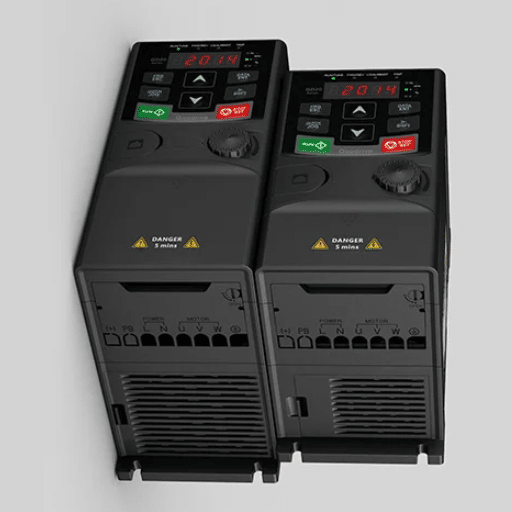
The future of VFD technology lies in improved energy efficiency to a large extent. Use of algorithms grounded in artificial intelligence and machine learning for optimization of motor performance and energy waste minimization are being adopted by novel ideas. Energy waste minimization is the ultimate target of the entire energy conservation system; thus, the VFDs will be responsive in real-time to the energy demands and, eventually, improve system performance over different applications.
Turning to power control, nevertheless, VFDs are increasingly connecting with IoT (Internet of Things) platforms that are able to check the device status, predict maintenance, and control it remotely. Through the Internet of Things, the communication with the device, containing diagnosis and some predictive maintenance, is now possible remotely and the control of this integration becomes inherently more responsive.
Future variable frequency drives will seamlessly work with renewable energy sources like solar inverters and wind turbines, which will be beneficial for the ecosystem and the modern eco-friendly technologies we are dealing with. Also, fundamental changes are taking place with regard to the areas of harmonic distortion control and voltage regulation, which will turn out to be the key signal of the VFDs in systems where power inputs tend to fluctuate all the time. The same may be seen as an element of progress in this very issue of energy sustainability that major countries of the world have declared as the utmost priority.
The deployment of IoT technology in conjunction with predictive maintenance practices has drastically changed the way industrial operations are carried out. The significant machinery endowed with sensors delivers accurate data on the vibration, temperature, and pressure of the machinery, which is then sent to the central systems for further analysis. Thereafter, machine learning models interpret the data and enlighten us about any anomalies. And also, they predict machine failure if it is going to occur in the near future. This scenario decreases the amount of downtime, increases the life of the machinery, and also helps in the optimization of resource used at the same time. Besides, the connectivity provided by the IoT helps in the provision of remote access to maintenance and diagnostics; those that form part of the on-site interventions are the ones that are reduced. This is in line with Industry 4.0 initiatives, and it promotes the manufacturing and energy sectors’ digital transformation by means of increased operational efficiency.
The domain of Variable Frequency Drives (VFDs) is in a continuous process of expansion and development, with many companies working on integrating the most recent technologies to meet the requirements for efficiency, sustainability, and accuracy in industrial applications. A notable breakthrough in this area is the introduction of artificial intelligence (AI) and machine learning (ML) algorithms into VFD systems. These technologies provide for predictive analytics and self-optimization which together with real-time adjustment of the operational parameters lead to an efficient energy consumption reduction as well as improved performance.
Another key technology is the use of Wide-Bandgap (WBG) semiconductor materials, like silicon carbide (SiC) and gallium nitride (GaN), in the VFD systems. These materials show exemplary thermal conductivity, fast switching, and less energy loss as compared to the silicon-based traditional designs hence are quite suited for the high power and high frequency applications.
Moreover, the deployment of edge computing in VFD systems results in the execution of processing tasks in the vicinity of the data source, which, in turn, speeds up the system’s response and lessens the need for cloud-based infrastructures. It is especially useful for operations that require fast decisions.
The industrial IoT (IIoT) technologies are helping to create a scenario in which besides connectivity, VFD systems are becoming intelligent and interconnected. This community allows access to system health and performance data, allows reconfiguration of a system from a distance, and the integration of VFDs into smart grids – all these activities aid in accordance with worldwide energy efficiency directives and goals of decarbonization.
Choosing a Variable Frequency Drive (VFD) is a complicated process as it involves assessing the motor size, load duty, and also whether the application is a variable torque one or a constant torque one; a lot of oil and gas applications like compressor or pump systems have specific VFD-related requirements. The variable frequency drives are essential in the oil and gas industry in making your operations efficient and improving the motor performance while at the same time reducing the energy consumption. A VFD is an option in the oil and gas sector that is an inevitable complement for operations and to achieve performance targets, and also as an energy-saving device.
Yes, mining applications such as conveyors, pumps, and fans prefer to use variable torque VFDs most of the time as they are the most efficient way to control the motor speed under fluctuating loads. With a VFD, the frequency and voltage are both adjusted to change the speed of the motor and to lessen the mechanical stresses by the process which will also increase the lifespan of the machines in the severe industrial conditions. VFDs are intended to operate with high efficiency and they can even out the power consumption and save energy greatly in very large motor groups. The control of variable torque in many industrial processes also has the extra benefit of making the process more stable and thus reducing the peak power demand.
Proper choice of variable frequency drive for the ventilation, heating, and air conditioning system guarantees precise and efficient motor speed control, making it possible to maintain high comfort levels at minimum energy consumption. The use of variable frequency drives in HVAC is very common and it is because of the frequency matching -motor load that the energy consumption is reduced to a great extent, besides, the motor and the mechanical system are shielded hence the motor efficiency is enhanced. A particular VFD for HVAC will be provided with functions that make remote monitoring possible, bring about a reduction of mechanical stress through soft starters and stops, and be compatible with automation systems in buildings.
Sure, the variable frequency drives play an important role in the oil and gas industry and a lot of oil and gas processes are dependent on variable frequency drive systems to regulate pumps, compressors, and drilling machines. What makes the operators and engineers take VFDS in the forefront is the variety of their functions: they are the same motors; they control the speed of the motors and the process; and they adjust the frequency and voltage for precise, smooth, and efficient motor control and operation especially in areas where climatic conditions are extreme such as deserts and the Arctic.