Ready to Get Your VFD Solution?
Whether you need a single drive or a complete system, we have the VFD products and engineering support to ensure your project's success.

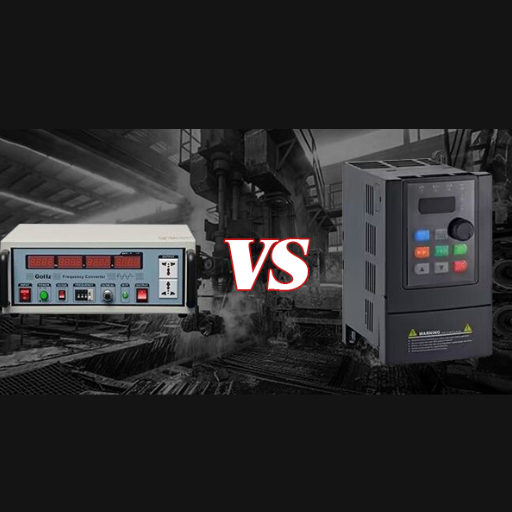
A frequency converter and an inverter are both converters. In IEC 60050-551, the standard that defines the terms, an inverter is the converter fed from direct current and a frequency converter is the converter fed from alternating current. That is the whole distinction at the level of the standard, and it explains why two pages can contradict each other without either being wrong.
Most explanations of frequency converter vs inverter pick one answer and present the other as a mistake. The usual claim is that an inverter is a part inside a frequency converter. That is a fair description of the hardware, and it is not what the standard says. Both statements are true about different objects.
Priya Raghavan found out what the confusion costs. She ran procurement for a food plant that was replacing a 90 kW pump drive, and she received two quotes for what both suppliers called “one 90 kW inverter.”
One quote described an AC-fed drive with a rectifier, a DC link and an output stage. The other described a DC-fed module with no rectifier at all, designed to hang on a shared DC bus that the plant did not have. The second quote was 19 percent cheaper and unusable.
This guide covers what the standard actually defines, why drive literature uses the words differently, and how to settle the question from a nameplate in about a minute.
Key Takeaways
- IEC 60050-551 makes an inverter and a frequency converter siblings, not whole and part. The inverter is the a.c./d.c. member of the family, the frequency converter the a.c. one.
- The claim that “an inverter is a stage inside a frequency converter” is still correct, because the output stage inside a drive really is fed from DC. It describes hardware, not device classes.
- Fuji Electric’s own glossary calls a drive an “inverter device” built from a converter circuit and an inverter circuit, which is the reverse of the common Western mapping.
- The word that decides a purchase is on the nameplate: AC or DC input, fixed or adjustable output, and whether a short-time overload rating is quoted.
- A 5 kW solar inverter and a 5 kW drive share a number and nothing else. Only one of them can start a 5 kW motor.
An inverter is a device that takes DC and produces AC. A frequency converter takes AC in and produces AC out at a different frequency. Both belong to the same family of electronic converters, and the standard places them side by side in it. The practical difference between them is the input side: direct current or alternating current.
That paragraph is the answer for anyone who wants the short version. Most writing on the frequency converter vs inverter question stops earlier, at a definition of one word and a claim about the other. The rest of this article exists because those two do not reconcile, and the mismatch has a real cost in procurement.
Notice what the definitions do not say. Neither one mentions a motor. Neither one says the device must have a control panel, a display or a communications card. The standard classifies by what goes in and what comes out, which is exactly what a nameplate tells you.
IEC 60050 is the International Electrotechnical Vocabulary, the reference the other standards point at when they need a term defined. Part 551 covers power electronics. Five entries do the work here, and they are quoted below from the text of the standard as reproduced in a national adoption.
| Entry | Term | Definition |
|---|---|---|
| 551-12-01 | (electronic) (power) converter | “an operative unit for electronic power conversion, comprising one or more electronic valve devices, transformers and filters if necessary and auxiliaries if any” |
| 551-12-02 | a.c./d.c. converter | “an electronic converter for rectification or inversion or both” |
| 551-12-10 | inverter (also “invertor”) | “an a.c./d.c. converter for inversion” |
| 551-12-22 | frequency converter | “an a.c. converter for changing the frequency” |
| 551-11-07 | (electronic) a.c./d.c. (power) conversion | “electronic conversion from a.c. to d.c. or vice versa” |
The hierarchy is the point. A converter is the family. The AC/DC converter and the AC converter are two branches beneath it. The inverter sits in the first branch and the frequency converter in the second, which makes them siblings rather than whole and part.
In the standard, the frequency converter vs inverter pairing is a sibling relationship, not a containment one. If you have read that a frequency converter contains an inverter, you have read something true about a circuit and false about a classification. The standard never places one inside the other.
One note attached to entry 551-12-22 is worth keeping. The standard says that “an a.c. converter for changing both the frequency and the voltage and possibly the number of phases is also called a frequency converter.” That single sentence covers almost every product sold as a drive, including units that change 50 Hz to 60 Hz and step the voltage at the same time.
Open a drive and the sentence makes sense. The incoming AC is rectified to DC, smoothed on a DC link, and switched back to AC by an output bridge. That output bridge is fed from DC, so by the standard’s own definition it is an inverter. The stage and the class happen to share a name.
The confusion comes from the word doing two jobs. In the first job it names a device type in a family tree. In the second it names a circuit inside a box. A sentence about the circuit is not a definition of the device, and a definition of the device does not describe the circuit.
For a buyer, the second job is the useful one. Knowing that the inverter is the stage that fails first, and that it is fed from a DC link, tells you what the drive’s capacitors and cooling are protecting.
There is a topology where the standard’s word is also the product name. In a common DC bus system, one rectifier feeds a shared DC link and each axis hangs off that link with its own output bridge and no front end. The axis module is an inverter, it is sold as an inverter, and calling it a frequency converter would be wrong.
The drive standard anticipates the case. IEC 61800-2:2021 covers adjustable speed AC drive systems with an AC feed of up to 35 kV or a DC input of up to 1.5 kV DC. A DC-fed module is inside the scope of the drive standard and outside the scope of anything with an AC input.
Regenerative systems make the same point from the other direction. When the front end can return energy to the supply, it becomes an active converter rather than a plain rectifier. At that point each half is better described by what it does than by which name the catalogue uses.
The same hardware is named three different ways across the documents an engineer actually reads. None of the three is careless. Each is consistent, and that is what makes the arguments about terminology so unproductive.
Part 551 classifies devices by their terminals, as the table above shows. It is the only one of the three that is normative, and it is the one that settles a dispute about what a word means.
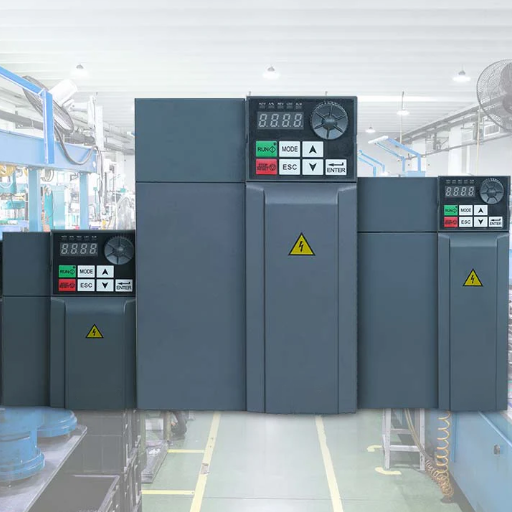
In European and North American catalogue usage, “frequency converter” usually names the complete AC-fed drive, and “inverter” names the output stage inside it. A supplier who quotes you an “inverter” for motor speed control is offering a drive, whatever the datasheet header says.
That usage is loose rather than wrong. It follows the internal topology, and it produces the sentence most people have read: the inverter is the part that makes the variable frequency.
Fuji Electric publishes a glossary column that reverses the mapping. It describes a drive as an inverter device with two halves: “The front part, the ‘converter circuit’ converts AC to DC while the rear part, the ‘inverter circuit’ converts DC to AC.”
The same page is careful about the double meaning. It notes that “converter” does not only mean the converter circuit inside the inverter device, but also a stand-alone converter unit. Read that carefully: in this usage the whole box is the inverter, and the converter is the rectifier at its front.
So the frequency converter vs inverter mapping flips depending on who printed the document. An engineer who reads only Western catalogues and an engineer who reads only Japanese manuals will describe the same drive with the two words swapped. Both will be understood by their own suppliers. Neither will be understood by the other.
What follows from the three usages. The standard governs a disagreement, because it is the only normative document of the three. The nameplate governs a purchase, because it is the only document that describes the specific unit in front of you.
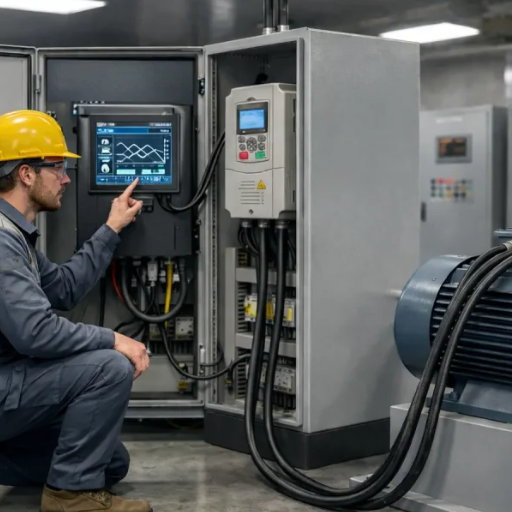
Three lines on a nameplate settle the frequency converter vs inverter question faster than any definition. Read them in this order.
An AC input means the device can be a frequency converter, because it has to rectify before it can invert. A DC input means the device is an inverter in the standard’s sense, and it cannot be connected to the mains. If a quote offers a “DC input frequency converter,” ask which standard it claims, because in IEC terms the device is an inverter.
This is the line that catches the expensive mistake. A DC-fed module quoted against an AC-fed drive looks like a bargain until someone reads the input rating.
A frequency converter adjusts the output frequency. A converter built for 50 Hz to 60 Hz supply conversion holds the output at a fixed frequency and varies nothing. Both are frequency converters under the standard, and only one of them can control a motor’s speed. The static frequency converter guide covers the fixed-output family.
Drives quote a short-time overload, commonly 150 percent for 60 seconds or 110 percent for 60 seconds, because a motor draws more than its rated current when it starts. A frequency converter built for a motor is rated for that starting duty, and the datasheet says how long the overload holds. A PV or UPS inverter quotes a continuous rating and nothing else, because its load is already running before it is connected.
| Nameplate line | What it proves | Device |
|---|---|---|
| Input 380-480 V AC, 3-phase | Has a rectifier, can be an AC-fed drive | Frequency converter, typically a VFD |
| Input 540 V DC | No rectifier, cannot connect to mains | Inverter module, often on a common DC bus |
| Output fixed 50/60 Hz, continuous rating only | No motor control, no starting duty | Power inverter (PV, UPS, off-grid) |
| Output 0-400 Hz, 150% for 60 s | Variable frequency and starting duty | Frequency converter |
Read all three lines together. Any one of them alone can mislead. A DC input with a variable output is a real product, and so is an AC input with a fixed output. The what is a frequency converter guide covers the device family from the other direction.
Want a second pair of eyes on a nameplate? Send us the input line, the output line and the load, and our engineers will tell you which family the unit belongs to. Talk to our engineers.
Outside motor drives, the word inverter has three common meanings. All three are DC in and AC out, which is why the standard’s definition fits them. That also explains why none of them closes the frequency converter vs inverter question for a motor load.
The U. S. Department of Energy describes the device as “a device that converts direct current (DC) electricity, which is what a solar panel generates, to alternating current (AC) electricity, which the electrical grid uses.” Several panels feed one inverter, and the inverter tracks the array’s maximum power point and synchronises to the grid.
What it does not do is control a motor. There is no variable frequency output, no V/Hz curve and no vector control. The solar inverter vs VFD comparison therefore turns on duty rather than on power. A PV inverter is designed to deliver power to a load that is already running, not to start one.
A UPS inverter takes DC from a battery string and produces a fixed, clean AC supply. Its job is to hold the output steady while the mains fails, which is the opposite of a drive’s job. A drive deliberately varies its output; a UPS inverter treats any variation as an error to be corrected.
A 12 V or 24 V inverter produces 230 V AC from a vehicle battery. The output is fixed and the load is whatever is plugged in. These units are the farthest from a drive in both construction and rating.
The sentence worth remembering. A 5 kW PV inverter and a 5 kW drive are both described as “5 kW,” and only one of them can start a 5 kW motor. The PV unit is rated for a continuous load; the motor needs several times its rated current for a few seconds, which is what the overload rating exists to supply.
Tomasz Nowak ran maintenance at a small bottling line and tried to solve a power problem the cheap way. He had a 3 kW solar inverter left over from a rooftop job, and a 3 kW pump that needed to move water during grid outages.
The pump tripped the inverter on every start. The inverter was not faulty and the pump was not faulty. A continuous-rated AC source cannot supply a motor’s starting current, which is why the drive he eventually fitted was rated for 150 percent of the motor current for a minute.
Most terminology disputes end at the specification stage if the document describes the device rather than naming it. Five lines are enough.
A specification written this way cannot be answered with the wrong device, because the wrong device cannot fill in line one or line four.
The difference between a converter and an inverter in the standard comes down to the input. An inverter is an AC/DC converter, fed from DC. A frequency converter is the AC converter, fed from AC, and it changes the frequency. In drive-industry usage the words often name a whole box and a stage inside it.
Only when the inverter is fed from AC, which is how catalogues use the word. A device with a DC input is an inverter and nothing else. A device with an AC input and a variable output answers to both names.
A DC-fed inverter module cannot, because it has no way to connect to a three-phase AC supply. A DC-to-AC power inverter cannot, because its output is fixed and it has no starting overload. An AC-fed inverter drive can, because that is what the name most often means in a motor context.
No. A solar inverter takes DC from the array and delivers fixed-frequency AC to the grid. A frequency converter takes AC in, changes the frequency, and can vary its output to control a motor. The AC frequency converter guide covers the device family in full.
Because some manufacturers, including Fuji Electric, use “inverter” for the complete device and “converter” for the rectifier at its input. The words are swapped relative to European catalogue usage, not used incorrectly. The AC drive vs VFD comparison covers the naming conventions around the same hardware.
Usually no, and occasionally yes. If the supply is AC and the output is variable, the words are interchangeable for buying. If the supply is DC, or a supplier quotes a unit rated for continuous output only, the difference decides whether the device works at all.
A frequency converter and an inverter are not the same thing, and they are also not rivals. The standard puts them side by side in one family. The drive trade uses the words for a box and for a stage inside it. The nameplate uses them for whatever the manufacturer decided to print.
Three habits settle the frequency converter vs inverter question. Ask what the input is, because AC and DC divide the family. Ask whether the output varies, because a fixed 50 Hz output is a different product from a drive. And ask for the overload rating, because it separates equipment built for motors from equipment built for loads that are already running.
Everything else is vocabulary. Useful vocabulary, worth getting right in a specification, and never worth an argument once the nameplate is on the table.
Send us the nameplate, the load type and the supply. We will confirm the device family, the rating and the overload before anything is ordered.