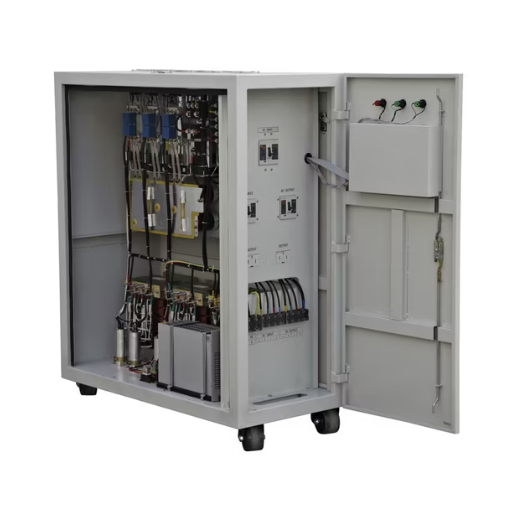
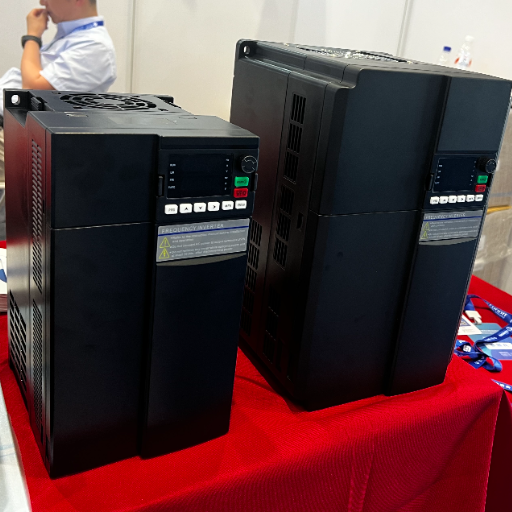
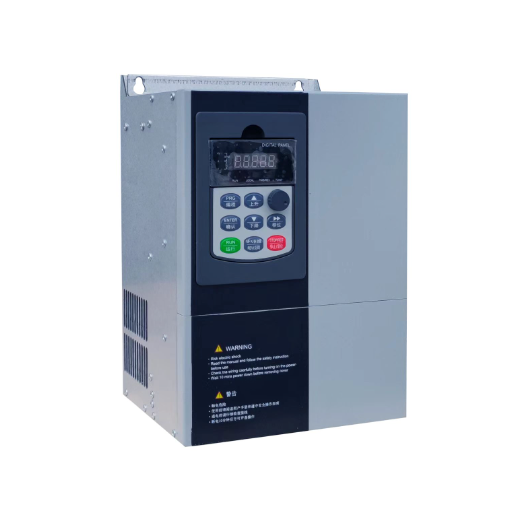
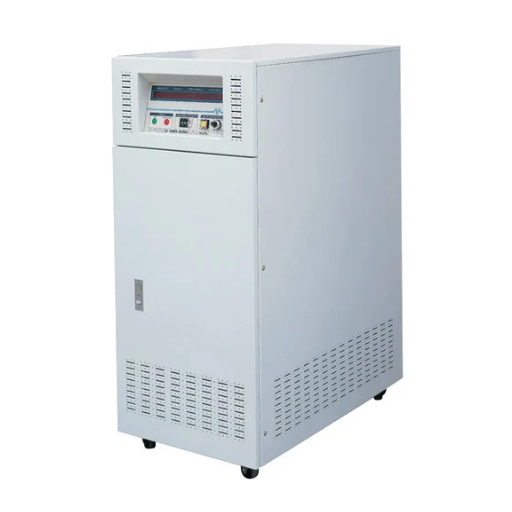
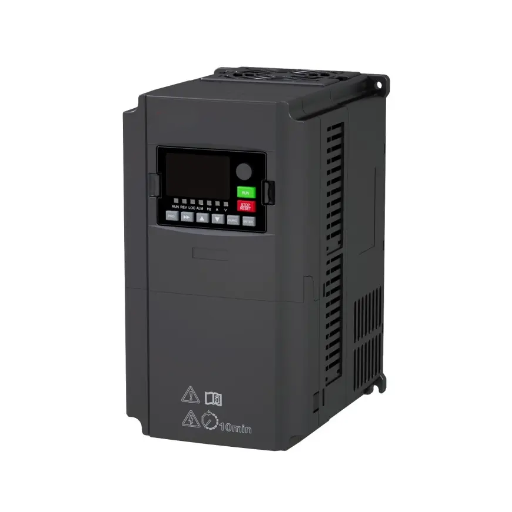
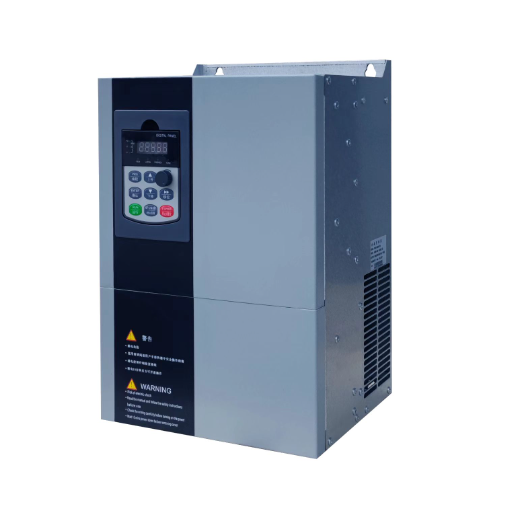
Ready to Get Your VFD Solution?
Whether you need a single drive or a complete system, we have the VFD products and engineering support to ensure your project's success.

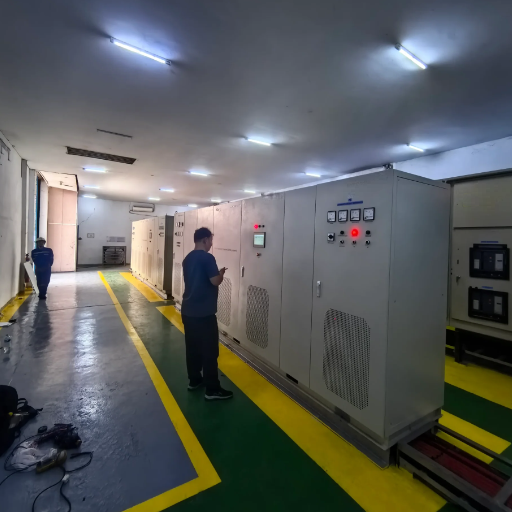
A shore power frequency converter changes the frequency of a port’s grid to the frequency a berthed ship needs. It exists because most ocean-going ships run at 60 Hz and most of the world’s ports supply 50 Hz.
Here is the part that costs money. A converter is not an accessory bolted onto a shore connection. It is the most expensive item in a shore power substation, and a large share of berths do not need one at all.
Elena Ruiz found that out the slow way. She managed the electrical upgrade for a berth at a northern European port, built for a short-sea ferry fleet that already ran at 50 Hz. The specification arrived with a frequency converter in it, because that is what a shore power substation is understood to contain.
It was bought and installed. Then the shore power converter sat idle, serving no call, because every vessel that berthed already matched the grid.
This guide covers what a shore power frequency converter does, what conversion actually costs, when a berth genuinely needs one, and how to size it.
Key Takeaways
- A shore power frequency converter matches a ship’s onboard frequency to the port grid, usually 50 Hz shore to 60 Hz ship.
- The European Onshore Power Supply Association puts the substation penalty at four times the investment per MVA, with converter electronics lasting 10 to 12 years against 25 to 30 for conventional equipment.
- If the ship and the grid already match, the substation is conventional and no converter is needed. Conversion is a decision about the fleet, not the technology.
- A worked low-voltage case shows the second-order cost: adding a converter changed the protection ratings and the cable ampacity upstream of the box itself.
- Rail traction grids at 16.7 Hz and 25 Hz need the same converter for the same reason.
Planning a berth? Send us the fleet mix and the berth load, and our engineers will tell you whether conversion pays before you tender. Send us the details.
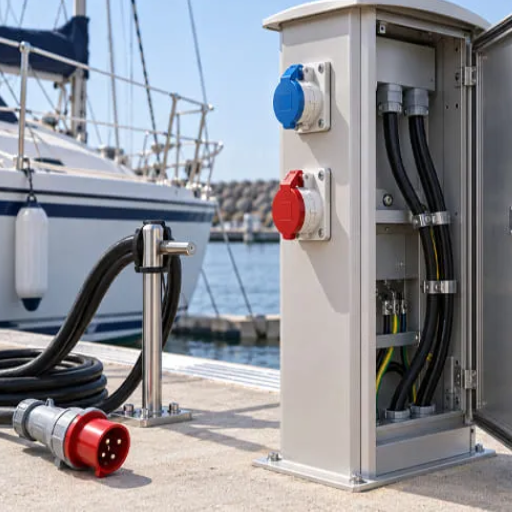
A shore power frequency converter rectifies incoming AC to DC, holds it on a DC link, then inverts it back to AC at the frequency the ship expects. The chain is the same one every AC frequency converter uses. What changes at berth is the power level, the safety interlocks, and the cost of getting the frequency decision wrong.
The term covers a family of names. Cold ironing frequency converter, onshore power supply converter, shore-to-ship converter and alternative maritime power converter all describe the same equipment. The choice of words usually says which market the supplier sells into rather than anything technical.
Three stages do the work. A rectifier turns the grid’s 50 Hz into DC. The DC link buffers it. An inverter rebuilds it at the target frequency, and an output filter smooths the switched waveform into a sine wave.
Everything downstream of the inverter is specified at the ship’s frequency, not the grid’s. That matters for the transformer, the protection settings and the cable, and it is where much of the hidden cost sits.
On the land side, the shore power converter sits between the grid connection and the ship’s connection point. A high voltage shore connection at 6.6 kV or 11 kV adds a transformer on each side, plus switchgear, protection and the cable management system that handles heavy high-voltage cables at the quay.
The shore power converter is one box in that chain. The chain is what the project costs.
Alternating current is generated at one of two frequencies worldwide, and the split does not follow shipping routes.
Europe, Africa, most of Asia, South America and Australia run at 50 Hz. North and Central America, southern Japan, South Korea and the Philippines run at 60 Hz. A few countries, including Brazil, Saudi Arabia and Japan, use both depending on the region.
The European Onshore Power Supply Association counts 175 countries on 50 Hz. Most of the world’s ports therefore supply a frequency that most of the world’s deep-sea fleet does not use.
Historically most merchant fleets ran at 50 Hz, because shipyards were concentrated in Europe and Asia. That changed for a specific reason. California was the first jurisdiction to mandate shore power for commercial vessels in 2007, at Los Angeles and Long Beach. Those ports supplied 60 Hz, the frequency of their own grid.
A ship built to plug in there had to be a 60 Hz ship. Most container and cruise tonnage ordered since then has been. The fleet now carries the consequence of a decision made at two Californian ports.
Ro-ro vessels and ferries trading only in short sea remain closer to an even split, with a majority at 50 Hz in Europe. That single fact decides most berth projects, and the 50 Hz to 60 Hz frequency converter guide covers the mechanism.
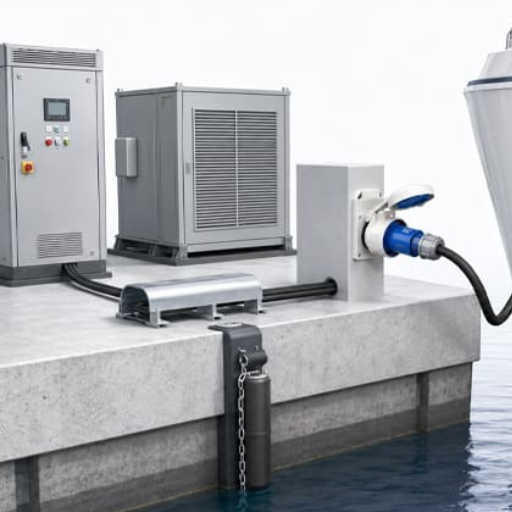
The decision test is short. List the vessels that will actually berth, and their onboard frequencies. If they match the port grid, you do not need conversion. If they do not, you do, and the cost is higher than the converter’s price.
Kwame Mensah ran the electrical package for a container terminal in a 50 Hz country. Nearly every deep-sea call was 60 Hz tonnage. Without conversion the berth could serve the domestic fleet and nothing else, so the shore power converter was not optional. The same arithmetic that makes conversion wasteful at one berth makes it unavoidable at another.
The European Onshore Power Supply Association, in a March 2026 position paper, states that at the substation level “investment costs are multiplied by 4 per MVA installed” once frequency conversion is added.
That figure comes from an industry association arguing a policy position, and should be read as such. It is also the only published estimate of the penalty this research could find, and no vendor page repeats it.
The same paper puts converter service life at “approximately 10 to 12 years compared to 25 to 30 years for conventional electrical equipment (transformers, switchgear, networks).”
A 25-year asset plan built around a 12-year component has a replacement cycle nobody budgets for at outline design.
Onshore conversion, the association notes, requires “a frequency converter (generally static), two additional transformers, and dedicated air-cooling systems” because power electronics are sensitive to heat.
This is the practical answer to why the multiplier is so large. The shore power converter is one item. The transformers, the cooling and the protection changes around it are the rest.
Conversion is avoidable in three situations:
That third option is the one most often missed in a tender, because the port engineer is asked to solve a problem the fleet owner could solve instead.
| No conversion | With conversion | |
|---|---|---|
| Substation equipment | Transformer, switchgear | Converter, two additional transformers, dedicated air-cooling, switchgear |
| Relative investment per MVA | 1x | 4x (EOPSA estimate) |
| Equipment service life | 25-30 years | 10-12 years for converter electronics |
| Maintenance | Conventional electrical | Specialised power electronics, often outsourced |
| Which ships it serves | Ships matching the grid frequency | Both frequencies |
Ports in the European Union are not deciding this on their own timetable. The Alternative Fuels Infrastructure Regulation sets the deadline. TEN-T maritime ports must supply shore power to at least 90 percent of calls by covered container and passenger ships over 5,000 GT, by the end of 2029. FuelEU Maritime then requires those ships to connect from 2030, and from 2035 at any EU port that offers shore power.
A berth that installs conversion because a deadline is close, without checking the fleet first, locks in the four-times multiplier and the 12-year replacement cycle for the life of the asset.
Working through a berth decision now? We will check the fleet mix against the grid frequency and tell you which of the three options fits. Talk to our engineers.
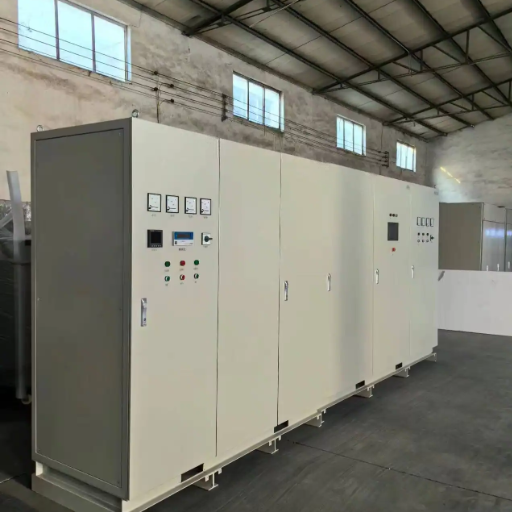
Sizing a shore power converter starts with the berth’s load, not the catalogue. The steps are conventional: total the simultaneous demand, apply the protection margin, then choose the architecture.
A published case study of a low-voltage terminal in Surabaya, Indonesia, shows how the numbers behave. The service is rated 1000 kVA, 400 V, 50 Hz, with five connection boxes along the berth, and the design basis was 250 A per panel.
At 400 V and 250 A each panel carries about 147.05 kW. Five panels total 735.25 kW. The design used 200 kW converter modules, distributed one per panel, which puts each module at roughly 73.5 percent utilisation. Three modules serve the domestic terminal, two the international one.
The study’s most useful finding is not the sizing. It is what happened around it. Applying the standard 125 percent margin to the protection ratings showed the domestic group’s breaker was undersized: 750 A of load needs 937.5 A, and the installed device was 800 A.
The feeder between the main breaker and the transformer also fell short, needing 1562.5 A against 1356 A installed. Both had to be upgraded.
Adding a shore power frequency converter changes the protection settings and the cable ratings upstream of it. That is why conversion costs more than the box.
Low-voltage shore connection sits below roughly 1 MVA at 400 to 690 V. High-voltage connection at 6.6 kV or 11 kV serves the large loads, from container ships up to the biggest cruise vessels, which can draw more than 10 MW at berth.
The range a shore power converter supplier publishes gives a sense of scale. Ingeteam, for example, quotes modular onshore power supply “from 1 MVA to 44 MVA, higher on demand.” That span covers a small ferry berth and a cruise terminal in one product family.
For the duty side of sizing, including how long a peak may last, the frequency converter sizing guide covers the method. Shore power adds continuous berth hours on top of it, which usually makes the duty question simpler rather than harder.
Railways solved the frequency conversion problem decades before ports did, and for the same reason: the load needs a frequency the grid does not supply.
Traction supply in Sweden, Norway, Germany, Switzerland and Austria runs at 16.7 Hz, sometimes written 16 2/3 Hz. A small part of the United States runs at 25 Hz. Neither is a grid frequency anywhere.
The reason is historical. Low-frequency AC suited the series-wound traction motors of the early twentieth century, and the infrastructure was built around it. Modern trains could run at grid frequency, but the supply network is already in the ground.
Very little, in principle. A static converter couples the three-phase 50 Hz grid to the single-phase traction grid, exactly as a shore power converter couples two frequencies at a berth. Hitachi Energy, which supplies them, describes the shift “from the traditional railway grid fed by rotating machines” to one fed by static converters. The company reports more than 1.5 GW installed into railway systems over 40 years.
What changes is the scale and the loading. Traction converters are utility-scale, and they supply a load that moves. The static frequency converter guide covers how solid-state conversion compares with older rotary sets, which is the same trade-off a port faces at a smaller size.
A shore power frequency converter changes a port’s grid frequency to the frequency a berthed ship uses, so the ship can shut down its auxiliary engines and run from shore power. The common case is a 60 Hz ship at a 50 Hz port.
No. If the ships that berth already match the port’s grid frequency, the shore power substation is conventional and no conversion is needed. Many European short-sea berths serve 50 Hz vessels from a 50 Hz grid without any conversion equipment.
The European Onshore Power Supply Association estimates that conversion multiplies substation investment by four per MVA installed, and that converter electronics last 10 to 12 years against 25 to 30 for conventional equipment. No neutral, published cost survey was found.
High voltage shore connection runs at 6.6 kV or 11 kV and serves large vessels with one or two heavy cables. Low voltage shore connection runs at 400 to 690 V, suits loads up to about 1 MVA, and needs several parallel cables.
Yes. Onboard conversion lets a vessel berth at any port regardless of grid frequency, and the association recommends short-sea shipping take that route. The trade-off is capital cost and space on the ship.
Most ocean-going ships are built for 60 Hz, and most of the world’s ports supply 50 Hz. A berthed ship cannot run its own equipment from the wrong frequency, so either the port converts or the ship does.
A shore power frequency converter is a solved engineering problem sold into an unsolved commercial one. The equipment works. The question is whether your berth should pay for it.
Three things follow. List the fleet and its frequencies before the converter appears in a specification. Treat the four-times figure and the ten-to-twelve-year life as an association’s estimate, not a quotation. And check what conversion does to the protection and cable ratings upstream, because that is where the budget goes.
Do that, and the berth you build serves the ships that actually call. Skip it, and you may buy a converter that never runs.
Send us the fleet mix, the berth load and the grid frequency. We will tell you whether conversion pays, and what it changes upstream if it does. Start the conversation.