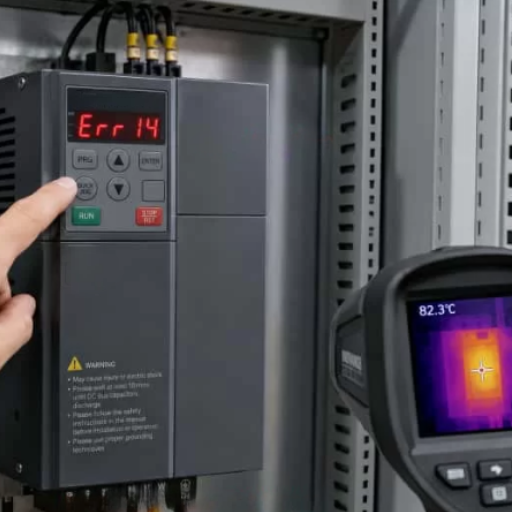
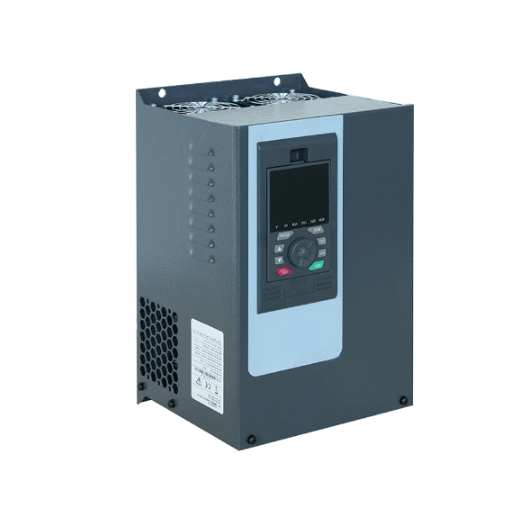
Ready to Get Your VFD Solution?
Whether you need a single drive or a complete system, we have the VFD products and engineering support to ensure your project's success.


A single VFD on a 100-HP centrifugal pump can save $8,000-15,000 per year in electricity. Multiply that across a facility with dozens of motors, and the numbers become impossible to ignore. Yet many engineers and procurement teams still struggle to map specific VFD benefits to their industry.
You already know that variable frequency drives control motor speed. What you need is a clear picture of where VFD applications in industry deliver the highest return — and what control mode, voltage class, and configuration each sector demands. This article covers 10 major industrial sectors with quantified energy savings, torque requirements, and real-world outcomes.
Want to see how VFDs fit into a complete motor control strategy? Explore our complete guide to variable frequency drives for a deeper technical overview.
Key Takeaways
- VFDs deliver 20-50% energy savings in pump and fan applications across all industries.
- Manufacturing automation uses VFDs for precise speed control on conveyors, mixers, and machine tools.
- HVAC systems achieve 30-50% energy reduction with VFD-controlled fans and chillers.
- Water treatment facilities use VFDs for precise flow control and reduced pump wear.
- Mining and heavy industry rely on VFDs for high-torque starting and reliable operation in harsh conditions.
- Control mode selection — V/f, sensorless vector, closed-loop vector, or DTC — varies significantly by application type.
- Shandong Electric VFDs cover 0.1 kW to 53,000 kW across low voltage (220V-690V) and high voltage (6kV-10kV) ranges for every industry covered.
The 10 major VFD applications in industry covered in this article are:
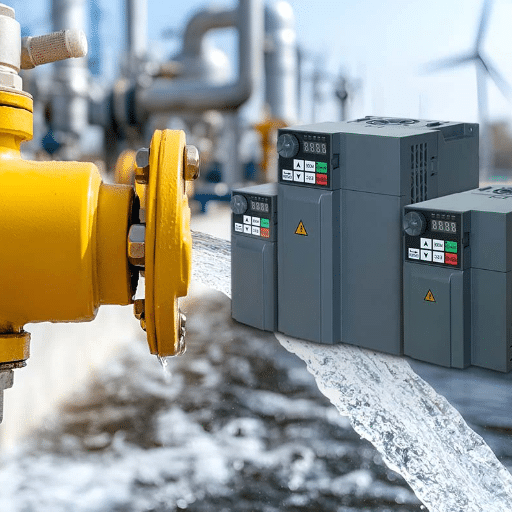
Pumps and fans account for roughly 65% of all VFD installations worldwide. The reason is simple: centrifugal pumps and fans are variable-torque loads, which means power demand drops with the cube of speed reduction. A pump running at 80% speed uses only 51% of full-load power.
Centrifugal pumps are the classic VFD application. In water distribution, chemical processing, and building services, flow demand fluctuates throughout the day. Without a VFD, operators throttle valves or bypass flow — both waste energy. A VFD slows the motor to match actual demand, cutting energy consumption by 20-40% while reducing mechanical stress on seals and bearings.
Positive-displacement pumps — gear pumps, screw pumps, piston pumps — need constant torque at all speeds. Here the VFD benefit is not energy savings but process control. Precise speed regulation maintains consistent flow rates and prevents cavitation. Sensorless vector control provides the torque accuracy these applications need.
In 2023, a municipal water treatment plant in Ohio retrofitted eight 75-HP raw-water pumps with VFDs. Before the upgrade, pumps ran at fixed speed with bypass valves wasting 30-35% of energy during low-demand periods. After installing VFDs with pressure-feedback control, the plant cut pumping energy by 35%, saved $48,000 in the first year, and achieved payback in 14 months. Head pressure stability also improved, reducing pipe hammer and extending valve life.
For a deeper dive into pump-specific VFD energy savings, see our guide on VFD energy savings and payback analysis.
Fans are second only to pumps in VFD adoption. The affinity laws make the economics even more compelling than pumps: fan power drops with the cube of speed, so a 20% speed reduction yields nearly 50% energy savings.
Commercial and industrial HVAC systems are among the highest-return VFD applications. A cooling tower fan or air-handling unit running at 50% speed consumes only 12.5% of full-load power. The U.S. Department of Energy motor systems guidance confirms that variable-speed fan control reduces HVAC energy by 30-50% compared to outlet damper or inlet vane control.
Process cooling fans and dust collection blowers also benefit from VFD control. In steel mills, cement plants, and foundries, dust load varies with production rate. A VFD matches blower speed to actual dust generation, saving energy and reducing filter wear.
In 2024, an automotive parts plant in Michigan added VFDs to 12 cooling tower fans. Previously, fans cycled on and off at full speed, creating temperature swings and wasting energy during partial-load conditions. With VFDs modulating fan speed based on leaving-water temperature, the plant reduced HVAC energy by 42% and avoided a $200,000 chiller upgrade because the existing system now had enough capacity.
Want to see how VFD control modes affect fan and pump performance? Read our article on VFD for motor control: speed, torque, and control modes explained.
Conveyors are constant-torque loads that need high starting torque to overcome static friction and precise speed matching to maintain flow rates. VFDs solve both problems.
A conveyor loaded with bulk material can require 150-200% starting torque to break away from a standstill. Across-the-line starting slams the mechanical system with 600% inrush current and shock loads. A VFD ramps the motor smoothly from zero to operating speed, eliminating mechanical stress while providing the torque the load demands.
Bucket elevators lifting grain, cement, or minerals need controlled acceleration to prevent spillage. Screw conveyors handling sludge or powders need consistent speed to maintain throughput. VFDs provide both. Sensorless vector control is the typical choice for these applications because it delivers high starting torque without encoder cost.
In automated distribution centers, multiple conveyor zones must synchronize speeds precisely. VFDs with PLC communication enable coordinated control across the entire system, reducing jams and improving throughput. For a deeper look at how VFDs integrate into complete automation architectures, see our overview of industrial VFD system design.

Air compressors are one of the most energy-intensive utilities in manufacturing. A typical facility generates compressed air at 100-120 psi and then wastes 30-50% of that energy through leaks, artificial demand, and inefficient control.
Rotary screw compressors traditionally load and unload based on pressure switches. Each unload cycle vents compressed air to atmosphere — pure energy waste. A VFD-driven rotary screw modulates motor speed to match air demand continuously, eliminating load/unload losses and saving 15-25% on average.
Centrifugal compressors operate near surge limits at low flow. A VFD maintains stable operation by adjusting speed instead of throttling inlet valves, improving both efficiency and reliability.
Large refrigeration compressors in cold storage and process cooling use VFDs to match cooling capacity to actual load. The energy savings are substantial because refrigeration systems often run at partial load for significant portions of the year. For more on how compressor VFDs fit into broader VFD for pumps and fans energy saving strategies, see our dedicated pump and fan guide.
Manufacturing covers the widest range of VFD applications, from simple conveyors to precision machine tool spindles. The common thread is the need for accurate speed and torque control.
Plastic extruders and industrial mixers are among the most demanding VFD applications. An extruder screw must break through solid polymer at low speed, often requiring 150-200% starting torque. In 2024, James Chen, a process engineer at a plastics plant in Tennessee, switched his 75-HP extruder from fixed-speed to sensorless vector VFD control. Startup torque improved from 80% to 180% at 0.3 Hz. Scrap dropped 12%, and the motor no longer overheated during low-speed operation.
Machine tool spindles operate in the constant-power region above base speed, where the VFD uses field weakening to extend speed range. Closed-loop vector control with encoder feedback provides the speed accuracy and fast acceleration that high-speed machining demands. NEMA MG-1 standards define the thermal and mechanical requirements for inverter-duty motors in these applications.
Textile lines need synchronized speeds across multiple sections to prevent tension variation. Paper machines need precise speed matching between wire, press, and dryer sections. VFDs with encoder feedback provide the synchronization accuracy these processes require.
Crane and hoist applications demand fast torque reversal, zero-speed holding, and precise positioning. Direct torque control (DTC) is the preferred VFD control mode for these dynamic loads.
An overhead crane lifting a 20-ton load must accelerate smoothly, maintain precise speed during traverse, and decelerate to a stop without swinging the load. A VFD with closed-loop vector or DTC control provides the torque response and braking control needed for safe, efficient operation.
Mine hoists lower and raise personnel and materials in shafts hundreds of meters deep. Starting torque requirements are extreme, and safety is critical. High-voltage VFDs with DTC provide the torque and control redundancy these applications demand.
Container cranes at ports cycle between ship and shore continuously. VFDs reduce cycle time through fast acceleration and regenerative braking, which returns energy to the grid instead of wasting it in resistor banks.

Mining applications push VFDs to their mechanical and thermal limits. Dust, vibration, extreme temperatures, and heavy starting loads demand drives built for harsh environments.
A ball mill grinding ore can require several minutes to accelerate from standstill to operating speed. A VFD provides controlled acceleration while limiting starting current to 150% of full load, compared to 600% with across-the-line starting. This reduces mechanical stress and extends gear and coupling life.
Underground mines rely on ventilation fans for air quality and temperature control. These fans run continuously and represent a major energy cost. VFDs modulate fan speed based on air quality sensors and shift schedules, saving 20-40% of ventilation energy.
Long overland conveyors in mining move bulk material across kilometers. VFDs provide soft start, load sharing between multiple drives, and regenerative braking on downhill sections. High-voltage VFDs (3.3kV-11kV) are common in these high-power applications. For facilities evaluating whether high voltage is the right choice, see our overview of industrial VFD systems architecture.
The oil and gas industry uses variable frequency drives from wellhead to refinery, with applications spanning pumps, compressors, and process fans.
Progressive cavity pumps and electric submersible pumps (ESPs) in oil wells need precise speed control to optimize production rates and prevent gas locking. VFDs provide the speed range and torque control these artificial lift systems require.
Crude oil and product pipelines use pump stations spaced every 50-100 kilometers. VFDs regulate pump speed to maintain constant pressure and flow despite changes in viscosity, elevation, and batch composition. Energy savings of 15-25% are typical.
Refinery process cooling and flare stack fans use VFDs to match airflow to process conditions. Explosion-proof VFD enclosures are required in hazardous area classifications.
Food processing demands precise control, hygienic design, and reliable operation in washdown environments. VFDs meet all three requirements. For an overview of how VFDs regulate motor speed across all sectors, see our guide on VFD working principle and operation.
Industrial mixers handling dough, sauces, and beverages need consistent speed for product uniformity. VFDs provide the speed accuracy and soft start that prevent ingredient splashing and motor overload.
Packaging lines run at different speeds for different products. A VFD makes changeover as simple as adjusting a speed reference. Stainless steel VFD enclosures withstand daily washdown cycles.
Food storage and processing facilities use large refrigeration systems. VFDs on compressor motors match cooling capacity to actual load, improving efficiency and extending compressor life.
In 2024, a dairy processing plant in Wisconsin replaced fixed-speed compressor controls with VFDs on four 100-HP ammonia compressors. The compressors had cycled on and off for years, causing temperature swings that affected product consistency and forced operators to run at colder setpoints than necessary. With VFDs modulating compressor speed based on real-time cooling demand, the plant stabilized storage temperatures within ±0.5°F, reduced compressor cycling by 70%, and cut refrigeration energy by 18%. The change also extended compressor seal life, reducing maintenance calls from quarterly to twice yearly.
The table below summarizes typical energy savings by industry and application. These figures represent real-world averages from retrofits and new installations.
| Industry | Primary Application | Typical Savings | Annual Savings (100 HP, 6,000 hrs, $0.10/kWh) |
|---|---|---|---|
| Water treatment | Pumps | 20-35% | $5,000-10,000 |
| HVAC | Fans, chillers | 30-50% | $8,000-15,000 |
| Manufacturing | Conveyors, mixers | 15-30% | $4,000-8,000 |
| Mining | Fans, conveyors | 20-40% | $5,000-12,000 |
| Oil & gas | Pumps, compressors | 15-25% | $4,000-7,000 |
| Food & beverage | Mixers, conveyors | 10-20% | $3,000-6,000 |
A 100-HP motor running 6,000 hours per year at 0.10perkWhcostsapproximately0.10perkWhcostsapproximately45,000 annually. A 30% VFD energy reduction saves $13,500 per year — often enough to achieve payback in 6-18 months. These figures hold across virtually all VFD applications in industry where motors run at partial load for significant hours.
Need help calculating ROI for your specific application? Our guide on how to size a VFD for your motor includes a current-based sizing methodology and energy savings estimator.

Selecting the right control mode and voltage class is as important as choosing the application. The table below provides a quick reference.
| Industry | Load Type | Recommended Control Mode | Typical Voltage Class |
|---|---|---|---|
| Pumps / fans | Variable torque | V/f or sensorless vector | LV (380-480V) |
| Conveyors | Constant torque | Sensorless vector or DTC | LV (380-480V) |
| Cranes / hoists | Constant torque, dynamic | DTC or closed-loop vector | LV to MV (690V-3.3kV) |
| Mining | Constant torque, heavy | Sensorless vector, DTC | LV to HV (3.3kV-11kV) |
| Machine tools | Constant power | Closed-loop vector | LV (380-480V) |
| Compressors | Variable torque | V/f or sensorless vector | LV to MV (380V-3.3kV) |
Mistake one: oversizing the drive. A VFD rated for 150 HP on a 100-HP motor adds cost without benefit. Size the drive to the actual load profile, accounting for duty cycle and overload requirements.
Mistake two: ignoring the environment. Dusty, hot, or corrosive conditions need proper IP ratings and cooling. A standard IP20 drive in a cement mill will fail in months. Specify IP54 or higher with filtered cooling air.
Mistake three: skipping application-specific control mode selection. V/f works for fans. Vector control is necessary for conveyors. DTC is justified for cranes. The wrong control mode wastes money or underperforms.
Mistake four: neglecting harmonic mitigation. VFDs generate harmonics that can distort power quality and trip upstream protection. IEEE 519 and IEC standards set limits on total harmonic distortion. Specify input reactors, DC chokes, or active harmonic filters for installations with multiple drives or sensitive equipment on the same transformer.
Mistake five: ignoring braking requirements for high-inertia loads. Applications like cranes, centrifuges, and large fans store significant kinetic energy. Decelerating quickly without a braking resistor or regenerative unit causes overvoltage faults. Size the braking circuit to the load inertia and stopping-time requirement, not just the motor rating.
Pumps and fans are the most common VFD applications in industry, accounting for approximately 65% of all installations. Centrifugal pumps and HVAC fans are variable-torque loads where VFDs deliver 20-50% energy savings through affinity-law speed reduction.
Factory-wide VFD energy savings typically range from 15% to 50%, depending on the mix of applications. Pump and fan systems achieve the highest savings (20-50%). Manufacturing equipment with conveyors and mixers sees 15-30% reduction. A facility with 1,000 HP of VFD-controlled motors can save $50,000-150,000 annually.
High voltage VFDs (3.3kV-11kV) are used in mining, oil and gas, power generation, and heavy manufacturing where motor power exceeds 500 kW. Applications include mine hoists, ball mills, pipeline pumps, and large ventilation fans.
Yes, but with limitations. A single VFD can control multiple motors in synchronized applications such as conveyor lines or fan arrays. All motors must have identical ratings and the VFD must be sized for the total motor current. Individual motor protection is required because the VFD cannot detect a single motor overload.
A soft starter reduces starting current and mechanical stress but provides no speed control. A variable frequency drive provides both soft start and continuous variable speed. Choose a soft starter for fixed-speed applications that only need reduced starting current. Choose a VFD when you need speed control, energy savings, or process optimization.
Selection involves five steps: match voltage class to your supply and motor, size current rating to motor full-load current with overload margin, choose control mode based on load type and precision needs, specify enclosure and cooling for the environment, and verify communication protocol compatibility with your automation system.Not sure which technology fits your application? Our article on how to select the right VFD walks through the full selection process, from load type to voltage rating.
Yes, when properly specified. Industrial VFDs are available with IP54, IP55, and IP66 enclosures for dusty and wet environments. High-temperature ratings, conformal-coated circuit boards, and filtered ventilation extend drive life in cement plants, mines, and food processing facilities.
VFD applications in industry span virtually every sector that uses electric motors. Pumps and fans deliver the highest energy savings. Manufacturing lines gain precise process control. Mining and heavy industry achieve reliable starts under extreme loads. HVAC systems cut operating costs by a third or more.
The pattern is consistent: match the control mode to the load, size the drive to the application, and specify the enclosure for the environment. V/f control handles pumps and fans. Sensorless vector unlocks torque for conveyors and mixers. Closed-loop vector provides the precision that winding and machine tools demand. DTC delivers the dynamic response that cranes and test stands require.
Shandong Electric VFDs cover 0.1 kW to 53,000 kW across low voltage and high voltage ranges, with control modes from V/f to DTC and enclosures rated for the harshest industrial conditions. From water treatment plants to mining conveyors, the right drive is the one that matches your application.
Here are five takeaways to bring back to your team:
If you are specifying drives for a specific industry application and need help with control mode selection, voltage class, or sizing, contact our application engineers. We will walk through your motor specifications, load characteristics, and environmental conditions and recommend the VFD configuration that delivers the performance your process demands.