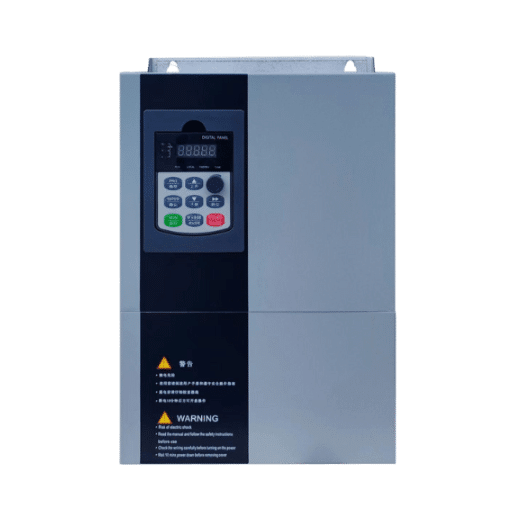
Ready to Get Your VFD Solution?
Whether you need a single drive or a complete system, we have the VFD products and engineering support to ensure your project's success.


VFD systems can reduce the electrical consumption of a motor by means of energy saving to a certain scale, say 20 to 50%, when the load is variable-torque, as is the case in pumps, fans, and blowers, or from 5 to 15%, when it stays constant torque in conveyors and compressors. The greatest reward lies in the investment that pays back after spending between 12 and 36 months.
When Marcus Chen, the facilities manager at the Cedar Valley Water District in Oregon, took note of his bill which had shot up 18% year over year in 2024, he was not happy. It was a case where all four booster pumps of the distribution system were running like champion horseraces, full speed, 24 hours a day, while they were partially choked by discharge valves that worked out for nothing but wasteful heat from horsepower. Energy savings VFD systems with 60 Hp capacity were fitted on all four pumps. Power consumption for water pumping was down 38% just in the first year. The district saved 412,000 kWh, giving them a utility rebate of $9,800 and recovering all hardware-and-commissioning costs in 19 months.
If you are a plant manager, facilities engineer, or energy consultant trying to build a credible ROI case for motor-control upgrades, you already know the headline promise: VFDs save energy. Motor-driven systems consume roughly 65% of all industrial electricity worldwide according to the IEA Energy Efficiency 2024 report, so even modest percentage savings translate into meaningful kWh reductions. What you need is the hard math behind that promise and behind variable frequency drive energy savings, application by application, with honest payback timelines and a clear picture of where savings calculations break down.
This article covers five things. First, how affinity laws produce cube-law savings when you slow a motor. Second, real savings percentages for seven common applications. Third, a worked payback example using bin-hour analysis. Fourth, the four mistakes that kill real-world savings. Fifth, where energy saving VFD systems pay back fastest and how to stack utility rebates.
Key Takeaways
- Energy saving VFD systems deliver 20-50% VFD energy savings on variable-torque loads (pumps, fans, blowers) through the cube-law relationship between speed and power.
- HVAC fan and pump retrofits typically pay back in 12-24 months; municipal water systems in 18-30 months.
- The bin-hour method produces far more accurate payback estimates than single-point speed-reduction math.
- Modern VFDs themselves consume 2-4% of input power, honest net savings must subtract these switching and cooling losses.
- Utility rebates of $30-150 per HP and federal incentives can cut payback periods by 30-50% when stacked correctly.

The physics behind VFD energy savings and variable frequency drive energy savings is the affinity law, formally documented in the U.S. Department of Energy Motor Tip Sheet and ASD evaluation protocol. For centrifugal pumps and fans, power consumed is proportional to the cube of motor speed. Slow a fan from 100% to 80% speed and the motor draws roughly 51% of full-load power. Drop to 60% speed and power falls to about 22%.
That cubic drop is why small speed reductions produce outsized energy savings. A cooling tower fan that spends most of its life at 70% speed is not consuming 70% power, it is consuming 34%. The gap between what your motor was drawing and what it now draws is your savings.
The same law works in reverse. Every 10% increase in speed above design requires a 33% jump in power. Oversized systems that run at full speed and throttle back mechanically are throwing away that cubic advantage.
Industrial pumps and fans are routinely sized for peak demand that occurs only a few hours per year. A chilled-water pump designed for the hottest August afternoon may operate at that load for fewer than 200 of the 8,760 hours in a year. For the remaining 7,500-plus hours, the pump is either throttled by a valve or damper or cycles on and off.
Throttling does not reduce power proportionally. A pump throttled to 70% flow still draws 85-90% of full-load power because the motor continues at rated speed and the excess energy is dissipated as turbulence and heat across the valve. A VFD slows the motor to match actual demand, capturing the cube-law reduction that throttling destroys. For a deeper look at centrifugal load behavior, see our primer on VFD energy savings for pumps and fans.
Not every load behaves the same way. Variable-torque loads, centrifugal pumps, fans, blowers, follow the affinity laws and deliver the largest savings. Constant-torque loads, conveyors, positive-displacement pumps, hoists, do not follow cube-law behavior. Slowing a conveyor from 100% to 80% speed reduces power by roughly 20%, not 50%.
That does not mean VFDs are worthless on constant-torque applications. Soft-start eliminates mechanical shock, demand-response cycling reduces run hours, and idle-reduction logic cuts standby consumption. Those savings are real, but they are smaller and harder to quantify with a single formula.

The table below shows typical savings ranges, payback timelines, and key notes for seven common industrial applications. These figures assume a modern low voltage VFD system sized correctly for the motor and load.
| Application | Typical Savings | Payback Range | Key Notes |
|---|---|---|---|
| HVAC fans and air handlers | 35-55% | 12-24 months | ASHRAE 90.1 mandates VFDs above 5 HP in many regions |
| Chilled water and hydronic pumps | 25-45% | 14-28 months | High static head systems see lower savings |
| Cooling tower fans | 30-50% | 10-20 months | Excellent candidate, long run hours, variable loads |
| Water and wastewater pumping | 20-40% | 18-30 months | Lift stations with wet-well level control are ideal |
| Industrial process pumps and blowers | 15-35% | 18-36 months | Watch for minimum flow and NPSH constraints |
| Conveyors and material handling | 5-15% | 24-48 months | Savings come from soft start, idle reduction, demand cycling |
| Air compressors | 20-35% | 14-30 months | Best when demand fluctuates; constant load sees minimal benefit |
Want to see how VFD savings apply to your specific application? Explore our low voltage VFD systems or read our complete guide to low voltage VFD selection for sizing fundamentals.
Building ventilation is the single best application for energy saving VFD systems and is increasingly required under ASHRAE 90.1 on fans and pumps above modest HP thresholds. AHU fans run thousands of hours per year at partial load because outdoor air temperature, occupancy, and building load fluctuate continuously. Matching fan speed to actual demand through a building automation system (BAS) routinely produces 35-55% energy savings. For a 50-HP supply fan running 6,000 hours per year at 0.12/kWh,thatisroughly0.12/kWh,thatisroughly9,000-$14,000 in annual electricity savings.
For a deeper walkthrough of HVAC-specific drive selection, see our guide to applying VFDs to HVAC fans and pumps.
Chilled water pumps benefit from VFDs because cooling load tracks outdoor temperature and building occupancy. A primary chilled-water pump that slows from 100% to 70% speed during shoulder-season operation cuts power consumption to roughly 34% of full load. Savings are slightly lower than fan applications because hydronic systems have higher static head, which does not scale with the cube law.
Cooling tower fans are the quiet star of VFD retrofitting. They run long hours, their load is almost purely weather-dependent, and they have minimal static head. A 75-HP cooling tower fan retrofit often pays back in 10-20 months, making it one of the fastest-payback applications in commercial HVAC.
Municipal lift stations and distribution booster pumps are strong candidates for pump VFD energy savings because flow demand varies with diurnal water use. A wet-well level control scheme with a VFD maintains constant level by modulating pump speed instead of cycling pumps on and off. The energy savings are solid, and the reduction in water hammer and mechanical wear extends pump life significantly.
Process pumps in food processing, chemical manufacturing, and wastewater aeration see meaningful savings, but engineers must account for minimum flow requirements, NPSH limits, and static head. A blower that cannot drop below 60% speed because the process requires minimum air volume will not deliver the full cube-law savings.
Conveyors do not follow affinity laws, so speed reduction alone does not produce dramatic energy savings. However, VFDs deliver value through soft-start (reducing mechanical wear), idle-reduction (stopping the conveyor when no product is present), and demand-response (slowing during peak-rate periods). In facilities with long run hours, these secondary savings add up.
Rotary screw compressors with varying air demand benefit from VFD-controlled compressor packages. When demand drops, the compressor motor slows rather than loading and unloading. The savings are highest in facilities with intermittent air demand, such as machine shops and packaging lines. Constant-demand facilities see minimal benefit.

Single-point savings calculations are misleading. A pump does not run at 70% speed for 8,760 hours. It runs at 100% for 800 hours, 90% for 1,200 hours, 80% for 2,400 hours, 70% for 2,800 hours, and so on. The bin-hour method breaks the operating year into speed bins, applies the affinity law to each bin, and sums the result.
Here is a simplified bin-hour table for a 75-HP cooling tower fan at $0.10/kWh:
| Speed Bin | Hours/Year | Power % | kWh/Year | Cost/Year |
|---|---|---|---|---|
| 100% | 500 | 100% | 27,975 | $2,798 |
| 90% | 1,200 | 73% | 48,942 | $4,894 |
| 80% | 2,500 | 51% | 71,936 | $7,194 |
| 70% | 2,800 | 34% | 53,550 | $5,355 |
| 60% | 1,500 | 22% | 18,405 | $1,841 |
| 50% | 260 | 13% | 1,898 | $190 |
| Total | 8,760 | — | 222,706 | $22,271 |
At full speed for all 8,760 hours, the same fan would consume 489,960 kWh and cost 48,996.Thebin−hourmethodshowsanetannualsavingsof267,254kWh,or48,996.Thebin−hourmethodshowsanetannualsavingsof267,254kWh,or26,725.
A 75-HP cooling tower fan retrofit requires a low voltage VFD, line reactor, bypass contactor, and commissioning. Total installed cost is approximately 18,000.Usingthebin−houranalysisabove,annualelectricitysavingsare18,000.Usingthebin−houranalysisabove,annualelectricitysavingsare26,725. Simple payback is 8.1 months. After factoring in a 5,250utilityrebate(70HP×5,250utilityrebate(70HP×75/HP), net payback drops to 5.7 months.
Modern IGBT-based VFDs are 96-98% efficient at full load, but that efficiency drops slightly at partial load. Switching losses, harmonic content, and the VFD’s own cooling fan add another 1-3% to total losses. For conservative payback calculations, subtract 3% from gross savings. In the cooling tower example above, net annual savings become $25,923, still an 8.3-month payback before rebates.
Utility rebate programs for VFD retrofits are widely available in North America and increasingly common in Europe. Typical rebates range from 30to30to150 per HP, depending on the utility and application. Some programs also offer performance-based incentives tied to verified kWh savings. In the United States, the Inflation Reduction Act (IRA) provides additional tax credits for energy-efficient industrial equipment upgrades. When combined, rebates and incentives can reduce net project cost by 30-50%.
Ready to calculate your own savings? Check our step-by-step VFD energy savings calculation guide for downloadable worksheets and worked formulas.
In 2023, a dairy processor in Wisconsin installed a VFD on a CIP wash pump based on a generic online calculator that promised 40% savings. The real savings came in at 18%. The problem was static head. The wash circuit had 60 feet of elevation change and spray-nozzle pressure requirements that never changed. When the VFD slowed the pump, the system could not actually use the reduced flow because the minimum pressure requirement kept the speed above 75%. Affinity-law math only works when the system can operate across the full speed range.
A VFD sized to a 100-HP motor nameplate will run at low load factor if the actual process only needs 60 HP. While this does not directly reduce energy savings, it inflates the upfront cost and makes the payback math look worse than it should. Always size the VFD on motor full-load amps and actual operating conditions, not the motor nameplate alone. Our step-by-step guide to sizing a VFD walks through the load-based methodology in detail.
In water treatment, hospitals, and data centers, a VFD failure can shut down a critical process. Engineers who omit a manual or automatic bypass contactor create a single point of failure. When the bypass is engaged, the motor runs at full speed and savings drop to zero until the drive is repaired. The bypass is not optional for critical applications.
VFDs generate harmonics that increase heating in motors, transformers, and cables. Without line reactors or harmonic filters, additional losses of 2-5% can quietly erode the energy savings the VFD is delivering. For retrofit projects, always include harmonic mitigation in the scope and the payback calculation.
For water treatment pump VFD selection, see our application-specific guide.

HVAC systems dominate the VFD retrofit market because run hours are long, loads are variable, and code compliance (ASHRAE 90.1, Title 24) increasingly mandates VFDs on new construction. Retrofits on existing buildings with old constant-speed motors often deliver the fastest payback in the entire industrial landscape.
Water and wastewater utilities operate pumps around the clock, but flow demand varies with population usage patterns. Wet-well level control, pressure-regulating valve replacement, and flow-paced chemical feed systems all benefit from VFDs. Municipal projects also have access to state and federal water infrastructure grants that can offset capital cost.
Cooling tower fans, chilled water pumps, and condenser water pumps in process cooling applications run long hours with weather-variable loads. Food processing, plastics manufacturing, and pharmaceutical facilities with continuous cooling demand see payback periods at the shorter end of the range.
Plants getting over two or three shifts accumulate enough running time that VFD retrofitting comes into the picture even at constant-torque loads. It is much easier to justify a VFD system for a conveyor when it is running 6,000 hours with a lot of idle time, simply from soft-start and idle-reduction benefits than for an energy-saving prospect that might not be really worth that much.
Variable-frequency drives typically save 20-50 percent of motor energy when applied as variable-torque loads, like pumps, fans, blowers, etc., where minute speed reduction results in a cubical decrease in power. Although drives offer savings of just 5-15 percent on constant loads, like conveyors, the advantages of soft start and demand reduction automatically start to deliver some benefits as well.
Most well-specified VFD retrofits deliver strong VFD ROI and pay back in 12-36 months. HVAC fan and pump applications at the shorter end (10-24 months), municipal water systems in the middle (18-30 months), and constant-torque applications at the longer end (24-48 months). Utility rebates can shorten these timelines by 30-50%.
Direct cube-law savings do not apply to constant-torque loads as power scales linearly with speed and not cubically. Nevertheless, VFDs still produce measurable energy savings with their soft-start feature taking care of inrush current and mechanical wear, idle-kick out feature stopping the motor when not needed, and demand response that pushes the motor to run at a reduced speed during peak rate periods.
Modern low voltage VFD systems consume 2-4% of input power through switching losses, harmonic generation, and internal cooling fans. Always subtract this from gross savings when calculating net payback. IE2- and IE3-rated drives under IEC 61800-9-2 are the most efficient and should be specified for energy-sensitive applications.
Yes, most North American Utility companies offer a rebate ranging from $30 to $150 per HP depending on the type of retrofit equipment installed, such as pumps, fans, and compressors. Some have a pre-approval and post-installation verification process in place, with the aid of the American Taxpayer Relief Act (in place of the Federal Energy Policy Act) having tax credits for industrial and commercial energy-efficiency upgrades. Current programs vary from state to state, so call your own local utility or use the services of an energy consultant.
In general, yes. Standard induction motors can be run with a VFD provided the motor is in good condition, the insulation class is adequate for the switching frequency, and it is not required to operate below 20% speed for extended application life. An older-generation motor or the application’s high-voltage inrush current might prompt the need for a dV/dt filter or sine-wave filter to protect the winding coil insulation.
Energy saving VFD systems and energy efficient VFD drives are among the most reliable and well-documented energy-efficiency investments in industrial automation. On variable-torque loads, the affinity-law cube relationship between speed and power produces savings that are both mathematically predictable and economically compelling. On constant-torque loads, the benefits shift from direct energy reduction to soft-start protection, idle reduction, and demand-response cycling.
The key to a successful VFD retrofit is honest math. Use bin-hour analysis instead of single-point estimates. Account for static head and minimum flow constraints. Subtract VFD switching losses. Include harmonic mitigation in the scope. And always stack utility rebates and incentives before finalizing the payback timeline.
Here are the five takeaways to bring back to your team:
If you are evaluating a specific pump, fan, or compressor retrofit and want help sizing the drive, running the bin-hour analysis, or identifying rebate programs in your region, request a savings analysis from our application engineers. We will walk through your motor list, operating hours, and local utility rates and give you a payback estimate you can take to your CFO with confidence.