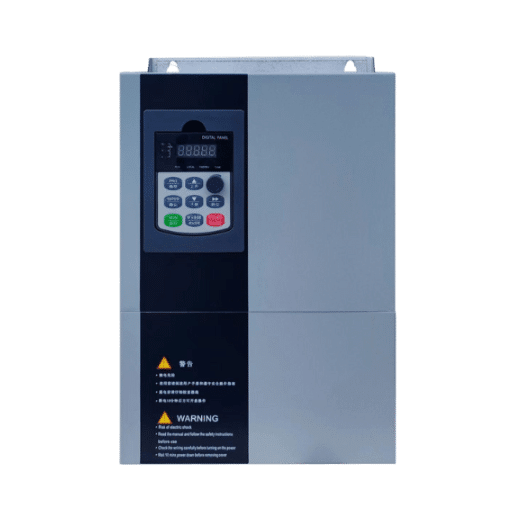
Ready to Get Your VFD Solution?
Whether you need a single drive or a complete system, we have the VFD products and engineering support to ensure your project's success.

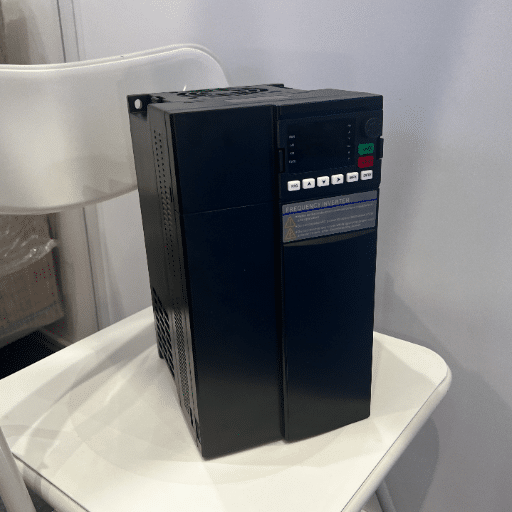
A Variable Frequency Drive (VFD) used for HVAC system drives motors to fans and pumps to lower demand when heating or cooling is not required in real-time; this can lead to savings of 30-60% when compared with fixed-speed operation with a payback period of almost 12 to 24 months depending on motor size in commercial buildings.
The June utility bill was deliverable by the facilities manager of a 180,000 sq. ft. office complex calling Denver his area in an entangling discussion. Cooling tower fans and AHA supply motors pushed his demand charge to $14,200 for that month alone.
After he had taken his facility through the conversion of five major fan systems using VFDs, one of the peaks took a 38% reduction. He spent a hardware cost including installation of$18,400. What would be his annual energy saving? $22,600. It took just under another ten months to break even.
You probably already know that VFDs save energy. What most HVAC contractors and facility managers lack is a structured retrofit framework that covers site assessment, motor compatibility, BAS integration, code compliance, and rebate capture. This guide gives you that playbook. For a broader foundation on drive selection, ratings, and applications across industries, see our complete low voltage VFD guide.
By the time you finish reading, you will be fully clued up about which HVAC apps will bring you the fastest returns, how to assess an existing HVAC system for its suitability for a retrofit, how to integrate into building automation, and how to use your energy-savings data to apply for utility rebates. We will do a walk-through of actual numbers, code restrictions, and commissioning checklist to be used on your next project.
Key Takeaways
- Cooling tower fan VFDs deliver the fastest HVAC payback at 12-18 months, with energy savings of 40-60%.
- ASHRAE 90.1-2022 mandates variable speed control for fans over 5 HP and pumps over 7.5 HP in most commercial new construction and major retrofits.
- BACnet or Modbus integration is now standard; proper point mapping during commissioning prevents costly callbacks and warranty disputes.
- Utility rebates can cover 30-50% of VFD hardware and installation costs when documented with pre/post energy measurement.
- Pre-2000 motors often need dv/dt filters or shaft grounding kits to avoid insulation failure and bearing currents under VFD operation.

Not every motor in an HVAC system justifies a VFD. The economics depend on run hours, load variability, and the cube-law relationship between speed and power. Here are the four applications where a VFD for HVAC systems pays off fastest.
AHU fans are the workhorse of commercial building climate control. They run long hours, experience wide load swings between day and night, and are typically oversized by 10-20% at design. A VFD for HVAC systems on an AHU supply fan matches airflow to actual occupancy and thermal load instead of throttling dampers.
Energy savings will be typically 35-50%. For a fan running 5,500 hours each year with a capacity is 22 kilowatt (kW), a variable-frequency drive (VFD) that runs on average 75% slower brings annual power consumption down from 121,000 kWh, more or less, to about 51,000 kWh. Eight thousand four hundred dollars every year is saved. Return and exhaust fans have about the same, although probably slightly lower savings, which varies between 30-45%, depending on their somewhat lower static pressure requirements.
Hydronic systems are ideal candidates for a VFD for HVAC systems because pump power drops with the cube of speed. In a typical chilled water loop, a VFD modulates pump speed to maintain differential pressure across the farthest coil. As zone valves close, the pump slows rather than riding the curve against a bypass valve.
Chilled water pump retrofits save 25-40% annually. Condenser water pumps, which generally operate at more constant flow, still achieve 20-35% savings by varying speed with cooling load. The key is to use differential pressure or temperature as the control signal, not a fixed schedule.
Cooling tower fans offer the single fastest payback in any VFD for HVAC systems retrofit. Nothing else comes close. They run at full speed only during peak design days, which represent perhaps 2-5% of annual operating hours. The rest of the year, a VFD for cooling tower fans can vary fan speed to hold condenser water temperature at a setpoint, eliminating the massive energy waste of on/off staging.
Energy savings of 40-60% are common. A 30 kW cooling tower fan running 6,000 hours per year might consume 180,000 kWh at full speed. With a VFD maintaining setpoint, average speed often settles near 60-70%, cutting consumption to 70,000-90,000 kWh.
Annual savings at 0.12perkWhrun0.12perkWhrun10,800 to 13,200.Fora13,200.Fora4,500 hardware and installation investment, payback arrives in 12-18 months.
Exhaust fans and rooftop units benefit from a VFD for HVAC systems when they serve variable-occupancy spaces like conference centers, auditoriums, or kitchen hoods. A CO2 or occupancy sensor signals the VFD to reduce airflow during low-occupancy periods. Savings of 20-35% are typical, with the added benefit of reduced noise during off-peak hours.
Retrofitting a VFD for HVAC systems onto an existing motor is not as simple as swapping a starter. A methodical approach to your HVAC VFD retrofit prevents callbacks, equipment damage, and code violations.
Start any VFD for HVAC systems project with a one- to two-week data log of motor current, run hours, and load profile. Clamp-on power loggers cost roughly $300 to rent and tell you exactly how much time the motor spends at partial load. If the motor runs above 90% speed more than 60% of the time, a VFD will not save much. If it modulates between 50% and 80%, the economics are strong.
Document the existing control method. Is the motor currently two-speed, across-the-line, or soft-start? Note the presence of bypass contactors, motor overload relays, and any existing control transformers. These all affect wiring and panel space requirements.
Motors manufactured before 2000 often have insulation rated for 1,600 V peak, while modern VFD output can reach 1,200-1,500 V with fast-rise PWM pulses. The reflected wave effect at the motor terminals can double that voltage. Pre-2000 motors have roughly a 40% higher risk of insulation failure under VFD operation without protective filters.
Test the insulation resistance with a megohmmeter. A reading of less than 100 megohms suggests that the insulation has degraded, so it needs rewinding or replacement. For motors over 10 HP in size and manufactured before 2000, specify dv/dt or a sinusoidal output filter. Motors over 75 HP should also fit shaft grounding or insulated bearings for preventing bearing currents.
Size the VFD at 110-115% of motor full-load amps (FLA), not horsepower. Nameplate HP is a mechanical rating; FLA is the electrical reality. A 20 HP motor with a service factor might draw 28 A while a standard 20 HP VFD is rated for 27 A. Size to current, not HP.
Selecting the best VFD for HVAC systems also depends on environmental rating. For mechanical rooms, an IP20 or IP21 enclosure with adequate ventilation is sufficient. For cooling towers, rooftops, or outdoor installations, specify IP55 or IP66 enclosures. Ambient temperature above 40 degrees C requires derating the VFD or adding ventilation.
If you need help matching the right drive to your motor specs, browse our HVAC-rated low voltage VFD range for detailed current ratings and environmental specifications.
A single VFD for HVAC systems on a 500 kVA transformer rarely causes issues. But when you add six VFDs for a full-building retrofit, total harmonic distortion (THD) can exceed IEEE 519 limits. Measure or estimate the aggregate VFD load as a percentage of transformer capacity.
Smoke control fans and stairwell pressurization fans require full-speed bypass capability for emergency operation. NFPA 92 and local fire codes typically mandate a bypass contactor that returns the motor to full speed upon fire alarm activation. Any VFD for HVAC systems serving life safety equipment must not inhibit emergency operation.
Coordinate with the fire alarm contractor. The bypass must be supervised, and the fire department may require inspection and approval before final sign-off. Document the bypass logic on the single-line diagram and the BAS sequence of operations.

A VFD for HVAC systems sitting in standalone mode is a missed opportunity. Don’t leave it there. BACnet VFD integration with the building automation system unlocks remote monitoring, energy tracking, and advanced control strategies.
Most modern HVAC VFDs support BACnet MS/TP, BACnet/IP, and Modbus RTU natively. BACnet is the dominant protocol in North American commercial buildings and is required by many utility rebate programs for measurement and verification. Modbus RTU remains common in industrial and older BMS installations.
For new construction, specify BACnet/IP. It runs over standard Ethernet, supports faster polling rates, and integrates cleanly with modern BMS platforms. For retrofits on legacy trunks, BACnet MS/TP over RS-485 is often easier to add to an existing network.
Sarah Delgado, an HVAC controls contractor in Phoenix, learned this the hard way on a 2024 retrofit. She specified Modbus RTU for three AHU VFDs because the drives shipped faster.
Six weeks after startup, the facilities manager demanded BACnet integration to match the rest of the campus. Sarah spent three days swapping communication cards and rewriting BMS graphics. Her takeaway was simple: verify the BMS protocol requirement before ordering hardware.
Standard BACnet VFD integration points to map for each VFD for HVAC systems include:
Map the fire/smoke override as a hardwired binary input, not a network command. Network latency during an emergency is unacceptable.
Any VFD for HVAC systems retrofit must comply with energy codes and power quality standards. Ignoring these can void permits, trigger inspection failures, or disqualify rebate applications.
ASHRAE 90.1 VFD requirements for 2022 mandate variable speed control for supply fans over 5 HP, return fans over 5 HP, and chilled water pumps over 7.5 HP in most commercial building types. The standard requires that fans and pumps be capable of operating at 66% of design airflow or water flow at 50% of design power. A VFD for HVAC systems is the most common and cost-effective way to meet this requirement.
The International Energy Conservation Code aligns closely with ASHRAE 90.1 but adds part-load efficiency metrics for packaged rooftop units and chillers. When you add a VFD to an existing chiller or RTU, verify that the part-load efficiency at 75%, 50%, and 25% load meets the code minimums for your climate zone.
IEEE 519 limits voltage distortion at the point of common coupling (PCC) to 5% THD for general commercial systems and 8% THD for dedicated industrial systems. Current distortion limits depend on the ratio of short-circuit current to load current (Isc/Il). A harmonic study is advisable for any retrofit with more than 100 kW of aggregate VFD load. The full IEEE 519 standard is available from IEEE.

The affinity laws explain why a VFD for HVAC systems creates such dramatic savings. For centrifugal fans and pumps, power is proportional to the cube of speed. A small reduction in speed yields a large reduction in power.
If a fan runs at 100% speed, it draws 100% power. At 80% speed, it draws 51.2% power. At 70% speed, it draws 34.3% power.
This cubic relationship is why a 20% speed reduction nearly halves energy consumption. In HVAC, fans and pumps rarely need full design output. The savings accumulate fast.
| HVAC Application | Typical Savings | Annual Savings Example* | Payback Period |
|---|---|---|---|
| Cooling Tower Fan (30 kW) | 40-60% | 10,800−10,800−13,200 | 12-18 months |
| AHU Supply Fan (22 kW) | 35-50% | 7,600−7,600−8,400 | 14-24 months |
| Chilled Water Pump (15 kW) | 25-40% | 3,000−3,000−4,800 | 18-30 months |
| Condenser Pump (11 kW) | 20-35% | 1,800−1,800−3,200 | 24-36 months |
| Exhaust Fan (7.5 kW) | 20-35% | 1,200−1,200−2,100 | 24-36 months |
*Assumes 6,000 run hours per year and $0.12 per kWh utility rate.
The payback period equals total installed cost divided by annual energy savings. For a 30 kW cooling tower fan:
Even with a more conservative 40% savings estimate and higher installation costs, payback rarely exceeds 18 months for cooling tower and AHU applications.
Ready to calculate savings for your specific project? Use our VFD energy saving calculation guide to build a payback worksheet with your actual motor sizes and utility rates.
Most North American utilities offer prescriptive rebates for VFD installations on HVAC equipment. Rebate values typically range from 80to80to250 per horsepower, depending on the utility and application. Custom rebates for larger projects can cover 30-50% of total project cost.
To capture rebates, you generally need:
Start at the Database of State Incentives for Renewables and Efficiency (DSIRE) to identify programs in your state. Then contact the utility’s commercial rebate department before starting work. Some programs require pre-approval.

Proper installation of a VFD for HVAC systems prevents interference, nuisance trips, and premature failure.
Run input power and motor output cables in separate conduits. The PWM output from the VFD induces high-frequency noise into adjacent conductors. Minimum separation is 12 inches; crossing at 90 degrees is acceptable if parallel runs are unavoidable.
Use three-conductor shielded cable for motor leads on drives over 25 HP or runs longer than 50 feet. Ground the shield at the VFD end only. Terminate motor leads with proper lugs and torque to manufacturer specifications.
Ground the VFD enclosure to the building grounding electrode system with a dedicated conductor. Do not rely on conduit as the sole ground path. Bond all metallic enclosures in the VFD circuit to maintain a low-impedance ground plane.
For EMC compliance, keep control wiring (24 VDC, 4-20 mA, thermistor) at least 12 inches from power wiring. Use shielded twisted pair for analog signals and ground the shield at one end.
Remember that every 10 degrees C above the VFD’s rated ambient temperature halves its expected lifespan. If your mechanical room hits 45 degrees C in summer, add ventilation or select a drive rated for 50 degrees C.
This VFD for HVAC systems is designed to maintain the speed of fans and pumps; depending on cooling and heating demand, this adapts automatically in the moment. Simply by reducing motor speed at partial-load conditions, it cuts energy consumption down by 30-60% as opposed to constant-speed operation.
For applying VFDs to HVAC systems, do you think it is worthwhile to select a drive of about 110-115% full-load amps of the largest motor with the correct IP enclosure rating for its intended application, BACnet/Modbus communication, and inbuilt dv/dt protection? When applied to mechanical room duty, choose an IP21-rated drive having HVAC-specific firmware. For cooling towers and rooftops, simply specify a drive in IP55 or IP66 with conformally coated boards. You must ascertain whether your utility company’s rebate program recognizes the VFD’s make and model number when presenting product literature.
A VFD on an AHU supply fan will typically save 35-50% of annual energy consumption. For a 22 kW fan at 5500 hours/year, potential savings at standard commercial utility rates would be about 5200-7300-7800.
VFD Requirements in ASHRAE 90.1 (2022) require variable speed control for supply fans above 5 HP, return fans above 5 HP, and chilled water pumps above 7.5 HP in most commercial buildings. No VFD control is necessary for very small motors in HVAC systems or a number of exempt applications, such as industrial process ventilation.
Yes, most of the time. Motors made since 2000 generally come with inverter-duty insulation rated for VFD operation. Some diagnostics have to be done on motors before 2000 to calculate insulation resistance and maybe dv/dt filters or shaft grounding would be necessary to prevent premature failure.
BACnet is the dominant protocol for commercial building automation in North America and is preferred for new installations. Modbus RTU is common in industrial settings and older BMS platforms. Always verify the existing BMS protocol before specifying communication hardware.
Size the VFD at 110-115% of the motor’s full-load amps (FLA), not horsepower. For outdoor cooling tower installations, specify an IP55 or IP66 enclosure. If the motor is pre-2000 or over 75 HP, add a dv/dt filter and shaft grounding.
VFDs draw non-sinusoidal current, creating harmonic distortion primarily at the 5th, 7th, 11th, and 13th harmonics. A single small VFD rarely causes problems. For aggregate VFD loads over 100 kW or 15% of transformer capacity, conduct a harmonic study and add line reactors or filters as needed.
A single HVAC VFD retrofit on an AHU or cooling tower fan usually takes one to two days of integration, wiring, commissioning, and BAS integration. A full-building VFD for HVAC systems retrofit would be six to ten drives, which might take one to two weeks, depending on panel special space, conduit routing, and fire alarm coordination.
Right. Many North American utilities offer prescriptive rebates of $80-250 HP for any type of VFD used for HVAC systems on a commercial item. Preferential rebates due to the higher cost of the product in a larger project can cover 30-50% or the like of the total project cost. Some programs require pre-approval and post-installation Measurement and Verification (M&V) documentation.
Yes. Smoke control fans, stairwell pressurization fans, and other life safety systems require a full-speed bypass contactor that overrides the VFD during fire alarm conditions. The bypass must be supervised and approved by the local fire authority.
A VFD for HVAC systems retrofit remains the highest-ROI energy upgrade available in commercial buildings. The numbers prove it. Cooling tower fans pay back in under 18 months. AHU supply fans follow close behind. Even hydronic pumps, with their longer payback periods, deliver reliable returns in buildings with variable loads.
The key to a successful retrofit is methodical planning. Assess the load profile. Test the motor insulation. Size to current, not horsepower.
Plan for harmonics. Integrate with the BAS properly. Document everything for code compliance and utility rebates.
The Meridian Office Complex in Austin followed this exact playbook on a 2023 retrofit. Their facilities team added VFDs to four cooling towers, six AHU supply fans, and three chilled water pumps.
Total project cost: 47,000.Utilityrebate:47,000.Utilityrebate:18,500. Annual energy savings: $34,200. Payback after rebate: 10 months. Two years later, zero callbacks and no bearing failures.
That is the standard you should aim for on every project.
Browse our HVAC-rated low voltage VFD range to find the right drive for your next retrofit. Need help with sizing or integration? Contact our engineering team and we will walk through your project specs together.
For detailed wiring and panel-layout guidance, refer to our low voltage VFD installation and wiring guide.