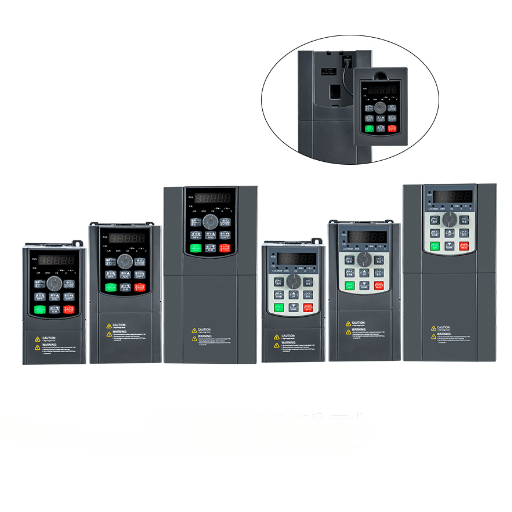
Ready to Get Your VFD Solution?
Whether you need a single drive or a complete system, we have the VFD products and engineering support to ensure your project's success.

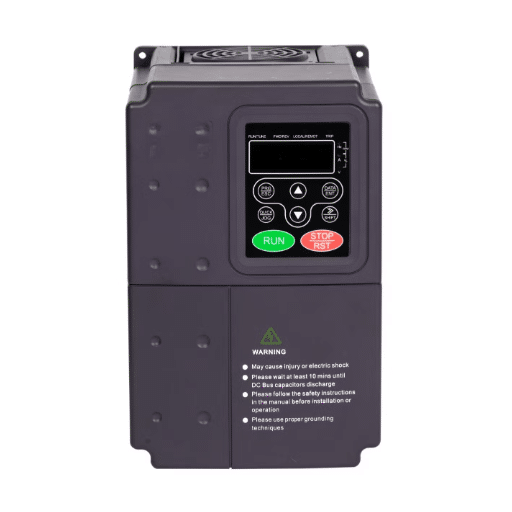
Variable Frequency Drives (VFDs) are the latest technological advancements in electric motor control, offering the broadest range of options for improved energy efficiency and operational accuracy. When it comes to the selection of a VFD, an inevitable question arises whether it should be single phase or three phase. This selection can significantly affect the system’s overall performance, compatibility, and efficiency. It is essential to understand the differences between the two types of VFDs if one is to make an appropriate decision; especially in relation to such factors as the level of power supply that is available, the expected use, and the financial limits. This post intends to thoroughly explain and contrast single- and three-phase VFDs without any ambiguity which will help in choosing one which is most useful in a particular situation or in a work environment and where it will be put in place.

VFD can be notified as an electronic device that is used to control the speed torque of an AC motor by varying the motor supply frequency and the voltage. It is pertinent and appropriate in applications where accurate many control is required, leading to reduced energy consumption and enhancement of system efficiency. VFDS are classified into single phase and three phase variable capability drives based on the type of electrical supply line. Single-phase VFDs are designed for small-scale applications, while three-phase VFDs are utilized when power requirements are high for the application. Efficiency improvements, less mechanical component wear and tear are to some expected extent achieved by the optimal operation of the motor. This happens when the VFDs are used, therefore, they have entered great deal in the process control and automation of modern facilities.
Use of Variable Frequency Drive (VFD) in different cases gives a lot of benefits, mainly in industrial and commercial areas. One of the main advantages of VFD is provision of the precise motor speed which can help to run the equipment at proper control level and meet any specific criteria. This reduces energy waste by a large margin as motors do not have to run at their full speed anymore and this is especially important since most of the time they do not even need the maximum speed.
It also helps in reducing optical overload of mechanical traction on the motor. VFDs create an opportunity of minimized stress on motor components due to the rise and fall of seamless speed meaning an extended use or life on the motor and other devices. Such developments in variable frequency drives have turned them into explicit devices having capacities like they can be adjusted to certain parameters, they can as well relay data, hence allowing one to integrate them in modern know nothing manufacturing or in other words Industry 4.0 and in the Internet of Things. VFDs have the ability to increase efficiency and reselling them increase less depreciation. VFDs are integral in both current technological advanced industrial automation, HVAC and renewable energy solutions.
Variable Frequency Drives (VFDs) function by adjusting the output frequency and voltage of the electricity delivered to the motor. In other words, the said adjustment is possible by transforming the input power supply of AC into DC through a rectifier, usually using a diode bridge or controlled thyristors. The DC voltage obtained at the output is then filtered and smoothed by a capacitor, which removes any ripples. At this point, transformation of the voltage is carried out, albeit with controlled frequency and voltage, converting the previously stepped down DC voltage using an inverter that uses active switching elements like modern insulated-gate bipolar transistors (IGBTs).
The output frequency directly affects the speed of rotation of the motor, while the voltage ensures proper torque and efficient operation of the machine. By using pulse width modulated (PWM) technology, VFDs fine-tune the technique structure, controlling motor acceleration, deceleration and steady-state processes. Traditional VFDs also have such a function. Voltage Fun Drives advances that incorporate specific dynamic tasks to the output values are capable of adjusting the system’s working point for higher efficiency as well as minimizing the mechanical damage to the equipment.
The sensors and feedback systems installed in the motor also feed on key elements such as motor load rating and operating speed and the heat characteristic of the motor. Such input data allows further adjustments during the operation or even allows better performance and reliability. With these intricate systems of operations, VFDs have an advantage that takes the application of the product to another whole level especially in the industrial spheres, as they allow unexcelled accuracy and efficiency.
| Key Parameter | Single-Phase VFDs | Three-Phase VFDs |
|---|---|---|
| Input Power Supply | Requires single-phase power | Requires three-phase power |
| Applications | Suitable for small-scale systems | Ideal for industrial applications |
| Power Output Capacity | Limited power handling | Higher power handling |
| Cost | Generally more affordable | Typically more expensive |
| Efficiency | Lower operational efficiency | Higher operational efficiency |
| Load Handling | Supports light and moderate loads | Supports heavy-duty loads |
| Size | Compact and lightweight | Larger and heavier |
| Voltage Stability | Can struggle with voltage dips | Better voltage stability |
| Maintenance | Simpler to maintain | Requires specialized maintenance |
| Availability | Widely available for home use | Widely used in industries |

Single-phase variable frequency drive (VFD) is a special device designed for single-phase motors to control speed and torque by modifying the supplied frequency and voltage. Applications requiring variable-speed operation, such as HVAC units, pumps, and conveyor systems, often incorporate such drives because of their features provide a better system performance. In this manner, they assist in making usage of motor power more efficient in accordance with the specific requirements of each application. They control the power factor by controlling the motor speed. Single-phase VFDs are expensive compared to a 3-phase VFD system because the installation process is harder when it comes to motor control centers.

Three-phase variable frequency drives (VFDs) allow to change the speed and torque of three- phase motors by changing the frequency of the voltage that is supplied to the motors. This is done without having to change the coupling or the voltage supply itself. These can be described in their applications as specific types of generators that generate very heaters at certain speed. Three- phase VFDs are known to be most commonly used in industries that require good control and high-efficiency motor performance. This component is vital in reduction of energy use at the same time enhancing movement of the machine.
Excellent as they are, the incorporation of three-phase electrical motors in the workplace does come with attendant technical and operational problems which need to be solved for the system to work effectively. First of all, the uppermost problem is the excessive expenses initially for the purchase of the equipment and the equipment itself, and the installation and start up of the system as a whole. It is an obvious fact that, unlike other simpler single-phase electromechanical equipment, the three-phase equipment has relatively more attachments that are used in control and monitoring tasks, including but not limited to complex motion controllers, sensors, and very strong power supply systems, which discourages the purchase of this equipment.
Going further, the most distressing problem, which hinders proper system operation, is the issue of system complexity. Therefore, it is necessary, as with any other electromechanical power equipment, to properly configure the three-phase drives in order to bridge coherence and harmony with the existing equipment and the electrical systems as they are. It is also necessary to mention the effect of harmonics into the appliance, the power source, which can be a cause of system instability, decrease of efficiency, or accelerated destruction of individual parts of the source.
In addition, the repair of three-phase drives calls for knowledge in maintaining such devices as they are more complex in design and use sophisticated control systems. Carrying out continuous monitoring and diagnosis of the system to address problems like overheating, insulation breakdown, or equipment break down is also recommended as some situations may affect the performance and the reliability and will lead to higher maintenance costs as well as Hadley, since a lot of time will be lost in the waiting for the delivery of spare parts. Last but not least, external factors such as high temperatures, humidity, and impurities will adversely affect these materials, so extra precautions should be taken during installation and operation.
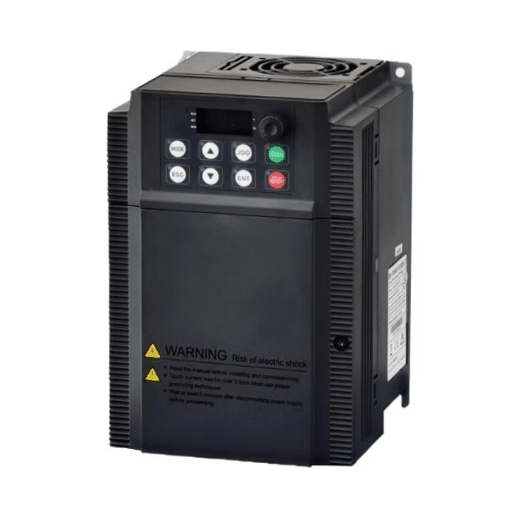
Variable Frequency Drives (VFDs) are categorized as single-phase VFDs and three-phase VFDs, with either of the two used in motors control. Single-phase VFDs are primarily used in controlling small inductive loads in household and small buildings applications such as HVAC, fan, and pump motors. They are also apt for scenarios where the need of a solution for motor speed and energy consumption to be managed in relatively small scale operations.
On the contrary. Three-phase VFDs play a crucial role in the operation and management of large industrial spaces and substantial facilities, commonly associated with high powered equipment like machines, conveyors, screw compressors or big sized chillers. VFDs such as these do a lot more than enable energy savings, as they also reduce the mechanical stresses on the machinery and are designed to help manufacturing, mines, and water plants become more automated. Given the conditions in which they operate, these VFDs are very versatile and extremely effective.
Single-phase drives operated using variable frequencies or VFDs are used widely in electrical machines where single-phase conduits are the only source of supply and at precision motor control. Such machines are commonly found in the domestic, small industrial and agricultural settings. Fan and compressor motors that are used in the HVAC units are a typical example. The usage of VFDs allows these motors to operate efficiently as they switch on and off, which tries to imply energy conservation. This third type of the complete pumping system consists of single-phase waterpumps that are provided by the farmer, drawn by hand to the boreholes to pump water.
Also, VFDs can be employed in the Yahokota Water Services to control the water pumps for general supply. Their other applications comprise of the provision of soft start-up, acceleration, protection against too many loads in the conveyor belts and small machinery in workshops and factories. They are usually very convenient considering the system’s reliability and especially the motor life, which is one of the huge problems associated with a fire.
Three-phase VFDs (Variable Frequency Drives) are an important electronic device in some industries that require precise control and high energy efficiency, for example, they are widely used in manufacturing, and oil and gas, air conditioning so often called HVAC systems and also, production of power. Their main purpose is the control of the speed, torque, and direction of the three-phase motors, thereby enhancing their performance while minimizing energy consumption.
Manufacturers, conveyor systems, mixers, and extruders are predominantly dependent on three-phase VFDs, it drives consistent speed for good product quality and minimizes waste. Installing these drives in the HVAC industry helps to reduce the overall consumption of energy and the associated costs of centrifugal or rotary systems oriented toward fans, pumps, compressors and more, because the speed of their operation can be controlled whenever it is necessary. Also, three-phase VFDs are also used in the oil and gas industry for the steering of varieties of drilling equipment, pumps and or compressors as they have to maintain high levels of reliability and load tilting in order to function properly within their different operating conditions.
In addition to improving efficiency in energy consumption, the vast amount of energy saved by this application is up to 50% compared to the traditional methods. It should be also appreciated that motors and connected machinery have their life extended further, during the start-up and operational phase of adaptation of three-phase ways and the suppression of mechanical stress, thanks to which maintenance costs will be significantly decreased together with a reduction in unscheduled repairs. All of the aforementioned therefore make the three-phase VFDs an absolute necessity for the drive to accelerate industry towards high performance.
When looking for a Variable Frequency Drive (VFD) for your motor, there are plenty things that you need to consider so that everything can be in the right place for it to work as required.
A clear balance between the three factors and the application offers an easy selection of VFD that will guarantee dependability, energy saving, and long service life for the drive system and auxiliaries.
As you settle on the kind of Variable Frequency Drive (VFD) you would like for your industrial application, the most recent data and information are also necessary to evaluate operational data, effectiveness, and compatibility. The advent of VFD technology most recently allowed electronic control of the motor speed, which has been proven 30% energy saving even in industrial plants. Another aspect which is now very important is the ability of a VFD to communicate with other devices in the field of Internet of Things (IIoT). This is because contemporary VFDs have communication options within the drive like Ethernet/IP and Modbus for quick exchange and optimization of process parameters. Furthermore, there has recently been a shift in the perception of noise emission levels because new machines incorporate active filters to suppress harmonics in power circuits. By the help of these modern enhancements, the enhancement can be managed to suit the present duties of the company and the future scaling.
It is crucial for the smooth functioning of industrial systems in the present day to have power without fail and compatibility that is untainted. Even though recent strides have been made in the control and provision of power, in particular voltage control, features like automatic voltage regulation (AVR) and uninterruptible power supply (UPS) that are designed to suppress voltage deviations and power fail-overs have been incorporated in power management systems. Such strengthening has allowed these systems to work over a broader range of line voltages, now under reliable operation in more intense use rather than the frequent break downs which were experienced.
The compatibility aspect has improved as well with the help of more universal power connectors across various regions, and by making the input frequency range adaptable. Such equipment also manages to perform as required across peculiar terrains or infrastructure configurations. Besides this, renewable sources including solar and wind have increased by use of such devices, and now includes the distribution of power with the help of dynamic load sharing and energy storage. It is very important that such criteria are observed in the case of ensuring sustainability of operation and in the case of reengineering installations against forthcoming in power consumption.
There’s a noticeable shift in the design of contemporary power systems: they have to be cost-efficient and readily available, for use in industries and for individuals in other parts of making the system less wasteful in terms of energy. With the development of new technologies such as intelligent grid technologies and automation power systems have seen a much decrease in energy losses as possibilities for real time power distribution and load management become optimally utilized. This lowers the general costs of power as an important aspect of cost reduction is the use of highly efficient transmission lines that eliminate energy loss during the transmission of energy.
In addition, technical solutions in the sphere of energy harvesting are designed – lithium-ion batteries, flow batteries – which affords the improvement in the introduction of alternative resources and reduction of the dependence on the normal combustion systems. And as such, these changes now increase operational costs and improve terms of current and future energy standards, but make them a necessity in modern operational energy systems.
It is true that it is possible, but there are issues, where if you take a one-phase VFD on an engine working on a three-phase duty basis, then you will not have an engine running on its full capacity. In dealing with the exclusion of thermal losses, one may have to employ a phase converter or an oversized VFD in certain instances. This affects the starting torque and the efficiency as well and may even expose the supply to higher order harmonics. Always ensure that the motor is suitable for operation in a VFD system and follow the manufacturing guidelines. In any equipment that will be used in high power application, obtaining a three-phase connection is more practical.
Harmonics induced by variable frequency drives are unsuitable not only due to their effect on the equipment they power, but also to the quality of power they transmit, demanding that they be evaluated: a major concern when making a choice between single phase vs three phase VFDs. In the supply side, single-phase VFDs cause more distortion compared to three-phase VFDs which tend to dissipate quite equally harmonics in the load. Remedial actions like the application of filters, inductors, or active front end devices might be forced. The selection process will be informed by the limits of the harmonics and the target efficiency, which presses the demand for the right designs.
While three-phase fast switching frequency drives are generally more resource-intensive in terms of connection and earthing, they, under the same power conditions tend to be more reliable when subjected to greater stress. A simpler view of things can be gotten when working with single-phase motor drives; however, the view may be misleading since it is mainly for limp and buckling application and many more machineries will be required which proves to be expensive to the installations and running of the drives. The possibility in relation to motor control contents and torque at the start-up should be taken for a proper looking.
Let’s begin with the examination of the engine’s power level, running time, start-up and availability of three phases. This helps to decide how suitable a single phase or three phase VFD is for your purpose. In these cases, it is most often advisable to use a three-phase VFD for high and/or continuous motors as it improves efficiency and lowers harmonics, reducing losses. And when there is no means of something bigger but light loads on the application area, it is sufficient to use a single-phase VFD with a correction factor applied or a PHASE converter separately. Before making the final decision, the main decision-makers are advised to consult the manufacturers to assess motor compatibility and harmonic self-vibration blocking, and the calculations underlying these assessments will be elaborated.