Ready to Get Your VFD Solution?
Whether you need a single drive or a complete system, we have the VFD products and engineering support to ensure your project's success.

The use of regenerative braking in variable-frequency drives (VFDs) is driving a fundamental shift in how energy efficiency and sustainability are managed in industrial systems. The method captures energy generated during braking and reuses it rather than wasting it as heat. By combining energy recovery with VFD technology, industries can significantly reduce energy consumption and costs while minimizing environmental impact. The write-up will shed more light on the following: regenerative braking in VFD, its industrial and universal practical applications, and the concrete benefits it brings to modern industrial systems. Engineers, energy managers, and industry specialists are all welcome to read and share their views on how they would utilize this new technology to achieve competitive results through the provided energy recovery system deep dive article.

Regenerative braking is the concept of reclaiming the energy that is generally wasted as heat during braking and turning it into electricity for reuse. This is done so because the motor is made a generator when decelerating and therefore the power is sent back to the storage system or can be saved in the battery. It is a well-known practice in the drive to control the electric frequency of the motor (such as VFDS) and in electric cars (EVs), because it leads to greater efficiency, lower operational costs, reduced waste, and, therefore, environmentally friendly policies. With this energy recovery, systems can achieve remarkable overall energy consumption reductions while maintaining the same satisfactory performance.
A regenerative braking system is based on energy conversion. When a vehicle or system is decelerated, its kinetic energy is not wasted as heat but is captured instead, as is the case in traditional braking systems. The whole process is driven by electric motors, which actually operate in reverse and act as generators. The captured kinetic energy is converted to electrical energy, which means it can either be stored in a battery or sent back into the power system right after conversion.
In electric vehicles (EVs), for instance, high-efficiency power electronics control energy transfer by directing recovered electricity to the battery pack in a more organized way. Regenerative braking technology, with bidirectional inverters and energy recovery systems as its main components, has undergone further development to match the performance of other devices, thereby allowing more energy to be recovered and increasing the car’s travel distance. On top of that, regenerative braking minimizes the wear and tear on mechanical components of traditional braking systems, leading to lower maintenance costs and a longer service life. Entering this system into the transportation and industry set-up offers a double benefit: it aids energy sustainability while not upsetting the system’s performance and reliability, which is most of the time the case.
Variable Frequency Drives (VFDs) are fundamental in regenerative applications because they provide precise control over the motor’s speed and torque, enabling efficient energy management and recovery. VFDs, with their intelligent algorithms, enable bidirectional power flow, allowing surplus power produced during deceleration or braking to be fed back into the grid or redirected to the system. Not only does this reduce the amount of lost energy, but it also drastically cuts operational power costs. The cutting-edge technology of today’s VFDs is real-time monitoring and diagnostics, which ensure the system runs as efficiently as possible regardless of changes in load and environment. Progress in VFD design, for example, in harmonic mitigation and higher power densities, enhances the system’s compatibility with renewable energy sources and grid standards, making it indispensable in industries like manufacturing and transportation, where regenerative applications are already in daily practice.
Regenerative drives are very important for energy recovery. The reason is that they can capture and reuse the energy that would have been wasted anyway during braking or deceleration of mechanical systems. This is a process especially well-suited to electric vehicles, elevators, cranes, and the like, where a lot of energy can be recaptured from rapid speed changes. Modern regenerative drive technology is the right combination of advanced power electronics and intelligent control algorithms that efficiently convert the system’s kinetic or potential energy into electrical energy, which can then be fed back into the power grid or used to power the system again. For example, in factory environments, regenerative drives can deliver energy cost savings of up to 30%, thus maintaining the business competitive and eco-friendly at the same time. The improved solutions in terms of efficiency and heat management make such systems less prone to overload during high-demand periods. Hence, they are seen as essential if we are looking for a sustainable energy solution.
A braking resistor is an essential component in power electronics and motor control systems, especially in variable-frequency drives (VFDs). Its main job is to remove the excess power generated when an electric motor is operated in braking mode. When the motor slows down, it becomes a generator that converts kinetic energy into electrical energy. The braking resistor is the right place to dissipate all the excess electrical energy as heat without harming the power system.
The braking resistors’ performance is directly affected by the resistance setting, the rated power capacity, and the thermal dissipation efficiency. The resistance value must be chosen with motor and drive system compliance in mind, to provide the best dynamic braking performance and minimal thermal generation without risking component damage. With advances in technology, high-quality insulating materials and efficient thermal designs have been used, increasing the efficiency and lifespan of braking resistors and expanding their industrial applications.
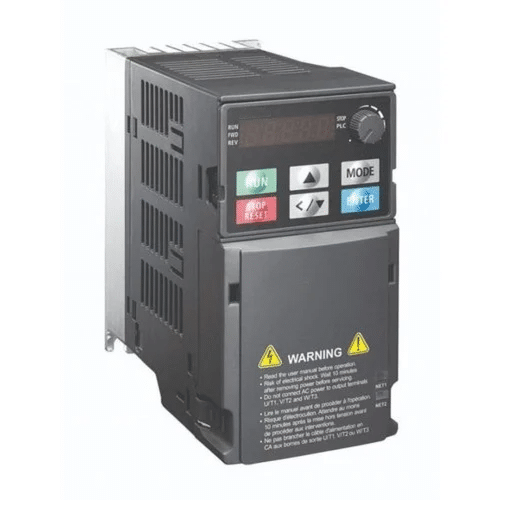
Variable Frequency Drives (VFDs) can regulate the speed and torque of electric motors by controlling the frequency and amplitude of the supplied voltage. The primary use of a VFD can be described as comprising three basic parts: rectifier, DC bus, and inverter. The rectifier converts the AC from the source into DC; afterward, the DC power is stored and regulated on the DC bus. Then the inverter reverses the DC power back to AC power at the selected frequency and voltage, and in this way, the precision of the motor speed control is achieved.
The sinusoidal waveform, which is necessarily generated by the motors, is properly emulated by modern VFDs using pulse-width modulation (PWM), thereby ensuring smoother operation and minimal electrical losses. The most complex VFD systems also integrate feedback loops, one of which uses encoders or sensors, while other devices read the motor’s current feedback and adjust the drive output accordingly. What is more, the introduction of VFDs into the industrial field, as per the latest research and state-of-the-art technology, has been very successful in minimizing energy consumption by perfectly matching motor speed to load requirements, thereby eliminating energy waste during typical full-speed operation.
Additionally, the devices have been equipped with built-in safety features, including overvoltage, undervoltage, and temperature protection, which will increase the motor’s and the whole system’s life and reliability. By combining the VFD’s ruggedness with the convenience of predictive maintenance notifications and real-time performance viewing, the efficiency and energy savings that VFDs offer do not make them less important in today’s automation and power management systems.
Generator mode converts mechanical or kinetic energy into electrical energy, which is then returned to the power grid. This mode is supported by advanced power electronics, which ensure the grid is compatible with parameters like voltage, frequency, and phase. The process dramatically increases the overall system’s efficiency by reducing energy loss during braking or deceleration, as in regenerative braking in trains, elevators, or electric vehicles.
The latest enhancements have improved the efficiency and reliability of energy input to the grid in generator mode technology. Namely, the innovation of insulated-gate bipolar transistors (IGBTs) has made power handling more efficient, thereby decreasing thermal losses. Moreover, the use of feedback sensors has been highly effective, creating a system that is unstable under dynamically varying conditions but stable during grid integration. According to the latest predictions, improving the generation mode’s efficiency can increase the total system efficiency by up to 30%, thereby reducing carbon emissions across sectors, particularly the industrial and transportation sectors.

Presently, modern elevator systems are increasingly adopting regenerative braking technology to reduce power consumption and support energy efficiency. The regenerative braking technique, in particular, enables elevators to recover the kinetic energy produced when a heavily loaded elevator car descends, or a lightly loaded car ascends. Thus, with this technology, elevators convert it into reusable electrical energy. The said savings are usually rechanneled into the building’s electrical grid or other power systems, such as lighting and HVAC.
According to research, about 70% of the energy that is usually wasted as heat during slowing down can be converted back into the electrical system and used to meet the building’s energy needs. Apart from that, an energy management system that integrates with a regenerative system can give significant improvements in energy use within that building, particularly if the building is tall. Such a result not only saves energy but also reduces greenhouse gas emissions; hence, it complies with the Sustainable Development Goals worldwide. If the future proves the creation of more effective energy storage systems, the installation of regenerative braking in elevators is expected to be easy and widespread soon.
The changes in the manufacturing and industrial automation landscape have been significant, driven by advances in artificial intelligence, robotics, and data analytics. The integration of machine learning algorithms with industrial machinery enables predictive maintenance, reducing downtime and improving operational efficiency. According to the latest industry data, the adoption of collaborative robots, also known as cobots, is a steady process, with their use now extending to assembly lines and even quality control.
Moreover, the use of IoT devices in production plants ensures that plant equipment is well monitored and that energy consumption remains consistent, thereby simplifying processes and reducing waste. The mix of the technologies acts as a stimulant to the construction of “smart factories”, which will be much more connected, adjustable, and have the ability to make instant decisions. Such a scenario indicates that the cost of operations is significantly reduced and production speed increased as well. The upsurge in automation technologies will notably underscore the need for digitization to make manufacturing a greener, even more efficient sector.
The integration of advanced technologies into transportation systems has become a significant factor shaping how we are moving toward mobility and sustainability. The latest trains, especially high-speed rail networks, incorporate advanced technologies such as magnetic levitation (maglev) and aerodynamic designs to make shorter trips and save significant energy. Moreover, digital monitoring tools for the same systems can be highly beneficial, enabling route updates, condition tracking, and schedule adherence, thereby improving reliability and performance.
At the same time, the surge of electric vehicles (EVs) has impacted both personal and commercial travel through transformations in the transport industry. With the implementation of battery technologies—such as solid-state and lithium-ion batteries—becoming increasingly efficient, EVs have achieved reduced greenhouse gas emissions and lower operational costs compared with traditional internal combustion engine cars. Additionally, many countries have made considerable investments in charging infrastructure, including both wireless charging stations and rapid-charging networks, which are expected to become mainstream soon.
At the point where these two modes of transportation meet, they create a basis for being part of the networked, green, and interconnected transport ecosystems. An example of this is electric train systems powered by renewable energy that can work with EV mobility hubs, which are centers that facilitate the operation of electric road vehicles, thereby allowing both passengers and goods to move from one mode of transport to another without complications. This way of doing business shows that the trend is continuing in reducing environmental impact and boosting business processes.

The cost of operating a system and its performance will improve with energy efficiency. Studies document that energy use can be reduced by up to 30% through energy-efficient systems, leading to savings of more than 3.5 years. By using new, cutting-edge regenerative technologies, such as variable-frequency drives or energy recovery systems, they will be able to generate energy within the system to reduce waste and, at the same time, improve efficiency. These same changes are, in addition, the ones the company can make to save it from the economy, which is starting to float again, and they will also serve as part of the manufacturing clean and green. The method now in place for companies offers a significant, quantifiable reduction in operational costs and aligns with increasingly stringent energy conservation compliance requirements.
Optimal use of mechanical components by them to reduce the severity and enhance the operational reliability of the equipment is a grave necessity. By using synthetic oils and lubricants with enhanced thermal stability, advanced lubrication techniques can significantly decrease friction and material loss. Additionally, predictive maintenance systems, such as vibration analysis and thermography, are beneficial. They allow early detection of faults, which, in turn, protects the equipment and prevents costly, time-consuming failures. Inventions and material science innovations have also introduced wear-resistant materials, alloys, and coatings such as tungsten carbide or diamond-like carbon (DLC), which enhance the surface durability of equipment components subjected to high stress. Through the integration of these technologies, not only do industries reduce downtime but also extend the lifespan of their machinery, thereby enhancing their economic viability and operational superiority.
It has become increasingly important to incorporate sustainable strategies into industrial operations to minimize environmental impact. Environmentally friendly lubricants and coatings, advanced tribological solutions, are increasingly being adopted. By reducing friction and wear, these materials lead to substantial cuts in energy usage and considerable reductions in greenhouse gas emissions. Nearly a quarter of energy dissipation in industrial systems is due to friction, as reported in the data, underscoring the importance of optimizing interface margins for energy efficiency.
Moreover, being environmentally friendly in the materials used is partially responsible for a cleaner environment and better lives for people who will use it. One perfect example is green industrial lubricants, which are entirely renewable. Because of this, there is little or no pollution and contamination of the water and land ecosystems. Also, through life studies, it is shown that if the company uses long-lasting materials, the equipment will remain active for a longer period, and the materials will not be used again as raw materials. The latest technologies in materials and tribology are helping the industry adopt responsible, green practices, ensuring high performance and reliability.
Enhancing Regenerative Braking Capability by Managing Voltage Transients
This paper discusses the efficiency gains and challenges of regenerative braking, including voltage transients.
Design and Development of a Variable Frequency Drive Test Bench Prototype and Testing Regime for Repaired Drives
This study focuses on VFD testing and operational verification.
Regenerative Braking for Induction Motor Drive
This article explores regenerative braking methods for induction motor drives.