Ready to Get Your VFD Solution?
Whether you need a single drive or a complete system, we have the VFD products and engineering support to ensure your project's success.

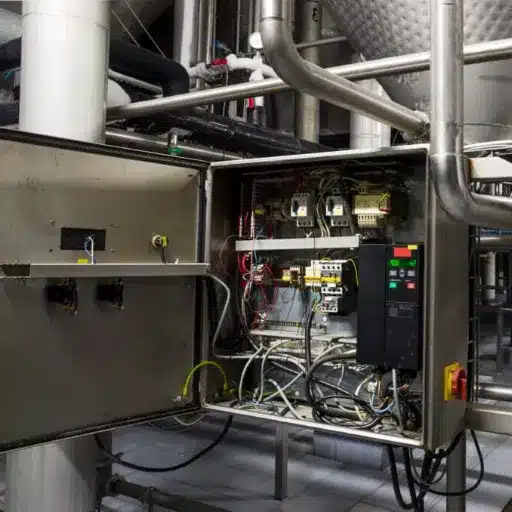
Variable Frequency Drives (VFDs) are widely used in various industrial and commercial applications, being the main component for keeping motors and machinery running efficiently. But, just as any sophisticated device, VFDs also have their share of problems and sometimes even outright failures. It is wise to look at the problems that usually occur with VFDs, learn the prevention guidelines, and thereby save a lot of time, money, and frustration. In this article, we will outline not just the most common factors that lead to VFDs being out of order but also how these factors can affect operations and we will give practical maintenance tips to your systems. A regular industry expert or a facility manager will find this guidance very useful in getting their VFDs almost immortal through improved reliability and longevity.
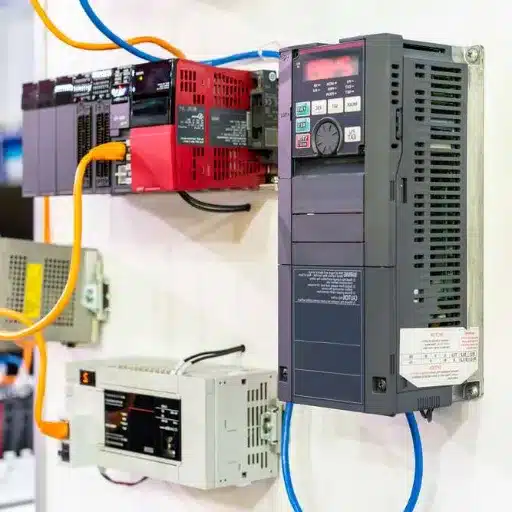
A Variable Frequency Drive, or VFD, is an electronic device that is used to control the speed and torque of an electric motor by changing the input frequency and voltage of the motor. VFDs are widely used in industrial and commercial settings, and they are crucial for both energy consumption optimization and equipment performance enhancement. They mainly serve applications like pumps, fans, conveyors, and compressors, among others.
Key Benefit: The main benefit of a VFD is that it can vary the speed of the motor so that it corresponds to the demand of the process, hence conserving a lot of energy. The U. S. Department of Energy states that the installation of VFDs in fan and pump systems can lead to a 20% to 50% reduction in energy consumption. Moreover, the VFDs make the mechanical stress on the equipment to a minimum by giving it smoother starting and stopping cycles thereby increasing the life of motors in general.
Variable Frequency Drives (VFDs) are very important in different industries because of their ability to control the speed and optimize the energy of electric motors accordingly. The lighting control technology brings about massive improvements in the efficiency and sustainability of operations. As a case in point, in the HVAC sector, VFDs are widely used to bring the performance of the fans and pumps to the optimum level with the result that energy consumption is reduced by as much as 50% when compared to conventional constant-speed systems.
VFDs, on the other hand, are well accepted in the manufacturing industry. Accurate motor control is possible thanks to VFD technology which in turn results in the enhancement of the automation processes, the improvement of the product quality, and the reduction of the downtime caused by the failure of the equipment. Industries like automotive, textiles, and paper depend on VFDs for their production lines to be both flexible and stable, thus eliminating wastage and increasing profit in the long run.
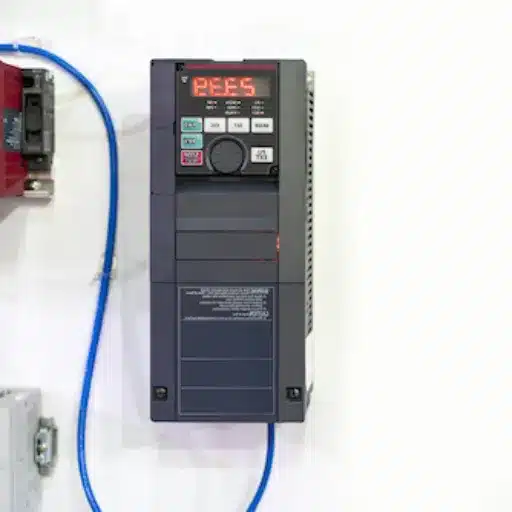
Overcurrent faults are one of the top problems that Variable Frequency Drives (VFDs) experience, among others. Such situations arise when the VFD current goes above its maximum operational threshold, and this could damage either the drive, motor or even the whole system connected to them. A variety of reasons can cause these faults, including load changes happening suddenly, short circuits, wrong programming, and to some extent, mechanical problems like a stuck motor.
⚠️ Industry Statistics: Current statistics show that more than 30% of VFD failures that are reported in industries are due to events related to overcurrent. These faults clearly not only shorten the lifespan of the equipment but also create long periods of inactivity that disrupt the whole production process and consequently increase the company’s overheads. Besides that, the risk of overcurrent conditions is also increased by poor maintenance practices or incorrect parameter settings during the installation of the equipment.
Heat buildup is a major factor that reduces the performance and the life expectancy of VFDs. Although the heat is out of the specified range, internal parts like capacitors, semiconductors, and circuit boards will be affected slowly but surely, thus finally leading to the reduction of the operational efficiency and the eventual failure of the device. The information from industry sources states that the lifetime of electronic components can be reduced to one half in case the temperature is increased by 10 °C over the recommended operating range.
Critical Issue: Proper ventilation and cooling systems are a must for coping with heat buildup successfully. According to research, it is around 57% of the total VFD failures that are due to cooling problems and flow of air hindered within the enclosures. One way to fix this problem is the use of forced air cooling, heat sinks, or liquid cooling systems, etc., which are believed to be one of the most effective solutions. Also, the regular maintenance schedules should include the cleaning of heat-dissipating components and checking if fans or cooling units are working fine.
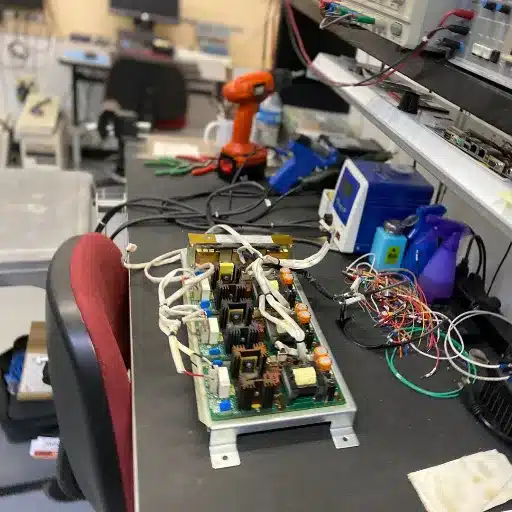
Diagnosing the early signs of variable frequency drive (VFD) failures is crucial for avoiding expensive repairs and lengthy downtime. Some of the main symptoms of VFD problems are fluctuating motor speeds, strange noises or movements from the motor, and commonly seen fault codes or alarms on the VFD display. Overheating is another major symptom that can be attributed to poor airflow around the unit or dust accumulation in the housing. Furthermore, you might notice that the power used has gone up and the motor-based systems might not be as effective, which are the signs of a failing VFD.
Thermal imaging cameras play a crucial role in identifying hotspots in VFD components like capacitors, IGBTs, and connections, among others. Overheating is a common early indicator of electrical or mechanical difficulties. A reduction in overheating-related failures by 15% according to industry data will translate to considerable savings in the long run.
These gadgets assist in detecting problems associated with the VFD performance impacted by voltage sags, surges, and harmonics, among others. Indications from recent studies say that harmonic distortion in industrial facilities can cut down energy efficiency by 10%, which again highlights the need for this tool.
Oscilloscopes are required for checking the output waveforms of VFDs and confirming that the signals are clean and within the expected parameters. When used alongside digital multimeters to track voltage, current, and resistance, these instruments provide a thorough examination of VFD performance.
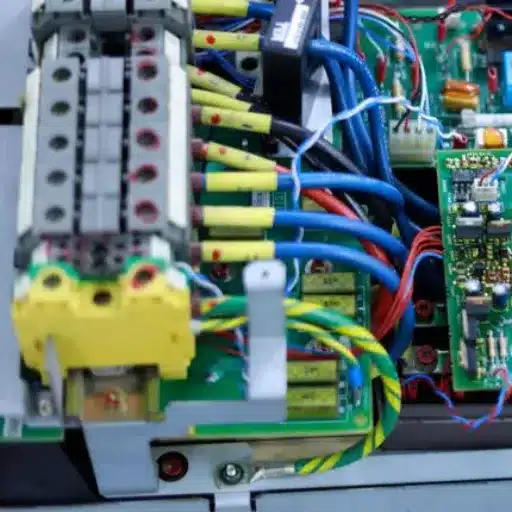
The long-term effectiveness and dependability of Variable Frequency Drives (VFDs) come hand in hand with wireless inspections and continuous monitoring. Having a properly organized inspection routine allows to spot trouble points and it does so before they have grown up to be major issues, therefore, it greatly reduces the likelihood of breakdowns. Inspection has as its main focus checking for the occurrence of overheating, checking for loose connections, checking for soaking in the form of dust, and listening for odd sounds or feeling vibrations that are not normal.
The use of advanced monitoring systems can significantly increase the effectiveness of preventive maintenance by giving access to real-time data. For example, through the builtin diagnostics present in the modern VFDs, a technician can keep an eye on the parameters such as the voltage, the amount of current, and the temperature of the internal parts and this technician can be alerted when there are any issues, thus the technician can perform the necessary correction right away.
VFDs have great sensitivity with respect to their environment. Consequently, make sure the area where VFD is installed is free of too much dust, moisture, and heat. A study carried out in the industry reported that high temperatures could shorten the life of VFD parts to the extent of 50%. To save VFDs from such a fate, one needs to install them in ventilated cabinets and also keep ambient temperatures lower than the manufacturer-recommended levels.
Overheating stands as one of the major reasons for VFD failures. Clean fans, filters, and heatsinks so as to avoid blockages that could obstruct air movement. According to research, dirty or clogged cooling systems may lead to akin situations as a 15% more energy consumption and the rapid breakdown of internal components.
Having the VFD firmware and software always updated helps the system run at top-notch performance, and the latest industrial technologies will also be added to the system’s capabilities. Manufacturing companies frequently issue updates for bug fixes, enhancing user experience, and providing better protection against high-tech cyber threats.
Main parts like capacitors and fuses are subject to aging and should thus be checked or replaced regularly depending on the pattern of usage and the nature of the surrounding conditions. A publication of 2023 stressed that timely changing of capacitors before their failure can lead to a decrease in the frequency of unplanned machine stoppages by a whole quarter.
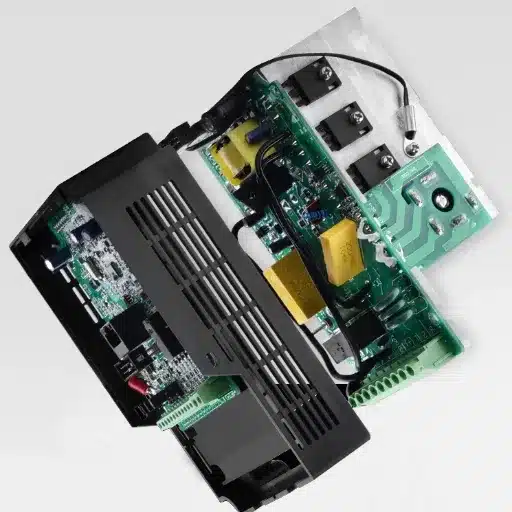
Repeated VFD failures because of overheating happened to a manufacturing plant. After the inspection, it turned out that the enclosures for VFDs did not have any ventilation. The drives were running hotter than normal which resulted in deterioration of parts and finally system collapse. Ambient temperature inside the enclosures was 10-15°F constantly higher than the suggested temperature for VFD operation according to the reports.
A motor damage at a water treatment plant occurred as a result of harmonic distortion produced by its VFDs. The motors connected to the VFDs overheated because of the disruption in the power supply and the excessive harmonics generated by the VFD. The THD (total harmonic distortion) was found to be more than 20%, which is very far from the allowed limit of 5%. The facility took the steps of installing harmonic filters and replacing the old VFDs with the new ones that have advanced built-in features for mitigation.
VFD Drives – “5 Causes of VFD Motor Failure & How to Fix Them”
This source discusses common causes of VFD motor failures, such as shaft currents and voltage spikes, and provides practical solutions for diagnosing and fixing these issues.
Source Link
EMC – “Common Causes of VFD Failure”
This article highlights frequent VFD failure causes, including environmental factors (dust, moisture, overheating), loose connections, and equipment overuse, making it a reliable reference for understanding failure prevention.
Source Link
MarineLink – “Catastrophic Equipment Failures Of VFD And HF Systems”
This source explores the impact of VFD failures in commercial and military electric propulsion systems, offering insights into the critical nature of VFD reliability.
Source Link
The most common signs of faults are the frequent occurrence of trip codes, overload warnings, erratic output, and, in some cases, the failure of the diode or rectifier, the high voltage on the DC bus, the faulty IGBT, the overheating, the burnt smell of the components, and the unplanned downtime.
Poor power quality alongside input voltage fluctuation as well as transient voltage occurrence can lead to the damage of sensitive components including the rectifier and diodes, and disabling of the latter that leads to nuisance trips, creating demand for higher current that in turn will affect the DC bus and IGBT stages, thereby making VFD systems more susceptible to failure, however, this can be eliminated by the use of proper filters, surge protection and good source conditioning.
Erratic behavior of the VFD might be attributed to several reasons such as improper wiring, substandard control board connections, terminals being dirty, faulty contactors, wrong motor parameters, or unstable input power; to isolate and fix the issue, one would need to check the wiring and tightness of the terminals, control board status LEDs would need to be inspected, and there should be monitoring of voltage or current readings, while qualified personnel are engaged for deeper drive or motor testing.
In the case of a VFD being the cause of frequent trip occurrences, start by checking for overload conditions, if the motor load has changed, overheating, and if the cooling fans are blocked, then check if the trip settings and codes on the drive are correct; also, keep a record of the trip history, isolate the motor and VFD, and call the repair service or manufacturer support such as ABB drives or Yaskawa to prevent further damage that could be irreversible.
Understanding and preventing VFD failures is essential for maintaining operational efficiency and minimizing costly downtime. By implementing regular maintenance practices, monitoring environmental conditions, and addressing issues proactively, you can significantly extend the lifespan of your VFD systems and optimize their performance.