Ready to Get Your VFD Solution?
Whether you need a single drive or a complete system, we have the VFD products and engineering support to ensure your project's success.

The use of Variable Frequency Drives (VFDs) in modern industrial and mechanical systems is pivotal as they provide exact control of moving parts and energy consumption. However, the operation of VFDs is not a one-size-fits-all situation. They can be set to operate with different duty cycles—continuous, intermittent, or periodic—depending on the application. Knowledge of these duty cycles is crucial to performance optimization, equipment lifespan extension, and energy waste reduction. In this article, we will discuss the various kinds of VFD duty cycles, their peculiarities, and the impact they can have on your system’s overall performance. Whether you are a veteran of the industry or a novice VFD user, this guide will give you the expert tips you need to make wise choices.
Variable Frequency Drive (VFD) duty cycles are the operational patterns that VFDs use to control the speed and torque of electric motors. These patterns dictate how the VFD supplies power to the motor under varying load conditions or at specific times of operation. A duty cycle may consist of several components, including running time, stopping time, accelerating time, decelerating time, and constant-speed periods. An understanding of these cycles is instrumental in ensuring that the VFD is employed effectively and efficiently, thereby minimizing wear and optimizing energy use in the particular application.
VFD duty cycles play a significant role and cannot be overemphasized, as they directly influence the performance, lifetime, and even the energy efficiency of the electric motor and the entire system it powers. The duty cycle can be adjusted to the specific application requirements of industrial machinery, HVAC systems, or conveyors, so that operators can keep the motor within its operating range without unnecessary stress and, hence, with little or no premature wear. Moreover, power consumption is lower when the duty cycle provides the motor only with the speed and torque it requires for the task, leading to lower operational costs. Thanks to breakthroughs in VFD technology and data-driven tools, engineers can monitor and adjust duty cycles with even greater accuracy than ever before, thereby realizing the benefits of IoT-enabled systems for improved productivity and sustainability.
Duty cycles are categorized into eight standard classifications, from S1 to S8, each defining a specific mode of operation for electric motors.
The motor runs at a constant load for a duration long enough to reach thermal equilibrium.
Operates at a constant load for a short period, insufficient to achieve thermal stability, then shuts down long enough for the motor to cool.
A sequence of identical cycles consisting of a period of constant load and a period of rest, without thermal equilibrium being reached.
Similar to S3 but includes significant starting periods.
Like S4, but additionally incorporates braking.
Continuous operation involving a sequence of different loads with no rest periods.
Similar to S6 but with added braking in the cycle.
Continuous operation comprising variations in load or speed.
The operation of an electric motor can be broken down into four distinct phases, each playing a critical role in its functionality and efficiency.
Duty cycles of VFDs (Variable Frequency Drives) are critical across different sectors to support good electricity use and extend the productive life of equipment. By precisely tuning motor speed and torque, VFDs significantly reduce energy consumption, enabling substantial cost savings in unavoidable applications such as manufacturing, HVAC, and water treatment. They also enhance process control, production process consistency, and the overall power of the system. Besides, the possibility of tuning to specific duty cycles increases mechanical stress on the equipment, which is very nice because it means less maintenance and greater operational reliability. That’s why VFDs are tools no industry can do without if it’s focused on efficiency, sustainability, and cost-effectiveness.
Variable Frequency Drive (VFD) duty cycles are essential for optimizing motor efficiency because they allow shifting the motor output to meet the specific demands of an application. They let more energy be used efficiently by adjusting motor speed and torque to operational requirements, rather than keeping the motor at full capacity unnecessarily. New studies show that VFDs can cut energy use by half, especially when loads change frequently, such as in HVAC systems or conveyor belts.
Up to 50%
Reduction in energy consumption with proper VFD duty cycle management
Besides saving energy, VFD duty cycles also help reduce friction between the motor’s moving parts by lessening the effects of sudden starts and stops. This translates into longer equipment life and reduced maintenance needs, which, in turn, leads to a direct decrease in operating costs. Furthermore, the ability to perfect motor performance enables greater precision in situations where consistency and control are critical. The use of VFDs and their variable duty cycles enables different sectors not only to improve their operations and environmentally friendly practices but also to address the challenges of energy efficiency and operational resilience in the modern world.
Variable Frequency Drives (VFDs) are essential devices used in various critical industries, primarily to improve energy efficiency and maintain precise operations. Recent reports indicate that VFDs have contributed significantly to the manufacturing, HVAC, water and waste, and oil and gas industries.
One of the main applications of VFDs is controlling motor-driven machinery, thereby optimizing production lines and reducing idle time.
A major user of VFDs to control the rates at which fans and pumps operate, thereby meeting airflow requirements and achieving energy savings in both commercial and residential systems.
VFDs are a must-have in water treatment facilities for controlling pump and motor operations, a critical step for maintaining consistent water pressure and improving wastewater treatment efficiency.
Drilling and extraction are made more reliable, leading to lower energy costs and higher safety standards through the use of VFDs.
The ongoing replacement of traditional drives with VFDs in these industries is a strong indication of VFDs’ importance as a solution for energy efficiency and sustainable operations. The VFDs do so by allowing these sectors to be flexible and stay alive in the competition through a good demand load match in the fast-changing market.
The use of Variable Frequency Drives (VFDs) in industrial processes has significantly reduced costs and enabled the adoption of sustainability measures. Newest research and data notes: industries with VFDs as part of their equipment report energy savings of 20-60%, mainly due to optimized motor speed control and elimination of energy waste. This energy savings translates into significant financial savings over the long term, as energy costs are generally a major part of total operating costs.
VFDs are considered an essential part of the eco-friendly movement because they reduce carbon emissions by lowering energy demand. Their use aligns with international objectives to reduce pollution and comply with strict industrial emissions standards. Besides, they enable predictive maintenance by providing highly accurate real-time performance data, thereby decreasing unexpected breakdowns and extending machine lifespans—a key aspect of sustainable asset management. The advantages listed above make VFDs a cost-efficient and sustainable technology capable of operating across all industries.
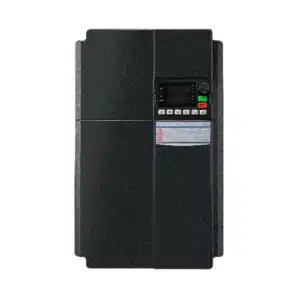
VFD duty cycles refer to the specific operational patterns and load requirements that a Variable Frequency Drive must handle over time. These cycles often include variations in speed, torque, and frequency to match the demands of the connected equipment. Properly defining and understanding the duty cycle is critical to ensuring the VFD is appropriately sized and rated for the application, thereby improving efficiency and reliability.
Identifying whether the application involves constant torque (e.g., conveyors) or variable torque (e.g., pumps and fans) helps select the appropriate VFD settings.
Factors such as ambient temperature, load peaks, and start/stop frequency influence the VFD’s performance and lifespan.
Many VFDs are designed to handle short periods of overload. However, exceeding these limits can lead to overheating or damage.
The duration of operation under various load conditions affects heat dissipation and overall system efficiency.
VFD duty cycles are essential to the proper working and long service life of variable frequency drives. The duty cycle is the ratio of the time in operation (load duration) to the time in rest or low load. In practice, this means that heat generation and cooling in the VFD system are analyzed. Electrical energy conversion during operation produces heat, which must be appropriately managed to avoid component failure. High-end VFDs usually use thermal sensors and overload protection systems that watch these cycles to improve performance.
Studies and measurements provide evidence that improper or overly heavy-duty cycles can cause thermal stress, ringing repairs, and lower-than-expected energy consumption due to increased power requirements. The case of frequent start/stop sequences generating current surges is one way in which wear and tear are intensified on the drive and motor, underscoring the importance of strict duty-cycle matching to the application demand.
Using highly detailed load profiles monitored by modern IoT-enabled devices, operators can adjust VFD duty cycles to achieve the required operational efficiency while keeping the system healthy, thereby enhancing productivity across various industrial settings.
Motor performance is highly dependent on the dynamic interplay among torque, speed, and heat dissipation. Torque is the motor’s rotational power, a decisive factor in the ability to move loads efficiently. On the contrary, speed indicates how fast the motor rotates and is affected by the input frequency, which is regulated by a Variable Frequency Drive (VFD). Nevertheless, heat dissipation becomes an essential factor when motors operate under fluctuating loads and speeds to avoid overheating and extend their lifespan. The new technology enables motors to maintain this balance through precise tuning via IoT, enabling real-time monitoring of these parameters.
The latest data and insights indicate that improving heat dissipation strategies can significantly increase the motor’s efficiency. In addition, torque and speed alignment with operational needs results in less wear and tear on the motor, which, in turn, leads to energy savings and performance maintenance. This unified strategy not only prolongs the motor’s life but also helps reduce industrial energy consumption, making it greener.
The decision between inverter-duty motors and standard motors depends on the application and operational requirements. Inverter-duty motors are those that can tell VFDs (variable-frequency drives) when to stop and are more prone to the voltage stress and thermal challenges that VFDs can cause. As such, they are characterized by improved insulation systems capable of withstanding the highest voltage spikes, and their energy consumption is usually not a problem, as they run efficiently at different speeds.
In contrast, standard motors are best for fixed-speed operations, and the initially lower cost is another argument for their selection. However, they will likely have shorter lifespans due to the electrical stresses they endure when VFDs are used. It is essential to evaluate performance requirements alongside the budget to select the correct motor.
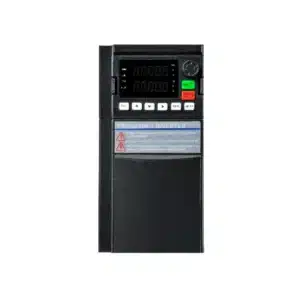
Variable Frequency Drive (VFD) duty cycles are widely used in industrial and commercial applications that require precise control of motor speed and torque. Some of the most common applications include:
Adjusting motor speeds to match fluid demand, optimizing energy consumption in water supply and wastewater systems.
Controlling airflow in HVAC systems for efficient heating, cooling, and ventilation.
Regulating speed for material handling systems to ensure smooth and efficient transport of goods.
Managing motor operation in air compression systems for optimal pressure control.
Providing variable speed control for safe and precise movement of loads.
VFDs (Variable Frequency Drives) have completely changed the landscape of many industries, making them more energy-efficient and more accurate in their operational processes. The most recent statistics show that the manufacturing, water treatment, and oil and gas sectors are the main sectors powered by VFDs due to their versatility.
VFDs help control the speeds of pumps and compressors, keeping production levels consistent without energy waste or excessive wear. This precision enables reliable drilling and extraction operations while lowering energy costs and improving safety standards.
VFDs modulate pumping flow rates, helping facilities save on electricity bills and providing effective water distribution. This technology ensures optimal pressure maintenance and improved wastewater treatment efficiency.
The manufacturing sector has turned to VFDs to improve conveyor systems, vary motor speeds on assembly lines, and enhance quality control through pinpoint precision. This application reduces idle time and optimizes production processes.
As environmental concerns rise, the feasibility study of VFDs, among other technologies, is expected to expand across industrial applications.
The adoption of Variable Frequency Drives (VFDs) has significantly improved the control of conveyor belts in the manufacturing process. VFD technology allows manufacturers to control the speed, torque, and motion of a conveyor system as a whole, which in turn results in smoother material flow and reduced wear on mechanical parts.
The use of such systems also creates a more flexible production environment, as manufacturers can adjust conveyor belt speeds for different product types and production volumes without having to shut down for long periods. This innovation offers the advantage of increasing operational efficiency while being environmentally friendly, as it uses less energy, thereby attracting both manufacturers and consumers interested in protecting the environment.
The energy efficiency of HVAC (heating, ventilation, and air conditioning) systems is a significant concern as companies and homes seek to reduce energy use and lower utility bills. The introduction of new technologies such as smart thermostats, advanced variable-speed compressors, and demand-controlled ventilation systems is radically changing the industry.
Use machine learning algorithms to analyze user preferences and occupancy patterns and adjust heating and cooling schedules to minimize energy waste.
Can adjust their output to match demand; thus, significant efficiency gains are achieved by avoiding the traditional systems’ frequent start-stop cycles.
Can sense and respond to the number of people in a space by adjusting airflow, thereby saving energy and maintaining good indoor air quality.
These innovations have the double benefit of reducing operating costs and contributing to the environment by cutting CO₂ emissions.
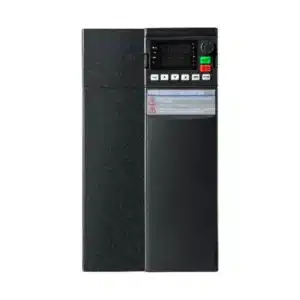
VFD duty cycles were expected to change depending on the need for energy-saving systems. Future trends indicated that VFDs would become more intelligent, dynamically adjusting their duty cycles based on real-time performance data and system requirements. These advancements will likely come with the use of machine learning algorithms that will not only help further optimize energy use but also reduce equipment wear and adapt to varying load demands. Besides, the integration with innovative building ecosystems will be improved to the extent that, through monitoring and controlling the entire operation, it will align with the global trend of going green and being efficient.
The progress of Variable Frequency Drive (VFD) duty cycles and technology is greatly influenced by artificial intelligence (AI) and the Internet of Things (IoT). According to the latest data, VFDs are no longer merely controlling motor speed. The integration of AI-powered algorithms is increasingly common, enabling the prediction of system behavior and allowing proactive energy savings and cost reductions by making the necessary adjustments. The application of IoT enables VFDs to operate not only individually but also to synergize with other intelligent systems, forming a network that centralizes and enhances the operation of the entire building.
VFD technology is gradually being replaced in favor of renewable energy. Thus, VFD is more attentive to the whole project, serving as the primary and greenest contributor. These developments are bringing the industry to the doorstep of intelligent, adaptive, and planet-friendly solutions in the near future.
The integration of IoT with precision control is revolutionizing entire systems by delivering greater accuracy in performance and energy use. According to recent market trends, these technologies not only optimize energy use but also ensure equipment lasts longer, as wear and tear is reduced through smarter, adaptive operation.
Can collect and process real-time data, enabling predictive maintenance and reducing downtime significantly.
Companies moving towards such modern systems will be rewarded with a drastic reduction in operating costs, along with green infrastructure.
The combination of precision control and IoT is enabling the creation of new industrial and commercial standards that are more tailored to efficiency and less harmful to the environment.
When AI-driven Variable Frequency Drive (VFD) systems are integrated with dynamic duty-cycle optimization, they represent the strongest drive yet for energy savings and system performance. The performance of these intelligent systems is based on machine learning algorithms that continuously analyze the system’s operational patterns and predict real-time adjustments to achieve optimal performance.
30-40%+
Energy Cost Reduction
Through continuous monitoring of load requirements, temperature, and energy consumption patterns
Recent analysis of search queries highlights one of the most frequently asked questions: “In what ways do AI-driven VFD systems facilitate the reduction of energy costs?” The reason is their constant monitoring of factors such as load requirements, temperature, and energy consumption. Furthermore, the system’s ability to prevent excessive wear and tear extends the equipment’s lifespan, making it a green, economical solution that can be found in various areas, such as manufacturing and HVAC systems. The union of VFDs with AI technology has undoubtedly been the most significant driver of change in energy optimization and operational efficiency.
Here are five professional and authoritative reference sources that you can use to verify the correctness of your article on “VFD Duty Cycles.” These sources are academic and technical in nature, ensuring credibility:
Title: Load distribution and VFD topology selection for harmonic mitigation in an optimal way
This article discusses optimal VFD topologies and their applications, offering insights into harmonic mitigation and duty-cycle control.
Title: Modified circuit design of VFD for critical loads under single phasing conditions
This paper explores the design and operation of VFDs under specific conditions, including duty cycle considerations.
Title: Optimization of VFD operations for transporting equipment and packages
Focuses on VFD operations in defined duty cycles, particularly in the context of transporting equipment.
Title: VFD Challenges for Shipboard Electrical Power System Design
This book provides an in-depth analysis of VFDs, including their effects on power systems and their implications for the duty cycle.
Discusses duty cycles in converters and microgrids, offering technical insights relevant to VFDs.
VFD duty cycles describe how long a motor runs under a specific load and pattern when driven by a variable frequency drive; duty refers to the percentage of time the motor is energized versus resting and is often expressed as a percentage. Duty cycle classification (IEC terms such as S1, S2, S3–S8) helps specify the duty cycle for an application’s motor, so you can select the right motor and avoid overheating or undersizing due to frequent starts and stops.
The motor nameplate often lists the duty or class (such as S1 continuous, S2 short-time, S3 intermittent), along with rated horsepower, frequency, voltage, and allowable temperature rise. Use the nameplate duty cycle information, along with the VFD’s duty cycle, to confirm the motor meets your needs and ensure its speed, torque at zero speed, and cooling are suitable for applications such as low-speed or rapid changes driven by automation.
Many three-phase motors are designed for continuous operation (S1) and can be used with VFDs for precise speed control, but not all motors are suitable for prolonged low-speed operation without overheating. Ensure the motor has adequate cooling and is specified for duty cycles that include extended low-speed operation; otherwise, select a motor with a higher insulation class or forced cooling to prevent overheating.
Identical duty cycles mean the motor experiences the same load pattern repeatedly; duty cycle classification (IEC S1–S8) defines different patterns: S1 continuous; S2 short-time; S3 intermittent, periodic with start/stop; S4–S8 include starting with load or variable load and frequent starts and stops. Understanding these types of duty helps you ensure the motor and VFD are ideal for applications such as automation tasks with rapid changes or medium-voltage drives in power systems.
The inertia of the motor and the driven load (moment of inertia) affects acceleration, deceleration, and the VFD’s thermal stress. High-inertia loads require more torque and longer run times to reach speed, which can affect the duty cycle and potentially lead to higher heating. When selecting the right motor for your needs, account for torque requirements, potential inertia mismatch, and whether the duty cycle allows the motor to cool between cycles to prevent overheating.
Applications needing torque at zero speed (holding torque) or precise speed regulation rely on VFDs for closed-loop control and may require motors designed for such duty cycles. Ensure the motor and drive combination supports the loop of control needed, feedback devices, and that duty cycles include frequent starts and stops or continuous holding without overheating to maintain performance in automation or positioning systems.
Frequent starts and stops increase thermal and mechanical wear; duty cycles that include many starts (S3–S8) typically require a motor with a higher horsepower margin and a VFD configured for soft-start, proper torque limits, and duty-based thermal protection. Selecting a motor for your needs means considering duty cycle duration, the percentage of time running, and inertia to ensure reliable, long-term operation.
Yes, medium-voltage, three-phase power systems commonly use VFDs to control large motors. For heavy industrial duty cycles, confirm that the VFD and motor are rated for the power supply, duty classification, and duty cycles, including protections for rapid changes, overcurrent, and thermal limits to ensure the motor is suitable for applications in power systems and process automation.
To prevent overheating, match the motor’s duty type and nameplate ratings to the VFD duty cycle; consider forced cooling or a motor with a higher temperature rating; monitor temperature and the duty cycle percentage of time at load; and tune VFD frequency and voltage profiles for controlled acceleration. Declaring the duty and selecting the appropriate motor and VFD settings will ensure the motor operates without overheating and meets the intended application’s speed and torque requirements.