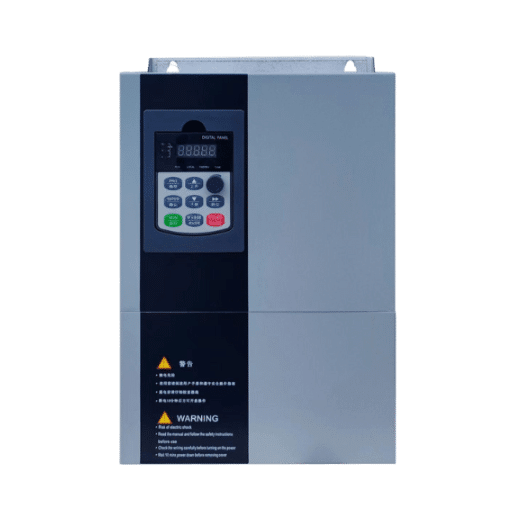
Ready to Get Your VFD Solution?
Whether you need a single drive or a complete system, we have the VFD products and engineering support to ensure your project's success.

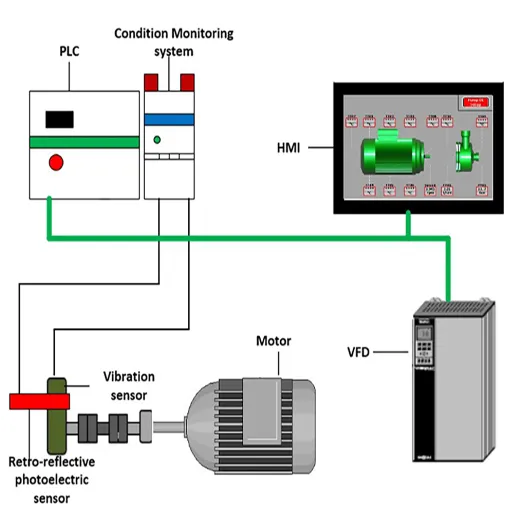
Variable Frequency Drives (VFDs) are integral to most modern industrial applications because they can regulate motor speed. However, with these devices, noise and vibration are often experienced, which, if not controlled, can result in equipment wear and tear, consequently decreasing the useful life and increasing operating costs. This paper explains the typical causes of VFD Noise & Vibration and practical methods to curb them. Whether you are a manager of a facility, a maintenance engineer, or even a maintenance worker, read this handy guide to maximize productivity, minimise breakdowns, and hence, smooth running of different systems. Continue reading to find the insights and actions you need to address this vital part of the VFD application.
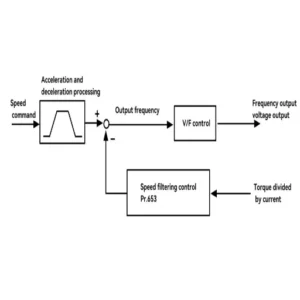
VFDs use rapid switching of electrical signals, which can generate electromagnetic interference, leading to audible noise in motors or surrounding equipment.
The non-linear nature of VFD operations creates harmonic distortions in the electrical supply, which can cause vibrations and increase wear on motor components.
Using a motor that is not correctly sized or designed for VFD operation can cause mechanical stresses, leading to excess noise or vibration.
Unsecured mounting or loose mechanical components in either the VFD or the motor can amplify vibrations and increase noise output.
High-frequency currents induced by VFDs can flow through motor bearings, causing damage over time and generating noise during operation.
Common-mode voltage is the voltage imposed equally on all motor phases with respect to the ground plane, induced primarily by switching in the Variable Frequency Drive (VFD). It causes increased noise during motor operation and operational inefficiency. Standard mode voltage creates electrical disturbances, stimulates motor winding noise, and may cause bearing currents to damage bearing motors, leading to higher noise levels.
Studies have shown that limiting these effects most often involves using good grounding techniques, shaft grounding rings, and filtering, which typically consists of common-mode chokes and dv/dt filters applied in some sequences. These methods are meant to reduce the high-frequency components and further minimize the coupling of undesired voltages into mechanical components. Proactively addressing common-mode voltage is sure to put an end to motor noise throughout the motor’s service life and enhance system performance in general.
Noise and vibration in VFDs are often associated with rapid changes in motor speed and torque. Such variations may induce a mechanical imbalance or any other electrical inconsistency in the system. One of the primary reasons is the VFD’s switching frequency, which generates high-frequency pulses in the power electronics, resulting in harmonic content that causes acoustic noise and motor vibrations.
Another reason is the excessive vibrations caused by electromagnetic forces within the motor windings due to an inconsistent current distribution. Then, too, mechanical problems like misaligned shafts, unbalanced loads, worn bearings, and other factors would, in turn, exacerbate the situation, raising noise levels and lowering the overall system’s efficiency.
⚠️ Critical Installation Considerations
Poor grounding and installation practices are a significant source of noise and vibration concerns during Variable Frequency Drive (VFD) operation. Insufficient grounding creates circulating current and electrical interference from power supply noise, leading to abnormal VFD operation, control system disturbances, and vibratory effects on the motor systems.
Anomalies in installation—whether in cable routing, shielding loss, or unacceptable terminations—can introduce mechanical resonances and EMI. According to the latest findings, dedication to a low-impedance grounding path is critical, and strict adherence to the manufacturer’s installation instructions is required. Regular inspections and strict adherence to these fundamentals during installation can keep the systems up to standard and reduce noise and vibration problems.
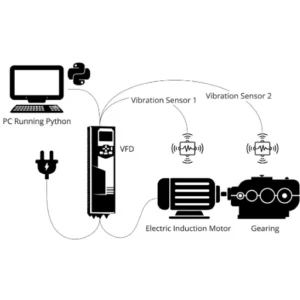
Noise and vibration can significantly affect machinery processes. They undermine efficiency through acts of aggression. Furthermore, they intensify wear and tear and probably cause premature failure. Excessive vibration results from misalignment, loose components, or excessively high operating temperatures, thus rendering the system unreliable.
How vibration and noise might affect motor aging and reduce performance and lifespan is indeed a significant concern. Increased vibration causes bearings, shafts, and other vital components of the motor to experience excessive stress, leading to imbalances and misalignments. Over time, these conditions promote higher friction and increased heating, leading to the quicker wear of the motor’s parts.
⚡ Critical Finding:
The virtual industrial world today reports that improper vibration control regularly sends motors to an early grave, reducing motor lifespan by more than half; hence, to avoid failure, these issues need to be acknowledged and further addressed through improved monitoring and predictive maintenance techniques.
Vibration and noise have a profound impact on machinery performance and reliability. Excessive vibration causes misalignment, looseness, and wear, reducing the precision with which a machine operates. Long-term exposure to such harsh conditions puts a tremendous strain on mechanical systems, increasing energy consumption and reducing output efficiency. Proper monitoring and proactive intervention, using techniques and sophisticated diagnostic tools, enable enterprises to detect vibration and noise problems earlier in development, prolonging the lifespan of equipment while maintaining relatively constant performance.
Based on the most up-to-date search data, one can undoubtedly assert that noise and vibration have long-term effects on machinery. In the absence of such extensive vibration, the equipment tends to misalign, wear out earlier, or undergo catastrophic failure. In the same scenario, noise serves as an early warning system for mechanical irregularities, alerting to potential issues such as oil-starved bearings.
These risks can be virtually eliminated through the use of cutting-edge diagnostics and predictive analytics. Real-time data capture and trend analysis are excellent means of identifying problems earlier, allowing sufficient time to address them before they grow larger with almost no effort, thereby minimizing downtime to a large extent.
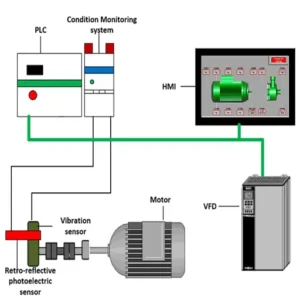
Establish and adhere to a consistent maintenance routine for inspecting and servicing machinery. This reduces the likelihood of unexpected failures and ensures that all components are in optimal condition.
Utilize tools such as vibration analysis, thermal imaging, and predictive analytics to monitor performance in real-time. These technologies help detect early signs of wear or damage, allowing for proactive repairs.
Verify that all moving parts are adequately lubricated in accordance with the manufacturer’s recommendations. This minimizes friction and prevents excessive wear on components.
Provide regular training for maintenance personnel to enhance their diagnostic skills and ensure proficiency with advanced monitoring tools.
Keep detailed records of maintenance activities and equipment performance. Analyzing trends from this data can reveal recurring issues and guide long-term improvements.
Good motor alignment and balance are so crucial for the smooth performance and longevity of equipment. Proper alignment, whether top/face-specific, axial, or both, reduces the likelihood of misalignment-related issues such as vibration and excessive heating. Tracking and balancing ensure synchronized rotation of the rotor and components, reducing wear on bearings and other elements.
Gaining popularity as a more sophisticated approach to modern alignment challenges because it offers heightened precision well beyond what old methods could achieve.
A powerful diagnostic tool that helps detect imbalances or alignment problems early and prevent them before causing system damage.
A modern search engine told us that one of the leading causes of urgent motor failures is way too frequent misalignment, leading to higher maintenance costs and counterproductive downtime. When these kinds of practical tools are in play, organizations will realize that running motors offer better all-around performance, consume much less energy, and serve as a preventive measure against expensive plant breakdowns.
Harmonic-mitigation-equipped advanced drives are vital actors in industry. These drives reduce the serious repercussions on the electrical system during the ride due to harmonic overloads. Harmonics distort both voltage and current, causing losses and inefficiency that may lead to mechanical breakdowns; these drives, whether equipped with active front-end (AFE) power supplies or built-in harmonic filters, minimize this kind of energy waste up front.
📘 IEEE 519 Standard Compliance
This falls under the IEEE 519 standard guidelines—greater electrical efficiency, prolongation of equipment life, and smooth operation of an electric system. In recent development history, the inclusion of harmonic mitigation in VFDs has become an essential agenda item for the industry.
It is a sine qua non that Variable Frequency Drives (VFD) or their critics are closely monitored and maintained to attain maximum performance and reliability over the years. Actual maintenance procedures, such as temperature and connection observations and software updates, are best practices for preventing issues and enhancing VFD health.
Furthermore, advanced diagnostic tools enable service professionals to detect minor problems and address them once identified. With advances in predictive analytics offering more options, key suggestions could be generated from industry benchmarks and search engine insights, thereby creating an intelligent, customized service schedule for each business need. These tools in action promise to address critical operational issues while ensuring the efficiency of the VFD plant, thereby reducing unplanned downtime and maintenance costs.
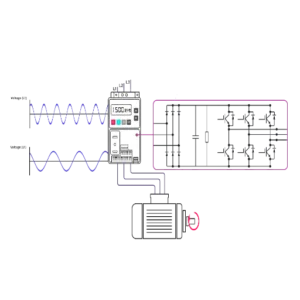
Lately, much of the improvement in variable frequency drives (VFDs) has focused on energy savings, operational flexibility, and reliability. One innovative idea is the integration of IoT-enabled intelligent controllers that provide real-time monitoring and remote diagnostics to boost system performance. Still, other work has introduced a new generation of harmonic filtering devices, which, when coupled with the traditional solution of three-phase and multi-line reactor interchange, form a hybrid system. The new VFDs usually feature enhanced cooling systems and more compact dimensions, further improving their lifespan and making them more sustainable and cost-effective across a wide range of applications.
The best recent products for VFD noise reduction address both audible and electrical noise challenges with truly up-to-date technologies. They significantly reduce noise by advancing materials and technologies, and are the most advanced design solutions. High-frequency acoustic noise is reduced by specific features, such as PWM technologies, which are logically optimized for use in higher efficiency.
The contribution of line reactors and harmonic filters to electrical noise reduction and effective interference management prevents interference with neighboring equipment. These solutions mitigate the risks posed by industry expectations and the rules that must be complied with to ensure system integrity. They also reduce energy costs through their compact design, thereby inspiring prosperity and the possibility of integrating them into modern industrial applications.
AI seems to be integrating with the Internet of Things (IoT) to take the monitoring and control of Variable Frequency Drive (VFD) systems to another level. Vibration levels, noise, and system performance can be monitored in real time using IoT-enabled sensors. AI algorithms analyze data to detect anomalies, predict potential failures, and deliver modest improvements in system efficiency.
🤖 Machine Learning Applications
Machine learning can identify patterns in vibration frequencies that may indicate mechanical issues, such as wear or misalignment, giving us time to step in with intensive maintenance measures. Therefore, by using such data-driven applications, we could not only reduce any downtime but also lengthen the usable life of VFD equipment.
The trend toward increasingly quiet VFD setups has taken a new shape in modern engineering and industry, as engineers and industry professionals work to tackle noise pollution and improve workplaces. The almost noiseless operation of new VFD models relies on top materials and cooling technologies. Algorithms developed using artificial intelligence also contribute by finely adjusting switching frequencies in real time to tamp down harmonic noise.
Sound-dampening enclosures and low-noise fans are indeed examples of applied technology used to lower such noise levels. Compliance with purely such health and safety standards is not the only reason for their application in any industrial environment. They’ve enhanced the comfort and operational efficiency of numerous industrial application types.
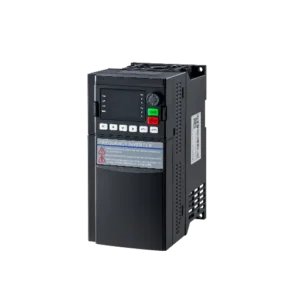
Variable Frequency Drives (VFDs) are crucial for controlling motor speed in industrial applications; however, their operation may induce noise and vibration challenges. According to experts, two leading culprits are identified as the causes of these issues: electromagnetic interference (EMI) and mechanical resonance. EMI is usually introduced by high switching frequency in drives, whereas mechanical resonance occurs when motor and system components lock horns and resonate at the same frequencies, magnifying vibration.
The vibration problem has been conclusively demonstrated in a manufacturing operation where optimized tuners installed in the motor drive systems resulted in a 30% improvement across the board.
In specific cases, addressing VFD noise and vibration requires the combined use of multiple strategies. One proven method is the use of advanced filters, like line reactors, load reactors, EMI filters, etc., employed in electrical noise suppression. Another way would be to ensure suitable mountings and proper alignment of motor drives to help reduce vibration levels.
The smoother operation, compliance with the noise regulations, and the life of equipment extend the control of those activities, along with a reasonable amount of maintenance and, from time to time, monitoring.
Industry experts discuss the advantages of variable frequency drives (VFDs) for a firm grip on motor speed regulation, efficient power consumption, and reduced noise and vibrations in the workplace. Studies and field reports have shown that noise in VFD systems is typically caused by high-frequency switching and harmonics. At the same time, vibrations may be caused by poor motor alignment, resonance, or insufficient damping.
👨🔬 Dr. Emily Carter, Senior Motor Systems Engineer
“They should use high-quality filters and perform proper grounding to eliminate electrical noise caused by VFDs. I advise performing a complete harmonic analysis to limit distortion that could affect the system’s health.”
🔧 James Reed, Mechanical Systems Consultant
“Precise alignment and load balancing are considered critical for reducing mechanical strains in the motor system and paving the way to eliminate vibration issues. Synchronization of predictive maintenance technologies, with vibration analysis software as a key tool, provides an all-round monitoring system that detects imminent mechanical defects and takes action promptly.”
The deployment of modern data tools aligns with the chorus that proactive monitoring is the key to significantly reducing noise and vibration levels under VF’s control.
Recent industry observers and online searches indicate that achieving proper vibration levels in a VFD-operated system is now a more crucial concern across numerous sectors. The trend is toward predictive maintenance solutions, meaning the entire industry is now moving toward data-driven decision-making.
Professionals argue that deploying technology, such as machine-learning algorithms, for real-time anomaly detection will serve the operator as the first step towards any inefficiency. When gazing into the crystal ball to predict trends from data, many data-oriented experts believe that active preventive maintenance measures offer a two-fold benefit: extending equipment life and reducing downtime, thereby underscoring the undeniable role of innovation in achieving operational excellence.
VFD noise & vibration commonly originate from the inverter’s pulse-width modulation (PWM) switching frequency and the resulting high-frequency components and carrier frequency applied to the motor. The IGBTs in the inverter create a stepped output waveform rather than a pure sine wave, which can excite the motor’s mechanical natural frequency, gearbox resonances, or structural components. Voltage spikes, eddy currents, and harmonics from the VFD output can also cause mechanical noise coming from the VFD and the driven equipment.
The inverter-rated output waveform and VFD switching frequency determine the spectral content of the voltage and current applied to the motor. A six-step or PWM waveform with a high carrier frequency (e.g., 8 kHz) produces high-frequency components that can be audible or cause subharmonic beating with the motor’s natural frequency. Adjusting the carrier frequency (Hz) and selecting smoother waveform filters reduces sharp voltage transitions and lowers noise in VFD applications.
Yes. Changing the VFD switching frequency (carrier frequency) can move noise energy away from sensitive audible ranges or structural resonances. Increasing the carrier frequency often reduces audible tonal noise but can increase switching losses in IGBTs and heat, while lowering it can shift energy into lower-frequency mechanical excitation. Proper parameter tuning balances noise reduction with inverter and motor thermal limits.
Absolutely. Using shielded cables and proper conduit routing, grounding, and EMC practices helps contain common-mode currents and reduces emitted interference from the voltage source and VFD cable. Shielded and grounded VFD cable with correct termination lowers stray capacitance and minimizes noise coupling to nearby control wiring and instrumentation.
Line and output filters—capacitors and inductors—smooth the VFD output waveform, reduce voltage spikes, and filter high-frequency switching components. An LC filter, or dv/dt filter, smoothes the harsh edges of the PWM waveform, reducing insulation stress on the motor and helping mitigate noise and vibration by decreasing high-frequency excitation and limiting voltage spikes applied to the motor.
Mechanical components can amplify or create noise and vibration when excited by the electrical waveform. Insulated bearings reduce circulating currents and bearing fluting caused by common-mode voltages, which helps avoid bearing damage and noise. Gearbox resonances and alignment issues can be excited by the output frequency or its harmonics, so addressing mechanical balancing, lubrication (eddy-current effects), and matching natural frequencies reduces downstream noise.
Starters or soft starters control the motor start torque and can reduce mechanical shock, but they do not provide the same speed control as an inverter VFD. Soft starters typically produce less high-frequency switching noise because they ramp the voltage gradually. Still, they won’t mitigate noise caused by variable output frequency or harmonics when speed control is required. Choose based on whether you need to control the speed or just reduce the starting current.
Start by isolating whether the noise is electrical (from the inverter/IGBT switching, voltage spikes, carrier frequency) or mechanical (motor bearings, gearbox, mounting). Use frequency response analysis, spectral measurements, and listening tests to correlate noise tones with the output frequency or the switching frequency. Inspect VFD parameters, cable shielding, and conduit routing, and check for resonance at natural frequency or mechanical wear.
Practical measures include tuning carrier frequency and VFD parameters to avoid exciting natural frequencies, installing dv/dt or sine wave filters to smooth the output waveform, using shielded VFD cable and proper EMC grounding, fitting insulated bearings, and ensuring mechanical alignment of gearbox and motor. Also consider output reactors, proper inverter rating for 480V systems, and avoiding long cable runs without appropriate filters to minimize voltage spikes and short circuit risks. Together, these steps reduce noise issues and improve system reliability.
Here are five professional and authoritative reference sources related to “VFD Noise & Vibration” that you can use to verify the correctness of this article: