Ready to Get Your VFD Solution?
Whether you need a single drive or a complete system, we have the VFD products and engineering support to ensure your project's success.

Motor protection is essential and cannot be ignored when discussing useful variable frequency drive operation. Ranging from protection against overload situations to anti-thermal damage and faults detection, this component guarantees the longevity and reliability of the drive. It is within this blog post that the required detailed information relating to motor protection of variable frequency drives is discussed breaking down key fundamental concepts such as overload protection, thermal monitoring, and fault inspection. If you are an engineer, technician, or maintenance professional, this insight will enable you to achieve excellent performance, reduce downtime, and prevent expensive repairs. Remaining will reveal how the combined effect of these protective measures improves system efficiency while protecting your plant equipment.
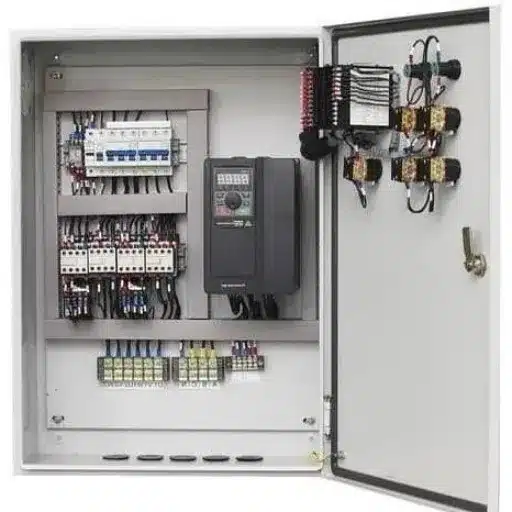
Variable-frequency drives (VFDs) are solid-state devices that control the speed and torque of electric motors by adjusting the frequency and voltage of the power supply to the motor. They are used in a broad range of applications, such as propulsion systems to conveyance systems to material processing, where FLOs are provided to control the flow through the control element operated. These devices improve the operations of machines due to fine-tuning motor parameters in response to load requirements to provide accurate motor control, energy efficiency, and increased system performance.
Working in general terms, the VFD system converts a fixed-frequency AC power supply into a variable-frequency output. Typically, these steps involve rectification, where AC is converted to DC; intermediate DC voltage regulation; and inversion, through which DC is converted back to variable-frequency AC signal. This is taken as a principle where the motor rotates at the speed required for the applications aiming at lesser wastage and consumptions.
Variable Frequency Drives (VFDs) are mandatory elements in the current motor control systems, rendering a vast range of flexibility and efficiency as applicable to the entire array of industrial and commercial applications. In effect, VFDs are intended to control motor speed and torque in such a way that it most effectively uses every watt-hour in the supply chain. VFDs therefore save the user costs and at the same time preserve energy at levels close to 50%, such as for expenditure upon cooling or ventilation systems, conveyors, and timers for which the load hardly ever remains same.
Key Benefit: VFDs provide the significant advantage of extending the lifetime of equipment by avoiding temperature stress during start-up and operation. High inrush current tends to force mechanical tension all along a snug start-up process-unlike all controlled starting processes with VFD. Some even say that repair and maintenance costs can be 30% less with VFDs, according to some well-driven studies.
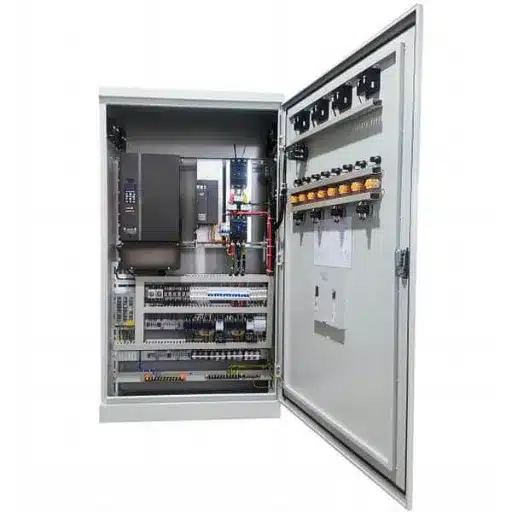
VFD Overload- The overload condition of the Variable Frequency Drive (VFD) happens when the motor calls for a drive capacity beyond its rating, causing problems like overheating, low efficiency, or complete failure-a typical case that results due to incorrect load calculations, fluctuations within the operating conditions, or mechanical obstruction in a system.
⚠️ Important Statistics: Overload conditions are observed by high current which may result overly into motor or drive over heating. A preliminary report on the same issue states that up to 30% of worldwide VFD faults are caused by overload conditions. But with the inbuilt thermal protective devices and current monitors, it is true that advanced VFDs can catch the oversaturated system and counteract it real-time, thereby ensuring a lower risk of damaged equipment.
Thermal hazards can be a major restraint in optimum motor performance and long run life, eventually tripping critical stages if not controlled effectively. Hyperthermia disperses insulations, shortens bearings life, and elevates electrical resistance; combine that to form inefficiency and failure risks to the motor. Studies have shown that, with a 10 degree rise in operational temperature from the recommended limit, motor insulations are subjected to reduced life extendancy by half. Eventually: prolonged exposure to such high temperatures hastens wear and tear, crack down on unscheduled downtime, and impact maintenance budgets in a considerable extent.
A primary cause of thermal overload is due to inadequate ventilation or cooling systems. In essence, the motor produces heat for conductance to the outside environment, yet in specific cases there could be prevention due to obstruction or accumulation of dirt and poor air circulation. In addition, overload operation or operation in high-temperature ambient environments is a factor leading to aggravated motor thermal problems.
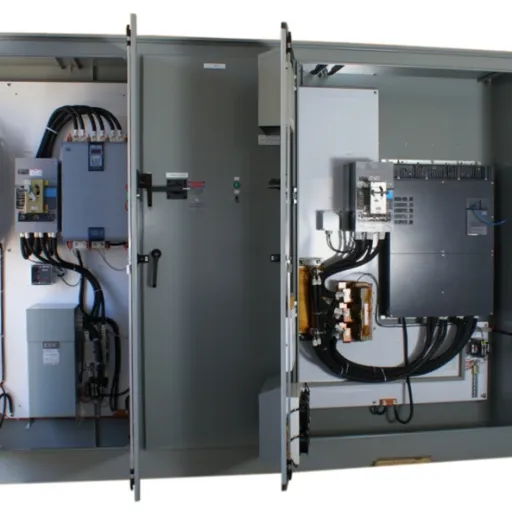
The VFDs monitor the current of the motor and sense any type of overcurrent occurring when the motor is drawing abnormally high currents for an extended time. VFDs being advanced cut down or turn off the output to prevent overheating of any operating equipment or damage from a failure occurring. It has been shown in studies that with the implementation of the overcurrent protection, failure rates could be brought down by as much as 40 percent.
Voltage waveform distortion and irregularity may damage heavily a motor or the VFD itself. Overvoltage protection accounts for the security of the drive in the situation of voltage surges from outside disturbances or application disturbances, such as utility supply spikes or regenerative energy from the motor. The drive switches shut off on receiving negative readings before the consequences result in an unstable system.
Heat could be detrimental to both motor and VFD performance. With the advent of various thermal monitoring devices integrated into the VFDs of the current era, attention could be focused on scrutinizing both the temperature of the internal drive and that of the motor. There have been varied reports by a wide range of academic studies on the effects of an effective thermal protection that may help to extend the damage incurred unwittingly by the dreaded motor by up to 20%. Beyond the abstract theoretical dialogue on the motor’s performance enhancement of VFD, measurable evidence exists through the support of this device.
DC injection braking is a state-of-the-art technique employed quite frequently in the safe and efficient deceleration of electric motors-many a time in industrial environments, especially when there is a need for stopping of the motor with adequate deceleration in an emergency. This extends until these applications depend on the principle that a controlled DC current can be injected on the stator windings of the AC motor after the involved voltages are removed. This controlled DC current produces a stationary magnetic field that interacts with the motor rotors, causing them to gradually halt.
✓ Advantages: DC injection braking has several advantages such as reduced wear and maintenance costs as it eliminates mechanical braking. Based on an industry report, the use of DC braking can improve the life of electrical motors by 20% compared to traditional braking methods. It makes an emergency situation safe in high-risk environments like those on conveyor systems, mining, and heavy machinery applications by providing quick and controlled deceleration.
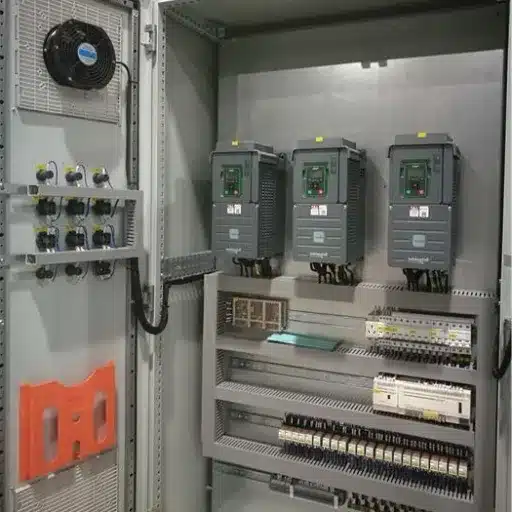
Developments in technology have changed motor protection strategies offering increased reliability, efficiency, and safety. Presently, Variable Frequency Drives (VFDs) are capable enough to protect motors from harmful conditions with the help of preemptive maintenance, checked diagnostics, and real-time monitoring that can stop the motor issues to become bigger failures. According to Allied Market Research, the cumulative VFD market estimates are to hit $25.4 billion by 2030 from a CAGR of 5.2%, with overall growth forecasts of 5.2 percent within the period 2021─2030. This therefore shows that preservation and performance of motors are becoming of interest across the industry.
IoT has enabled the creation of motor-protective devices, which lets operators collect remote analytic data. Sensors inside these end devices can monitor such parameters as temperature, vibration level, and current flow, while automated alerts can signal an anomaly on the basis of threshold levels. In so doing, aggressive early intervention preempting downtime reduces the potential call for utilizing short repair hours and downtime costs. Some of the conclusions shown are that predictive maintenance through IoT systems could reduce unscheduled equipment failures by 30% and maintenance costs by around 25% off.
In a plant involved in assembly activities around heavy machines, a VFD protection installation at a motor-shop production always implied a productive workout. Often, power drops and abnormal loading conditions caused the motors to trip out of operation. However, a signal-of-devices inclusion of VFD-driven protection with dynamic overload protection and harmonic filters halved the device failure instances in the first year. Furthermore, an energy audit clearly showed a straight 15% reduction in power consumption as a benefit of modified motor travel speed, accounting for a savings of $50,000 per year on a utility bill at the plant.
Findings at a water treatment plant indicate that VFD integration holds the most cost-effective and high-efficiency water pump systems suitable for a variable load. This solution for monitoring the pumps and the VFD solution could help in implementing energy-saving rules to protect the motor. Thus, the authority for operation would not be discontinued due to extra thermic loads if the motor failed. The data shows a reduction in energy consumption by 30% compared to the traditional motor system. Consequently, this translates to a decrease of more than 120 metric tons of carbon emissions per annum. An additional way the Showroom Facility is able to meet this mandated sustainability and save $75,000 for the annual operating cost.
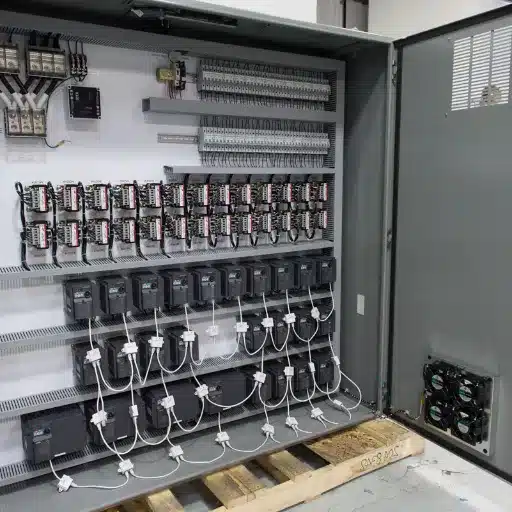
It is imperative the motor be effectively protected in variably controlled motor environments using Variable Frequency Drives (VFD). A chat at the time about how to keep downtime at minimum, manage energy efficiencies, or make the motor last longer starts with setting up a suitable network to battle surges to keep overvoltages and spikes at bay. Numerous international research findings record up to 80% of motor system degradation initiated by transient voltage, thereby highlighting the need for surge protection.
Similarly, the significance of thermal management in the motor protection of VFD lingers on. Minimizing the excessive heat from doing harm to the motor’s component is taken into account with respectable cooling systems, such as forced air cooling and heat sinks. About 50% reduction in life expectancy is estimated for motor insulation for every 10°C increase in operating temperature. Temperature monitoring by sensors and advanced analytics allow the early identification of potential overheating.
The pace of evolution of industrial technology is breeding multiple emerging trends in motor control systems that determine the way in which industries view effectiveness and reliability. One big trend that has cropped up is the fusion of Industrial Internet of Things (IIoT) with motor systems. According to Grand View Research, the global IIoT market is estimated to hit around $1.11 trillion by 2028, with a CAGR of 22.8%. IIoT-operated motors are fitted with intelligent sensors to produce real-time performance data that enables predicted diagnostics and operational optimization.
Following several key contributions, energy-efficient motors have now been recognized, with global movements toward decreasing the carbon footprint. Approximately 45% of worldwide electricity consumption is accounted for by electric motor applications. The massive adoption of high-efficiency motors by various governments and industries is considered to result in a energy consumption savings of 20% to 30% in contrast with conventional systems.
VFD motor protection is essential for ensuring longevity, efficiency, and reliability in industrial motor systems. By implementing comprehensive protection strategies including overload prevention, thermal management, and fault detection, organizations can achieve significant cost savings, reduce downtime, and enhance overall system performance. The integration of modern technologies such as IoT and advanced monitoring systems continues to revolutionize motor protection, making it more predictive, efficient, and effective.