Ready to Get Your VFD Solution?
Whether you need a single drive or a complete system, we have the VFD products and engineering support to ensure your project's success.

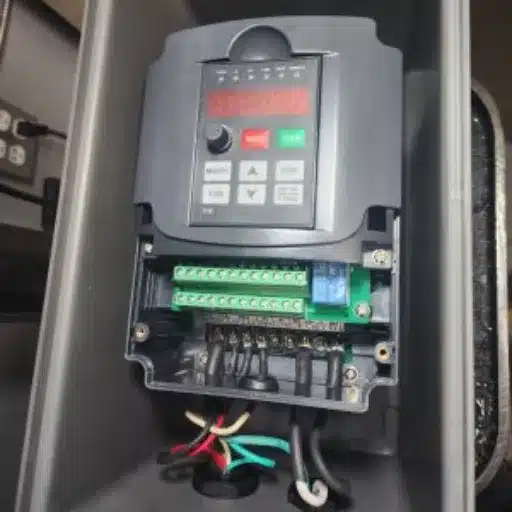
The programming of a Variable Frequency Drive (VFD) may appear to be a challenging endeavor, but with the correct assistance, it transforms into an easy and fulfilling task. Regardless of whether you are a veteran technician or a novice who is just searching for industrial automation, the VFD setup and its configuration knowledge is a must-have for maximizing motor output and power saving. This tutorial aims to take you through the VFD programming essentials, decanting the whole process with simple, implementable steps. By the conclusion, you will possess the basic understanding that will allow you to program a VFD without any fear and at the same time, improve the entire working of your system. So, let us begin!
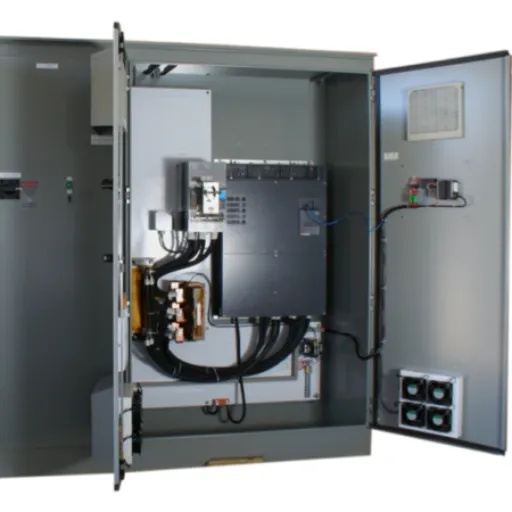
A Variable Frequency Drive (VFD) is an electronic device used to adjust the speed and torque of an electric motor by changing the power frequency and voltage supplied to it. In industrial automation, VFDs are widely used to improve the efficiency of the motor, reduce the power consumption and offer a high degree of control over the motor operation. VFDs contribute to the prevention of energy wastage by lowering the motor’s speed according to the need of the application, thus elongating the equipment life and decreasing the running costs.
💡 Did You Know?
Presently, the data suggest that VFDs could lead to energy savings of up to 50% in specific applications, especially in situations where the demand for pumps, fans, and compressors fluctuates significantly. The state-of-the-art VFDs come with a rich set of features like logic programming, inbuilt diagnostics, and networking, which facilitate their integration into IoT (Internet of Things) systems in the industry. Due to their wide-ranging applications, they are critical in industries from the production sector and HVAC to water purification and power generation from renewable sources.
VFDs influence the motor speed and torque by modifying the current’s frequency and voltage going to the motor. Basically, the control method relies on the connection between the motor’s speed and the input current’s frequency, which is given by the formula:
Motor Speed (RPM) = (Frequency × 120) / Number of Motor Poles
Motor speed can thus be steadily controlled within a very small range by the VFDs through frequency change, which in turn leads to cutting down power consumption and hence higher operational efficiency.
VFDs implement this through major parts, i.e., rectifier, DC bus, and inverter. The incoming AC power is changed to DC power by the rectifier, which then is maintained at a constant voltage level on the DC bus. Next, the inverter alters the DC power to AC power of desired frequency and voltage, thereby achieving smooth and accurate motor control. To ensure an even higher level of control and reliability, leading-edge microprocessors and algorithms are also employed in modern VFDs.
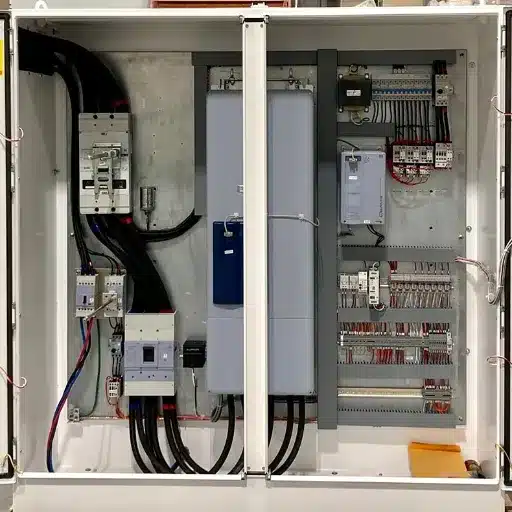
One of the main reasons configuring motor parameters such as motor voltage, current rating, power rating, and frequency is vital. For example, if a motor runs on 480V, 60Hz, and 50 HP, these parameters must be input accurately in the installation process to avoid overheating or inefficient operation.
These factors decide the rate at which the motor will take full speed or come to a stop. A short time for the acceleration helps the motor to be more responsive, but it also puts more stress on the motor and the system. The standard for industrial motors is that they operate with a slow acceleration value of 5–15 seconds.
The maximum and minimum frequencies set the limit within which the motor can operate. A typical frequency range for such applications would be 20Hz to 60Hz. This way, the motor will not be overdriven or underdriven, and its longevity will be increased.
PLCs (Programmable Logic Controllers) and HMIs (Human Machine Interfaces) are multifunctional devices that, coming together, make the operation and control of Variable Frequency Drives (VFDs) in the industry more efficient. VFDs have been integrated with PLCs to bring about more precise automation, making possible the operation of complex sequences and advanced motor control. The PLCs function as the main control units that carry out the commands given according to data from inputs like speed, torque, and processing conditions, and thus allowing for the adjustment of the motor’s performance in real-time.
Imagine PLCs as super-efficient, super-fast electronic brains controlling the manufacturing process with data inputs coming from various sources like workers, machinery, environment, etc. On the contrary, the HMIs are the workers’ interface with the system, and through their simple and easy to understand, user-friendly displays and adaptable dashboards, HMIs help monitor and even control the process. A typical example and the very best one is that with the HMI, an operator can, without getting up, adjust the speed of a motor, check the performance of the system, or troubleshoot a fault. This system greatly reduces downtime since data such as important real-time trends and diagnostics can be visualized and promptly dealt with.
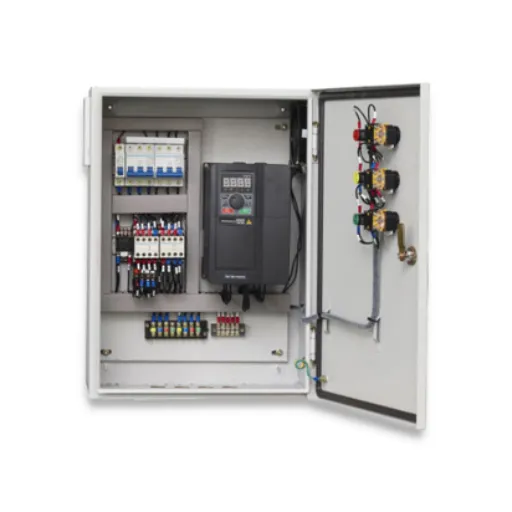
It is necessary to check the VFD first if it is compatible with the motor in terms of voltage, current ratings, and frequency range. Industrial motors usually operate in a frequency range of 0 Hz – 60 Hz. The voltage should correspond to the motor’s specification (for example, 230V for single-phase and 460V for three-phase systems).
Feed the power supply wires to the VFD’s input terminals and connect the motor to the VFD’s output terminals. Make sure grounding connections are properly made and check all wiring according to the manufacturer’s wiring diagram. Otherwise, improper operation or damage to the motor may occur. Recent research shows that well-designed grounding systems decrease electrical noise interference by as much as 80%, which is a significant help in sensitive installations.
When all the connections are done, turn on the VFD and see if there are any error codes or warning lights. The user manual can be a useful resource for troubleshooting the issues. Some modern VFDs have built-in diagnostics which can identify problems like short circuits, overvoltage, or bad configuration.
⚠️ Important Note:
For instance, if input voltage of the motor is 480V and frequency is 60Hz, then these values should be input into the VFD meticulously.
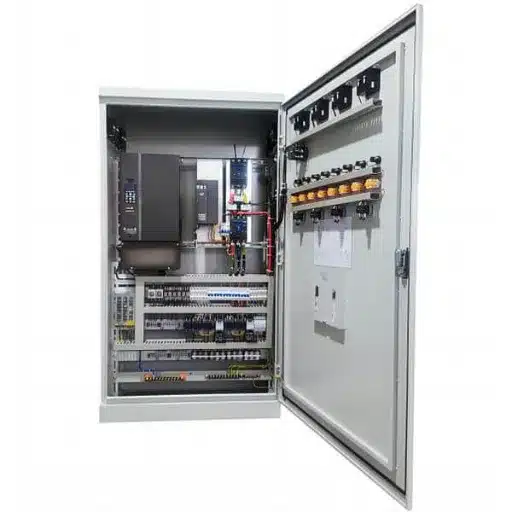
A prevalent mistake in programming VFDs is the input of incorrect motor data like voltage, frequency, current, and rated speed. An example of this is when the motor current is set to a wrong value, the VFD may either not produce the best torque or may set off the faulty alarm wrongly. It has been reported that improper motor calibration can take away up to 15% of the efficiency of the operation. Always double check the motor nameplate data with VFD settings and do conduct tests after the installation.
Motor time settings that are very short might lead to unstable operation or even damage to mechanical parts. A survey carried out by industrial automation experts in 2023 reported that about 30% of maintenance problems in VFD-driven installations were due to incorrect ramp-up and ramp-down times. A gradual approach according to the application eliminates mechanical stress and ensures quiet transitions.
Some machine operators ignore VFD’s protective features like under-voltage, over-voltage, and thermal overload settings. Although this may cut down on setup time at the start, it puts the motor and drive system at the risk of very costly damage in the long run. Reports from the industry indicate that applying built-in protection reduces the downtime caused by faults by about 40%. Always turn on and set these features to meet your operational needs.
Load profile and application-specific requirements should be well understood before configuring the VFD. When there is no match between the drive and the motor load the result is often inefficiencies or failures. For instance, a 2022 industry report revealed that about 25% of VFD faults are a result of inaccurate motor parameter settings. Technical tools such as load simulation software can aid in much better alignment of VFD parameters with the application’s demands.
The majority of the modern VFDs come with auto-tuning characteristics that not only make performance best by the proper setting of motor resistance, inductance, and back EMF but also provide the opportunity to fine-tune the performance. ABB’s 2023 user survey states that the use of the auto-tuning feature led to a 30% reduction in the time taken to commission, on average. Make sure that the motor and drive system are properly connected and stable before you start auto-tuning.
Parameter misconfiguration is still the top reason for performance issues. Acceleration/deceleration rates (usually written as ACC/DEC) and torque limits are some of the key parameters that need to be very carefully set to fit the operational requirements. For example, a low acceleration setting causes high inrush currents which might damage the motor or drive. One common case is where the ACC is set too low for conveyor belts that leads to mechanical stress and overcurrent trips. Use the defaults that the manufacturer recommends as a starting point, then adjust them based on the results.
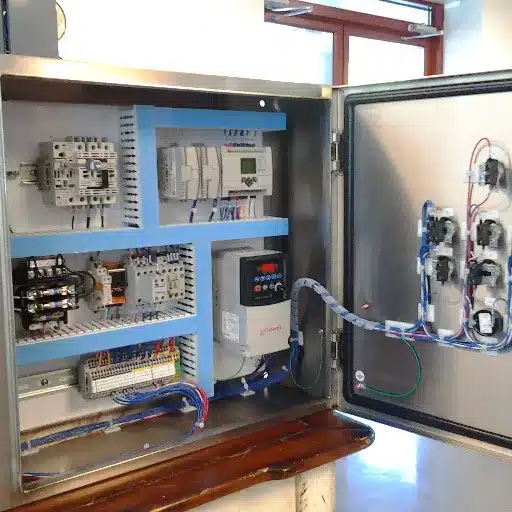
The top firms in the Variable Frequency Drive (VFD) sector are consistently coming up with new ideas thus they are gradually increasing the efficiency, reliability, and functionality boundaries. For instance, Siemens has worked out its SINAMICS G120X series, which is a product specifically meant for the infrastructure of water and wastewater. The series is all about making the best use of energy through motor control and providing network connectivity as part of the package which in turn gives the overall operations a boost.
🚀 Innovation Spotlight:
Not only this, but ABB, too, has been working on its ACS880 series, which has now made it possible to conduct advanced predictive maintenance through cloud-based monitoring that is indeed an important feature. Besides the drives, their AI-enabled algorithms are running at the same time analyzing operational data to foresee possible breakdowns, as a result slicing down the equipment’s idle time and maintenance expenses by up to 30%, which has been claimed in ABB’s latest announcements.
Variable frequency drives (VFDs) are becoming an area where technology is very much evolving and at the same time, energy-efficient and sustainable are the main trends. One remarkable trend is the addition of IoT (Internet of Things) connectivity to VFDs. IoT VFDs are connected to the internet and allow the users to monitor, control and perform the maintenance all at the same time. This not only cuts down the downtime but also uses the energy in a more efficient way giving back a significant amount of money to the industries as a result.
Also, the other major innovation is the incorporation of artificial intelligence (AI) and machine learning (ML) algorithms in the programming of VFDs. These technologies are empowering the VFDs with self-diagnostic and adaptive ability and allowing them to understand the load and accordingly change the operating point for the best efficiency. A report by Allied Market Research cites AI-integrated VFDs as one of the fastest growing segments that will be inseparable from smart manufacturing and other industrial applications.