Ready to Get Your VFD Solution?
Whether you need a single drive or a complete system, we have the VFD products and engineering support to ensure your project's success.

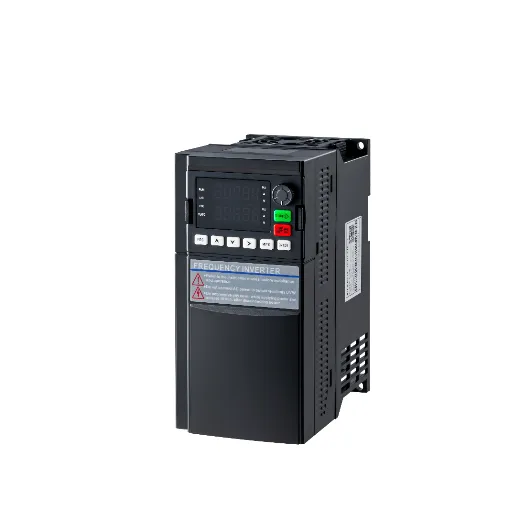
Variable Frequency Drives (VFDs) play a pivotal role in motor control and are a primary factor in enabling an industry to refine energy consumption and improve operational efficiency. No matter if you are an expert engineer, a plant supervisor, or just an interested person in cutting-edge technology, an understanding of VFD working principles is necessary to cope with the ever-changing industrial market. This manual is a thorough technical investigation of VFDs that exposes their essential mechanisms, their components, and their usage. It will take you through the process of VFD-controlled motor speed, the discovery of their critical role in energy savings and equipment lifetime improvements, thereby giving you access to the ultimate source of information on VFDs from the cutting edge. Keep your audience engaged as we reveal the facts behind these crucial devices and equip you to make sound decisions about your operations.
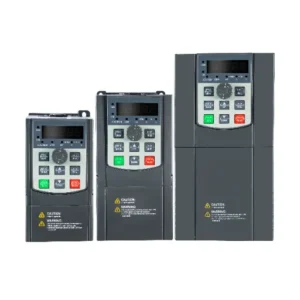
Variable Frequency Drives (VFDs) are devices that enable altering the speed and torque of electric motors by varying the frequency and voltage of the power supplied to them. These devices are very popular in manufacturing and processing, as well as other industries, where they help improve motor performance, reduce energy consumption, and make workflows more efficient. The primary function of VFDs is to vary the motor speed to meet the requirements of the specific application, thereby reducing energy consumption and machinery downtime. VFDs that enable accurate motor control make motor startup very smooth and reduce mechanical stress, thereby increasing the reliability and lifespan of the system.
Variable frequency drives (VFDs) control the speed and torque of the motor primarily by regulating the frequency and voltage supplied to the motor. This is achieved through a process of conversion: the incoming AC power is first converted to DC, then reconverted to AC at the desired frequency and voltage. Such VFDs can precisely adjust motor speed in response to demand, without mechanical gear changes. Today’s VFDs feature advanced algorithms that ensure smooth transitions and efficient energy consumption; dynamic torque and energy optimization are also incorporated. Moreover, with the integration of real-time monitoring and feedback systems, VFDs now offer enhanced automation capabilities tailored to the operating area, thereby improving motor performance.
By optimizing motor performance and thereby improving energy efficiency, Variable Frequency Drives (VFDs) are essential in the operation of many industries. In manufacturing, VFDs are major contributors in conveyor systems, pumps, and fans, where speed and torque control are necessary. The HVAC sector relies on VFDs to regulate temperature and airflow without excessive energy consumption. The same applies to the water and wastewater sector, where VFDs are also used to control pump operations, resulting in less wear and energy expenses. VFDs are used in mining, agriculture, and the oil and gas industry, where the benefits are substantial in terms of operational efficiency and equipment life. When coupled with advances in automation and the growing adoption of IoT, VFDs not only address operational issues but also address environmental concerns.
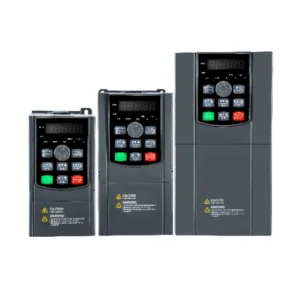
Variable Frequency Drives (VFDs) consist of several key components that work together to control motor speed and efficiency:
Converts incoming AC (alternating current) power to DC (direct current) power for further processing.
Stabilizes the DC power by using capacitors or inductors to store and filter energy.
Converts the stabilized DC power back to AC power at the desired frequency and voltage to control the motor.
Serves as the “brain” of the VFD, allowing users to program and adjust settings such as speed, torque, and direction. It also provides system monitoring and diagnostics.
A rectifier is an essential part of a Variable Frequency Drive (VFD) that changes alternating current (AC) to direct current (DC), and thus it is the basis of motor control. The current cannot flow in both directions when rectification is achieved with diodes or thyristors. The AC sine-wave input is converted to a pulsating DC output. Modern rectifiers equipped with top-notch semiconductor materials are highly efficient and exhibit lower energy loss, a requirement for high-performance applications.
To ensure the most up-to-date data, rectifiers are key to the efficiency of renewable energy systems like solar and wind, where AC-to-DC conversion is essential for energy storage and transmission. Their ability to handle higher power ratings and reduce energy consumption has made them a necessity for sectors pursuing sustainable energy solutions.
A DC bus is an essential part of electrical systems, especially in renewable energy and industrial applications. It plays a central role in regulating and stabilizing voltage by storing energy in capacitors or other storage elements, ensuring a consistent, reliable output even when input power sources fluctuate. For example, in systems such as solar panels or wind turbines, the DC bus draws power from surges and dips and thereby provides a continuous current to the upstream operations.
With the latest data, technological advancements in DC bus designs have enabled higher efficiency and better energy management. Modern systems are made of new materials and equipped with control algorithms that provide a significant performance boost. Apart from that, maintaining voltage stability on DC buses not only makes energy systems more resilient but also extends the lifespan of connected equipment, reinforcing the role of DC buses in the transition to sustainable energy solutions.
An inverter is one of the most critical components of modern energy systems, as it converts direct current (DC) to alternating current (AC), which is the type of electricity mainly used in homes, industries, and offices. The process enables efficient use of energy from renewable sources, such as solar panels, which produce DC power, through the existing AC power grid. Present-day inverters feature state-of-the-art technologies, such as pulse width modulation (PWM) and intelligent control systems, that together deliver high efficiency and stable performance. Besides, inverter design innovations have already gone so far as to enable higher power outputs and the adoption of innovative grid technologies, thereby making their role even more significant in eco-friendly energy systems.
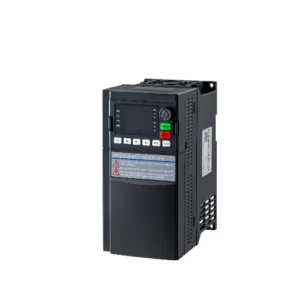
Variable Frequency Drives (VFDs) offer numerous advantages across industries by enabling better control of motor speed and energy use. Key benefits include:
The installation of VFDs not only improves energy efficiency but also significantly contributes to consistent product quality. Based on real-time data, the industry can make very accurate adjustments to motor speed, leading to the production of the same quality and the same amount of product throughout the production cycle. In the food and beverage sector, for instance, controlling mixing speeds ensures uniform texture and taste, while in manufacturing, uniform machining speeds result in high-quality finished products.
Businesses can anticipate and avert potential problems using the latest data from search engines. By using predictive analytics, organizations can identify which equipment is likely to fail, schedule maintenance at the most appropriate time, and avoid costly downtime. Moreover, real-time data access ensures that operational decisions are up to date, thereby reducing unnecessary expenses and improving overall resource management. The integration of sophisticated search insights enables firms to improve operational efficiency and realize significant savings while maintaining the same level of quality and performance.
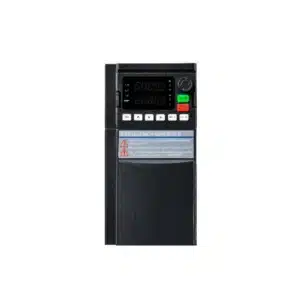
Variable Frequency Drives (VFDs) are widely used across various industries for their ability to control motor speed and optimize energy consumption. Typical applications of VFDs include:
Modern HVAC systems have become indispensable in the quest for indoor comfort and energy-saving measures. Thanks to technological advances, these systems now feature energy-efficient features such as variable-speed drives, smart thermostats, and highly efficient heat exchangers. Data suggests that using these modern technologies can lead to a maximum 30% reduction in HVAC system energy consumption. In addition, innovative HVAC systems use IoT and AI-based monitoring to operate at peak efficiency, adapting to current occupancy and changing weather conditions. This practice not only reduces energy costs but also helps reduce greenhouse gas emissions, thereby aiding the move towards a sustainable future. The adoption of energy-efficient HVAC systems in both residential and commercial buildings can provide excellent climate control while reducing environmental impact.
The oil and gas sector has adopted state-of-the-art technology to improve safety and operational efficiency in challenging environments. Predictive maintenance tools powered by AI and machine learning can help companies identify equipment failures before they occur, thereby reducing downtime and human hazards. The company has also been using automation and robotics, turning high-risk jobs, such as pipe inspections and offshore drilling, into safer ones for workers. Improved data analytics, along with real-time monitoring systems, enable highly accurate decision-making and quick responses to operational problems. Not only do these innovations intensify productivity, but they also ensure compliance with the strictest safety norms, thus making the energy sector more resilient and sustainable in the long run.
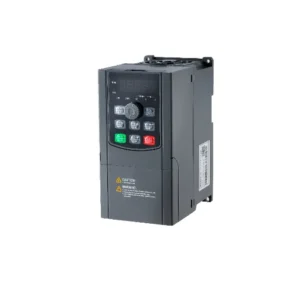
The trajectory of Variable Frequency Drive (VFD) technology is clearly aiming at energy efficiency, superior automation, and digital systems integration. The innovations are the root cause of the smart VFDs already being developed, enabled by better connectivity that allows them to be smoothly integrated into industrial IoT ecosystems. The machine learning-based solution will be the leading supplier of predictive maintenance features, now standard, thereby avoiding maintenance downtime and optimizing performance. To make VFDs even more attractive, the designers are adopting eco-friendly designs that use less power and leave a smaller carbon footprint. These breakthroughs will give VFDs the flexibility to adapt and grow with rapidly evolving, high-demand industrial applications, ensuring that industry sectors benefit from improved efficiency and lower costs.
Variable Frequency Drives (VFDs) with compact, modular designs are changing how installations are carried out in factories and other industrial settings. The space-saving designs are ideal for seamless integration into existing systems without significant changes. The modular layouts of the VFDs also allow for effortless transitions; likewise, the other components can be added or changed with even fewer interruptions, leading to less downtime and reduced maintenance costs. Recent search trends indicate that industries are favoring compact, user-friendly, and scalable VFDs. This upward trend in demand emphasizes the need for flexible, space-efficient solutions that can accommodate technological and operational changes over time.
Advanced semiconductors are significantly contributing to energy savings and performance improvements across applications such as industrial automation and consumer electronics. The use of modern materials such as gallium nitride (GaN) and silicon carbide (SiC) has enabled the production of semiconductors that are not only faster-switching but also exhibit lower power losses and greater thermal stability than conventional silicon-based semiconductors.
Customizing software to meet the needs of niche markets is not possible without a profound understanding of the unique operational requirements and challenges. Besides, I am turning up the heat on performance, reliability, and energy efficiency by applying advanced semiconductor solutions to the unique needs of each industry through my expertise.
A Variable Frequency Drive (VFD) is an electronic controller that adjusts the speed and torque of an AC motor by varying the frequency and voltage of the power supplied to the motor. It achieves this through pulse-width modulation, which controls the output voltage and frequency delivered to the motor windings, enabling precise motor control and energy savings.
VFDs are commonly used with AC induction motors and can also be used with DC motors. The most prevalent applications involve controlling the speed of AC motors in various industrial and commercial applications, offering significant benefits in energy efficiency and performance.
VFDs facilitate variable speed control by adjusting the frequency of the incoming AC power. By varying the frequency, they can adjust the motor speed, enabling it to operate at different speeds as required by the application. This is particularly useful in applications where the load changes frequently, such as pumps and fans.
Using a VFD provides multiple benefits, including energy savings, improved process control, reduced mechanical stress on the motor and drive system, and extended equipment life. VFDs significantly reduce energy consumption by allowing the motor to operate at optimal speeds, matching its speed to the application’s actual demand.
A motor controller is essential for VFD operation as it manages the switching and modulation of power to the motor. It regulates the voltage and frequency delivered to the motor, enabling precise control of speed and torque and ensuring efficient performance across various applications.
Yes, VFDs are widely used in pump applications. By adjusting the pump motor speed, VFDs enable better flow control and improved energy efficiency. This capability is particularly beneficial in systems where flow demand varies, leading to significant savings in operational costs.
There are several types of VFDs, including voltage-source inverters (VSI), current-source inverters (CSI), and multi-level VFDs. The right VFD type depends on the specific motor application and the required performance characteristics, such as torque control and efficiency.
A VFD helps prevent motor damage by providing soft-start capabilities that reduce inrush current at startup. Additionally, it allows for smooth acceleration and deceleration, minimizing mechanical stress. By controlling the frequency and voltage provided to the motor, VFDs maintain optimal operating conditions, protecting the motor from overheating and other potential issues.
Typical VFD applications in industry include HVAC systems, conveyor systems, fans, compressors, and various types of pumps. They are used in both industrial and commercial applications to enhance energy efficiency, improve process control, and reduce equipment wear and tear.
Here are five professional and authoritative sources that discuss how Variable Frequency Drives (VFDs) work. These sources include academic and organizational websites: