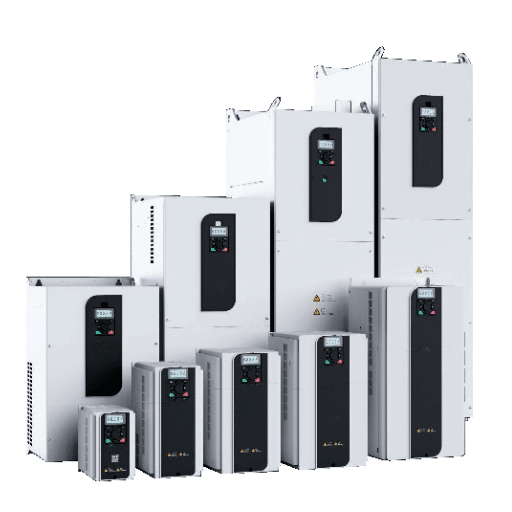
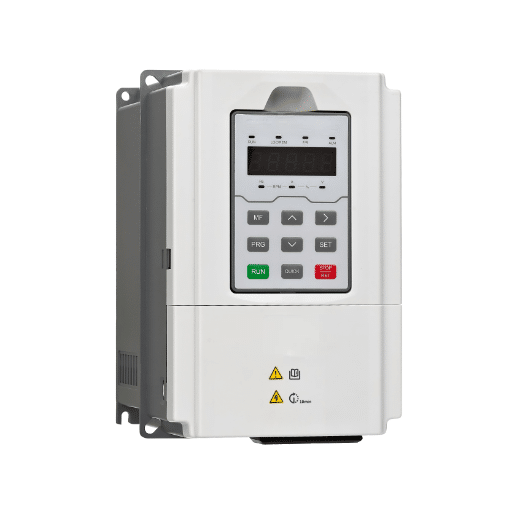
Ready to Get Your VFD Solution?
Whether you need a single drive or a complete system, we have the VFD products and engineering support to ensure your project's success.

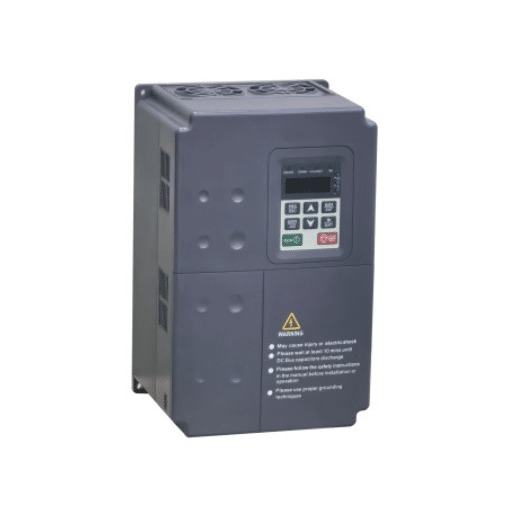
A variable frequency drive is an electronic device that controls the speed and torque of an AC electric motor by varying the frequency and voltage of the power supplied to it. If you have ever wondered why so many factory motors run at full speed even when the machine only needs half the output, you have already identified the exact problem that a variable frequency drive solves.
Rahim Patel runs a mid-sized textile mill in Bangladesh. Last year his monthly electricity bill hit 48,000,andhisplantengineertracednearly70percentofthatcosttotwelveinductionmotorsrunningpumpsandventilationfans.Everymotorwaslockedatfullspeed,controlledonlybymechanicaldampersandvalvesthatwastedenergybyblockingairflowandfluid.Afterinstallingvariablefrequencydrivesonthosetwelvemotors,Rahim′sbilldroppedto48,000,andhisplantengineertracednearly70percentofthatcosttotwelveinductionmotorsrunningpumpsandventilationfans.Everymotorwaslockedatfullspeed,controlledonlybymechanicaldampersandvalvesthatwastedenergybyblockingairflowandfluid.Afterinstallingvariablefrequencydrivesonthosetwelvemotors,Rahim′sbilldroppedto31,000 per month. The project paid for itself in fourteen months, and the motors experience less wear because they no longer start with a violent mechanical jolt.
That is the practical power of understanding what a variable frequency drive is and how it transforms industrial operations. By the end of this guide, you will know exactly how VFDs work, why they matter for your facility, and whether your application actually needs one.
Key Takeaways
- A variable frequency drive controls motor speed by adjusting electrical frequency and voltage, cutting energy use by 20-50 percent on pumps, fans, and compressors.
- Every VFD contains three core stages: a rectifier that converts AC to DC, a DC bus that smooths the power, and an inverter that creates variable-frequency AC for the motor.
- The terms VFD, AC drive, variable speed drive, and frequency inverter describe overlapping technologies with subtle regional and technical differences.
- VFDs deliver payback in 12-24 months for variable-load applications, but they are unnecessary for motors that truly run at fixed speed 100 percent of the time.
- Modern VFDs operate at 96-98 percent efficiency and include built-in protections against overload, overvoltage, and phase loss.
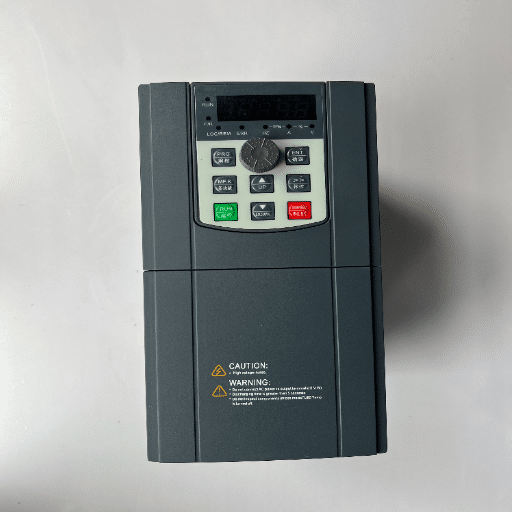
A variable frequency drive controls the speed and torque of an AC induction motor by changing the frequency and voltage of the electrical power it supplies. Instead of running at a fixed speed set by the grid’s 50 or 60 Hz frequency, the motor can spin faster or slower to match the exact demand of the application. This simple adjustment eliminates the energy waste that happens when a motor runs at full speed while the machine it powers only needs partial output.
Beyond energy savings, a VFD provides soft starting, precise process control, and built-in motor protection. It replaces mechanical throttling devices — dampers, valves, and brakes — with electronic precision. For anyone asking what is a variable frequency drive in practical terms, the answer is this: it is an electronic throttle for electric motors that pays for itself through lower electricity bills and reduced maintenance.
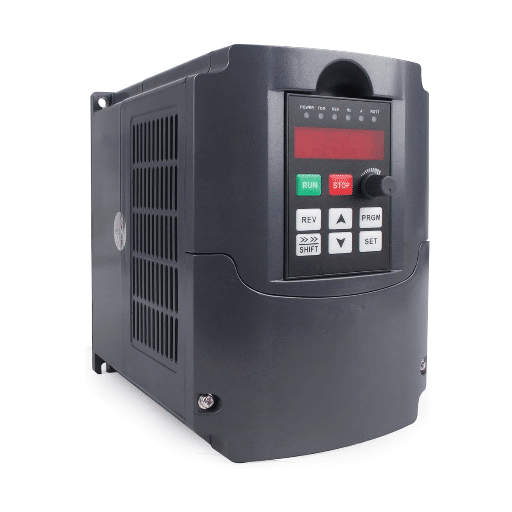
A variable frequency drive is a power-electronics controller that sits between an electrical supply and an AC induction motor. It receives fixed-frequency AC power — typically 50 Hz or 60 Hz — and converts it into adjustable-frequency output that changes how fast the motor spins.
The underlying physics are straightforward. The synchronous speed of an AC motor follows the formula N = 120f / p, where N is speed in RPM, f is frequency in hertz, and p is the number of motor poles. If you lower the frequency from 60 Hz to 30 Hz, the motor speed drops by roughly half. A VFD manipulates that frequency precisely, and it simultaneously adjusts voltage to maintain proper magnetic flux inside the motor. Without this voltage adjustment, the motor would overheat at low speeds.
Think of it like adjusting the water pressure in a hose. A fixed-speed motor is like a hose that only runs at full blast. You can partially block the nozzle, but you are still pumping the same amount of water and wasting energy. A VFD is like a faucet that lets you dial the exact pressure you need, so you only use the energy required for the job.
This simple concept explains why variable frequency drives have become one of the most important energy-saving technologies in modern industry. Electric motors consume roughly 60 to 70 percent of all industrial electricity worldwide, according to the International Energy Agency. A large share of those motors run at fixed speed even though their loads vary throughout the day. That mismatch between supply and demand is exactly what a VFD eliminates.
Want to see how VFDs fit into a complete motor control strategy? Explore our complete guide to variable frequency drives for a deeper technical overview.
Every variable frequency drive, regardless of manufacturer or application, performs its job through three internal stages. You do not need an electrical engineering degree to understand them. The process is logical, and once you see the flow, the technology stops feeling mysterious.
The first stage is the rectifier. This component takes the incoming AC power from your wall or distribution panel and converts it into direct current. The rectifier typically uses a diode bridge for basic applications or insulated-gate bipolar transistors for regenerative drives that can feed power back into the grid. At this point, the electricity is DC, but it is not smooth — it pulses in time with the AC input.
The second stage is the DC bus. Capacitors and sometimes inductors sit here to smooth out those pulses and store a stable reservoir of DC power. The DC bus acts like a buffer. It absorbs sudden demand changes from the motor and protects the upstream rectifier from voltage spikes. If you open a VFD enclosure, the large cylindrical capacitors on the DC bus are usually the most visible components.
The third stage is the inverter. This is where the real magic happens. The inverter uses high-speed switching devices — usually IGBTs — to chop the smooth DC into a synthetic AC waveform with adjustable frequency and voltage. By controlling how fast and in what pattern these switches open and close, the drive creates output that can range from a few hertz up to several hundred hertz.
Most modern VFDs use a technique called pulse width modulation, or PWM. Instead of producing a pure sine wave, the inverter outputs a rapid series of voltage pulses. The motor’s inductive windings naturally average these pulses into a smooth current. By changing the width and spacing of the pulses, the drive controls both frequency and voltage simultaneously. The result is precise speed control without heavy, inefficient mechanical gearboxes or throttling devices.
If you want a deeper dive into how does a VFD work under the hood, read our article on how a VFD works in detail.

The business case for a variable frequency drive almost always starts with energy savings, but the benefits extend far beyond the electric bill.
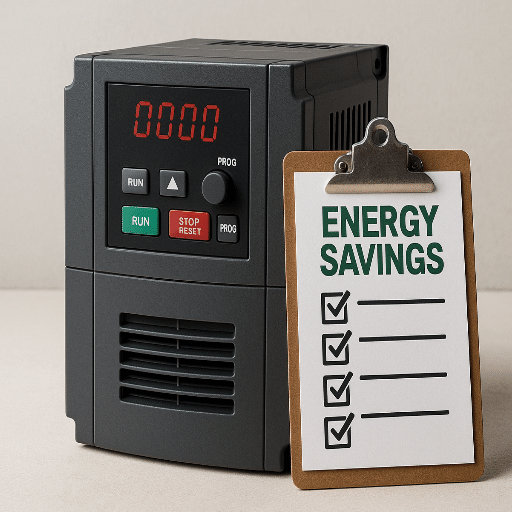
Pumps, fans, and compressors follow what engineers call the affinity laws. These laws state that power consumption changes with the cube of speed. A 20 percent reduction in motor speed cuts power consumption by roughly 49 percent. A 30 percent reduction cuts power by about 66 percent. That is not a linear relationship — it is exponential. This is why a VFD retrofit on a fan or pump system can reduce energy use by 20 to 50 percent without any sacrifice in performance during peak demand.
Some manufacturing processes need exact speed regulation. A conveyor belt carrying fragile electronics cannot jerk or overshoot. A centrifuge in a water treatment plant needs gradual ramp-up to avoid mechanical stress. A VFD provides smooth, programmable acceleration and deceleration profiles measured in seconds or even minutes. That level of control is impossible with simple on-off contactors.
When a motor starts directly across the line, it draws five to eight times its normal running current. That inrush current creates thermal stress in the windings and mechanical shock in couplings, bearings, and belts. A VFD starts the motor gradually, limiting inrush current to barely above running levels. The result is less downtime, fewer repairs, and longer service life for both the motor and the driven equipment.
In facilities with weak electrical infrastructure, starting a large motor can cause voltage sags that dim lights, reset computers, and trip breakers on other circuits. A VFD eliminates this problem because it draws current progressively. The motor never sees a sudden demand spike, and the facility’s electrical system remains stable.
Walk through any industrial exhibition and you will hear at least four different terms describing essentially the same device. Understanding the terminology — and the exact VFD meaning in different regions — helps you read datasheets, compare quotes, and communicate clearly with suppliers.
In China and India, suppliers often label their products as frequency inverters. In Germany and Scandinavia, you are more likely to see frequency converter or Drehzahlsteller. In the United Kingdom, variable speed drive and inverter drive both appear regularly. When you request quotes from international suppliers, it helps to mention all these terms so you receive complete proposals. In short, a variable speed drive explained for procurement buyers is simply any device that lets you change motor speed electronically rather than mechanically.
For a detailed AC drive vs VFD comparison of how these terms differ technically and commercially, see our guide on the difference between AC drive and VFD.
Not every variable frequency drive uses the same internal topology. The three main designs each suit different power levels and performance requirements.
The VSI design is by far the most common. It uses the DC bus capacitors as a stable voltage source and switches that voltage into the motor. VSI drives are cost-effective, reliable, and suitable for roughly 90 percent of general-purpose applications including pumps, fans, and conveyors. Most low voltage VFD systems you encounter in factories today are VSI designs.
CSI drives use inductors rather than capacitors on the DC bus, creating a stable current source instead of a voltage source. They are heavier and more expensive, but they handle very large motors exceptionally well. You will find CSI drives in mining, metal rolling mills, and other high-power applications above several hundred kilowatts.
PWM is technically a control method rather than a hardware category, but the term appears so often in product literature that it deserves mention. A PWM drive is simply a VSI drive that uses pulse width modulation to shape its output. Because virtually all modern general-purpose VFDs use PWM, the terms have become nearly synonymous in commercial catalogs.

Variable frequency drives appear in almost every industry that relies on electric motors. The largest segments by volume are pumps, fans, and compressors, but the list of applications grows every year.
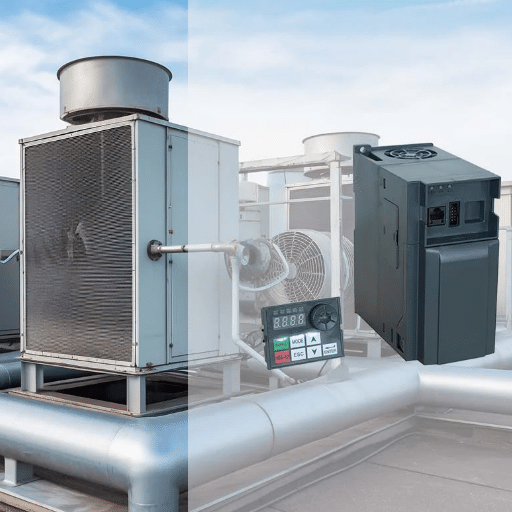
Water treatment plants use VFDs on intake pumps to match flow with demand. HVAC systems use them on chillers and air handlers to maintain precise temperature without running compressors at full capacity. A single large building can contain dozens of drives operating invisibly behind the walls.
Distribution centers and airports use VFD-controlled baggage and package conveyors. The drive accelerates each section gradually to prevent packages from tipping, then slows the belt when no items are present. That intermittent operation would be impossible with fixed-speed motors.
Air compressors with VFDs deliver consistent pressure without the wasteful load-unload cycling of traditional designs. CNC machine tools use servo drives — a specialized cousin of the VFD — to position cutting tools with micron-level accuracy.
For a comprehensive look at how different industries deploy this technology, read our guide to VFD applications by industry.
No technology is perfect for every situation. A clear-eyed assessment of what variable frequency drives can and cannot do will save you from expensive mistakes.

Deciding whether to install a variable frequency drive comes down to a few simple questions about your application.
A soft starter is a simpler, less expensive device that limits inrush current during motor startup but does not vary running speed. If your only goal is to reduce mechanical stress during starts, and the motor runs at fixed speed otherwise, a soft starter costs less and introduces fewer harmonics. The key is knowing the difference before you buy. See our full soft starter comparison to understand when each technology makes sense.
Maria Santos learned this lesson the hard way. She manages a cold-storage warehouse in Sao Paulo and purchased soft starters for her evaporator fans, assuming they would deliver the same energy savings as VFDs. Six months later, her electricity bills had barely changed. A consulting engineer explained that soft starters only control the first five seconds of operation; they cannot reduce energy during the other 99 percent of runtime. Maria replaced the soft starters with VFDs, and her next quarterly bill dropped 28 percent. The replacement cost stung, but the lesson was clear: match the technology to the actual problem.
Not sure which technology fits your application? Our article on how to select the right VFD walks through the full selection process, from load type to voltage rating.
A variable frequency drive controls the speed of an AC motor by changing the frequency and voltage of the electrical power it receives. This allows the motor to run faster or slower to match the exact needs of the application, rather than running at full speed and wasting energy.
An inverter is the electronic circuit inside a VFD that converts DC power back into variable-frequency AC power. In everyday industrial language, especially in Asia and Europe, the term “inverter” is often used to describe the complete drive unit. Technically, the inverter is only one of three stages.
Most modern three-phase induction motors can run with a VFD, but very old motors or motors with poor insulation may overheat or fail prematurely. Motors rated for inverter duty have reinforced insulation and separate cooling fans to handle the non-sinusoidal output of a PWM drive.
For pumps, fans, and compressors with variable demand, energy savings typically range from 20 to 50 percent. Payback periods are usually 12 to 24 months depending on local electricity rates, operating hours, and the degree of speed reduction achieved.
The terms overlap heavily. VFD specifically refers to electronic drives that vary frequency. Variable speed drive is a broader term that can also include mechanical speed controllers. In most practical conversations, they mean the same thing.
The three main parts are the rectifier, which converts AC input to DC; the DC bus, which stores and smooths the DC power; and the inverter, which converts the DC back into variable-frequency AC output for the motor.
Now that you understand what is a variable frequency drive and how it works, you can evaluate whether it fits your facility. A variable frequency drive is one of the most practical investments an industrial facility can make when motors represent a significant share of the energy budget. It converts fixed-speed waste into variable-speed efficiency through a straightforward three-stage process: rectify, buffer, and invert. The technology is mature, the savings are measurable, and the payback periods are short for the right applications.
The key is matching the drive to the actual operational profile. If your motors run at fixed speed with no variation in load, a VFD will not help. But if your pumps throttle, your fans damper, or your conveyors start and stop throughout the day, a variable frequency drive will cut costs, reduce wear, and give you control you never had before.
At Shandong Electric, we manufacture VFD solutions for facilities across Asia, Europe, and the Americas. Whether you need a single low-voltage drive for a workshop pump or a complete system architecture for a production line, our engineering team can guide you from initial assessment to commissioning. Contact Shandong Electric for a free VFD assessment today.