Ready to Get Your VFD Solution?
Whether you need a single drive or a complete system, we have the VFD products and engineering support to ensure your project's success.

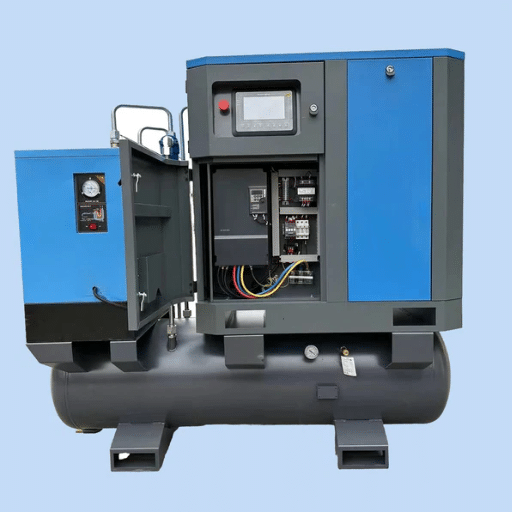
A VFD for compressors adjusts motor speed to match air demand, eliminating the inefficient load/unload cycling of fixed-speed compressors. Compressed air systems consume roughly 30% of industrial electricity, according to the U.S. Department of Energy, and VFD-controlled compressors save 20-35% of that energy compared to traditional load/unload control. The savings come from running the motor at exactly the speed needed to maintain system pressure, rather than cycling between full load and unloaded idle.
When a food processing plant in Brazil retrofitted its 160 kW rotary screw compressor with a variable speed drive, the results surprised even the engineering team. Pressure fluctuations that had plagued their packaging line for years disappeared overnight. Energy consumption dropped 28%, and the compressor that used to cycle 40 times per hour now runs smoothly at constant pressure. The $45,000 annual energy savings paid back the VFD investment in 18 months.
This guide covers which compressor types benefit most from VFD control, how load/unload compares to variable speed at different demand levels, and what you need to know about sizing, anti-surge protection, and multi-compressor coordination. Whether you are planning a new installation or retrofitting an existing system, the sections below give you the technical foundation to make the right decision.
Key Takeaways
- VFD compressor energy savings reach 20-35% compared to load/unload control, with the best ROI when demand varies between 40-80% of capacity.
- Load/unload control wastes 25-40% of full-load power even when unloaded, while VFD control matches power consumption directly to demand.
- Rotary screw compressors are the most common VFD retrofit target, but centrifugal compressors also benefit through anti-surge speed control.
- Permanent magnet (PM) motor compressors achieve IE5 efficiency class (>94% at partial loads) and pair well with VFD control.
- Multi-compressor systems benefit from VFD sequencing, where one VFD unit acts as the trim compressor while fixed-speed units handle base load.
- Minimum speed limits (typically 30-40 Hz) prevent oil foaming in oil-flooded rotary screw compressors.
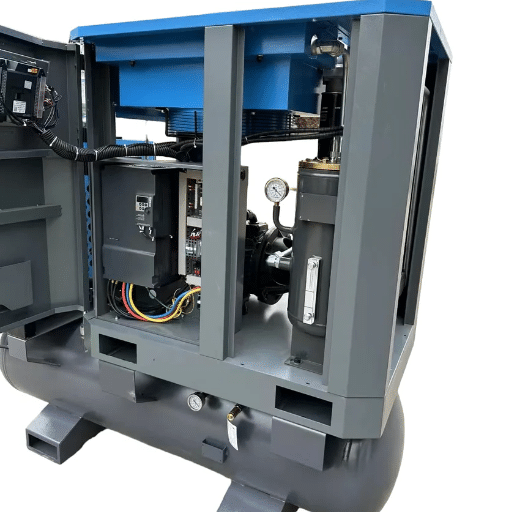
A variable frequency drive controls compressor motor speed by adjusting the frequency and voltage of the power supply. In compressed air applications, this capability translates into four practical benefits that fixed-speed starters cannot deliver.
Load-following control is the primary advantage. Instead of running at full speed and cycling a load/unload valve to regulate pressure, the VFD adjusts motor speed to match actual air demand. This eliminates the energy waste of unloaded running and the pressure band cycling that causes mechanical wear. Pressure regulation becomes tighter, typically within plus or minus 0.1 bar compared to plus or minus 0.5 bar for load/unload systems. Soft starting limits inrush current to 150-200% of full load instead of the 600-700% spike from direct-on-line starters. Condition monitoring turns the VFD into a data platform, tracking current signatures, load trends, and operating hours that reveal compressor health.
If you are new to drive technology, our complete VFD applications guide covers the fundamentals of variable frequency control across all industries. The principles for compressors are similar to VFD for pumps and fans, though compressors have unique torque characteristics and control requirements.
Not every compressor benefits equally from VFD control. The load profile, control method, and operating environment determine whether a variable speed drive delivers strong ROI or marginal improvement.
Rotary screw compressors are the most common industrial compressor type and the best candidate for VFD retrofit. These machines compress air using two intermeshing rotors, and the torque requirement is relatively constant across the speed range. A VFD for rotary screw compressor applications delivers 20-35% energy savings compared to load/unload control.
Oil-flooded rotary screw compressors have one important limitation: minimum speed. At very low speeds (below 30-40 Hz), oil separation becomes ineffective and foaming can damage the compressor bearings. The Compressed Air and Gas Institute (CAGI) provides standards and educational resources on compressor selection and operation. Most manufacturers specify a minimum speed of 40-50% of rated speed. Oil-free rotary screw compressors do not have this limitation and can operate down to 20-25% of rated speed.
Centrifugal compressors use impellers to accelerate air, and their power consumption follows a different curve than positive displacement machines. At partial load, centrifugal compressors can become unstable if the operating point crosses the surge line. This is where VFD control offers a unique advantage: by adjusting speed, the VFD moves the operating point away from the surge region while maintaining pressure.
The energy savings for centrifugal compressors are typically 15-25% compared to inlet guide vane (IGV) control. The savings are lower than rotary screw applications because IGV control is already more efficient than load/unload cycling. However, the anti-surge protection benefit often justifies the VFD investment independently of energy savings.
Reciprocating compressors are positive-displacement machines that compress air using pistons in cylinders. VFD control is less common for these machines because they typically operate at lower power levels and have pulsating torque characteristics that require careful VFD selection. When VFD control is applied, the pulsation frequency changes with speed, which may require pulsation dampener retuning.
For multi-stage reciprocating compressors, VFD control can save 15-25% energy by matching compressor output to demand. The investment is most justified when the compressor runs at variable load for significant portions of the operating cycle.
Refrigeration and process cooling compressors represent a growing VFD application. A VFD for refrigeration compressor applications controls cooling capacity to match thermal load, which is inherently variable in cold storage, food processing, and industrial cooling. ASHRAE guidelines recommend variable capacity control for refrigeration systems with variable thermal loads. The energy savings are 20-30% compared to fixed-speed cycling control.
Scroll and screw refrigeration compressors both accept VFD control, though the control strategy differs. Scroll compressors require careful attention to minimum speed limits and oil return. Screw refrigeration compressors have similar characteristics to industrial rotary screw machines. For HVAC compressor applications, see our dedicated article on VFD in HVAC systems.
Understanding the quantitative difference between load/unload and VFD control is essential for building a business case. The comparison below shows why VFD control wins at most demand levels.
A fixed-speed compressor with load/unload control runs the motor continuously at full speed. A valve opens and closes based on system pressure:
The unloaded power consumption is the hidden cost. A 200 kW compressor running unloaded for 40% of the time wastes 20-32 kW continuously. Over 8,000 annual operating hours, that is 160,000-256,000 kWh of wasted electricity.
A VFD-controlled compressor adjusts motor speed to match air demand:
| Demand Level | Load/Unload Power | VFD Power | Energy Savings |
|---|---|---|---|
| 100% | 100% | 100% | 0% |
| 80% | 85-90% | 65-70% | 18-25% |
| 60% | 70-80% | 45-50% | 30-40% |
| 40% | 55-65% | 30-35% | 40-50% |
| 20% | 40-50% | 15-20% | 55-65% |
The savings are most dramatic at partial load. A compressor that spends most of its time at 40-80% demand delivers the strongest VFD ROI. For systems with constant near-full demand, load/unload control may be sufficient.
Consider a 160 kW rotary screw compressor operating 6,000 hours per year with average demand at 60%:
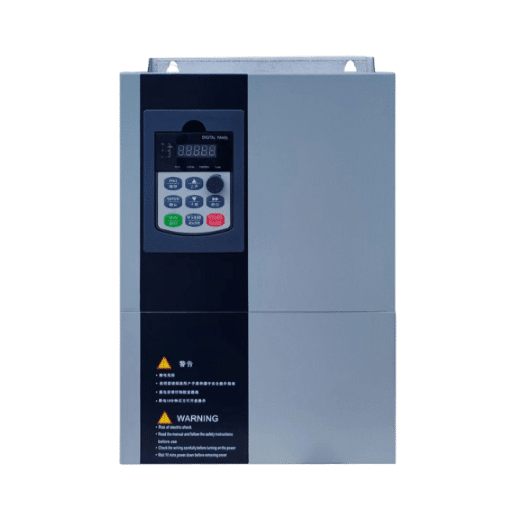
Centrifugal compressors face a unique challenge that VFD control can solve: surge. An anti-surge VFD compressor system adjusts speed to prevent the flow reversal that damages impellers, bearings, and seals. Understanding surge protection is critical for anyone operating centrifugal air or process gas compressors.
Surge occurs when the flow through a centrifugal compressor drops below a critical threshold and the pressure ratio exceeds the compressor’s capability. The result is flow reversal, where compressed gas flows backward through the impeller. Surge causes:
The surge line on a compressor performance map defines the minimum stable flow at each pressure ratio. Operating to the left of this line causes surge.
A VFD for compressors used on centrifugal machines provides anti-surge protection by adjusting speed to keep the operating point in the stable region. This compressor VFD control strategy is more energy-efficient than traditional blow-off methods. When the control system detects that the operating point is approaching the surge line:
This speed-based approach is more energy-efficient than traditional anti-surge control, which relies primarily on blow-off valves that vent compressed air to the atmosphere.
| Parameter | Anti-Surge Valve Only | VFD Anti-Surge |
|---|---|---|
| Energy waste at partial load | High (blow-off losses) | Low (speed reduction) |
| Response time | Fast (<50 ms) | Moderate (<100 ms) |
| Mechanical complexity | Blow-off valve + recycle line | VFD + optional valve |
| Capital cost | Lower | Higher |
| Operating cost | Higher (wasted energy) | Lower |
| Best for | Extreme transients | Steady-state partial load |
Most modern installations use a hybrid approach: VFD control for steady-state operation with a fast-acting anti-surge valve for transient protection.
Permanent magnet (PM) motors represent the next generation of compressor drive technology. Selecting a VFD for compressors with PM motor pairing delivers efficiency gains that standard induction motors cannot match.
PM motors use permanent magnets in the rotor instead of copper windings. This eliminates rotor copper losses and delivers:
At 50% load, a PM motor is typically 5-8% more efficient than a standard IE3 induction motor. Over a compressor’s 80,000+ hour lifetime, that efficiency difference translates into significant energy savings.
PM motors require VFDs with specific control capabilities:
Not all standard VFDs support PM motor control. Verify compatibility before specifying a PM motor compressor package.
PM motor compressors deliver the best ROI when:
The price premium for PM motor compressors is typically 15-25% over standard induction motor packages. With high run hours and variable demand, payback periods are 2-4 years.
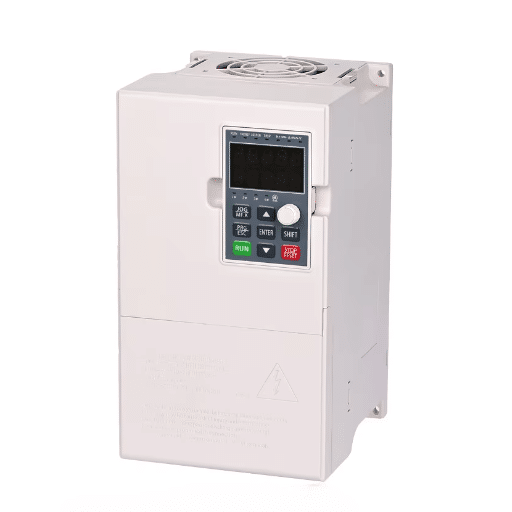
Proper VFD sizing prevents startup failures and ensures reliable long-term operation. A correctly sized VFD for compressors must account for the constant-torque load profile and continuous duty cycle that distinguish compressor loads from other industrial equipment. Compressor loads have specific characteristics that differ from pumps, fans, and conveyors.
Compressor loads are constant torque at varying speeds. The torque requirement does not change significantly with speed, which means:
Select the VFD based on these compressor-specific requirements:
For detailed sizing methodology, see our guide on how to size a VFD for your motor. Most compressors use low-voltage VFD systems up to 500 kW.
Avoid these errors that cause compressor VFD problems:
Most industrial facilities operate multiple compressors. An effective compressor VFD control strategy extends beyond individual machines to coordinate the entire compressed air system.
When multiple VFD compressors operate together, a sequencer controller coordinates their operation:
The sequencer monitors system pressure and individual compressor operating points to determine the optimal staging. The lead VFD compressor handles the variable demand portion, while fixed-speed units serve the base load.
The most common and cost-effective multi-compressor configuration uses one VFD compressor as the trim unit with fixed-speed compressors handling base load:
This hybrid approach delivers most of the VFD energy savings at lower capital cost than replacing all compressors with VFD units. The VFD compressor should be sized to handle the expected demand variation range.
Beyond individual compressor control, system-level optimization includes:
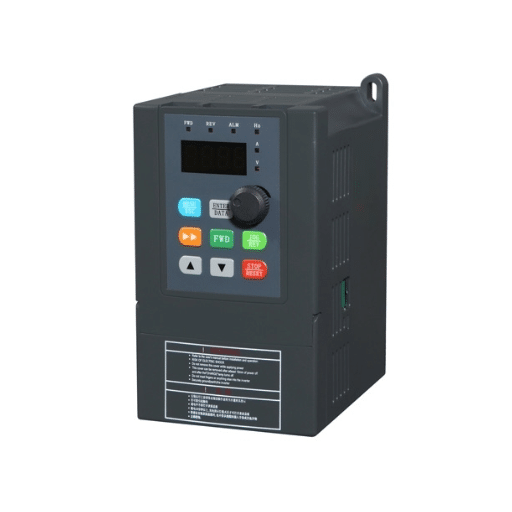
Theory is useful, but real-world results prove the case. The following three examples show how VFDs solve specific compressor challenges across different industries and geographies.
A food processing plant in Sao Paulo operated a 160 kW oil-flooded rotary screw compressor with load/unload control. The packaging line required stable pressure at 7.0 bar, but the load/unload cycling created pressure swings between 6.5 and 7.5 bar. These fluctuations caused inconsistent packaging seal quality and 3-5% reject rates.
After installing a VFD with sensorless vector control, the compressor maintained pressure within plus or minus 0.1 bar of the setpoint. Packaging rejects dropped to less than 1%. Energy consumption fell 28%, saving $45,000 annually. The compressor that used to cycle 40 times per hour now runs continuously at the speed needed to match demand. Mechanical wear decreased dramatically, extending the oil separator service interval from 4,000 to 6,000 hours.
An industrial cold storage facility in Warsaw operated a 200 kW screw refrigeration compressor at fixed speed with suction pressure modulation. Temperature fluctuations in the cold rooms exceeded plus or minus 2 degrees C, which compromised product quality for temperature-sensitive pharmaceutical storage.
Converting to VFD capacity control eliminated the temperature fluctuations. The compressor speed adjusts to match the thermal load, which varies significantly between summer and winter and between loading and storage periods. Energy savings reached 22%, and the reduced number of compressor starts extended the motor bearing life. The facility recovered its VFD investment in 24 months through electricity savings alone.
A large manufacturing plant in Shandong Province operated an 800 kW centrifugal compressor supplying plant air at 7.5 bar. During low-demand periods (nights and weekends), the anti-surge blow-off valve opened frequently, venting compressed air to atmosphere and wasting energy.
Installing a VFD with integrated anti-surge control eliminated the blow-off losses. During low-demand periods, the VFD reduces compressor speed to keep the operating point safely away from the surge line while maintaining system pressure. Energy consumption fell 18%, saving approximately $120,000 annually. The anti-surge valve now serves only as a backup for transient protection during sudden demand changes. This type of manufacturing VFD application demonstrates how drive technology solves problems that no other control method can address.
A VFD-controlled compressor saves 20-35% energy compared to load/unload control for variable demand applications. VFD compressor energy savings are highest when demand varies between 40-80% of capacity. The savings depend on the load profile: systems with demand varying between 40-80% of capacity deliver the strongest ROI. At constant near-full demand (90%+), load/unload control may be more cost-effective because the VFD investment cannot be recovered through energy savings alone.
Yes, but the compressor must be compatible with variable speed operation. Oil-flooded rotary screw compressors are the most common retrofit candidates. Centrifugal compressors can also be retrofitted, but the anti-surge control system typically needs upgrading. Reciprocating compressors are less common VFD retrofit targets due to their pulsating torque characteristics. Consult the compressor manufacturer before retrofitting to verify minimum speed limits and control system compatibility.
Load/unload control runs the compressor motor at fixed speed and cycles a valve between loaded (producing air) and unloaded (idling) states. Unloaded power consumption is 25-40% of full load. VFD control adjusts motor speed to match actual air demand, eliminating the unloaded idle state. VFD systems maintain tighter pressure control (plus or minus 0.1 bar vs plus or minus 0.5 bar) and reduce mechanical wear by eliminating valve cycling.
It depends on the load profile. If demand is constant at 90%+ of capacity, load/unload control may be sufficient and the VFD investment cannot be justified through energy savings alone. If demand varies between 30-80%, a VFD almost always delivers strong ROI. Consider VFD control even with constant demand if pressure stability is critical for your process, as VFD systems maintain much tighter pressure bands than load/unload cycling.
Match the VFD to the compressor motor’s rated full-load current and power. Use a heavy-duty overload rating of 150% for 60 seconds minimum. Account for ambient temperature derating (1-2% per degree above 40 degrees C) and altitude derating (1% per 100 meters above 1,000 meters).
At very low speeds (below 30-40 Hz), oil-flooded rotary screw compressors may experience oil foaming because the oil separator cannot function properly at reduced airflow. Most compressor manufacturers specify a minimum speed limit of 40-50% of rated speed. The VFD must be configured with this minimum speed parameter to prevent operation in the foaming zone. Oil-free compressors do not have this limitation and can operate down to 20-25% of rated speed.
A VFD for compressors delivers value through energy savings, tighter pressure control, and reduced mechanical wear. The 20-35% VFD compressor energy savings compared to load/unload control make VFD retrofits one of the fastest-payback investments in industrial energy efficiency, with typical payback periods of 1-3 years.
The equipment that delivers the strongest ROI is the rotary screw compressor operating at variable demand between 40-80% of capacity. Centrifugal compressors benefit from both energy savings and anti-surge protection. Refrigeration compressors gain capacity control that stabilizes process temperatures.
If you are evaluating a VFD for compressors retrofit in your compressed air system, the right approach starts with understanding your load profile, compressor type, and system configuration. Our engineering team has supported compressor VFD installations across food processing, manufacturing, cold storage, and industrial applications.
Contact our compressor application engineering team → for VFD sizing support, anti-surge control strategies, and multi-compressor system coordination tailored to your specific requirements.