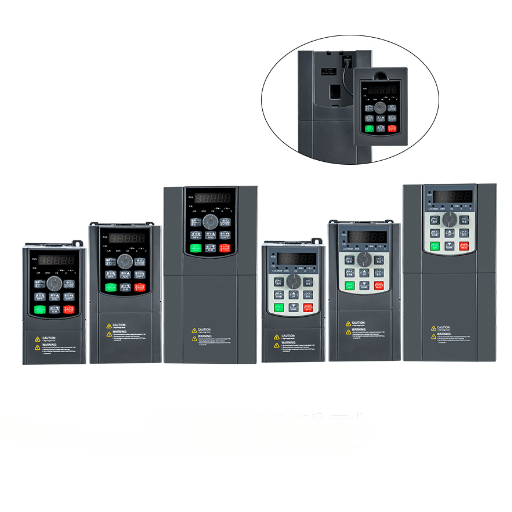
Ready to Get Your VFD Solution?
Whether you need a single drive or a complete system, we have the VFD products and engineering support to ensure your project's success.


Among the various application areas, the usage of Variable Frequency Drives or VFDs is one of the most significant technological revolutions that happened in the manufacturing sector. VFDs’ precision upgrades have not been confined to any specific machinery or working areas but across the whole spectrum of the industry, and are a must in production flow. This technical content catches the readers’ attention by giving the major point of VFDs being an indispensable part of the production floor, coming as well with a huge leap in technology to the old installations of the particular areas. Whether it is the compulsion of energy consumption imposed by governments, the yet manageable but concerning equipment wear and tear, or the operationally controlling systems that are under discussion, will ultimately lead us to the point where the guide will, in a broad sense, throw light on the entire VFD field of benefits and applications. Let us push all these ahead and see how the still reluctant-to-innovate industries are getting their adaptation pushed by VFDs.
A Variable Frequency Drive (VFD) is a modern and digital device that is employed for the control of the electric motor’s speed and torque. The frequency and the voltage as input into the motor’s circuit are what the VFD is able to change. It is most widely used for energy usage optimization, operational performance enhancement, and demanding precise control in the various sectors. The VFDs enable to maintain mechanical stress on equipment at a low level, to prolong the life of the motor, and to make the system adjust just in time to the load requirements dynamically, hence, contributing to the better overall efficiency and reliability of the manufacturing process. VFDs are the key players in the HVAC, water treatment, and automated production lines industries.
| Type | Operating Principle | Common Applications | Advantages | Limitations |
|---|---|---|---|---|
| Voltage Source Inverter (VSI) | Uses capacitors for energy storage | Pumps, fans, conveyors | High efficiency, widely used | Limited regenerative capability |
| Current Source Inverter (CSI) | Utilizes inductors for energy storage | High power applications | Rugged design, good fault tolerance | Larger and bulkier equipment |
| Pulse Width Modulation (PWM) | Converts AC using high-frequency pulses | HVAC, precision drives, robotics | Smooth speed control, low harmonic distortion | Complex circuitry, heat generation |
| Direct Torque Control (DTC) | Directly controls motor torque and flux | High-performance industrial systems | Fast response, no speed sensor needed | Higher cost, requires advanced tuning |
| Cycloconverter | Converts frequency directly in single stage | Low-speed, high-torque applications | High torque, no DC link needed | Limited frequency range, complex design |
| Matrix Converter | Direct AC-to-AC conversion without DC link | Compact systems, specialized machinery | Compact, regenerative capability | Not widely used, expensive components |
VFDs are becoming more and more popular especially in the HVAC (Heating, Ventilation, and Air Conditioning) sector. One of the main applications is to manage the speed of the pumps and fans in the HVAC system. The devices are programmed in such a way that the motor speed can be varied according to the need and hence power consumption can be cut by up to 50%.
VFDs provide a mild starting and stopping of conveyor systems, which ensures not only the materials’ safe transportation but also less mechanical stress of the motors and a small amount of wear and tear. So, VFDs are the best choice for factories’ assembly lines, logistics, and food processing plants.
The use of VFDs is a necessity to get the speed properly controlled on the cranes and hoists so that it is safe and easy to lift and lower heavy loads. They help the vehicle to move with a very good speed, thereby providing the safest and most efficient way to transport materials.
VFDs, when installed in refrigeration and air compression systems, can change the compressor speed and thus maintain the pressure level at a certain point. This technology is likely to continue to be applied and used in industries where it is critical to reduce energy consumption and extend the life of the equipment such as oil and gas or chemical processing companies.
Variable frequency drives make a noticeable difference in the CNC (Computer Numerical Control) machines, as they are important in the control of your tool’s speed. This allows for an increase in the precision and flexibility for materials of varying properties and hence becoming indispensable in the automotive and aerospace industries.
There is an advantage in the flexibility of VFDs in more sensitive applications like the food or pharmaceutical industry, where the final product is strongly dependent on the mixing process. As the consistency of the mix is better controlled, VFDs also contribute to earlier wear-off of motors during operations involving high viscosity.
The VFDs deliver a very gradual and controlled acceleration and deceleration, and thus ultimately give a rise in passenger comfort and cut down on energy consumption significantly. Additionally, through allowing the regeneration of braking energy, they also enable efficient braking systems.
VFDs are commonly found in everyday operations involving industrial washers or centrifuges, where they use the motors with low-rpm generators to optimize washing and energy efficiencies.

Variable Frequency Drives (VFDs) take control of the spindle motors to control both speed and torque. Variable frequency drives also set the spindle speed parameters which makes it easy for the machines to be programmed to have the correct speed for the material. Electric energy is saved by the variable frequency drives by adjusting the motor’s performance to the particular machining requirements. Variables such as current, frequency, and voltage are adjusted to mimic the mechanical quantities for different machinings. Thus, the motor is more efficient as it does not consume power like the fixed speed motor even when not in operation. This attained efficiency is, however, dependent heavily upon the nature of the load. The technical term used in the industry in this connection is controlling the motor in the so-called “Vector Control Mode”.
It is very essential to have a good level of precision in CNC operations and this can be achieved through the cooperation of technology and the most detailed process optimization. One of the very important technologies is the adoption of linear encoders and when they are utilized, the positional accuracy can be checked very quickly and this information can be used by the system to adjust also for very small deviations. Consequently, the sub-micron positioning accuracy, which is the critical feature for industries like aerospace, and medical device manufacturing, will be sustainably met by the machine.
No one can deny the fact that toolpath optimization software is one of the key factors to obtain the cutting tool geometry needed for the desired parameters. The software almost immediately helps the machinist to get rid of difficult programming and set-up practices not to mention the time-consuming process of developing standard cutter inserts. Moreover, the software is capable of digitizing the set of the cutting tool provided by the tool vendor through data collection and adaptation, systematically embracing the automation process.
Variable Frequency Drives (VFDs) also contribute greatly to the technique of modern CNC manufacturing by offering variable-frequency and voltage control of industrial motors, thereby reducing power, energy consumption, and the mechanical and thermal stress on the attached equipment, hence, the controllable parts still being in general perfect mechanical condition in the long run. Moreover, the expansion of the workflow area thorough the provision of the driving system in the production cell for automated warehousing decreases the number of warehousing operations and shorten the delivery time.
Dynamic torque vectoring and multi-motor synchronization are among the recent VFD technology advancements. IoT-enabled VFD systems have also been integrated, making preventive maintenance more efficient. These systems keep an eye on the essential parameters of the motor such as its temperature, vibrations, and load, thus allowing to run diagnostics in real time and to bring the occurrence of unexpected downtime to as low a degree as possible.
The other aspect of VFD usage in the domain of CNC production is that it has a direct effect on the quality of the finished surface as well as on the accuracy of the dimensions. By the control of the speed with great precision one can avoid the occurrence of the main hindrance for a good finishing – chatter, and at the same time the material removal rate will be kept at a consistent level so the possibility of tool wear will also be reduced. Added to these factors is the fact that modern motion-control systems provide a valuable contribution to the CNC machine capacity in terms of handling intricate geometries and high-precision applications effectively.
The introduction of motor control devices, specifically the ones combined with Variable Frequency Drives (VFDs), is the main reason why the CNC machines became more accurate. It is because motor control is the one responsible for controlling the exact speed of the spindle and the feed rates, which consequently leads to the cutting paths being made accurately and the deviations being reduced. For example, it was found that systems with advanced motor control were capable of achieving as tight as ±0.001 inches in terms of tolerances in the industrial sector.
The energy usage is optimized using effective motor control by the adjustment of the motor speed and torque to the specific requirements of each machining operation. Research shows that the energy consumption of VFD-equipped motors can be cut by as much as 30% when compared to fixed-speed motors, conservation and the savings making them a pro-environmental and economic solution.
Improved motor control smoothens the vibration and lowers the mechanical impact in the machining operations. This can benefit from less wear on the tooling which means the tool lasts for approximately 20-50% longer, depending on the application, and of course, this automatically is a cost-saving factor by directly reducing the tooling replacement rate.
Sophisticated motor control can maintain the same speed of the spindle so that there is little to no chatter and the deflection of the tool is not an issue. This results in the production of finer surface finishes, with the roughness values (Ra) often going down by as much as 40% when the ideal conditions are kept, no matter what the operations are and even with the use of hard-to-machine materials
CNC machines that have sophisticated motor control systems with advanced algorithms can now dynamically change the toolpath and geometry during the cutting process. They achieve perfect position movements through different axes so the fabrication of intricate designs comes out error-free, especially needed in the aviation, automotive, and medical device manufacturing industries
Motor control systems play a vital role in the longevity of both CNC components and motors by averting overloads and minimizing mechanical wear. This is especially true with the inclusion of instruments that could preempt downtime, such as predictive maintenance, in the latest control systems which warn the operator of any potential difficulties before they even happen, thereby practically mitigating downtime to the point of nonexistence and also saving on the operating costs in a very high rate.

Variable Frequency Drives (VFDs) are very helpful for making the pump system’s operation more efficient and get much improvement is ensured. The biggest benefit of the VFDs is that it matches the motor speed with the real flow or pressure demands due to which the wastage of energy is zero, as is the case with the fixed-speed pumps full-time operation in the full demand mode. The final result is great energy savings being achieved most probably in the applications of a variable load situation. The dependence of mechanical systems on the pump is reduced when VFDs eliminate the stress on the system components during the starting period along with the soft start-up method provided. In a way, the Advanced VFDs with built-in diagnostics and monitoring systems become the typical choice for the modern, efficient and energy-saving pump system’s operators because they allow for predictive maintenance and, therefore, make the system more reliable by reducing the downtime.
Variable Frequency Drives (VFDs) allow boosting the pump capacity by giving control over the speed of the motor to an infinite precision level. When the VFD is used, the pump’s output is matching the system’s demand every time, which is not the case with the traditional system that always runs at full power. This results in substantial savings in energy consumption, especially in systems where the demand for load varies during operation. For instance, several surveys indicate that lowering the motor speed by only 20% can cause a 50% reduction in the pump system’s energy use, which indicates the very high efficiency gains achievable with the implementation of VFDs.
Variable Frequency Drives (VFDs) are a type of motor controller that both identify and dampen hydraulic difficulties through changing the rotating speed. Cavitation, which is an outcome of the existence of low-pressure pockets in the pump, may not cause harm instantaneously but over time, could lead to significant wear. The VFDs work out this potential risk by adjusting the pump speed to adhere to the most favorable conditions regarding flow and pressure. Even more so, the soft starting and easing off that the VFDs provide considerably minimizes the chances of a water hammer. It is the VFDs that are stopping or starting the flow abruptly that create such a pressure surge.
Variable Frequency Drives (VFDs) are a major factor in improving energy efficiency in pump systems. The device optimizes motor speed to match the real-time demand, and in the majority of the cases, the centrifugal pumps would be most efficiently operating at around 80-85% of their full load capacity. It has been shown that moving a pump at an unnecessary speed results in a totally exponential energy use. As the energy used by the pump is proportional to the cube of the motor’s speed, cutting the speed merely by a few percent amount to considerable energy savings. For instance, outputting the speed of a pump motor by 20% can give a drop in energy consumption of about half. This shows the remarkable efficiency gain achieved in operations. Moreover, this efficacy is also reflected in terms of cost savings, and some plants report that almost 30-50% savings in energy costs were made by using VFD technology.
Apart from that, VFDs enable the provision of real-time control and monitoring which leads to the efficiency in responding to the changing requirements of the system. Consequently, this dynamic optimization not only saves energy but also prevents mechanical parts from getting damaged thus adding to the cost efficiency in the long run. The introduction of VFD-related applications directed at the motors of a plant extends far beyond the savings in the energy balance but also into the savings of the environmental impact. Specifically, the wastewater treatment and the HVAC industry would be the first ones in line to get involved in financial and environmental advantages as they would be accomplishing the requirements as per the sustainability initiatives.
Variable Frequency Drives (VFDs) are extremely important for the functionality of industrial pump systems because they enable precise control over motor speed and torque, thus, matching pump output to the current demand. VFDs enable a scenario where a system load can vary significantly from the average and pumps can still run at peak efficiency. Specifically, centrifugal pumps are a key beneficiary of this technology as their power consumption changes with the cube of the speed—a 20% drop in speed can lead to almost 50% of energy savings. On top of that, VFDs help to cut down on mechanical wear by allowing for a gradual start and stop to the motor. This will be a very rewarding feature because it will let pumps take in the flow gently, thus reducing stress on seals, bearings, and the piping system through the cut off of the surge. Slow wear and tear result in increasing equipment life and low maintenance cost in the long-term.
The usage of VFDs can prove really useful in environments which require flow control, for example, chemical processing or water distribution networks. In those cases, the conventional method of controlling flow via the opening-close of throttle valves can be substituted with VFD-regulated speed changes which in turn will give us exact flow rates without the power loss due to the pressure. On top of this, the VFD market lately has seen the entry of maintenance and monitoring systems that use analytics for predictive maintenance and monitoring, thus giving information on the system’s conditions and possible failure points, combining to ensure the smooth running of the industrial operation.

Variable Speed Drives (VSDs) are considered the lifesavers of conveyor systems since they operate these systems more efficiently and save on energy. The drives cut back on wear and tear by matching the motor speed with the load demand, extend the equipment’s life expectancy, and cause a significant drop in maintenance costs. Beyond this, the state of the art in speed control makes the handling of materials more accurate, reduces the waste of material, and increases productivity. Current VSDs come with innovative control functions as well, for instance, soft starting and stopping, to name a few, which not only prevent the material from being overused but also improve safety. With the help of such great advantages like these features combined, VSDs are considered as an essential part in terms of the improvements of the performance and efficiency of conveyor systems in many different sectors.
Variable frequency drives (VFDs) throughout the years have been a great support for material handling systems and at the same time their control has been enhanced along with the energy saved. Energy consumption can be greatly reduced by as much as 30% if VFDs are used in systems with varying load requirements. The latter energy-saving measure is a result of a speed-matching system by the VFDs according to the process load in real-time which is expected to decrease wasted power during low-traffic times to a great extent. Not only that, but the VFDs are also compatible with industrial Internet of Things (IoT) platforms which in turn means they contribute to a data-driven decision-making process and timely maintenance service. These are the key factors reinforcing each other as the VFDs are saving energy while at the same time further heat-tracking and ensuring that the data from various sensors is with no delay directed to the proper maintenance or repair sites.
The reduction of long-term maintenance costs in conveyor systems significantly and is largely based on the application of advanced predictive maintenance techniques. Advanced predictive maintenance methods are able to use sensor data, machine learning algorithms, and real-time monitoring for predicting failures before they occur. For instance, vibration and temperature sensors can continuously check the health of machine components like bearings, motors, and belts to which the sensors are attached and give early signs of wear or excessive heating. The data collected during the checking stage is processed to find out when exactly these components are going to fail so that maintenance can be planned very precisely.
Predictive maintenance offers reduced unplanned downtime as one of its major advantages. Instead of just waiting for a failure to happen, maintenance personnel can already replace or repair parts during the planned idle times so that the production schedule will be less disrupted. Further, predictive analytics can manage spare parts inventory through forecasting of component demand quite accurately, therefore, this is associated with the decrease of the total costs for storage and procurement. The interaction between proactive checking, data crunching, and proper scheduling is leading to a great increase in the reliability of the conveyor system, while the maintenance costs are still the lowest.
Variable Frequency Drives (VFDs) are indispensable in the automation of conveyor systems as they offer motor speed and torque control with high precision. This control is a must-have in the quest for energy conservation, heightened efficiency, and decreased mechanical wear. To name one of the benefits, conveyors can be operated at their full speed only during the periods when they are really needed, that is when input material is available, thus volume/time efficiency is increased, while still being energy efficient, if using VFDs. Furthermore, VFDs are characterized by their support of association of the following: gentle start-up and stop, and these features can prevent mechanical stress and, thus, extend the life of system elements.
It is common for the modern VFD to be furnished with highly developed communication protocols such as EtherNet/IP and Modbus, which allows for a straightforward alignment with programmable logic controllers (PLCs) and supervisory control systems. This is allowing for real-time monitoring, diagnostics, and remote control, thus enhancing the view and the management of the whole conveyor system actually from the same place. The surveys as well as the industrial automation specialists’ case data confirm that the implementation of VFD technology can lead to power consumption reduction by as much as 30%, which is a big contributor to the operational cost reduction process. The integration of VFDs in the conveyor system reduces the energy use and so the industries that use them will have higher automation, sustainability, and reliability levels.

In the future, the manufacturing sector will see great developments in the Variable Frequency Drives (VFDs) such as, energy proficiency, control system, and automation intelligence. More and more technological advancements that are related to Industry 4.0 are being used, and the VFDs are experiencing a connectivity growth that makes them able to be easily integrated with Industrial Internet of Things (IIoT) architectures. This improved connection enhances the real-time monitoring, predictive maintenance and the system optimization, thereby, reducing the downtime and operational costs.
Moreover, factories have gained the ability to design and at the same time produce very accurate VFDs which have also brought in the precision of control of electric motors at the forefront of efforts to cut down power consumption. The ever-increasing pace of converting to clean power sources also positively impacts the diverse applications of VFDs in modern, eco-friendly, and energy-conserving production technology. Hence this development suggests that the VFD technology will remain an indispensable item in the innovation and efficiency aspects of the industrial operations.
The key areas of influence for Variable Frequency Drives (VFDs) at present have shifted to where they are now perceived as vital equipment on the factory floor. The main job of these drives is to gate the speed and power of electric motors. The end result is a precise production output to meet the varying market needs. The new technology behind VFDs has made them more powerful and thus capable of improving quality and at the same time reducing the number of unwarranted stops in manufacturing processes.
A major angle in which VFDs are superior is by slashing power bills because they turn motors on only when the required speed is specified, instead of letting them run at maximum capacity round the clock. The results of the researches show that the use of VFDs can save power consumption of motors by up to 50% in specific cases. This energy competency is not just consistent with green strategies but also in the long run it provides significant money savings. Moreover, the modern VFDs provide the motor performance monitoring and failure anticipation facilities by data analysis, thanks to the diagnostic and predictive maintenance tools they come with this resulting in better productivities.
Considering the continuous incorporation of the Industry 4.0 technologies, the design of VFDs is being done with the special focus on being compatible with automation systems. VFDs can talk to PLCs and cloud-based platforms, hence making real-time data collection and remote management feasible. This blend of flexibility and control is what VFDs are nowadays in the industries such as food processing, chemical production, automotive, and renewable energy. The part played by them in the facilitation of energy saving, process control efficiency, and quality is something that can be seen everywhere in the future in the form of an upward trend and continuous improvement of the efficiency and outputs of the industries.
Variable Frequency Drives (VFDs) are being widely used in industries to make them more efficient, sustainable, and flexible, and thus they are the first choice in the modern manufacturing era. As per industry reports, once VFDs are used in electric-motor systems, the energy consumption may go down as much as 50%, a sector that makes up around 70% of global industrial energy use. This is a huge deal, that shows how VFDs draw a ring around energy use management, i.e., as a control part of the energy usage circle.
Moreover, VFD technology developments have made significant inroads by IoT (Internet of Things) integration which predicts malfunctions after providing incorporation and diagnostics features. So as a result, these features are coupled with and add to the remaining part of decreasing downtime and increasing the overall equipment effectiveness (OEE), both of which are vital aspects in the case of high-demand industries. In addition, the speed of motors has been increased in a very precise way, which in turn enhances product quality and control of processes and thus putting manufacturers ahead of their competitors.
With the increasing adoption of strict energy efficiency and sustainability requirements, VFDs are anticipated to continue as a major part of the latest industrial operations. Enterprises that give priority to VFD incorporation at this moment are probably going to be the ones not only having the long-term savings but also operating in line with the world’s green standards and regulation.
The speed of an electric motor is regulated by the frequency and voltage that is sent to the motor in the case of a variable frequency drive, also known as adjustable frequency drives. Because of this, VFDs can accurately turn the motor at measurements and this is the major reason why they are used in various industries where it is necessary to operate more efficiently. Lowering maintenance costs by implementing a VFD and getting the motor and the driven device to last longer are some other advantages of using a VFD. A good selection of VFD loading and “VFD tuning” for best system performance will produce an energy-efficient and power factor-friendly system.
VFDs, short for variable frequency drives, provide a way of speeding or slowing AC motors by modulating both the frequency and the voltage of the power supplied. VFDS have been more and more popular due to their capability to control the speed settings of the driving motors and to decrease unnecessary motor efficiency, both of which lead to great energy preservation. In addition, the improved power factor and system efficiency would also help the users in achieving their whole life cost. One of the other benefits of the use of VFD’s is that they regulate the power factor and system efficiency while the energy is going through saving, and doing so afterwards by the supply of clean and regular energy source.
Yes, Variable Frequency Drives are the most suitable for the areas like pumps and conveyor belts in which they modulate the speed of mixers, pumps, and conveyors according to the process requirement. The precise control coupled with VFDs culminates in the decreased wear and tear of mechanical parts and the extended life of belts, bearings, and motors. In short, the usage of VFDs along with the motion control solutions is beneficial both in terms of improving performance and cutting energy use in today’s industrial plants. The right VFD depending on the motor and conveyor system help in achieving consistent and durable VFD solutions for industrial and manufacturing requirements.
The need for adjusting the motor power consumption is decreased by Variable Frequency Drives (VFDs) since the motor can be set to the desired speed. The outcome is considerable energy savings and increased system efficiency. They do not only lower the noise and vibration in the system, but also protect mechanical parts by refusing to deliver more power than is required, this way the equipment will have a longer lifespan. VFDs can also offer an increase in the power factor and a shifting mechanism that is more attractive to the users as it is less sudden and damaging to the mechanical devices.