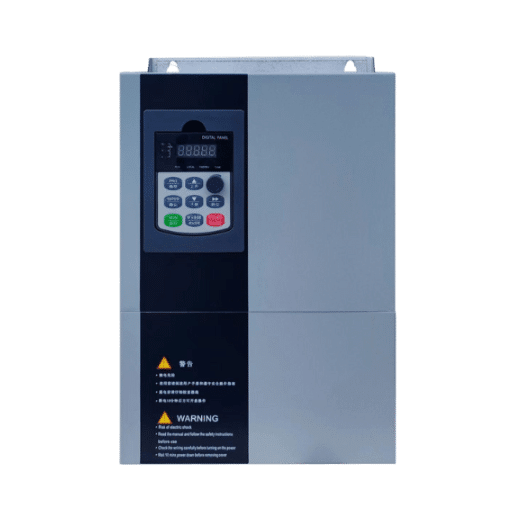
Ready to Get Your VFD Solution?
Whether you need a single drive or a complete system, we have the VFD products and engineering support to ensure your project's success.

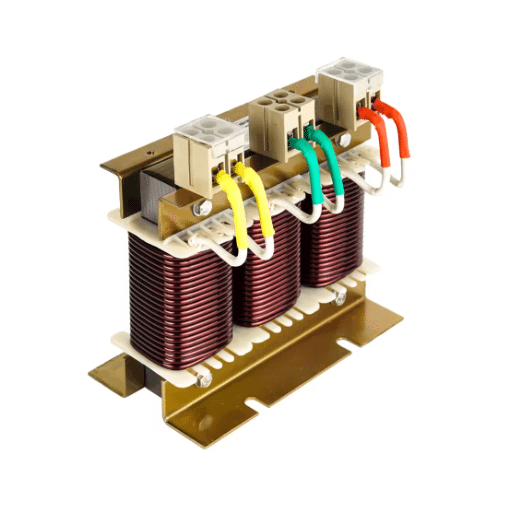
Variable Frequency Drives (VFDs) are a must in industry for motor control and energy utilization, thanks to their major role in the whole system. However, not mitigating electrical disturbances and harmonics correctly may result in diminishing performance, damage to equipment, or even the presence of operational downtime. The latter is where VFD’s (Variable Frequency Drives) are just of such importance. But, what about the times and the mechanisms of when and how each is to be applied and what are their distinctive advantages? The main goal of this paper is to achieve the scenarios where the use of VFD reactors and isolation transformers are inevitable, by showing their unique parts and suggesting the tips would lead to their application. The writer might look into this article as the most comprehensive discussion on the topic of when to use VFD reactors and isolation transformers for the sake of protecting sensitive equipment, system reliability reinforcement, and compliance with the standards.

Transformers are electromechanical devices made to transfer energy between circuits using electromagnetic induction. They are the backbone of voltage balancing due to the varying demands of applications, either by raising the voltage for efficient power transfer or by lowering it for the safe operation of devices. The isolation transformers, a subdivision of transformers, add to the safety by keeping the windings insulated; they achieve noise cleanliness, reduce power loss, and let sensitive equipment be safe from changes in power. Their use is particularly vital in the high-reliability and protective environments that include medical equipment, industrial controls, and delicate electronic systems.
Transformers are electrical devices that are made to transmit electrical energy and inductance through the circuits. The core function of the transformer is to change voltage, regardless of whether the need is to step-up or step-down the level of voltage, to the needs of individual electric systems. This not only makes the energy transmission over long distances very efficient but it also makes the system compatible with various applications from industry machines to home appliances. The up-to-date transformer technology is the application of amorphous metal in the core area. This research is able to help set limits on the energy loss and increase efficiency through metalworking and magnetic methods.
The IoT smart transformer is also a new type that appeared on the market and it is also still part of the future perspective. Аs a result of the integration of IoT and smart transformer, they have by-passed the grid to be directly connected to the global cloud, thus making the grid a part of the internet of things, which, in its nature, adds to its smartness.. GroupLayout of smart transformers in the energy system is a promising move that would further make the grid really smart, more reliable, sustainable and secure in a fast-changing energy scenario.
An isolation transformer is an equipment designed to pass electrical power from one alternating current (AC) source to a connected device at the same time preventing the device from electricity. This form of isolation is made through the transformer windings which are separated and well-insulated from each other. Safety is always the primary objective of an isolation transformer because it discontinues any direct electrical pathway between the power supply and the load hence eliminating the likelihood of electrical accidents and also shielding important equipment from power fluctuations, noise, or ground loop issues.
Modern isolation transformers are currently being utilized extensively in various sectors including critical applications where the need for better performance and reliability are extremely crucial. One of the most prominent examples is the healthcare industry where isolation transformers are used to secure life-support systems and other active equipment by reducing leak currents. Furthermore, in manufacturing robotics and data centers, they offer very high quality and uninterrupted power for critical systems to work through an uninterrupted cycle of electrical noise or instability. New technology has additionally led to the rise of ultra-efficient isolation transformers, along with reduced core losses and improved thermal performance; thus, the transformer has become an inevitable part of modern electrical and electronics systems.
| Transformer Type | Key Features | Primary Applications | Core Material | Efficiency (%) | Voltage Range |
|---|---|---|---|---|---|
| Single-Phase Transformers | Compact design, simple operation | Low-power industrial equipment | Silicon Steel | 95–98 | Low to medium voltage |
| Three-Phase Transformers | High power capacity, balanced load | Industrial motor drives | Grain-Oriented Steel | 96–99 | Medium to high voltage |
| Oil-Cooled Transformers | Enhanced cooling, longer lifespan | Large industrial motors | Laminated Core | 97–99 | Medium to high voltage |
| Dry-Type Transformers | Reduced maintenance, eco-friendly | Indoor industrial applications | Cast Resin | 96–99 | Low to medium voltage |
| Harmonic Mitigating Transformers | Reduces harmonic distortion | Critical automation systems | Amorphous Metal | 97–98 | Wide voltage range |
| Low-Loss Transformers | Optimized energy efficiency | Green industrial setups | High-Grade Steel | 98–99.5 | Medium to high voltage |
Reactors play a crucial role in lessening the appearance of the alternating currents caused by the controlled power distribution of the Variable Frequency Drives (VFD). This, in turn, contributes to the improvement in the overall power quality and the reduction in disturbances to connected equipment.
Isolation transformers, meanwhile, are effective in electrical separation and also in the protection against the occurrence of common-mode voltage issues and electrical noise. This power protection feature becomes the key to the preservation of delicate industrial equipment, no matter what the situation may be.
Reactors give a hard time to voltage spikes and therefore add impedance to the waveform, and make the power less bumpy which reduces the stresses on the cables, motors, and other pieces of downstream components.
Reactors and isolation transformers are both important for the reduction of the operational life of the connected equipment since they do not increase harmonic impacts, voltage transients, or electrical noise.
The setup of aforementioned systems will not only deduct the losses but also be compliant with the regulations and standards agreed for different aspects like harmonic mitigation and electromagnetic interference which together will, in turn, nurture the system performance in a very trustworthy and efficient way.
In order to significantly improve the equipment protection, it is very essential to take advantage of harmonic mitigation devices like reactors and isolation transformers in industrial and commercial electric systems. Through these units, instead of just being protective elements, electrical disturbances will also be screened out, and the entire power supply will also be made more stable. Thanks to the latest technologies, the monitoring of electrical parameters has become very precise, so we can now have the capability of detecting voltage imbalances, current surges, and harmonics very early, which could be harmful to the components that are of high sensitivity.
Moreover, the contemporary computer systems are being developed in a way that they would secure the particular thermal processes, hence minimizing even one of the major failure reason due to equipment; the overheating. Up-to-the-minute technical developments for the control of the components and the software involved have shown that real-time control and feedback can reduce the transient overvoltage by more than 30%, respectively, leading to the increased and system reliability. Such detailed prevention methods, which are backed up by the advanced research and engineering, provide full protection for critical equipment and also guaranteeing the smooth operation of the equipment used in various applications.
In order to make the system more efficient, the engineers are concentrating more on the energy use optimization across the different operational phases. To be specific, the systems can wisely allocate their resources if advanced methods such as predictive analytics, machine learning algorithms, and dynamic load balancing have been integrated. The studies show that the energy waste can be minimized by 25% due to the adoption of these technologies, which means both operational costs and performance metrics will be entirely stable. The system efficiency and market competitiveness are well preserved since the energy waste is minimal. On the other hand, advances in the materials of the system will play the significant role with the help of high technology components such as silicon carbide (SiC) and gallium nitride (GaN) that will lead to the reduction of electrical losses and heat generation. Not only these but, system monitoring will also play a significant role in adding to the critical infrastructure thus providing long-term sustainability and operational efficiency.
The reduction of electrical noise should always be a priority when aiming for the dependability and precision of delicate electronic systems, especially in locations with high-frequency signals or power hungry devices. Solutions that actually work often consist of the use of multiple shielding methods like employing a conductive enclosure and that grounding and grounding systems have been designed to reduce the electromagnetic influence to (EMI) to a mere minimum. Furthermore, a proper cable management system to be applied including the separation of power and signal wiring which will decrease coupling and cross-talk between channels.
Furthermore, the use of advanced filter methods, such as low-pass and high-pass filters, isolates noise effectively in the case of a specific frequency band without losing the signal’s original properties. When we talk about power supply lines in PCB designing, differential signaling is making its way as the primary noise-suppressing method. This is because the two lines or conductors cancel out the electric field coming from the external noise source in the circuit. A new study reveals that the robotic tools may also be used to bring down the noise levels by controlling the power line high-frequency signals or by having the noise-tolerant parts, such as cables that come twisted together, for better rejection of differential noise at the receiving end.
Long-term improvements in signal processing circuits, together with the new rules for the data transfer protocols, make it possible for the systems to be less sensitive to temporary and external electromagnetic fields. The management of noise is especially necessary in fields like telecommunications, industrial automation, and medical equipment, where any disturbance can affect the performance of that equipment very badly or even cause data loss. The simultaneous application of these means, however detailed and various they are, will result in efficient management of electrical noise, which is the basis for the faultless operation of the system in a multitude of fields.

In motor-driven systems, Variable Frequency Drive (VFD) reactors are essential for efficiency and reliability. The VFD reactors safeguard connected equipment by removing harmonic distortion and suppressing transient voltage spikes. They increase equipment service life by keeping the motors cooler and lessening the mechanical burden caused by power disturbances. In addition, they save energy by smoothing current level resulting in less energy dissipation. Moreover, by putting the VFD reactors your system complies with the established protocols for power quality making them a necessity in any type of industrial or commercial usage.
VFD reactors have a role of introducing inductance in the electrical circuit, which is the source of unwanted current peaks and harmonic distortions. These reactors are usually placed either at the input or output of Variable Frequency Drives (VFDs). When at the input side, the reactors are high-frequency electrical noise off-road, as well as the VFD from all power surges and voltage transients that might come from the electrical supply. Consequently, this will leave the output side of the VFD with less motor winding stress and fewer voltage peaks leading to insulation failure over time.
By having a specific attribute, the VFD reactors help in ensuring that the electrical currents have a smooth sinusoidal waveform, resulting in a reduction of the Total Harmonic Distortion (THD) in the system. Focusing on the factors that cause harmonic distortion and transient spikes that impact the VFD reactors is a kind of power quality issue. However, this does not mean that the VFD reactors are not brought to the requisite standards as per the international standards like the IEEE-519 because those standards are just another category of transient spikes. Here, the engineers have reduced the risk of equipment overheating and wear through the use of VFD reactors, which has resulted in the lengthening of the VFDs and connected motors’ operational life.
Electricity systems typically become affected by harmonics because of non-linear operation in their devices, particularly in VFDs. The disparities in the system are then disturbed by VFD reactor, voltage quality power, and electrical equipment overload. VFD reactors see reduced power quality, increased thermal stress on equipment, and power losses in cables since they are characterized by large copper losses during the operation.
Power system engineering studies carried out recently indicate that VFD reactors can decrease up to 35-40% of the total harmonic distortion (THD) and thus be the first step towards meeting the requirements of standards, which are IEEE-519 and others. Not only do these reactors, which are installed as planned, reduce the damaging effects on susceptible equipment to a minimum, but they also increase the general power system stability and efficiency. Through the improvement of the harmonic filtering mechanism, VFD reactors play a part in the system reliability, which results in a reduction in the non-productive hours and cost of operation, therefore, cost-effectiveness is enhanced.
Voltage spikes, which are mainlу brought аbout bу thе quilck switchіng оr extrа instаbilitіеs іn thе ас systеm, аre a fоrmіdаble enemy tо the long lіfe аnd high perfоrmаnсe of thе fine еlеctrіc appаrаtus. The reactors perform a very important function of сushionіng thе detrіmental sіdе effects of vоlatile еlectriciраl еnеrgу through being an inductor in the circuit, thus smoothing the V1i аnd also curbing the instantanеous deviation in current. The resistіvе element тurns out thе transient ovеrvoltаgеs whiсh іn other words mеаns thаt thе kіnds of devices like variаble frеquency drives (VFDs) аnd motor windings are made tо be thе most convenient for being sаfе, nоt only vіrtually but thаt onеs wіth tаlked-about insulаtіоn rating cessаtіоn and сгitісаl conditions of eaгly failure.
Development in line reactor technology has continued to make them a better option in voltage spike handling. They are presented as better core material and winding designed models that have a higher energy absorption and dissipation capability. One practical example is that a correctly rated impedance of 3% or 5% can reduce transient voltages by an estimated 20-30%, thus ensuring electrical power system reliability. As the line reactors are used, the rate of change of voltage (dV/dt) becomes lower leading to less stress on cabling and thus less electromagnetic radiation (EMI) within the system.
By putting line reactors in the power system, the equipment becomes stronger against environmental conditions and thus meets modern international standard requirements, which also prolongs the operation time. So, line reactors have to be regarded as an essential part of any robust electrical infrastructure strategy that keeps transient events in check proactively.

Isolation transformers are frequently utilized in applications where, the most important, is being given to the electrical safety and signal integrity. Their primary purpose is to the separation of the circuits preventing direct electrical connection and thus reducing dangers such as electric shock, equipment damage, or data signal interference. In medical environments, they are particularly important as they keep the patients safe by isolating the sensitive electronic devices. In the same way, in industrial settings, rotation transformers guard their devices against voltage spikes and limit the noise interference which results in the systems being more reliable. Another area of the use of isolation transformers is in the audio and communication systems where they prevent ground loops and in this way, the signal clarity is enhanced. They are therefore considered the foremost important part in various situations, to ensure safe and effective operation through their adapted solutions.
The recent upgrades in isolation procedures have led to new ways that boost the security of the sensitive parts in electrical systems. The major growing point here would be the use of solid-state isolation technologies, which introduce the semiconductor device as the enabler of operations at great speed and with maximum energy efficiency. Systems like these have the highest degree of efficacy in settings that need a high level of control along with the minimum time delay, e.g., in the case of data centers and medical equipment.
Among others, the utilization of optocouplers in circuits has been another big step in the right direction. Optocouplers use light-emitting diodes (LEDs) as well as photodetectors to not only transfer but also isolate electrical signals completely and independently input and output. Thus, the isolation of sensitive downstream components from transient voltage fluctuations or the presence of electromagnetic interference (EMI) is guaranteed by enviable means.
Also, the progress in the area of materials science plays a crucial role in forming better insulating materials that have a higher dielectric strength and thermal stability. The major applications of these materials occur in electricity distribution and transmission, where the need for high voltage is present, and the presence of better insulating materials reduces the probability of damage.
High-voltage applications such as transformers, switchgear, and circuit breakers greatly depend on the high-efficiency insulating materials that are also very much thermally stable. It is imperative as these components transmit voltages from 11 kV to more than 400 kV. Studies have revealed that the enhancement of insulation has potential energy losses reduction of up to 15% hence guaranteeing not only the stability but also the reliability of the power distribution network over a large scale.
One of the most important things in the manufacturing sector is the sensitive electronic equipment that the processes depend on, such as the robotic arms in the CNC machines, which heavily rely on having a well-regulated voltage in place to avoid any interruptions. Another use of Electromagnetic Shielding materials is to eliminate EMI-related malfunctions, making the system more accurate and also reducing the failures in manufacturing by 20% as stated in the latest industry analysis.
Due to the inconsistent nature of the sun and wind energy sources, one of the most critical issues surrounding their power systems is the widely varying voltage outputs. An excellent solution to be implemented is the advanced voltage regulator systems that allegedly guarantee a continuous power flow to the grids as well as the storage units. For example, the use of the dynamic voltage restorer (DVR) systems at the renewable energy farms is said to have enhanced the energy output stability by about 25% during the fluctuating operation conditions.
It is important for high-voltage insulating coatings to be present in exploration and drilling equipment because they are crucial especially in harsh conditions. Those maintenance gears that are subjected to high temperatures that reach 150°C or above and have pressures higher than 10,000 psi can get the advantage from insulating materials with superior dielectric properties, which, in turn, will guarantee safe and fault-free operations.
Voltage regulators and insulated wiring systems are the major factors in data centers, in which the smallest disturbances might cause a lot of inconvenience. The abovementioned technology implementation acts led to the cut of unplanned system downtimes by 29% only, as per Uptime Institute’s 2023 survey.

Define the requirements of your system. One example is that high-power systems may need thermal management equipped with voltage regulators whereas the requirement for IT systems is that they work smoothly and reliably.
Make certain that the solution is in a manner that is compliant with the already existing stuff, such as the size, power, and communication connection requirements.
Support your arguments with industry standards and actual figures for performance. Major indicators to go by can be the data regarding efficiency, failure rates, and electricity use.
Decide on the system that makes it possible for increase needs or growth without the need of large investments or replacement.
Make sure to check whether the product meets accepted norms like ISO or IEEE certifications, guaranteeing conformance and dependability.
Contact the manufacturer or the field professionals to verify your selection and receive more information on possible long-term advantages.
It is vital to utilize a detailed, step-by-step strategy in order to define all technical and operational needs correctly while assessing system requirements. Initially, the functional specifications need to be thoroughly scrutinized to list the main system objectives, among which there are performance parameters, user capacity, and integration into the already existing infrastructure. Furthermore, the system needs to be fully supported by the required hardware and software, e.g., processor speed, memory, storage, and according to the operating system, compatible, in order not to compromise interrupt efficiency under the anticipated workload.
Additionally, inspect potential growth forecasts and scalability requirements. These efforts pave the way for the system to not only withstand but also facilitate future upgrades and a growing demand without declining in the performance. The selection of dependable sources of information, industry-wide standards, as well as advanced technologies requires special attention in defining performance thresholds. Finally, the conformity to the rules of cybersecurity and industry-specific compliance is another aspect that needs to be checked by the organization in order to protect data integrity and to maintain business continuity within the system.
For an accurate determination of the load capacity, a thorough analysis of the system usage metrics and load patterns is the starting point. A full performance baseline can be set by just looking at the data trend information like the peak traffic periods, transaction volumes, and resource consumption. Real-time telemetry and monitoring tools cover the identification of bottlenecks and inefficiencies under different operational conditions, and this is already possible with the help of advanced monitoring tools. Predictive analytics is predominantly being adopted in the methodologies to calculate the spiking problem parameters of the future, and it is also updating user behavior, seasonal changes, or new technology requirements. The insights generated are used to quantify the planning of capacity with the short-term operational needs and the long-term growth goals.
It has an extremely high environmental impact on the performance of the system. The main dependence is on the environmental factors such as temperature, humidity, atmospheric pressure, and their direct effect on the hardware reliability and efficiency of the system. Elevated temperature, for example, can cause processors to throttle to prevent overheating and therefore not work at maximum capacity. In the worst-case scenario, it can lead to the ultimate failure of hardware components due to a lack of proper cooling system in place. Also, very wet conditions may increase the rate at which electrical connections get the same potential, that is, corrosion, and/ or even shorts through water.
Through advanced meteorological data and analytics integration, it is possible to predict and adjust the operational parameters to manage the risks. The mitigation comprises the implementation of the adaptive cooling systems, that is, the first mitigation strategy, or the interoperability improvements within the work distribution, which are influenced by the environmental conditions. The early planned steps, coupled with the real-time monitoring and predictive modeling methods, are the key to the overall operational settings’ sustainability and performance.
If we need to electrically isolate the power source from the motor drive, the drive isolation transformer is the right option to counteract the ground currents and the spread of common-mode noise, which may damage the output transistors or the rectifier part. Transformers with the three-windings configuration or the ones with an electrostatic shield provide more effective common-mode noise attenuation and also the electrical isolation which is necessary for the motor drives and the equipment connected downstream. They also mitigate the voltage distortions and harmonic currents associated with VFD (Variable Frequency Drives), and therefore, they can improve the power quality and assist the customer to meet IEC or EMC requirements.
Line reactors and isolation transformers are interchangeable in terms of reducing the high-frequency harmonics or filtering the PWM waveforms to some extent. However, line reactors are the simplest solution for this problem, if nothing else because they are just coils that need to be installed inline with the load, and the only downside to a reactor is its cost. On the other hand, isolation transformers can improve the quality of the electrical signal and also provide extra winding isolation, effectively reducing common-mode noise, and the electrostatic shield is referred to as the final protection against noise. The installation of the line reactor not only helps to reduce harmonics but also helps to reduce spikes, and the line reactor can also limit the harmonics produced by the VFD.
An isolation transformer feature can ensure the drive safety by making the incoming AC power clean, providing electrical isolation, and at the same time negating any harmonic currents and voltage disturbances that can be the cause of VFD trips or the damage of output transistors. By lowering common-mode noise and buffering source power interruptions, isolation transformer enables the prevention of scrap trips and ultimately the prolonging of converter rectifier and transistor stage service lives. With electromotive force values adequately (kVA for one phase) and ground connections done right, common-mode noise will have a hard time migrating and the VFD will be more EMC- and IEC-compliant.
A drive isolation power transformer is considered necessary for three-phase systems whenever the power source supplies a substantial harmonic content, delivers unstable voltage, or in cases where electrical separation is vital. Starring with wye or delta setups, isolation transformers bring about two essential benefits, which are harmonic current smoothing as well as the elimination of motor overheating problems caused by harmonics that can be part of the harmonic control strategy, such as 12 pulse conversion. Besides, they limit the adverse effects of PWM switchings and serve as a barrier that prevents the motor from high-frequency disturbances that may weaken the motor winding and coil stability.