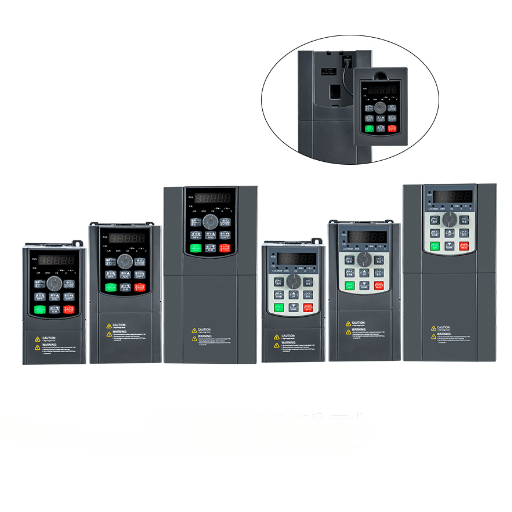
Ready to Get Your VFD Solution?
Whether you need a single drive or a complete system, we have the VFD products and engineering support to ensure your project's success.


Variable Frequency Drives (VFDs) are critical components of modern industrial and commercial systems as they offer accurate motor control, high energy efficiency, and improved operation flexibility. Among the leading manufacturers in this growing landscape, ABB is internationally renowned for its VFD technology innovation. This article details features, advantages, and applications of ABB’s Variable Frequency Drive, providing a clear portrait as to why they are held in such high regard throughout industries on a global scale. Consumers who read this informative review become more aware of how ABB’s VFD solutions can enhance system performance, improve energy management, and dovetail with the requirements of the advanced automation environment.

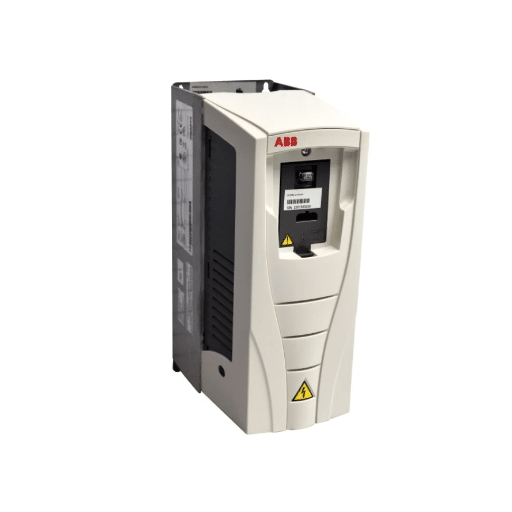
ABB variable frequency drives (VFDs) are advanced solutions designed to efficiently control the speed and torque of electric motors. By controlling the motor input frequency and voltage to optimize energy consumption, reduce mechanical stresses, and assure operational precision, these drives offer high functionality. ABB offers a very wide range of VFDs, catering to the very diversified needs of industry in HVAC, manufacturing, and water treatment across a multitude of categories. Providing friendly operator interfaces, superior robustness, and compatibility with modern automation systems, ABB’s VFDs also assist companies to achieve maximum energy management, system performance, and lowered downtime.
ABB variable frequency drives are involved in cutting-edge motor control, regulating electric motor speed, torque, and direction through the manipulation of frequency and voltage supply to the motor. Cutting-edge technology allows the ABB VFDs to provide very accurate process control, energy efficiency, and improved operational flexibility. The drives play a very vital function in all applications where variable motor speed is required, for instance, conveyor systems, pumps, and fans. This kind of device saves energy consumption and operational funds.
ABB’s VFDs are equipped with adaptive programming, safety functions, and multiple industrial communication protocols, including Modbus, Ethernet/IP, and PROFIBUS, delivering high levels of control-system safety while enabling immediate identification of problem areas and predictive maintenance. When deployed in different configurations and sizes of power, ABB VFDs are purposefully designed to integrate perfectly with existing systems of automation, thereby making the drive an indispensable item for modern-day industries eyeing on maximizing efficiency.
For industrial applications and contribute all the energy savings through variable speed operation in reaction to decreasing low-load conditions, variable frequency drives (VFDs) may be the finest tools for joining with the pure nature of energy. VFD control the speed and torque of electric motors, reducing energy loss even in conditions of relatively low loading. The energy loss reduction is significantly important, with the greater savings achieved in relatively low-energy-saving scenarios. The theory is that a 20% speed decrease in an engine equates to over 50% energy savings. VFDs offer somewhat of a gentle start and stop for machines, thereby reducing mechanical stresses and paving the way for increased lifespan and less maintenance. The progress of VFDs is advantageous together with the growing emphasis on sustainable development and energy-saving standards.
ABB is a well-known global company in the divisions of electrification and automation with activities in over 100 countries around the world. The company is based in Switzerland, with products in control systems, robotics, industrial automation, power grids, and others. In general, ABB is famed for its Variable Frequency Drives used to run high-efficiency motors and for its advanced IT solutions working in the mechanical fields like optimization of energy and control management.
ABB, while holding the fort for sustainability, is reputed for being among the sectors allocating the biggest amounts of capital for R&D investment; approximately 4-5% of its annual revenue is spent on innovation. The experience of employees is similarly laden with challenges as ABB capitalizes heavily on R&D, offering innovative solutions that lead the way forward with ABB Ability™, a range of digital solutions leveraging IoT and AI for predicting maintenance, fault finding, and real-time surveillance. Additionally, ABB actively supports global initiatives for transitioning to clean energy through solutions addressing the integration of renewable energy sources and the subsequent reduction of the carbon footprint in industrial and commercial sectors.
Ranked at the top of the industrial technology sector, ABB has cultivated deep trust from numerous quarters, a range of industries, including energy, transportation, manufacturing, and construction. The company’s apparent commitment to a durable, efficient, and digital future ought to be reckoned as one of the world’s leading manufacturers.
Energy Efficiency
ABB Variable Frequency Drives (VFDs) optimize motor performance by controlling the motor speed and torque according to the requirements of applications, thereby saving energy costs and ensuring low maintenance costs.
Improved Process Control
Using these drives for precise control over the motor speed and acceleration affects the overall system performance and operational efficiency in industrial processes seventy-eight.
Extended Equipment Lifespan
In addition, these VFDs facilitate cooling because of minimized wear and tear, because soft start and stop capabilities in ABB VFDs have been shown to considerably extend service life and reduce maintenance-related issues.
Reduced Downtime
A reliable system of the hidden performance of ABB VFDs, diagnostics, and monitoring features, therefore, still ensures that issues are spotted early enough for subsequent preventive maintenance, thus minimizing unplanned downtimes.
Environmental Benefits
Investing in lower energy requirements not only helps in terms of cost reduction but also supports sustainability issues by reducing greenhouse gas emissions and thus climate change. Compliance with environmental laws and regulations is another issue.
Simple Integration
Drive parameters may vary, and thus ABB AC drives are a perfect fit for connecting to various systems available, being used for applications for industries.
Energy efficiency is essential to all industrial and commercial activities and touches upon operational costs and environmental responsibility. The Variable Frequency Drives (VFDs) assist in maintaining an optimum use of energy as they control motor speed to match the requirements of processes, so as to save energy used in places where motor speed is greater than needed. The use of VFDs results in energy savings of about 30-60% on HVAC systems, pumping systems, and conveyors, and it decreases usage-related costs, particularly where the energy is consumed.
On top of all that, advancing technologies also allow alignment with global energy standards and the achievement of sustainable objectives. It makes, for instance, the use of advanced motor controlling algorithms and power factor correction in ABB VFDs to ensure enhanced utilization of energy-friendly practices while strictly adhering to regulatory requirements. Building upon these innovative technical changes by enabling the monitoring/ analysis of data and real-time condition assessments, particular adjustments for precise settings, and continuous improvement in performance occur as an achievement. Effectively managing such advanced drive systems, organizations could gain measurable savings while reinforcing the strength of their efforts in sustainable energy conservation practices in general.
Variable-frequency drives (VFDs) such as ABB uphold algorithms of the highest order to provide exceptional performance for any kind of motor and across numerous industrial applications. These are enabled by sensorless vector control (SVC) and closed-loop vector control (CLVC) techniques to enhance torque precision, speed control, and load adaptation. In addition to real-time feedback and adaptability, ABB VFD adjusts noiselessly to reduce mechanical stress on motors and render longer motor life and fewer unplanned plant shutdowns.
Further initiatives have been the integration of harmonic mitigation technologies to contribute greatly to ensuring appropriate power quality and complying with IEEE-519 standards. Moreover, the high-speed motor capability of ABB VFDs will grant industries like manufacturing, water treatment, and HVAC systems various productivity gains. The most advanced motor functions with seamless diagnostic identification within ABB drives afford them truly superior assurance of operational reliability and energy efficiency.
ABB variable frequency drives (VFD) are tailored to facilitate enhanced equipment reliability and reduced maintenance requirements, using advanced technologies to abate wear and tear among mechanical components. The inclusion of precise motor control guarantees smooth start-stop conditions during operations, thereby reducing most of the mechanical stresses and wear common in conventional motor systems. Besides, these drives also have high self-diagnostics options for predictive maintenance to predict everything before any unscheduled downtime. As per industrial data, predictive maintenance systems reduce downtime by approximately 20% and diminish maintenance costs by approximately 30%, thereby leading to smooth long-term operation. ABB VFDs prioritize among their assets, being their components, which are highly durable and have good cooling systems, together with quality testing. This ensures that they will deliver through the years as the total cost of ownership will naturally be lowered.

Industrial versatility and efficiency make it necessary for ABB drives to be implemented in a big way across a very wide range of industries. These devices boost motor performance in the manufacturing sector, leading to lower energy usage and enhanced accuracy in the assembly or material-handling processes. The water and wastewater industries use ABB drives to regulate pump speed for energy-saving flow control. Support is absolutely critical for operations such as drilling and line pressure management for oil and gas. Runs with the best safety and reliability in HVAC systems of commercial buildings also benefit from ABB drives, maintaining desired controls over airflows and temperature for energy conservation. This indeed shows how indispensable and multifaceted ABB drives are to industrial processes.
ABB drives have a major impact on improving efficiency, reducing downtime, and enhancing efficient use of resources in various production and manufacturing applications. Drives guarantee precise motor control, which suits conveyors, mixers, and assembly lines to ensure sustained product quality and waste reduction. One example is the speed of a motor adjusted to its specific production demands by use of variable-speed drives, thereby significantly lowering energy consumption. A further advantage is that this integration of ABB drives into production systems, wherein implemented adaptive predictive maintenance is accompanied by advanced diagnostics capabilities that sustain optimal uptime for extending the life of any equipment. ABB’s culture of innovation results in scalable drive solutions from automotive to food to pharmaceuticals to heavy machinery that promote high-performance production targets while also integrating with their sustainability objectives.
For the optimization of HVAC systems, there is a particular significance attached to ABB drives by the provision of motor control that enhances the ability to save energy and improve system performance. HVAC systems with variable speed drives (VSDs) are able to modulate fan and pump speeds in response to real-time demand, reducing energy consumption considerably and yet maintaining optimum indoor air quality and temperature control. The new generation of ABB drives helps in the integration of some advanced communication protocols like Modbus and BACnet for smooth collaboration with building management systems (BMS) for centralized control and monitoring.
Some studies report that the employment of VSDs for HVAC applications could lead to reductions in energy consumption by 50% when compared to the traditional fixed-speed motors. Furthermore, ABB drives have an in-built option of harmonic mitigation technology to ensure better power quality and prevent overheating of the equipment, thus improving system reliability. Such attributes are invaluable at locations like commercial buildings, hospitals, data centers, and parcels of industrial applications where constant control of the environment is essential. With a sturdy design and adaptability, UIs, on the other hand, ensure the efficient operation of HVAC systems, leading to energy savings.
Variable Frequency Drives (VFDs) play a major role in the optimization of water and wastewater treatment facilities. By giving exquisite control over the speed and torque of pumps, blowers, and mixers, these drives allow facilities to cautiously adjust to the process requirements and save energy in the process. According to various studies, energy savings of up to 50% can occur by implementing VFDs compared to the constant-speed system currently prevalent in these applications. The energy consumption of these facilities is relatively high.
In various applications, VFDs are able to provide much-needed convenience to operators for adjusting motor speeds in response to a demand change while wasting energy due to reduced demands. As a further benefit, VFDs allow operators to carry out soft start and other soft stops, greatly minimizing water hammering effects and subsequently prolonging the life of mechanical parts.
They have another significant application in the aeration systems meant for biological wastewater treatment, where operators can easily control blower speeds that directly vary as per the specified oxygen levels. This control eliminates wasted power by increasing the biological efficiency of the treatment process. Moreover, the advanced VFDs are effortlessly integrated into the supervisory control and data acquisition (SCADA) system for unceasing performance visualization, real-time diagnostics of the device, and prompt, accurate measurements of system uptime and reliability.
Energy Efficiency Optimization
ABB drives are built to save power consumption incredibly by adjusting motor speeds for the exact requirements of the application, which in turn reduces the operational cost substantially.
Advanced Control Capabilities
Due to an integrated algorithm, utmost precision of motor control is available on these drives, bestowing smooth operation, predictable performance, and adaptability to various industrial applications.
Integration with Industrial Systems
With complete support for SCADA and other automation platforms. ABB drives enable centralized control, monitoring, and diagnostics for smooth operational management.
Built-In Safety Mechanisms
With elements like Safe Torque Off (STO) and overload protections, ABB drives work on equipment safety and user protection during operation.
Scalability and Flexibility
ABB drives are designed to meet the requirements for any motor type or horsepower range, providing scalable solutions that cater to any needs at any aspect for a simple or complex system.
User-Friendly Interface
These drives provide easily accessible and intuitive parameters (whose parameters can be reconfigured upon free will or pre-defined configuration) for digital display, thereby ensuring quick setup or installation and recharge facilities.
The current state of the art in control is integrated in ABB drives to boost the performance, efficiency, and precision levels of the motors. DTC (Direct Torque Control) technology employed in the drives assures the fastest and most precise control of torque to the motor without needing an encoder or any feedback system. By ensuring that acceptable operation is maintained by the motor under varying load angles, DTC enhances performance times and productivity. In ABB drives, various torque control/theories are provided: scalar (V/Hz) control, vector control with encoder feedback, sensorless vector control for a wider range of industries.
Boosting the system integration aspect, ABB drives can seamlessly communicate with a wide range of field protocols, such as PROFIBUS, Modbus, and Ethernet. This connectivity provides an opportunity for real-time data exchange and monitoring, thus contributing to superior automation and process control. The drives further offer adaptive programming and other measures that allow the user to modify control logic, customized and specialized to their unique application requirements, sans the involvement of PLCs and thus lowering system design and general complexity. Such facilities of automation technology make ABB drives unprecedented in speed control applications by bringing in the beauty of precision, quality, and reliability.
The ABB drives have been developed and optimized for easy integration into modern automation systems in order to communicate with shared protocols that are commonly available on the market such as Modbus, PROFIBUS, PROFINET, and EtherNet/IP. The high degree of compatibility of the drives renders them suitable for most of the Industrial Control Systems that demand uninhibited data exchange between the drives and the supervisory control level. Besides, these advanced diagnostic tools also enable immediate observations for precautionary maintenance but in a much quicker and more effective way. The very next thing is that IoT also gets facilitated by an inbuilt connectivity gateway, delivering additional enhancements toward the optimization in operation through the wisdom of data and analytics. All these are key elements that put ABB Drives in the heart of system automation in bidding to be an industry synonym for operational excellence.

ABB has adopted several landmark innovative features that improve the efficiency and adaptability of its motor drives. One fundamental achievement is in the integration of machine learning algorithms, thereby enabling real-time system optimization and adaptive control under fluctuating load conditions. At its most basic level, regenerative technology is being made available to allow for energy recovery and reuse, thereby significantly reducing the overall energy consumption. Stronger cybersecurity measures, which are globally compliant, exist to keep data communication secure and the system operational. ABB motor drives also have superior modular designs enhanced for ease of maintenance and scalability, thus reaching most industrial applications with less downtime. There are some things that place ABB drives in the arena for the futuristic industrial automation solutions.
One of the prominent applications within the field of motor control is implementing cutting-edge algorithms, designed to optimize motor performance under various conditions, while adapting to different parameters. They do this using FOC (Field Oriented Control) and DTC (Direct Torque Control) by maintaining constant speed and delivering variable torque without considerable energy losses. Such algorithms can also adapt to the observed factors of the motor in real time while still providing highly efficient and precise performance under various industrial settings, from heavy processing plants to precision manufacturing premises.
To use a predictive-maintenance strategy and enable condition-monitoring in a real-time scenario, the present-day drive systems employ machine learning to analyze operational data to predict a forthcoming defect condition. Monitoring parameters for examining possible symptoms resulting from wear are vibration, temperature, power consumption, and any other attribute indicating the onset of a failure. With such a proactive method in place, such systems also significantly reduce unscheduled downtimes, optimize maintenance schedules, and prolong the life expectancy of the equipment. This results in continual efficiency gain and cost optimization for industrial applications.
One of the most significant trends in smart drives and IoT integration is analytics at advanced levels and computations at the edge for getting responses in real-time. When processing data close to the machine or at the edge level, edge computing wastes far less time in latency, and thus action can be taken instantaneously, as decisions can be quickly made in reflection upon changes happening right under a closer watch. The use of machine learning algorithms with smart drives analyzes huge volumes of data that predict when there is going to be odd behavior or something of the kind, causing inefficiency in energy or wear and tear of the components, while leaving them free from continuous cloud communication.
Sustainable priorities have served to heighten the growing implementation of smart driving systems to help minimize energy improper uses and the carbon footprints. With the integration of the IoT, a machine can effortlessly change its power output according to the power demand at the time, thus creating efficiency in operations and cutting associated factors that could be easily wasteful. Here also, valid analysis from IoT sensors can provide ways available to the eyes of the manager to take action on energy saving initiatives, wherein the most amazing would, as an example, allow for reducing the speed of a motor or detecting periods of low efficiency.
Another important trend we have seen is open-source and interoperability of systems. This is complemented by acceptance of the communication protocols by smart drives and IoT devices, which are increasingly getting integrated into various industrial ecosystems. This develops the possibility of holistic monitoring and control across various operations and helps businesses consolidate data from various devices under one unified management system. Open-source platforms ensure innovation happens at a quicker pace, with developers collaborating to develop and adjust for the many new requirements of industrial processes.
1
2
Energy efficiency and reliability are characteristics of ABB VFD drives, thereby saving a huge amount of energy for a variable load operation, such as the water-pumping sector. Choosing the right ABB drive involves setting the same for effective integration within a control network to achieve efficiency and reduce operational costs. Energy-efficient systems that affect savings generally include advanced algorithms and motor optimization. Quite a few customers from the food and beverage and municipal sectors report paybacks faster than anticipated because of reduced energy consumption.
ABB VFDs are located within various applications stretching from the likes of water pumps and fans all the way to complex food chains or the food and beverages sector, or the industrial belt in the field of conveyors. The plethora of configurations and easy-to-install network connectivity gives them a leading follow-on for straightforward automation and elaborated integrated systems. ABB drives are often used by system engineers because their drives are less expensive with an awesome performance right under severe environmental conditions. The choice and specification of the drive ensure long-term life and minimum downtime for the customer.
Models on the market are the epitome of those concepts, with many drivetrains built for record efficiency and reliability, with the sturdiness of industrial electric stresses to be ruled out. Many models also have diagnostics, network capability, and remote-monitoring solutions for improvement in system-wide redundancy; this can mean saving on downtime. Qualification, installation, and sound maintenance by competent professionals adds additional longevity and usage to those drives within the occupation. The market classifies ABB immediately as highly relevant in terms of best-guaranteed drives to those customers that cannot afford failure, particularly in the food and beverage industry.