Ready to Get Your VFD Solution?
Whether you need a single drive or a complete system, we have the VFD products and engineering support to ensure your project's success.


Variable Frequency Drives (VFDs) are critical in modern industrial automation, enabling precise motor control and higher energy efficiency. The big breakthrough that makes VFDs so successful is the communication protocols they support—those are what make it so easy to connect them to larger control systems and real-time devices. This write-up examines the most common VFD communication protocols, such as Modbus and CANopen. Besides, their functionality, advantages, and specific use cases are also discussed. Be it the desire to make one’s system more performant, to make data exchange smoother, or to make equipment, controllers, or drives more compatible, mastery of these protocols is the stepping stone for full-scale-up of your VFD systems. Follow the text to know the power of those VFDs, which is mainly represented in technologies that create the heart of communication in industrial fields by operating and bringing success.
VFD (Variable Frequency Drive) communication is the transmission of information between a VFD system and various external devices such as PLCs (Programmable Logic Controllers), sensors, or control systems. This process underscores the continuous monitoring and control of VFD systems in industrial applications. The two most commonly used communication protocols of the VFDs are Modbus and CANopen. Modbus has been widely adopted due to the simplicity and scalability of its protocol, enabling highly reliable data transfer over long distances. CANopen also offers very high-speed communication and is well-suited for applications that require real-time control and synchronization. However, both protocols – Modbus and CANopen – are well-designed so that they effectively turn VFDs into components of larger automation networks and therefore provide a good deal of operational system functionality and a system diagnostics tool.
A Variable Frequency Drive (VFD) is a control system that adjusts the speed and torque of electric motors by controlling the frequency and voltage supplied to them. Such automobiles are a vital part of the industrial revolution today, as they enable accurate motor control, energy conservation, and reduced mechanical stress on machines. Variable-frequency drives, also called inverters, are buck-boost transformers that change the AC voltage and frequency. They are used for various applications in heating, ventilation, and air conditioning systems, and the drive in each case can achieve a significant portion of the system’s energy savings by being controlled by the exact load condition at any time. Additionally, cutting-edge VFD solutions now offer better compatibility with IoT setups, comprehensive diagnostic tools, and more effective, varied cooling methods to ensure reliable, high-efficiency operation.
The latest communication options have been added to Variable Frequency Drives (VFDs) nowadays, making them easier to integrate into complete industrial control systems and networks. Several communication protocols, such as Modbus, EtherNet/IP, and PROFIBUS, are used by VFDs to transfer real-time data on motor performance, energy consumption, and fault diagnostics, as well as to provide information directly to the operator. Accordingly, savings in energy, the human factor, and production losses will ultimately have a substantial impact on the facility’s economy through improved system reliability and stability.
Similarly, an advanced, technologically improved VFD can furnish essential data, which is then sent to the central control unit. It will result in iteratively optimizing system performance and making adjustments in the cloud without the need for an on-site human operator. This is one guiding light in businesses where, along with the issues mentioned above, responding to demand quickly is also critical. The following enhancement towards greater efficiency in this field was the IIoT (Industrial Internet of Things), which is even more closely connected to cloud data, thereby enabling every cloud data-driven opportunity. It highlights the vital role of communication in the use of VFDs in heavy industrial setups, benefiting the firm.
| Protocol | Key Features | Data Rate | Suitable Applications | Advantages |
|---|---|---|---|---|
| Modbus RTU | Serial communication standard | Up to 115 kbps | Low-speed industrial networks | Simple, cost-effective |
| Modbus TCP | Ethernet-based Modbus variant | 10/100 Mbps | High-speed industrial networks | Easy integration, scalable |
| Profibus | Industry standard for the fieldbus | 9.6 kbps to 12 Mbps | Automation in manufacturing | Reliable, robust |
| Profinet | Ethernet-based protocol | Up to 100 Mbps | Real-time motion control | High performance, flexible |
| EtherNet/IP | Ethernet-based industrial net | 100 Mbps or higher | Varied industrial applications | Scalable, interoperable |
| CANopen | Controller Area Network-based | Up to 1 Mbps | Embedded systems, VFDs | Efficient, real-time data |
| BACnet | Building automation standard | Up to 100 Mbps | HVAC and building systems | Vendor-neutral, flexible |
| DeviceNet | CAN-based fieldbus | 125 kbps to 500 kbps | Factory automation | Simple, low installation cost |
| Ethernet POWERLINK | Real-time industrial Ethernet | Up to 1 Gbps | High-performance automation | High precision synchronization |

The Modbus communication protocol is widely deployed in the industrial sector to connect devices, such as Variable Frequency Drives (VFDs), and enable data transmission among them. It works in a master-slave setup where the master, for example, a controller or programmable logic controller (PLC), sends requests, and the slave, for instance, a VFD, responds. Besides, the protocol supports both serial (e.g., RS-485) and IP communication; therefore, it is possible to develop a solution that meets the system’s requirements. The protocol has a core capability for automatic integration, enabling multi-manufacturer devices to work together. Modbus is often used to check and set open-loop parameters, such as an unchanged working point, as well as closed contours in VFDs, a method that ultimately leads to a high-efficiency system. The aforementioned ease of installation and reliability have made Modbus a standard choice for industrial control systems.
The Modbus protocol can operate in a master/slave or client/server model, and it is a favorite in industrial environments for data exchange. Through its task-sharing capability, the system is divided into two roles: the controller, which is the master, and the sensors or actuators, for example, which are the slaves. The former will process the requests, while the latter handles the data or executes the commands. Modbus supports several transmission modes, but the most common are the RTU and ASCII modes for serial communication, both widely used yet very different.
In a very significant way, Modbus is a protocol that organizes transmitted data into registers or coils. They are further divided into holding registers, input registers, discrete inputs, and coils, each with its own specific use, and which may include reading sensor data, actuator control, or device parameter setting. By using these well-defined data models, Modbus enables efficient, predictable interoperability.
Due to recent developments in networking, the application of the Modbus protocol is now broader, enabled by Modbus TCP/IP and the use of Ethernet. This approach to expanding the protocol has not only resulted in better connections but also easier scaling and more efficient integration with the latest IoT-enabled devices, which, in turn, is a big help in industrial digitization. Not to mention that Modbus uses the least computational power, making it a perfect fit for embedded systems, which adds to the list of reasons why it continues to be the primary communication protocol.
To implement Modbus communication for VFD applications, one should take a step-by-step approach that ensures the system works seamlessly and supports effective data exchange. The first thing the person would do is to confirm that the VFD supports the Modbus protocol – either as Modbus RTU (serial communication) or Modbus TCP/IP (Ethernet-based communication). If the former is the case, determine the supported baud rate, parity, data bits, and stop bits, as these four parameters must match those of the master device or controller.
Subsequently, allocate a unique Modbus address to the VFD to prevent network conflicts. The address serves as a label that links the drive to the Modbus network. The user manual of the VFD will show which registers were put aside for mapping the data. Via these registers, system operators will have access to all the values they need to control the VFD remotely; in addition, they can also receive fault codes and related information.
Ensure signal integrity is maintained by correctly connecting the wires. For Modbus RTU, RS-485 cables should be connected with the recommended A+/B- polarity and in accordance with the termination resistor guidelines for long-distance communication. Modbus TCP/IP requires that the IP address, subnet mask, and gateway be specified in the VFD settings, and these settings must be compatible with the control system network.
Eventually, set up the Modbus master device (e.g., PLC, SCADA, or HMI) to read the VFD registers at the appropriate times. To ensure the setup is working, try communicating via the VFD’s diagnostic tools and the master software. Implementing error-checking methods, such as CRC verification, and using consistent timeout settings will further enhance the already high reliability under industrial conditions when properly configured. The system will achieve better performance and energy savings if VFDs are precisely controlled and monitored.

CANopen is an innovative communication protocol built on the CAN (Controller Area Network) standard and intended for control-oriented industrial applications. Communication between devices and the control unit is usually via the power network and signal lines. This can be either a single-direction communication system or a bus system in which all devices are connected via a mix of power and signal lines, with the bus running through the power cables. A typical example is variable-frequency drives and associated equipment such as HMIs, PLCs, or encoders.
CANopen is a communication protocol that grants efficiency and reliability to complex control systems, and among its most essential functions are the Process Data Object (PDO) and Service Data Object (SDO) data communication types. High-priority, time-sensitive data exchanges, usually for real-time control duties, are the primary focus of PDOs, which deliver the data without including any additional overhead. SDOs, on the other hand, are used for configuration and diagnosis and provide a more detailed communication path, using the device’s object dictionary as a reference.
One more thing about CANopen is that its Network Management Ability (NMT) is another keystone not to overlook for the network’s functioning. States of the given-at-present devices – e.g., initial, pre-operational, operational, and stopped – are communicated to the licensee via NMT, thus enabling central control and fault handling. Furthermore, the use of SYNC and EMCY (emergency) protocols ensures seamless operation and rapid issue detection, thereby enhancing system robustness.
Moreover, CANopen is organized into small sections that support standardized device profiles, and the most familiar ones are CiA 301 for communication and CiA 402 for motion control, which facilitate easy interfacing and interoperability. These profiles specify what data devices can trade and do with each other, which is a lot of help for device compatibility across different makers, even as makers themselves change. Thus, the combination of these characteristics has made CANopen the most suitable for the most demanding and precise applications across sectors such as manufacturing, automotive, and the automation field.
The combination of CANopen and variable-speed drives is a good option for a robust, well-informed system that is easy to integrate and delivers high-quality motion control applications in manufacturing. CANopen provides a very efficient way for the drive to communicate with other system components, such as PLCs, sensors, and actuators, thanks to standardized device and application profiles for its device manufacturers, which enable uniform programming methods. Through its ability to enable real-time data exchange, CANopen also delivers high performance and quick response times, thereby optimizing the system and ensuring it is fully capable of meeting requirements.
Its capability of dealing with the most challenging control commands like target velocities, torque commands, and position references, with a tiny time lapse, is the best facility. Moreover, its error-control protocols, such as node guarding and heartbeat monitoring, enable high, fault-tolerant performance even in harsh conditions. CANopen simplifies maintenance tasks and prevents system failures when coupled with advanced malfunction-detection devices.
In applications where system scalability is needed, CANopen can be used to have several devices connected to the same network without the network becoming noticeably more complex. This is especially beneficial in the manufacturing, transportation, and robotics industries, where the addition of new components often drives increased production. When the advantages are properly utilized, variable-speed drives that operate in a CANopen network are more versatile and can interact with and be controlled by other devices, enabling them to meet the very demanding requirements of current industrial automation systems.
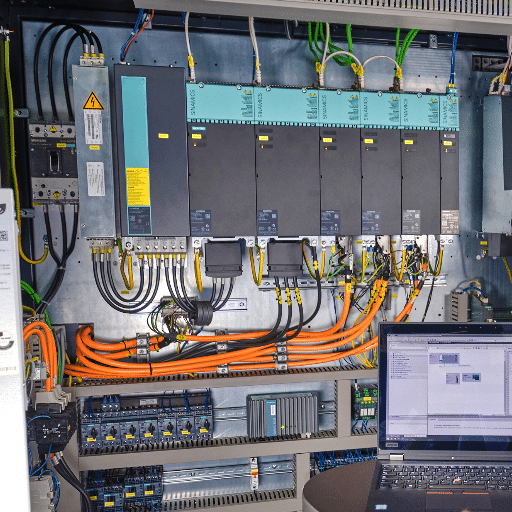
Using advanced networking techniques for Variable Frequency Drives (VFDs), often referred to in the industry as VFDs, has significantly increased the system’s efficiency and flexibility. It can assist with precise motor control by enabling uninterrupted communication between devices in an automated network. These include, but are not limited to, real-time data exchange, remote monitoring, and diagnostic capabilities, which enable, among other things, better operational control and reduced downtime. The use of standards like EtherCAT or PROFINET, with their emphasis on high-speed communication and robust data handling, would be most suitable for highly complex industrial scenarios. In short, adoption of these advanced techniques will not only save energy but also simplify the processes, besides giving the companies the flexibility to expand in the future, which is an absolute necessity in modern automated systems, complying with their requirements.
When you put many Variable Frequency Drives (VFDs) together in a shared network, it is essential to ensure seamless communication to maintain synchronization and system efficiency. Modern industrial controllers and communication protocols enable these systems to exchange real-time data for accurate control. Ethernet-based protocols such as EtherCAT, Modbus TCP/IP, and PROFINET have been used to control multiple VFDs over a single network. These protocols enable high-speed, large-scale data transactions, reduce latency, and support sophisticated process control, providing an efficient solution for complex automation environments.
Essential aspects of network design include network topology, protocol compatibility, and the placement of gateways where protocol changes are required. On top of that, providing sufficient bandwidth and device prioritization can eliminate bottlenecks and deliver consistent performance. Providing forecast maintenance for the integration of advanced diagnostic functions with modern VFDs also helps monitor motor temperature, current, and torque, thereby further improving reliability. The proper use of these advanced technologies and methodologies will eventually support the operational goals of smart manufacturing plants.
It is indispensable to tweak the communication systems of variable frequency drives (VFDs) so they can interoperate (i.e., operate together without problems) with industrial control systems. First of all, the selection of the proper communication protocol, be it Modbus RTU, EtherNet/IP, or PROFINET, ensures that the system is compatible with the existing production infrastructure. Thus, it is necessary to consider data transfer speed, network complexity, and device compatibility when making this choice.
Moreover, it is advisable to use an appropriate combination of communication technologies, along with topologies such as star, ring, or daisy chain, to achieve low network load and avoid communication distortions. The latter can be addressed using star, ring, or daisy-chain topologies, depending on field requirements, and each should be backed up by redundancy to prevent operational failures. Alongside that, methods for reducing electrical noise, such as the use of shielded cables and proper grounding in areas with high electromagnetic interference (EMI), for example, those with large motors or welding machines, are essential.
It is also advised to set the baud rates and addressing conventions to the desired levels to ensure a unified communication system across all equipment. Making sure the network is divided into segments so that essential processes are protected, and the system cannot be overloaded. By regularly updating VFD firmware, security and performance will improve, and using diagnostic tools to monitor communication activity can help capture problems early. These measures are applied to build a stable, efficient system for the new era of automation in the industry.

The landscape of Variable Frequency Drive (VFD) communication protocols is changing as technology advances in industrial automation and smart manufacturing. The integration of Industrial Internet of Things (IIoT) is one of the main trends, enabling more seamless real-time data sharing between VFDs and complete operational systems. Protocols tend to become faster and more interoperable through Industry 4.0 standards. On the other hand, wireless communication channels, such as Bluetooth and Wi-Fi, are becoming increasingly popular because they offer greater flexibility in system design and maintenance. The protocols, on the other hand, are constantly improving with the help of available encryption and authentication tools to address cybersecurity issues that may arise. The main goal of these advances is to reduce operational costs, enable predictive maintenance, and improve the scalability of industrial environments.
The integration of Internet of Things (IoT) technology with edge computing has been a revolutionary force in automating Variable Frequency Drive (VFD) applications. By combining IoT with Edge technology, individuals can have connected, smart devices that provide real-time data and analysis. As a result, operators can monitor motor speed, power consumption, and running temperature with very high precision, thereby ensuring peak efficiency and providing early indications of any faults.
The previous system, however, also relied on edge computing, which helped keep the time scale in check by processing the most critical data at the local level, thereby reducing time lag and lessening reliance on cloud computing for real-time operations. Edge-computing-enabled VFD systems can make real-time decisions, such as changing motor speed. This situation is not only connected to the machine’s reliability but also directly affects the operational costs.
Advanced analytics platforms integrated into these technologies further support predictive modeling and, in turn, prolong equipment life. The use of these cutting-edge technologies confirms that VFD automation is progressing toward more intelligent, environmentally friendly, and efficient systems.
The advent of the Internet of Things (IoT) in Variable Frequency Drive (VFD) communications represents a significant innovation, as it has changed the way industrial systems are continuously monitored and controlled. With IoT, devices and central systems can exchange data seamlessly, enabling easier real-time monitoring of performance metrics such as motor speed, energy consumption, and system temperatures. The use of cloud-based IoT platforms, combined with robust communication protocols such as MQTT and OPC UA, ensures the safety and reliability of data transmission between interconnected systems in an IoT network.
IoT, through advanced data analytics, also makes implementation easier and provides actionable insights indispensable for predictive maintenance and early fault detection. Like, from the operators’ perspective, the situation can be seen as they have identified anomalies before they became expensive equipment breakdowns through vibration analysis, which reveals the interaction of the cervical spine. One study shows that VFD systems connected to IoT can reduce total energy and maintenance costs by 30%. The most important part of this is that, in addition to making the operation cost-effective, it also helps secure sustainable operations, since total energy consumption is reduced and equipment life is extended.
Therefore, the automation of IoT in VFDs leads to continuous communication gaps; however, it makes both forms of communication smarter. It also enables the industry to respond to dynamic operational situations with not only great accuracy but also exceptional speed, a characteristic of a highly agile industrial environment. Indeed, this technical partnership is a clear indication of the significant role IoT plays in implementing intelligent, green solutions across industries.
The future of industrial automation is decisively being sculpted by the union of cutting-edge technologies such as artificial intelligence (AI), machine learning (ML), and edge computing. As a worldwide phenomenon, industrial AI solutions are expected to surge, primarily because they improve data processing efficiency and optimize predictive maintenance processes. In one aspect, AI-driven algorithms process large datasets in real time, enabling predictive diagnostics that, in turn, lead to less downtime and better operational consistency.
Edge computing, when combined with the Internet of Things, also enhances automation by bringing computation to devices closest to the factory floor. In this way, the issue of latency is effectively addressed, and feedback to critical systems is delivered in record time, which is indispensable in actual industrial setups. To cap it off, interoperability standards are increasingly the need of the hour, as they enable various systems to work hand in hand through communication, thereby creating an integrated ecosystem for smart factories.
Moreover, cyber protection is an essential component of the forthcoming industrial automation. Amid ever-expanding interconnections, all companies must embrace robust security frameworks to protect data and prevent cyber threats from disrupting critical infrastructure. By implementing secure-by-design principles and real-time threat monitoring, industries can build reliable ecosystems that prioritize refurbishment as the most vital operation.
Title: On reducing the outage probability in VFD-NOMA with limited CSI at source
Title: An Embedded Modbus Compliant Interactive Operator Interface for a Variable Frequency Drive Using RS 485
Title: Real-Time Monitoring of Constant Pressure and Variable Frequency Drive Motor in a Control Plant Using Modbus TCP/IP, IoT Core, MQTT, and Grafana
The most common communication protocols for variable-frequency drives, which also serve as the basis for PLC and supervisory system communication, are Modbus RTU, Modbus TCP, CANopen, Profibus, and EtherNet/IP. Among the suggested protocols, Modbus has proven to be the most popular, as it is easy to use and has many applications in the industrial environment. In the meantime, CANopen is an excellent solution for the requirement for network-deterministic behavior in motion and drive applications. In contrast, the scenario with VFDs and a remote networking connection was entirely reversed when VFDs were mainly connected via Ethernet ports. The choice of the proper protocol among others would depend on the current plant architecture, the need for cyclic data, and the real-time need for control.
A Modbus communication system, to be created by a person, must meet specific requirements such as being able to communicate with a drive that supports Modbus RTU over RS-485 or Modbus TCP over Ethernet. Port parameters must be configured correctly. Control registers on the PLC for start/stop, speed reference, and fault monitoring can only be relied on with the correct register configuration, including the status registers. Grant that the electrical noise on the RS-485 lines can be eliminated simply by properly grounding and shielding. Finally, a Modbus-compliant system or diagnostic tool should be used to verify communication, hence ensuring successful communication.
CANopen, as a fieldbus protocol, has been developed on top of the CAN physical layer to primarily serve the needs of real-time control, device profiles, and standardized object dictionaries for drives and motion devices. If you want to ensure the hardware maintains the same wavelength for a long time and achieve reliable message delivery, CANopen is the best choice. The number of drive vendors that use CiA 402 drive profiles in their products is quite large, and they follow the same standards, making it easy to integrate drives into the automation network. The availability of a noise-free environment and a system with a high level of fault tolerance are among the main concerns, and the CANopen integration also provides a perfect match for distributed I/O devices in systems with a large number of devices.
Suppose you intend to rectify the problems tormenting you. In that case, the first step is to investigate the common issues that occur when the wiring in an electrical power system is incorrect: loose connections, inferior-quality wires, improper terminations, and a faulty earth connection. Furthermore, it is a must to go through the majority of protocol settings, which are default or standard, for example, node addresses, baud rates, parity, and frame formats, to make sure that the drive and the master device are identical in all places. The most common way is to use protocol analyzers, network diagnostic tools, and even the communication LEDs, along with the error logs incorporated into the VFD, to trace the location of faults and bad frames, if they exist.