Ready to Get Your VFD Solution?
Whether you need a single drive or a complete system, we have the VFD products and engineering support to ensure your project's success.

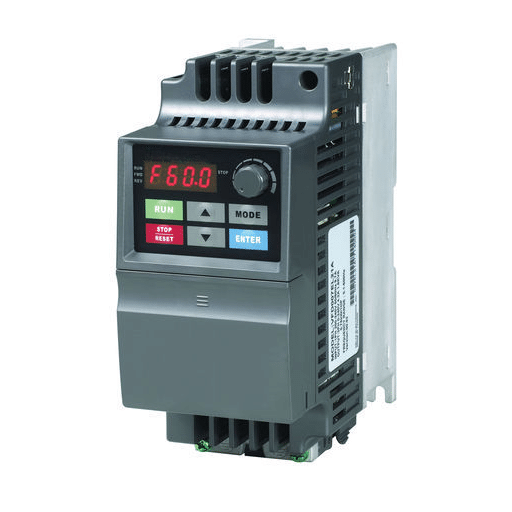
When the need arises to improve engine performance across different industries or business areas, the choice of a Variable Frequency Drive (VFD) is of primary importance. The VFD, in addition to regulating the engine’s speed and power, reduces energy consumption, extends operating life, and makes the movement quieter. Nonetheless, with so many different specifications, elements, and devices the VFD should be compatible with, this results in a headache for the user. Yet, with a wide variety of options available on the market, choosing the right VFD can still be formidable. This manual is to guide you and give you the best solution, i.e., the list, along with some of the most practical and valuable insights to help you have your say. It will be helpful to you if you are replacing old motors or involved in new installations, to narrow your selection process and promote optimal motor performance.

Variable Frequency Drives (VFDs) are electronic devices that modulate the speed and the torque of electric motors by varying the frequency and voltage being supplied. They are ubiquitous in the industrial and commercial sectors because they can tune the motor output to specific setup requirements, making the system energy efficient and enabling process control. What is more, VFDs enable precise motor speed control, reducing energy consumption and contributing to less wear and tear on mechanical systems and a longer lifespan for the equipment.
A Variable Frequency Drive is an innovative machine that converts the fixed-frequency AC power from the main supply to a variable-frequency, variable-voltage output used to control the motor. This is mainly done in three main parts. Initially, the VFD converts the incoming AC power to DC power using a rectifier. The DC power is then smoothed and held in capacitors located on the DC bus. Lastly, the inverter stage will convert the DC power back to AC power at the intended frequency and voltage using semiconductor devices, such as insulated-gate bipolar transistors (IGBTs). While tuning the frequency, the VFD can effectively control the speed of rotation of the motor’s magnetic field, thereby enabling precise adjustments in motor speed and torque. This particular control is essential for reducing energy costs, improving process precision, and meeting the various operational requirements of industrial sectors.
VFDs are highly significant for energy efficiency and play an equal role in reducing energy consumption in motor-driven systems by matching the motor to the actual load requirements. Research shows that in many applications, motor speed control with a VFD can reduce power consumption to 30-50% compared to a constant-speed motor. The other side of the coin is that VFDs relieve drive components of mechanical stress, thereby allowing the equipment to run for a longer period without requiring owner maintenance. Besides energy savings, the latest VFD models typically feature integrated diagnostics and communication protocols, enabling real-time monitoring and integration with industrial automation systems without hassle. The benefit of such characteristics is that the system operator will be provided with the necessary operational information and support, thereby ensuring the reliability and efficiency of the system through predictive maintenance strategies.
VFDs are a powerful tool for energy conservation because they match motor speed to the actual load requirements. The U.S. Department of Energy points out that VFD use in motor-driven systems can help save up to 50% of energy, especially in applications such as pumps, fans, and compressors.
By giving the equipment a soft start and stop, the VFDs minimize wear and tear on the motor’s mechanical components and their supporting equipment. Consequently, this reduces the need for replacement and maintenance, thereby saving significant operating costs and, at the same time, extending the plant’s lifespan.
The controllability feature of VFDs enables operators to regulate electricity consumption through motor performance. The drive system for some applications, such as conveyor systems, mixers, and machining operations, requires exact speed control, which VFDs can provide.
It is common in present-day VFDs to find new diagnostic functions that monitor parameters such as the motor’s temperature, current, and torque. The integration of these diagnostic capabilities enables predictive maintenance practices, reducing downtime while keeping operations uninterrupted.
In practice, the motor is slowly accelerated by the VFD instead of being set to full speed immediately; this reduces inrush current and lowers peak demand charges on utility bills. This particular feature of VFDs makes them a very cost-effective solution for energy-intensive industries.
VFDs have the capability to be programmed in such a way that they can meet various operational requirements and thus can be used efficiently in several industrial sectors like the manufacturing, HVAC and water treatment sectors. Additionally, VFDs can be used with a wide range of motors and thus have a broad range of applications due to their flexibility and versatility.
Ensure the VFD has the same ratings as the motor for voltage, frequency, and horsepower. Being similar in ratings is a crucial point to avoid the possible situation of either inefficient operation or equipment damage.
Find out whether you have a machine that needs a certain amount of power (like examples are conveyors) or a machine that doesn’t (e.g., fans and pumps). It will affect how well the VFD performs and how much energy it saves.
Find out the flair of control that is required, which might be speed regulation or torque control. If a control system is looking for more than the basics, a feedback loop or programmable settings may be necessary.
Keep in mind and address environmental factors, such as temperature, humidity, and dust. The suitable enclosure ratings with the VFD, (e.g NEMA or IP standards), should be chosen so that the performance is assured and the warranty is not voided.
Depending on how you look at it, the business case being the first one, the environmental aspect being the second one, or trying to have a bit of both, identify a simple way of expressing that a prompted VFD energy saving potential assessment input device will be accurate because it will be based on a high-efficiency one.
To avoid power-quality distortions, ensure that the VFD has harmonic filters or other anti-disturbance features, and that it complies with market norms and specifications, such as IEEE-519.
It is essential to be very cautious while choosing a motor for use with a Variable Frequency Drive (VFD). Various technical factors must be considered to achieve the best possible result and ensure compatibility between the two systems. Motor types, voltage ratings, and required torque are just some of the parameters that must be considered to match the overall needs of the particular application. In some cases, synchronous motors can be the ideal solution for high-efficiency, specific-speed-control applications, while induction motors are the most common choice for their sturdiness and are on the cheaper side of motors, too.
Motor ratings, including nominal voltage, frequency, and power (e.g., horsepower or kilowatts), are definitely among the primary concerns. They should be in accordance with VFD capabilities to avoid any inefficiency or, in the worst case, mechanical damage. Moreover, accounting for the thermal factor is an absolute must. Motors designed for VFD applications usually come with Class H insulation and advanced cooling devices to help avoid the heat generated by the drive’s pulse-width modulation (PWM) signals.
The effects of operational factors, such as starting torque and load inertia, must also be considered. The motor must be designed for these conditions when tremendous torque at low speeds is required. As a result, both the thermal and dynamic limits set by the manufacturer will need to be carefully checked. Following the recommendations and instructions of proper agencies, such as NEMA MG1 or IEC 60034, is another way to confirm that the motor is designed for operation with a VFD and conforms to current industry practices.
Increasing the demands on the motor up to the point of overloading is quite a common practice in drives with variable frequency (VFD). In this case, the motor’s efficiency needs to be evaluated strictly under load conditions. The motor is usually designed to withstand a certain amount of torque, and exceeding this limit is like imposing mechanical stress on the system, generating heat and bringing it close to the edge of failure. Continuous overloading should still be kept within the motor’s service factor limits, which are often between 1.0 and 1.25 for standard designs. For cases where power is used only for a short duration, the maximum torque profile must be carefully selected based on the motor’s dynamics. The use of accurate torque measurement, together with torque/speed curves, provides a reliable means of determining whether the motor will be stable and efficient as expected. Furthermore, today’s computer-based methods and sensors are used for real-time monitoring and control of torque and overload, while also enabling maintenance planning and system performance optimization.
An electric motor’s full-load current (FLC) is, without a doubt, one of the most critical parameters, as it denotes the maximum current the motor draws under rated load and voltage conditions. This data is necessary for selecting appropriate protective devices, such as circuit breakers and fuses, and also plays an integral part in the design of a safe and efficient wiring system. FLC is usually marked on the motor’s nameplate and is affected by factors such as motor type, size, and application-specific requirements.
Understanding the full-load current situation means looking at the power factor and efficiency ratings as well, since these two factors directly affect power consumption and operating costs. The correct analysis of FLC for various load cases provides a picture of the motor’s thermal performance and the potential for overload. Nowadays, cutting-edge motor control systems have begun to use real-time current monitoring to adjust operation instantly, thereby reducing energy consumption and making the system less prone to performance decay. This method, which involves monitoring data, enables professionals to predict problems and adjust the system to comply with industrial norms and legal requirements.

The VFD (Variable Frequency Drive), which is the acronym for the carrier frequency, means the switching frequency at which the insulated-gate bipolar transistors (IGBTs) operate. It is worth mentioning that the choice of an appropriate carrier frequency is crucial since it has a direct impact on the motor efficiency, voltage waveform quality, and system noise levels.
Higher carrier frequencies often lead to smoother voltage waveforms. This contributes to reducing the noise and vibration of the motor and, at the same time, overcoming the source of overheating due to harmonics. Nevertheless, the increased combined heat and switching losses in the VFD may be a reason for the IGBTs to be under potential thermal stress, therefore, requiring more effective cooling and decreasing the VFD’s overall energy efficiency. In contrast, lower carrier frequencies help with heat and switching losses, thus affecting the root of the process to the motor and associated systems, and the THD generated, respectively, but they may increase noise and THD of the motor in case they override the other benefits.
Thus, when determining the carrier frequency, the engineering has to weigh these issues and consider the specific demand of the application such as motor size, cable length, and the required operational efficiency. The use of adaptive carrier frequency technologies that are now present in many modern VFD models allows the system to monitor the conditions and adjust the frequency accordingly, which would help to bring about a better and more flexible performance and reliability situation as well as saving energy when the motor power used is less.
Prior to proceeding or setting up a variable frequency drive (VFD), a few key specifications need to be looked at to make sure that it performs in the best possible way and that it is a perfect match for the particular application for which it is intended. The main factors to be considered are the rated voltage and current, both of which have to fit in with the electrical properties of the motor in order to prevent any possibility of overload or inefficiency. Besides that, the overload capacity of the VFD, which is generally presented in terms of a certain percentage of full-load current over a set period, has to be more or less equal to the needs of industries where a high level of torque is required at intermittent or prolonged intervals.
Another key aspect is the switching frequency, as stated earlier, that affects directly the noise levels of the motor, the system harmonics, and the heat generation inside the drive itself. It is also important to evaluate drives for their efficiency ratings, harmonic distortion compliance (to IEEE 519 standards where applicable), and the presence of protection features such as overcurrent, overvoltage, and thermal protections. The use of a communication protocol such as Modbus, PROFIBUS, or Ethernet/IP is getting more and more significant which can help in the near future the extremely easy integration into the advanced automation and the monitoring systems that are already in place.
Another factor that has to be figured in is the number of cables going from the VFD to the motor. The length of the cables also falls under this factor. Too long cables can cause a drop in voltage and thereby reflected wave phenomenon, which can take the motor’s insulation beyond its limits. Due to this, measures like the usage of output reactors and/or the correct choice of cable type can be made a necessity in the said conditions. Thus, adjusting the device in a way that it will perform flawlessly, be less power-hungry, and at the same time be as safe as possible is the ultimate result of the above-mentioned factors.

One of the most common errors is when the VFD chosen is either too small or too big for the motor. In the former case, the motor’s starting current may be a problem for the VFD, while in the latter case, extra costs might be incurred without any additional benefits.
Getting an input voltage and/or phase which is incompatible with the VFD can further lead to performance problems or equipment breakdown. Therefore, always double-check with the power supply specification.
The VFD lifespan can be significantly shortened if the working conditions, i.e the ambient temperature, humidity, dust, and exposure to corrosive substances, are ignored. One must look for a VFD with a rating that takes the working environment into consideration, to say the least.
Incorrect feature selections, like the speed range, torque control, and communication protocols, could lead to poor and incompatible performance of the system.
The VFD-induced harmonics have the potential to damage other equipment connected to the same power network. Therefore, the use of line reactors or harmonic filters is a most required measure to handle the problem.
The motor’s operational requirements are not carefully checked in many Variable Frequency Drive (VFD) systems. These requirements include the correct HP, current, and voltage ratings, as well as the overload handling capability. If the motor’s specification is underestimated or its VFD mismatches, the result could be inefficient operation such as overheating, or reduced lifetime, or failure to start under load. For instance, the low-speed operation of the motor for long durations may be insufficient to cool the motor due to the lack of air from its internal fans. Thus, the motor speed should be matched in an efficient way, the motor operation with insulation ratings suitable for variable speed, and the load torque. Guidance is therefore needed regarding motor efficiency (e.g., IE3 or IE4 standards compliance), insulation rating for variable speed operation, and the connected load’s torque requirements. The use of the latest simulation tools along with advanced software will certainly yield the best match between the motor and drive. Consequently, the system reliability is there, as is the promising future of the technology.
Skipping the specifications set by the manufacturer can be very dangerous and can make the occurrence of mechanical and operational failures of the system most likely. For instance, in the case of equipment being used either with a voltage or current out of the boundaries of the ratings, wear may be hastened, and the lifespan of the components, such as bearings, windings, or drum seals, may be reduced. Another example is when one disobeys the prescribed thermal limits: overheating may take place, which can finally lead to the destruction of the main parts that could be very costly to replace.
It is clear from the experimental data that inaccuracies in following the instructions for the motor’s torque or load can cause the generation of some harmonic waves in the operation, thus, the result is the increase of vibrations and the reduction of the motor’s efficiency as a whole. Consequently, the generated energy will be wasted, while at the same time it will not be possible to avoid the danger of resonance or structural fatigue. Moreover, in case the system operates above the speed boundaries, it can lead to the early failure of gear systems or the overstressing of the couplings which will require a large and costly amount of work to be done including repair, replacement, and upgrading of the important machine parts.
Failure to use the latest control features can adversely affect both the efficiency and the lifespan of equipment. Systems that are contemporary facilitate the adjustment of such factors as speed, torque, and load to make sure that they work within the safety and performance limits. A good example of this is the use of variable frequency drives (VFDs) as it allows precise control of the motor’s speed which in turn lowers energy consumption and mechanical strain. The absence of such mechanisms will lead to equipment that in the long run exhibits inefficiency, for example, producing more heat, wearing out components, and having a non-uniform supply of power. Moreover, with continuous monitoring and predictive analytics, plants can now receive the real-time data needed to prevent equipment failures, thus reducing not only the unplanned downtime but also the maintenance costs. The lack of priority for these controls means a decrease in reliability and profit, which then makes the system highly likely to suffer a catastrophic failure.

When you are about to pick out a Variable Frequency Drive (VFD) that fits well in your scenario, you need to search for one that is not only the best performance-wise but also the most compatible with your system. Some of the major things to be noted are:
When you take these mentioned factors into account, you not only guarantee that the chosen VFD meets the users’ demands but also that it helps to lower the operational risks and inefficiencies. The validation of the selection can be done through the support of the manufacturer’s documentation and through the engagement of well trained specialists.
First of all, define the system’s special working conditions, including the power of the motor, voltage rating, current demand, and the kind of load (constant or variable torque). The application of these parameters guarantees that the VFD is correctly sized and manually operated by the operator.
Consider the environment in which the VFD is to be operated. There are many factors such as the temperature of the surroundings, the concentration of dust, and etc., which can impact the choice of enclosures, cooling techniques, and also protective features like the coating.
The first thing that you should consider is the possibility of pairing the motor model and the VFD. The overload capacity, starting functions, and the kind of control to be used are all subtle details you have to take care of. The use of sensors like encoders is another option; it is one of the feedback mechanisms that is preferable for precise speed.
Advanced VFDs are nowadays pre-fitted with communication interfaces for troubleshooting and connecting the automated system. Decide upon the protocols which are advantageous to your industry e.g. Modbus, Ethernet/IP, or Profibus, considering the existing control systems’ connectivity and data exchange because these are the main cores of the whole process.
Get an energy audit for your system and compare the results between the operation of motor loads and the ideal situation. Motors and drives will continue to be the largest consumers of energy in an industrial facility or campus. Simply optimizing their use can have a huge impact on the electric bill, thereby saving huge amounts of money that otherwise would be paid to the electricity company. In a nutshell, the system loses most of its energy through the motor when the wrong speed is used.
By choosing the right configuration and features, the operational complexity issue is handled. To the list of features, such as multi-motor control, advanced fault diagnostics, and regenerative braking systems for the recovery of deceleration energy in high-inertia systems, simply the one that pleases you.
As far as the document says, confirm that the VFD reacts with the safety standards of the region and the world like the UL, CE, and IEC. Safety should come first and it includes functions to stop the machine in a critical situation, systems that can safely turn off the torque (STO), and schemes for identifying the faults at first sight.
Choosing a VFD manufacturer that is recognized for its wide range of documentation, technical services, and warranty coverage is strongly recommended. This is basically support from the manufacturer and a very essential one as it includes firmware updates, guides for troubleshooting, and other interactive resources for maintenance that are responsible for the unfailing operation of your VFD.
When a global car manufacturer decided to overhaul the energy consumption of its assembly robots and conveyor systems, it successfully did so by introducing the Variable Frequency Drives. They were not just any VFDs but were equipped with energy-metering tools which resulted in 20% less power consumed by the whole facility over a three-year period. Furthermore, the wise safety option given the safe torque off (STO) removed the chance of maintenance-related equipment damage and so increased the system operation reliability element.
A renovator of commercial property fitted variable frequency drives in addition to with more efficient and dependable heating, ventilation, and air conditioning (HVAC) systems control. This strategy made it possible to control exactly the speeds of fans and pumps, thus, major energy savings and extended life for mechanical components were the consequences. By calculations, the return of the investment in less than two years could be distinguished, which made the installation to be both environmentally and financially benefited.
The use of variable frequency drives in municipal water treatment plants is a big reason for the improved management capability of pump operations, which resulted in the lowering of the wear, and this was necessary for the water pressure to stay consistent. They kept their maintenance costs 30% lower as they went the direction of VFD-controlled systems in a facility of average size. The built-in fault detection mechanisms of VFDs were the early indicators of faults, thus, the risks were being minimized and the equipment continued to work as critical.
Potential ignition sources and protections in electric rotating machines operating in explosive gas atmospheres
This paper discusses considerations for selecting equipment like VFDs in critical environments.
A review paper on variable frequency drive
This paper offers a comprehensive understanding of VFD terms, operations, and selection considerations.
The best approach when choosing a VFD is to start by making a match between the drive and the motor nameplate regarding the voltage, phase, and horsepower. You will also need to analyze if the motor is PWM output compatible, and a vector control motor. Next is to take a look at the load and its duty cycle. From that, one can decide to go for higher inrush current capacity if necessary or opt for sensorless vector control for accurate low-speed torque. As for the environment, whether it is cooling requirements or an IP rating, the presence of a heatsink or additional ventilation may be needed.
The procedure of estimating the size of a VFD is commenced by referring to the motor’s nameplate for its horsepower and full-load current, and thereafter, opting for a drive that is equipped with a continuous current and voltage ratings matching or exceeding the motor’s needs. Always have in mind the starting torque and inrush current, especially in the case of loads with a high starting torque, and also, as the situation requires, think about a drive with overload capability or a the higher current rating.
When it comes to simple constant-torque applications with potential cost and simplicity issues, choose V/Hz control in view of its perk-fixed-flux regulation, which is excellent for pumps and fans. For the purposes of our discussion, applications requiring the most precise speed and torque control, optimum low-speed operation, or fast dynamic response are most appropriately dealt with by vector control or sensorless vector control for better torque accuracy and starting characteristics. Encoder feedback vector control is superior to sensorless vector at very low speeds although the latter saves the cost of sensor feedback.
When Variable Frequency Drives (VFDs) are in use, they often give rise to harmonics, voltage spikes, as well as EMI which could be detrimental to other sensitive equipment. Therefore, think in terms of line reactors not only for smoothing the input current but also for overcoming the problem of output DV/DT especially when it comes to the long motor cable runs. If your site belongs to the group that is affected by power quality, then at least the type of harmonic filter to be installed can be specified, either as an active type or as a passive one.