Ready to Get Your VFD Solution?
Whether you need a single drive or a complete system, we have the VFD products and engineering support to ensure your project's success.

Integrating a Variable Frequency Drive into your system provides tangible advantages that impact both performance and your bottom line. Our AC drives are engineered to deliver these core benefits consistently across their operational life.
By matching motor speed to the real-time load requirement, especially in pump and fan applications, our VFDs can reduce energy consumption by up to 50% or more. This leads to a lower operational cost and a rapid return on investment.
Achieve precise speed and torque control to improve your product quality and consistency. A VFD allows for fine-tuning of machine operations, ensuring every cycle is performed with optimal parameters for superior output.

The soft-start and stop capability provided by the AC drive minimizes mechanical shock and stress on motors, gears, belts, and bearings. This gentle acceleration time reduces wear and tear, prolonging the life of the entire system.
The high starting current associated with starting a motor across the line is eliminated. This helps a facility avoid peak demand charges from the utility supply and reduces stress on the electrical distribution system.
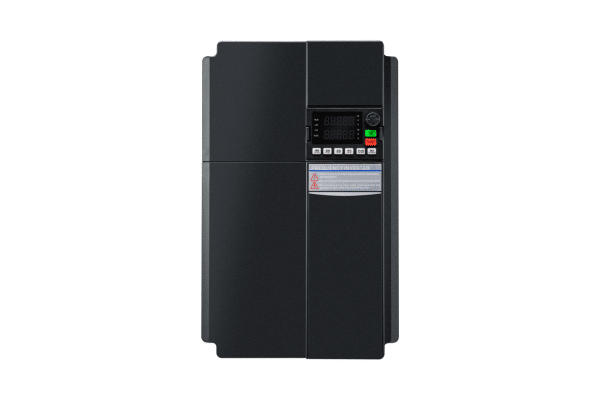
A compact and efficient low-voltage VFD designed for small-scale applications, offering precise motor control and energy savings in a user-friendly package.
Technical features
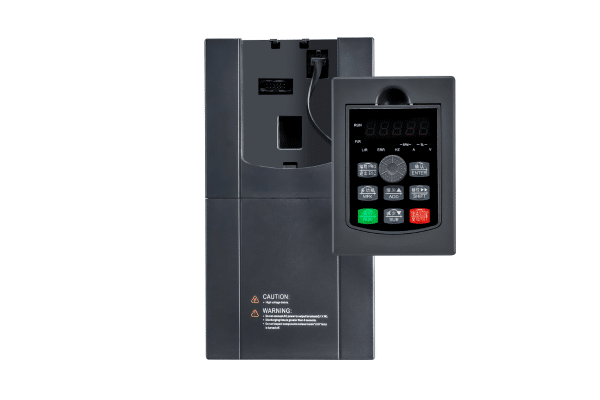
A versatile and reliable low-voltage VFD, ideal for light-duty industrial and commercial applications, ensuring consistent performance and advanced control.
Technical features
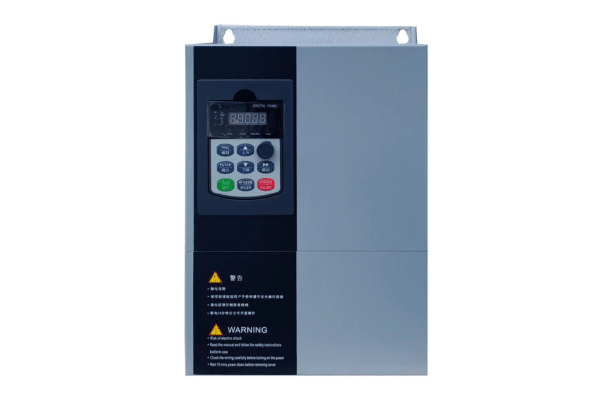
A high-performance low-voltage VFD built for medium-duty applications, offering advanced motor control and excellent adaptability for various tasks.
Technical features
In the HVAC industry, energy efficiency and occupant comfort are paramount. Variable Frequency Drives are essential for optimizing system performance and reducing operational costs in commercial and industrial buildings.


Precise control over fluid dynamics is critical in water and wastewater applications. Our VFDs offer the reliability and control necessary for these demanding, often 24/7, operations.
In manufacturing and logistics, operational efficiency is defined by uptime, throughput, and consistency. VFDs are the core of process automation, providing the control needed to synchronize and optimize production lines.


This industry demands hygienic design, gentle product handling, and absolute process consistency. VFDs allow for the fine-tuning of machine speeds to protect delicate products and ensure repeatable quality.
AC Variable Frequency Drives, or VFDs, offer comprehensive speed control capabilities essential for optimizing the performance of AC motors. By adjusting the frequency of the power supply, VFDs provide precise control over motor speed, allowing for smooth acceleration and deceleration. This capability is crucial in applications where maintaining specific motor speeds is necessary to ensure operational efficiency and reduce energy consumption.
Torque management is another critical feature of VFDs, enabling the regulation of motor torque to match the load requirements. By adjusting the voltage and frequency, VFDs can maintain the desired torque levels, preventing mechanical stress and enhancing the lifespan of the equipment. This feature is particularly beneficial in applications where variable loads are present, like conveyor systems and pumps, ensuring consistent performance.
The input and output specifications of VFDs are key determinants of their compatibility with different industrial applications. Typically, VFDs accommodate various voltage inputs, such as 230V 1-phase or 3-phase systems, and provide adjustable output voltage and frequency. This flexibility allows VFDs to cater to diverse motor types and operational requirements, ensuring seamless integration into existing systems and maximizing energy efficiency.
This table provides a general overview of the typical technical specifications for our 1-5 HP variable frequency drives. For detailed information, please refer to the specific datasheet for each product model.
| Parameter | Typical Specification |
|---|---|
| Power Range | 1 HP - 5 HP (0.75 kW - 4 kW) |
| Input Voltage & Phase | Single-phase 200-240 VAC; Three-phase 380-480 VAC |
| Output Characteristics | Three-phase, 0 - Input Voltage; Output frequency 0 - 400 Hz |
| Primary Control Modes | V/f Control, Sensorless Vector Control (SVC) |
| Overload Capability | 150% of rated current for 60 seconds (Heavy Duty) |
| Enclosure Rating | IP20 (Designed for installation in a control panel) |
| Communication Protocol | Integrated Modbus RTU (via RS-485) as standard |
| Braking System | Built-in dynamic braking unit (external resistor optional) |
| Keypad & Display | Digital operator panel with LED display |
| Standard I/O | Configurable digital inputs, analog inputs, and relay outputs |
| Ambient Temperature | -10°C to 50°C (14°F to 122°F) without derating |
| Certifications | CE, UL, RoHS compliant |
Selecting the optimal VFD requires careful consideration of your motor specifications, application requirements, environmental conditions, and performance objectives. Our technical team provides comprehensive support throughout the selection and implementation process.
We assist with:



A Variable Frequency Drive (VFD) is an electronic power conversion device that controls AC motor speed and torque by varying the frequency and voltage supplied to the motor. VFDs convert fixed-frequency AC power to variable-frequency output, enabling precise motor speed adjustment from zero to maximum rated speed.
Yes. Our single-phase to three-phase VFDs are specifically engineered to convert single-phase input power to balanced three-phase output, enabling operation of three-phase motors in locations where only single-phase power is available. This configuration maintains full motor performance characteristics while providing variable speed control.
Our VFDs incorporate comprehensive protection mechanisms including overcurrent protection, overvoltage/undervoltage protection, overload protection, short circuit protection, ground fault protection, and thermal monitoring. These safeguards ensure reliable operation while protecting both the drive electronics and connected motor from fault conditions.
VFDs reduce energy consumption by eliminating the inefficiencies inherent in mechanical throttling and constant-speed operation. By adjusting motor speed to match actual load requirements, VFDs decrease power draw proportionally to the cube of speed reduction in centrifugal load applications (pumps and fans), resulting in substantial energy savings.
Voltage/Frequency (V/F) control maintains a constant voltage-to-frequency ratio, suitable for applications requiring basic speed control. Vector control (also called field-oriented control) provides superior performance by independently controlling motor flux and torque, delivering enhanced low-speed torque, improved dynamic response, and higher precision—ideal for demanding applications requiring tight speed regulation.
Yes. All models feature RS485 communication capability, enabling integration with supervisory control and data acquisition (SCADA) systems, programmable logic controllers (PLCs), and human-machine interfaces (HMIs). This connectivity facilitates remote parameter adjustment, real-time monitoring, and centralized process control.