Ready to Get Your VFD Solution?
Whether you need a single drive or a complete system, we have the VFD products and engineering support to ensure your project's success.



In the realm of modern industry, the demand for precise and efficient control of electric motors has led to the development of Vector Variable Frequency Drives (VFDs). These advanced devices play a crucial role in optimizing motor performance by controlling key parameters such as speed and torque. By employing sophisticated techniques like vector control, VFDs are able to enhance the efficiency and versatility of motor-driven applications.
Vector Variable Frequency Drives represent a significant leap forward in motor control technology. Unlike traditional methods, these drives utilize advanced vector control techniques to precisely manipulate the magnetic field and torque of AC motors. By controlling the voltage and frequency supplied to the motor, VFDs can optimize performance across a range of operating conditions. This capability is especially valuable in applications that require dynamic speed and torque adjustments. As industries increasingly adopt automation and seek energy-efficient solutions, the role of VFDs in driving efficiency and precision continues to expand.
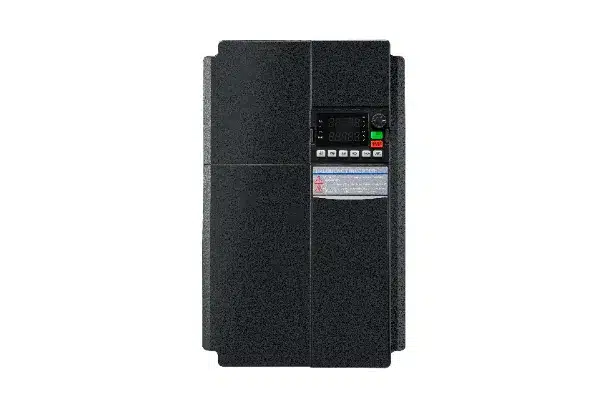

Built-in RS485 communication interface with Modbus-RTU protocol enables seamless integration into existing automation systems. This facilitates remote monitoring, data acquisition, and centralized control across multiple drives.
Monitor and configure drive parameters in real time through intuitive LCD or LED displays. This capability streamlines commissioning, troubleshooting, and optimization without interrupting operations.
Closed-loop control with integrated PID feedback ensures accurate process regulation. This feature is particularly valuable in applications requiring precise speed or position control, such as tension control systems and coordinated multi-motor operations.
Vector Variable Frequency Drives (VFDs) deliver advanced precision and efficiency across a broad spectrum of industrial applications. By incorporating state-of-the-art control algorithms and robust hardware design, these drives significantly enhance operational performance, energy efficiency, and system reliability.
Vector VFDs provide superior torque control and dynamic response, enabling precise speed and position regulation. This leads to smoother acceleration, optimal motor utilization, and improved process accuracy in demanding automation environments.
By dynamically adjusting motor speed to match load requirements, vector VFDs reduce unnecessary energy consumption and operational costs. This optimization supports sustainability goals and provides measurable long-term energy savings.
Our vector variable frequency drives have been extensively tested and deployed in a wide range of industrial environments, consistently delivering stable and dependable performance. Their robust design ensures uninterrupted operation even under rigorous conditions, minimizing unplanned downtime and securing critical processes.
We provide unparalleled technical support throughout the entire product lifecycle, from initial selection and system integration to ongoing maintenance and troubleshooting. Our expert engineering team is available to address complex application requirements, ensuring your systems achieve optimal efficiency and compliance with industry standards.
Understanding that each operation has unique requirements, we offer a flexible portfolio of drives with customizable features. This adaptability allows our solutions to be precisely configured, guaranteeing seamless compatibility, streamlined commissioning, and the ability to maximize productivity while controlling operational costs.

A compact and highly versatile general-purpose vector drive designed for a broad range of everyday applications. It offers both standard V/F and advanced Open-Loop Vector Control (SVC), making it a reliable and cost-effective choice for conveyors, fans, and pumps where simplicity and efficiency are key.
Key Parameters:

A flexible and robust vector drive engineered for industrial machinery that requires dynamic performance. It features a wide carrier frequency range that can be automatically adjusted to optimize motor noise and efficiency based on the load. This adaptability makes it perfect for machine tools, mixers, and other variable-load applications.
Key Parameters:

Our premier high-performance vector drive designed for heavy-duty applications demanding superior torque and overload capabilities. With an enhanced overload rating of 180% for 3 seconds, it is engineered to handle the high starting torque and shock loads common in crushers, extruders, and other demanding industrial machinery.
Key Parameters:
Vector variable frequency drives (VFDs) are essential for controlling the speed and torque of electric motors. They utilize advanced control methods to optimize motor performance in various applications.
| Specification | Details |
|---|---|
| Control Method | Field-Oriented Control (FOC), Scalar Control |
| Voltage | 230V, Three-phase (3-phase) |
| Frequency Range | 0-60 Hz |
| Motor Type | AC Induction Motor, Synchronous Motor, Permanent Magnet Motor |
| Torque Control | Direct Torque Control, Torque and Flux Control |
| Current Rating | Motor Current, Stator Current |
| Control System | Closed-loop, Open-loop |
| Modulation Technique | Space Vector PWM, High Switching Frequency |
| Feedback Mechanism | Encoder, Feedback Signals for Rotor Position |
| Temperature Management | Motor Temperature Control |
| Motor Parameters | Motor Voltage, Motor Torque, Motor Speed |
| Operating Conditions | Full Torque at Zero Speed, Speed Regulation |
| Automation Capability | Integration with Control Systems for Industrial Automation |
Selecting the optimal VFD requires careful consideration of your motor specifications, application requirements, environmental conditions, and performance objectives. Our technical team provides comprehensive support throughout the selection and implementation process.
We assist with:

Vector VFDs are advanced motor controllers that regulate speed, torque, and direction by controlling the frequency and voltage supplied to electric motors, providing comprehensive dynamic performance.
Vector VFDs are primarily designed for AC induction and permanent magnet synchronous motors, ensuring reliable control and broad application versatility.
Most Vector VFDs incorporate a range of safety features, such as overcurrent, overvoltage, undervoltage, and thermal protections, to safeguard both motors and connected equipment.
By precisely matching motor output to application requirements, Vector VFDs reduce excess energy consumption and enable significant cost savings across varied industrial environments.
Yes, Vector VFDs deliver precise torque control and fast response, making them ideal for applications that demand dynamic load regulation and frequent startups or stops.
Absolutely. These drives support a wide array of communication protocols (such as Modbus, Profibus, and Ethernet) for seamless integration with industrial automation and control systems.