Ready to Get Your VFD Solution?
Whether you need a single drive or a complete system, we have the VFD products and engineering support to ensure your project's success.



AC Variable Frequency Drives (VFDs) stand as a cornerstone of efficient motor control. These sophisticated devices not only optimize motor speed and torque but also enhance energy efficiency and operational flexibility. Their ability to precisely control the speed of electric motors revolutionizes industries by providing tailored solutions to meet specific operational needs.
AC variable frequency drives (VFDs) are essential components in modern industrial applications used to control the speed and torque of electric motors. A VFD adjusts the frequency and voltage supplied to an AC motor, allowing for precise motor control.
By varying the frequency applied to the motor windings, VFDs control the speed of the motor effectively. This adjustable speed drive capability is crucial for applications requiring different motor loads and operational conditions. The speed and torque can be controlled by adjusting the output frequency and voltage, enabling optimized performance.
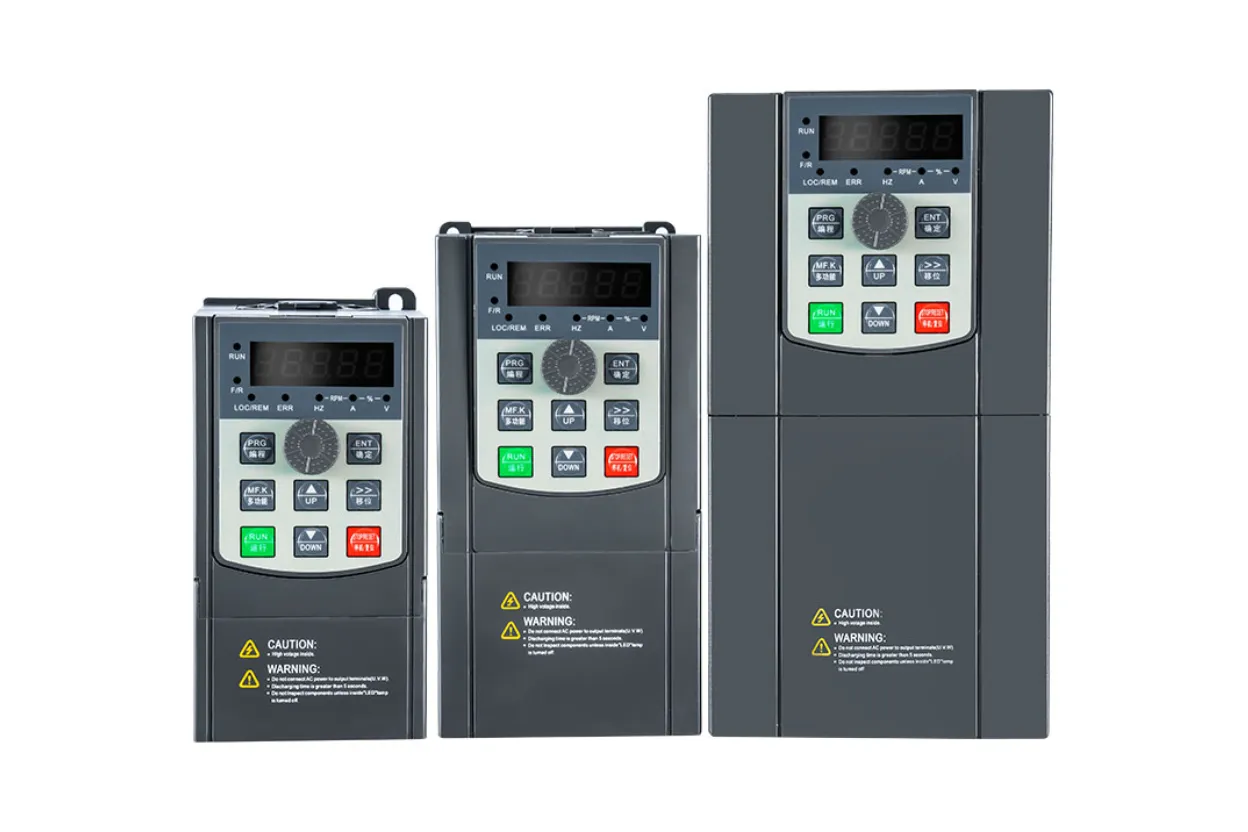
AC Variable Frequency Drives are engineered with advanced features that extend beyond energy savings. These include:
Companies specializing in VFD technology develop drives tailored to any motor type, offering solutions that optimize motor performance while ensuring global support. VFDs not only enhance process control and equipment longevity but also contribute to reduced emissions, aligning with environmental sustainability goals. Their versatility in applications, from small appliances to large industrial compressors, underscores their indispensable role in modern engineering.
AC VFDs adjust motor speed by varying the frequency supplied to the motor, enabling exact control over your equipment’s performance. Whether you’re managing pumps, fans, conveyors, or other motor-driven systems, VFDs allow you to match motor output precisely to process demands—eliminating inefficiencies from constant-speed operation.
Running motors at constant speeds when variable output is needed wastes substantial energy. VFDs optimize motor performance by delivering only the power required for current conditions, reducing energy consumption by up to 50% in many applications. Lower energy use translates directly to reduced operational costs and a smaller carbon footprint.
By providing soft-start capabilities and eliminating mechanical stress from full-voltage starts, VFDs reduce wear on motors, belts, and connected equipment. This results in fewer maintenance requirements, reduced downtime, and longer service life for your capital investments.

A compact and highly versatile general-purpose AC Variable Frequency Drive designed for a broad range of everyday applications. It offers both standard V/F and advanced Open-Loop Vector Control, making it a reliable and cost-effective choice for conveyors, fans, and pumps where simplicity and efficiency are key.
Technical features

A flexible and robust drive engineered for industrial machinery that requires dynamic performance. It features a wide carrier frequency range that can be automatically adjusted to optimize motor noise and efficiency based on the load. This adaptability makes it perfect for machine tools, mixers, and other variable-load applications.
Technical features

Our premier high-performance drive designed for heavy-duty applications demanding superior torque and overload capabilities. With an enhanced overload rating of 180% for 3 seconds, it is engineered to handle the high starting torque and shock loads common in crushers, extruders, and other demanding industrial machinery.
Technical features
Our AC VFD inventory includes:
| Category | Configurations |
|---|---|
| Power Ratings | 1HP to 25HP |
| Voltage Options | 110V, 230V, 460V, 480V |
| Phase Configurations | Single-phase input to 3-phase output, or 3-phase input to 3-phase output |
| Control Types | Constant torque and variable torque applications |
| Enclosure Ratings | IP20 for indoor industrial environments |
Selecting the optimal VFD requires careful consideration of your motor specifications, application requirements, environmental conditions, and performance objectives. Our technical team provides comprehensive support throughout the selection and implementation process.
We assist with:

An AC variable frequency drive (VFD) is a type of motor controller that drives an AC electric motor by varying the frequency and voltage of the power supplied to it. This allows for precise speed control and torque management of the motor.
Variable frequency drives control the speed of the motor by adjusting the output frequency and voltage. By varying the frequency, the AC motor speed can be increased or decreased, allowing for efficient operation in various industrial applications.
Selecting the right VFD involves considering the motor type, required speed control, torque needs, input voltage, and specific application requirements. It’s important to ensure that the VFD is compatible with the AC motor’s specifications.
VFDs are commonly used with AC induction motors and synchronous motors. They can also be utilized with DC motors in specific applications, although they are primarily designed for AC electric motors.
The VFD controller is responsible for regulating the output voltage and frequency supplied to the motor. It features advanced control algorithms like vector control, which enhances performance by providing better torque control.
Yes, VFDs are available for both low voltage and medium voltage applications. Each type of drive is designed to handle specific voltage levels while providing adjustable frequency capabilities.