Ready to Get Your VFD Solution?
Whether you need a single drive or a complete system, we have the VFD products and engineering support to ensure your project's success.

Managing water and wastewater systems involves constant challenges: fluctuating demand, high energy costs, and the need for absolute reliability. Traditional fixed-speed pumps that are either on or off can’t adapt, leading to excessive energy use, high-pressure surges (water hammer), and increased mechanical wear.
Our Water & Wastewater VFDs are the solution. By precisely adjusting pump motor speeds to match real-time demand, our VFDs provide intelligent control over flow and pressure. This transforms your operation into an efficient, responsive, and cost-effective system, perfect for both municipal and industrial applications.
In water and wastewater operations, several persistent industry challenges can hinder efficiency, reliability, and regulatory compliance. Addressing these obstacles with effective, technology-driven solutions is vital for maintaining competitiveness and ensuring dependable, high-quality service in demanding environments.
Traditional pump systems operate at a constant full speed, regardless of actual water demand. This “on/off” control method wastes massive amounts of electricity, as the pumps are either running at 100% power or are off, leading to high operational costs for municipal facilities.
Solution:
A water treatment vfd enables precise speed control, allowing pumps to match their flow rate to the real-time demand. This targeted energy optimization dramatically reduces power consumption, often by 30-50%, leading to significant cost savings for taxpayers.
Many industrial water systems require precise flow or pressure for processes like filtration, chemical dosing, or cooling. Simple on/off controls struggle to maintain this consistency, leading to fluctuations that can compromise product quality and process integrity.
Solution:
A wastewater pump drive with a built-in PID controller allows for precise, automated control of flow and pressure. This ensures stable and reliable operation, enhancing the quality and consistency of critical industrial processes.
Traditional setups offer minimal visibility into pump and motor health, hampering preventative maintenance and prolonging downtime during faults. Operators often must travel to remote pump stations to diagnose issues, resulting in slow response times.
Solution:
A modern SCADA VFD provides comprehensive real-time diagnostics and remote monitoring. This empowers maintenance teams to anticipate issues, reduce unplanned outages, and troubleshoot problems remotely, improving overall system reliability.
The abrupt starts and stops of fixed-speed pumps create hydraulic shockwaves known as water hammer. This subjects pipes, valves, and pump components to considerable mechanical stress, accelerating wear and increasing the risk of costly pipe bursts and maintenance interventions.
Solution:
VFD-driven systems provide smooth, controlled acceleration and deceleration. This “soft start” and “soft stop” functionality eliminates water hammer, minimizing shock loads on the entire system and extending the lifespan of critical infrastructure.
Aeration blowers are one of the largest energy consumers in a wastewater plant. Running them at a fixed speed, regardless of the dissolved oxygen (DO) levels, leads to inefficient oxygen transfer and significant wasted energy, especially during periods of low biological load.
Solution:
Implementing VFDs allows for precise control of blower speed based on real-time DO sensor feedback. This strategy of energy optimization ensures the blowers only provide the exact amount of air needed, dramatically reducing electricity costs.
Wastewater pumps are prone to clogging from rags and solids, which can lead to costly downtime and maintenance. Basic motor controls cannot proactively address this issue, often leading to a complete blockage and pump failure.
Solution:
A smart wastewater pump drive can be programmed with anti-clogging routines. By sensing a potential jam, the VFD can automatically initiate a series of reversing and forwarding cycles to clear the obstruction, ensuring continuous operation.

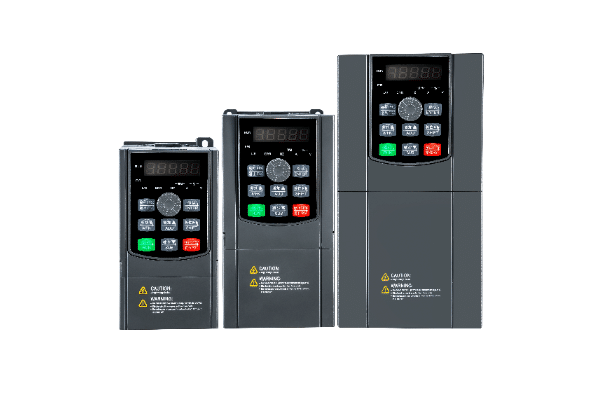
A compact, high-performance vector drive offering flexible customization and precise, energy-saving control suited for various water and wastewater systems.
Technical features

This universal VFD provides superior performance with a modern, compact design and excellent heat dissipation, ideal for numerous adaptable applications.
Technical features

A heavy-duty vector VFD delivering high-torque output and excellent overload capacity, designed for the most demanding industrial water treatment tasks.
Technical features
Designing systems with VFDs requires careful consideration of efficiency. By tailoring systems to incorporate VFDs, facilities can enhance energy efficiency and improve performance. Efficient design minimizes energy consumption and operational costs while maximizing the benefits of VFD implementation in water and wastewater applications.
Variable speed control is pivotal in optimizing pump performance within water and wastewater applications. By using a VFD, operators can precisely adjust the pump motor speed to match system demands, thereby improving efficiency and reducing energy consumption. This level of control minimizes the risk of water hammer and other issues, ensuring smooth and reliable operations across water treatment and wastewater treatment plants.
VFDs play a crucial role in reducing mechanical stress on pump systems. By gradually ramping up the motor speed during start-up, VFDs prevent sudden surges in torque that could otherwise damage the pump and associated infrastructure. This controlled acceleration not only extends the lifespan of the equipment but also minimizes maintenance costs and downtime, contributing to a more efficient and reliable water and wastewater treatment process.
Improved system reliability and extended equipment life are significant benefits of using VFDs in water and wastewater treatment facilities. By optimizing pump control and reducing mechanical stress, VFDs enhance the overall system efficiency. This leads to fewer breakdowns and less frequent repairs, ultimately cutting down operational costs. The integration of VFDs into treatment operations ensures that facilities can maintain high levels of performance over the long term.
Upgrading from a traditional fixed-speed system to a VFD is one of the most impactful investments you can make for your water infrastructure. The benefits are clear and immediate.
| Parameter Category | Specification | Typical Range / Options |
|---|---|---|
| Electrical | Power Range | 1 HP – 500+ HP (0.75 kW – 375+ kW) |
| Input Voltage | 200-240V, 380-480V, 575-690V | |
| Input Phase | Single-Phase (for smaller HP) or Three-Phase | |
| Output Frequency | 0 – 120 Hz | |
| Performance | Control Method | V/Hz, Sensorless Vector, Closed-Loop Vector |
| Overload Capacity | 110-120% for 60s (Normal Duty); 150% for 60s (Heavy Duty) | |
| Speed Regulation | ±0.5% of max speed | |
| Pump-Specific Features | Pump Control Functions | Multi-pump control, sleep mode, pipe fill mode, pump clean |
| Protection Features | Dry run protection, motor overload, underload detection | |
| Connectivity | Communication Protocols | Modbus RTU (standard), EtherNet/IP, PROFINET, BACnet |
| Analog I/O | 4-20mA, 0-10V inputs/outputs | |
| Digital I/O | Programmable inputs/outputs | |
| Environmental | Enclosure Rating | NEMA 1 (indoor), NEMA 3R (outdoor, rain-tight), NEMA 4X (corrosion resistant) |
| Operating Temperature | 14°F to 122°F (-10°C to 50°C) | |
| Conformal Coating | Standard or optional | |
| Certifications | Safety & Quality | UL, cUL, CE |
| NSF/ANSI Certifications | NSF/ANSI 61 & 372 |
Selecting the optimal VFD requires careful consideration of your motor specifications, application requirements, environmental conditions, and performance objectives. Our technical team provides comprehensive support throughout the selection and implementation process.
We assist with:
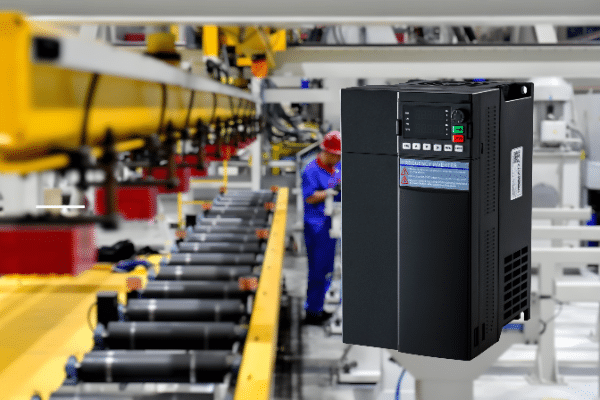


The energy savings are substantial. Because pumps follow the Affinity Laws, a small reduction in speed leads to a large reduction in power consumption. Reducing a pump’s speed by 20% can lower its energy use by nearly 50%. In typical water and wastewater applications, facilities can expect to reduce pump energy consumption by 30-50% after installing a water treatment VFD.
VFDs provide a “soft start” feature, gradually ramping up a motor to operating speed. This eliminates the powerful electrical inrush and mechanical jolt (water hammer) caused by starting a large pump at full voltage. By preventing these shocks, a VFD significantly reduces wear and tear on pipes, valves, and the pump itself, leading to longer equipment life and fewer repairs.
The ROI for a VFD in a water or wastewater application is typically very fast, often between 1 to 3 years. The return is driven primarily by direct and significant savings on electricity bills. Additional long-term savings come from reduced maintenance costs, longer equipment life, and minimized emergency repairs.
A SCADA VFD is a drive designed to communicate seamlessly with a Supervisory Control and Data Acquisition (SCADA) system. This integration is crucial for modern water management, as it allows operators to remotely monitor pump status, adjust speeds, and collect performance data from a central control room. This enhances operational efficiency and enables faster responses to system changes or alarms.
Yes, retrofitting is one of the most common applications for VFDs. Most existing three-phase AC induction motors are compatible with VFDs. A qualified technician can assess your current system, including the motor and control panel, to ensure a smooth and effective upgrade to VFD control.
No, a VFD system generally reduces overall system maintenance. By eliminating the mechanical shock of hard starts, it decreases wear on pumps, bearings, and seals. The VFD itself is a solid-state electronic device with no moving parts and requires minimal maintenance beyond ensuring it remains clean and its cooling fans are operational.