Ready to Get Your VFD Solution?
Whether you need a single drive or a complete system, we have the VFD products and engineering support to ensure your project's success.

A Conveyor VFD (Variable Frequency Drive) Control is an electronic device that manages the speed of the electric motor powering a conveyor system. Instead of running at a single, fixed speed, a VFD allows you to precisely adjust the motor’s speed in real-time. This enables you to match the conveyor’s movement to your specific production needs, load capacity, and workflow, providing unparalleled flexibility and efficiency.
The primary function of using a VFD is to provide continuous and precise control over the speed of motors driving fans, pumps, and compressors. By adjusting the motor speed, the VFD directly controls the flow rate of air or liquids, ensuring the HVAC equipment operates at the most efficient level possible.
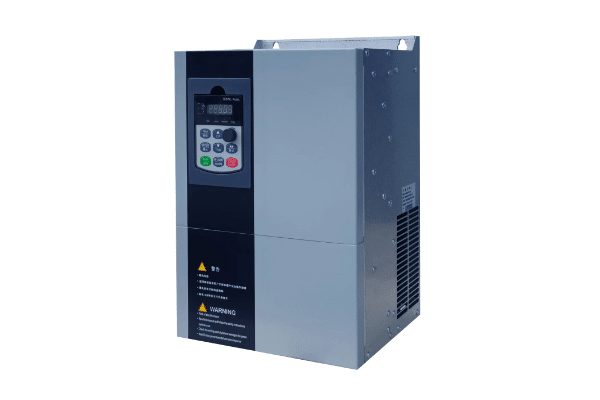
Conveyors need Variable Frequency Drives (VFDs) to transform them from inefficient, single-speed machines into smart, adaptable, and efficient material handling systems. While a simple motor starter can only turn a conveyor on or off at full speed, a VFD provides intelligent control, which is crucial for modern automation, efficiency, and equipment longevity.
The Challenge: A fixed-speed conveyor operates at one constant speed, which is almost never the optimal speed for every situation. This “one-speed-fits-all” approach leads to major inefficiencies: it might be too fast for delicate products, causing them to tip or break, or too slow for high-volume production, creating bottlenecks.
The VFD Solution: A VFD provides precise speed control, allowing operators to fine-tune the conveyor’s speed to perfectly match the product, the production rate, or the task being performed. This means you can slow it down for fragile items, speed it up to increase throughput, or synchronize its speed with other machines, ensuring maximum efficiency and flexibility.
The Challenge: Starting a conveyor with a traditional starter is like flooring the gas pedal in a car. This “direct-on-line” start creates a massive inrush of electrical current and a sudden mechanical jolt that violently jerks the belt, chain, gearbox, and motor. This repeated stress leads to premature wear and tear, increasing maintenance costs and leading to unexpected downtime.
The VFD Solution: A VFD provides a “soft start” by smoothly and gradually ramping up the motor’s speed. This eliminates the mechanical shock and electrical strain, which significantly extends the life of all drivetrain components. This gentle start is one of the most effective ways to improve the long-term reliability of a conveyor system.
The Challenge: More complex material handling tasks, such as changing the direction of the conveyor or ensuring multiple conveyors run at the exact same speed, are complicated and expensive with traditional controls. They often require bulky and failure-prone mechanical reversing starters and complex wiring.
The VFD Solution: The direction of the conveyor can be changed with a simple digital signal, providing smooth and controlled reversing. For long conveyors with multiple motors, VFDs can be programmed for precise synchronization, ensuring all motors share the load evenly and run at the exact same speed. This prevents belt stretching and improves the reliability of the entire system.
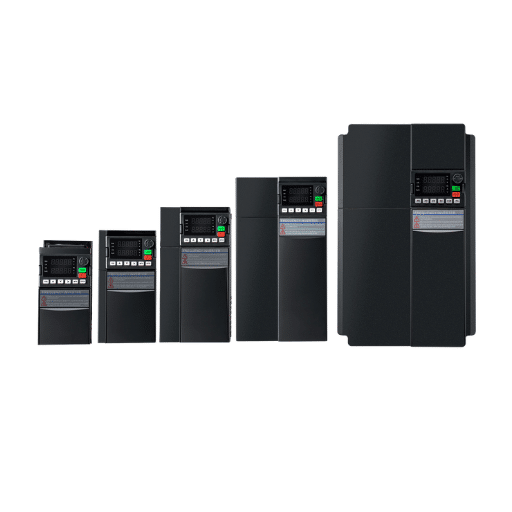
A compact, high-performance vector drive offering flexible customization and precise, energy-saving control for a wide array of conveyor applications.
Technical features
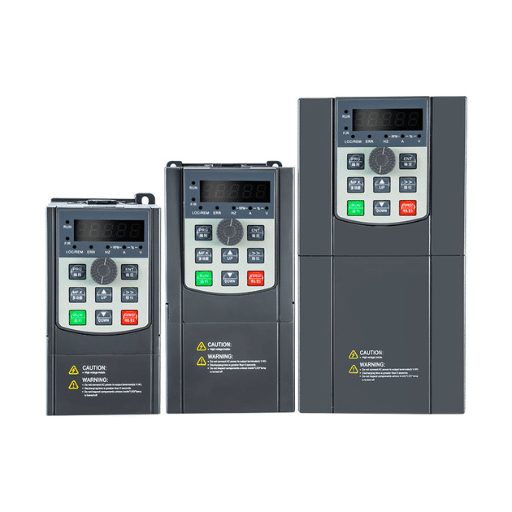
This universal VFD features a modern, compact design and excellent heat dissipation, making it an adaptable solution for numerous systems.
Technical features

A heavy-duty vector VFD delivering high-torque output at low speeds, designed for the most demanding industrial conveyor applications.
Technical features
A Conveyor VFD Controls system can be applied to nearly any motor-driven conveyor, transforming it from a fixed-speed system into a dynamic, intelligent material handling solution. Their application in these key areas is crucial for maximizing operational efficiency, improving process control, and reducing mechanical wear.
The fundamental feature of our VFDs is their ability to provide precise speed control. Unlike fixed-speed starters, our drives allow you to easily adjust the conveyor’s speed to match production rates, optimize product spacing, or accommodate different material types. This dynamic control is essential for improving throughput, reducing jams, and enhancing overall system efficiency.
Our VFDs are engineered to provide smooth, controlled “soft starts” and stops. By ramping the motor up to speed gradually, they eliminate the sudden mechanical jolt that causes product tipping, package damage, and excessive wear on gearboxes and belts. This controlled acceleration and deceleration are critical for maintaining the stability of goods on the conveyor.
Conveyor systems, especially when fully loaded, require a significant amount of torque to get moving. Our VFDs, particularly those with advanced vector control, are designed to deliver high starting torque even at very low speeds. This ensures the conveyor can start reliably and smoothly without straining the motor, regardless of the load.
Many material handling applications require bidirectional movement. Our VFDs offer built-in reversing capabilities, allowing the conveyor to change direction with a simple control signal. This is achieved smoothly and safely, eliminating the need for complex and costly external mechanical reversing starters and contactors.
Our Conveyor VFD Controls are engineered to deliver precise speed regulation, high starting torque, and exceptional reliability. The following table outlines the technical specifications that allow these drives to enhance your material handling efficiency, reduce mechanical stress, and provide seamless control over your conveyor systems.
| Specification | Description |
|---|---|
| Voltage Range | 208–600V, 1-phase or 3-phase AC |
| Horsepower (HP) | 0.5–250 HP, depending on model |
| Control Interface | Digital keypad, remote PLC, or analog input |
| Speed Range | 10%–100% of rated motor speed (variable, precise) |
| Enclosure Ratings | NEMA 1 (indoor), NEMA 4/4X (dust, water, corrosion) |
| Temperature Range | -10°C to 50°C (14°F to 122°F) |
| Protection Features | Overload, overvoltage, undervoltage, thermal |
| Pressure Regulation | Integrated sensors and PID control for fine tuning |
| Soft Start/Stop | Programmable acceleration and deceleration ramps |
| Certifications | UL, CE, RoHS, ISO 9001 compliant |
Selecting the optimal VFD requires careful consideration of your motor specifications, application requirements, environmental conditions, and performance objectives. Our technical team provides comprehensive support throughout the selection and implementation process.
We assist with:



Most energy savings come from reducing the motor’s speed. A conveyor running at 80% speed uses significantly less energy than one running at 100%—often cutting power consumption by 20% or more. A VFD eliminates the waste associated with running a conveyor at full speed during periods of low production, light loads, or gapping. This direct control over energy use translates into lower electricity bills.
VFDs significantly reduce mechanical stress. The “soft start” feature gradually ramps up the motor’s speed, eliminating the sudden jolt that causes wear on belts, chains, gears, and bearings. Similarly, a soft stop prevents abrupt halts. This smooth operation minimizes shock loading, which is a major cause of breakdowns, leading to longer equipment life and lower maintenance costs.
Absolutely. While the initial cost is higher than a simple motor starter, the return on investment (ROI) is typically very quick, often realized within one to two years. The ROI is driven by three main factors: direct energy savings from reduced power consumption, lower maintenance costs due to less mechanical wear, and increased productivity from better process control and less downtime.
The primary advantage is precise process control. While a fixed-speed system is either on or off, a VFD-controlled conveyor can be sped up, slowed down, or synchronized with other equipment. This improves product handling, reduces jams, allows for proper spacing and sorting, and minimizes wear and tear, all while saving energy. It transforms a simple conveyor into an intelligent part of your production line.
By eliminating abrupt starts and stops, a VFD ensures products remain stable on the conveyor. There are no sudden jerks to tip over bottles, shift boxes, or damage delicate items. You can also program specific speeds for different products, ensuring that fragile items are moved more slowly and gently than robust ones, which directly reduces product loss.
Key specifications include the motor’s horsepower (HP) and voltage, the required phase (1-phase or 3-phase), and the enclosure rating (e.g., NEMA 1 for clean, dry environments or NEMA 4X for washdown areas). You should also consider the control interface needed—whether it’s a simple keypad, a remote signal from a PLC, or a networked communication protocol.