Ready to Get Your VFD Solution?
Whether you need a single drive or a complete system, we have the VFD products and engineering support to ensure your project's success.

Compressor VFD Systems serve as intelligent air compressor drives, precisely controlling the motor’s speed and torque. They work by adjusting the frequency and voltage of the power supplied, allowing the motor’s output to match real-time air demand perfectly. This eliminates the massive energy waste inherent in fixed-speed operation and provides superior, dynamic control over your entire compressed air system.
Unlock significant energy savings with our Compressor VFD Systems. As an advanced air compressor drive, this technology modulates motor speed to meet fluctuating air demand, preventing the costly energy waste of constant full-speed operation. This adaptability not only slashes electricity costs but also reduces mechanical stress on the motor, enhancing the overall reliability and lifespan of your equipment.

Compressor VFD systems need Variable Frequency Drives (VFDs) to maximize efficiency and operational control in modern air compression applications. A VFD acts as an intelligent controller for the compressor motor, adjusting speed according to real-time air demand. As industries seek greener operations and greater automation, the advantages of compressor VFD and air compressor drive technology become even more critical.
Traditional compressors operate at full power regardless of the actual air demand. During periods of low use, the compressor enters an “unload” cycle, in which the motor continues to consume significant energy while producing no compressed air, resulting in substantial electricity waste.
✔ The VFD Solution:
A Compressor Variable Frequency Drive transforms the system by precisely adjusting the motor’s speed to match the real-time air demand. By slowing the motor down during low-demand periods instead of unloading, it eliminates wasted energy and can often reduce a compressor’s total energy consumption by 30-50%.
Fixed-speed systems operate within a wide pressure band, often requiring a higher average system pressure to ensure the minimum required pressure is always available. This “artificial demand” wastes significant energy and causes pressure fluctuations that can affect end-use tool performance.
✔ The VFD Solution:
A VFD enables precise, stable pressure control, typically maintaining system pressure within a very narrow band. This allows the overall target pressure to be lowered, saving energy while providing consistent, reliable air pressure for superior performance of pneumatic tools and equipment.
Fixed-speed compressors utilize a direct-on-line start, which creates a massive inrush of electrical current and a sudden, violent mechanical jolt. This repeated stress on the motor, belts, gears, and bearings leads to premature wear and tear, increasing maintenance costs and the risk of component failure.
✔ The VFD Solution:
A VFD provides a smooth, controlled “soft start” by gradually ramping up the motor to its operating speed. This process minimizes both electrical strain on the power network and mechanical shock on the equipment, significantly extending the lifespan of the motor and other critical compressor components.
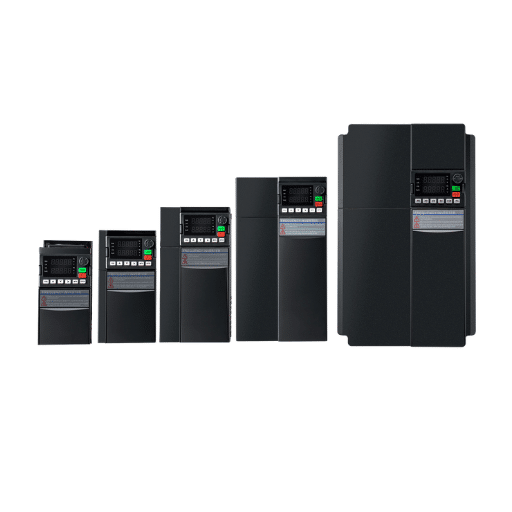
A compact, high-performance vector drive providing flexible customization and precise, energy-saving control for a wide array of compressor applications.
Technical features
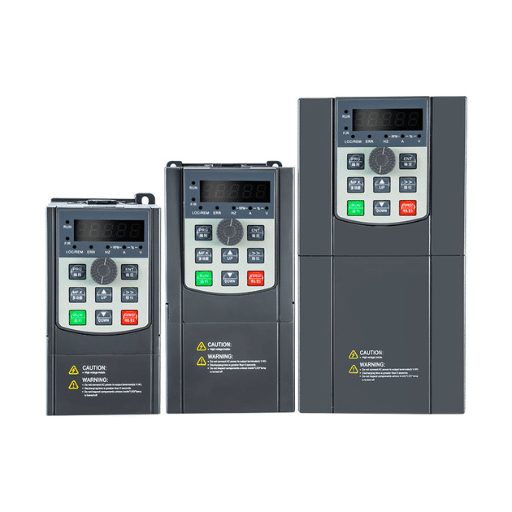
This universal VFD features a modern, compact design and superior heat dissipation, making it an adaptable solution for numerous systems.
Technical features

A heavy-duty vector VFD delivering high-torque output and excellent overload capacity, designed for the most demanding industrial compressor tasks.
Technical features
Variable Frequency Drives are vital for compressor VFD systems, enabling smart energy use, reliable soft starts, and unwavering pressure regulation. Addressing the potential challenges through careful planning, expert installation, and regular maintenance lets organizations capture all the advantages of modern VFD-driven air compressor solutions.
The most significant benefit of Compressor VFD Systems is their ability to drastically reduce energy consumption. By functioning as an intelligent air compressor drive, the VFD precisely matches the motor’s speed to the real-time air demand. This eliminates the extremely wasteful and costly “unload” cycles common in fixed-speed compressors, often cutting total energy usage by 30-50% and leading to a rapid return on investment.
A VFD provides a controlled soft start, gradually ramping up the motor instead of subjecting it to the violent shock of a direct-on-line start. This is a critical advantage in modern screw compressor control as it minimizes mechanical stress on the motor, bearings, and belts. By reducing this wear and tear, a compressor vfd significantly extends the operational lifespan of the entire system and reduces long-term maintenance costs.
Compressor VFD Systems deliver superior process stability by maintaining system pressure within a very narrow band, often +/- 1 PSI. Unlike fixed-speed units that have wide pressure fluctuations, the air compressor drive ensures a constant and reliable air supply. This allows the overall system pressure to be lowered—saving additional energy—while improving the performance and consistency of all air-powered tools and equipment.
Our Compressor VFDs are engineered with a comprehensive feature set to meet the rigorous demands of modern compressed air systems. Below is a general overview of key technical specifications designed for optimal performance and energy savings.
| Specification | Typical Range / Options |
|---|---|
| Power Range | 1.5 kW - 400 kW (2 HP - 550 HP) |
| Input Voltage | Three-phase 200-240V, 380-480V, 500-600V |
| Control Method | Sensorless Vector Control, PID Control for Pressure Regulation |
| Overload Capacity | Heavy-Duty: 150% for 60 seconds |
| Enclosure Ratings | IP20, IP21 (NEMA 1), IP55 (NEMA 12) |
| Built-in Protections | Phase Loss, Overcurrent, Overvoltage, Undervoltage, Motor Overload |
| Compressor-Specific Features | Sleep/Wake Function, Automatic Restart, Belt Break Detection |
| Communication Protocols | Modbus RTU, TCP/IP, Profinet, EtherNet/IP |
Selecting the optimal VFD requires careful consideration of your motor specifications, application requirements, environmental conditions, and performance objectives. Our technical team provides comprehensive support throughout the selection and implementation process.
We assist with:


The energy savings are significant. Most facilities see a reduction in compressor energy consumption between 25% and 35%, with some achieving savings as high as 50%. The savings come from eliminating the wasted energy of running a compressor at full speed during periods of low air demand. A small reduction in motor speed leads to a much larger reduction in energy use.
A VFD system is ideal for any facility where air demand fluctuates throughout the day or across different shifts. This includes manufacturing plants, automotive shops, food and beverage processing, and any operation with variable production schedules. If your current compressor spends a lot of time in an “unloaded” state (running but not producing air), a VFD is an excellent investment.
Absolutely. While the initial investment for a VFD-equipped compressor or a retrofit may be higher than a traditional system, the return on investment (ROI) is typically very fast, often within 1-3 years. The substantial and continuous energy savings, combined with reduced maintenance costs and potential utility rebates, make it one of the most financially sound upgrades for a compressed air system.
VFDs extend the life of a compressor in two key ways. First, they provide a “soft start,” gradually ramping up the motor speed to avoid the high in-rush current and mechanical shock of a traditional startup. Second, by running continuously at lower speeds instead of frequent start/stop cycles, a VFD reduces stress on motors, bearings, and other critical components, leading to fewer breakdowns and lower maintenance costs.
Yes, in many cases, a VFD can be retrofitted onto an existing fixed-speed air compressor, particularly rotary screw types. This can be a cost-effective way to gain the benefits of VFD technology without replacing the entire compressor unit. A qualified technician should assess your current system’s motor and controls to ensure compatibility.
Modern VFD systems are designed with user-friendly interfaces and automated controls. Once installed and programmed by a technician, they require minimal operator intervention. The system will automatically adjust to air demand, and basic monitoring or status checks are typically straightforward.