Ready to Get Your VFD Solution?
Whether you need a single drive or a complete system, we have the VFD products and engineering support to ensure your project's success.

Our Pump Variable Frequency Drives (VFDs) provide superior control over your motor-driven systems. By adjusting the frequency and voltage supplied to an AC motor, these drives enable precise speed regulation, leading to significant energy savings and enhanced operational efficiency. A variable speed pump drive is crucial for applications requiring dynamic adjustments, from water/wastewater management to industrial processes. We offer advanced centrifugal pump control solutions that ensure optimal performance, reduce mechanical stress with soft-starting, and deliver a fast energy ROI.

Traditional pumps are inefficient, causing high costs, wear, frequent maintenance, and poor performance. A VFD (Variable Frequency Drive) offers precise, adaptable control for all fluid movement, including centrifugal pumps. It solves these issues by turning fixed-output pumps into dynamic, responsive systems. Here are six major advantages of VFD technology.
Pumps operating at constant maximum speed, regardless of actual demand, consume large amounts of unnecessary electricity. Operators often rely on throttling valves to restrict flow when less output is needed. This method not only squanders energy but also leads to higher utility bills across the board.
✔ The VFD Solution:
A VFD continually monitors and adjusts the pump speed to precisely match real-time system requirements. By optimizing motor output to suit demand, the system eliminates excess energy use. In fact, lowering pump speed by just 20% can slash energy consumption by up to 50%, generating significant and ongoing cost savings for your facility.
Direct-on-line starting forces the pump motor to jump abruptly from a standstill to full speed. This instant surge causes a powerful electrical inrush and sudden mechanical jolt that impacts all connected components—motor shafts, bearings, seals, and couplings. Over time, repeated shocks hasten wear and invite frequent breakdowns and costly repairs.
✔ The VFD Solution:
A VFD introduces a soft start and gradual speed ramp-up, allowing the pump to gently reach its operating speed. This controlled acceleration minimizes both electrical and mechanical stress, helping extend the operational life of the motor, seals, bearings, and other critical components, while decreasing the likelihood of unplanned downtime.
Conventional on/off pump control cannot effectively respond to fluctuations in flow or pressure requirements. This often leads to unstable system conditions, including variable process quality, product losses, and potential harm to sensitive equipment downstream. Manual adjustments are imprecise and rarely address the underlying problem.
✔ The VFD Solution:
With a VFD, you gain precise, responsive control over pump speed and output. The drive seamlessly adjusts to changes in process demand, maintaining stable flow rates and pressure levels. This results in consistent product quality, reduced waste, and greater protection for all equipment within the system.
Running pumps at full speed regardless of demand increases operational noise and vibration. This not only creates a disruptive and uncomfortable environment for personnel but is also a warning sign of excessive system stress, which can escalate to structural issues or premature system failure.
✔ The VFD Solution:
By allowing pumps to operate only as fast as necessary to meet demand, a VFD significantly lowers both noise and vibration. Smooth acceleration and deceleration further prevent water hammer and hydraulic shocks in the pipeline, ensuring quieter, more reliable, and safer operation for the entire facility.
Frequent harsh starts and overuse accelerate wear on pump components, force frequent repairs, and lead to unexpected breakdowns. Operational budgets suffer as teams devote more resources to replacing worn parts and managing failures.
✔ The VFD Solution:
Implementing VFDs minimizes the rate of component wear by eliminating harmful shocks and keeping the system operating at optimal speeds. The result is extended service intervals, fewer emergency repairs, lower inventory requirements for spare parts, and a substantial reduction in overall maintenance expenditure.
Traditional fixed-speed pumps use more electricity than needed, leading to higher greenhouse gas emissions and making it harder for organizations to achieve sustainability objectives or comply with increasingly strict energy regulations.
✔ The VFD Solution:
Our advanced VFD technology enables true energy optimization. By consuming only what is necessary for actual demand, your pumping system dramatically reduces its power draw and the associated carbon footprint. This not only helps fulfill corporate responsibility commitments but also demonstrates proactive environmental stewardship to your stakeholders.
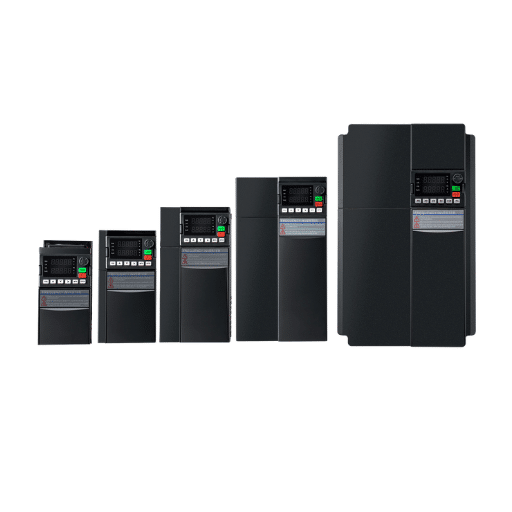
A compact, high-performance vector drive offering flexible customization and precise, energy-saving control for a wide range of pump systems.
Technical features

This universal VFD features a modern, compact design and superior heat dissipation, making it an adaptable solution for numerous applications.
Technical features

A heavy-duty vector VFD delivering high-torque output and excellent overload capacity, designed for the most demanding industrial pumping tasks.
Technical features
Discover how Pump VFDs enhance efficiency across industries by optimizing energy use, ensuring precise control, reducing equipment wear, and improving system reliability.
Gain superior control over your pump systems, allowing for exact adjustments that enhance productivity and process accuracy across all your applications.
Our advanced VFDs intelligently manage motor speed, leading to substantial reductions in energy use and a strong return on investment.
Eliminate harsh startups to reduce mechanical stress, prevent premature wear on belts and bearings, and extend the operational lifespan of your equipment.
We provide customized drive solutions optimized for your specific industry needs, ensuring seamless integration and peak performance.
Pump VFD Solutions optimize energy use, enhance motor control, and protect equipment. Ideal for industries like water, HVAC, and agriculture, ensuring efficiency and reliability.
| Category | Parameter | Specification |
|---|---|---|
| Electrical | Input Voltage | Single-Phase: 200-240 VAC; Three-Phase: 200-240 VAC / 380-480 VAC |
| Input Frequency | 50/60 Hz (±5%) | |
| Power Range | 1 HP to 500 HP (0.75 kW to 375 kW) | |
| Output Frequency | 0.1 to 400 Hz | |
| Control Method | V/f Control, Sensorless Vector Control (SVC) | |
| Overload Capacity | 150% of rated current for 60 seconds; 180% of rated current for 3 seconds | |
| EMC Compliance | Integrated C2/C3 filter options available | |
| Control & Performance | Speed Control Accuracy | ±0.5% of maximum speed (SVC) |
| PID Control | Built-in PID controller for automated process regulation | |
| Preset Speeds | Up to 16 programmable preset speeds | |
| Accel/Decel Ramps | Two independent S-curve ramps; 0.1 to 6000 seconds | |
| Motor Type Support | Asynchronous Induction Motors (IM), Permanent Magnet Motors (PM) | |
| Environmental | Enclosure Rating | NEMA 1 (IP20) / NEMA 4X (IP66) options available |
| Operating Temperature | -10°C to +50°C (14°F to 122°F) without derating | |
| Operating Humidity | < 95% RH (non-condensing) | |
| Vibration Resistance | Conforms to IEC 60068-2-6 standards | |
| Cooling Method | Forced Air Cooling via integrated fan | |
| Installation | Digital Inputs | 5-8 programmable digital inputs (Start, Stop, Fault Reset, etc.) |
| Analog Inputs | 2-4 programmable analog inputs (4-20mA / 0-10V for pressure transducers, flow meters) | |
| Relay Outputs | 1-3 programmable relay outputs (Run, Fault, At Speed) | |
| Analog Outputs | 1-2 programmable analog outputs (for speed, current monitoring) | |
| Communication Protocols | Standard: Modbus RTU (via RS-485); Optional: BACnet MS/TP, EtherNet/IP, Profibus DP | |
| Monitoring | Display & Interface | Backlit LCD or LED display with intuitive navigation keys |
| Parameters Displayed | Motor Speed, Output Frequency, Output Current, Output Voltage, Power Consumption | |
| Protection Functions | Overcurrent, Overvoltage, Undervoltage, Overheating, Motor Overload, Phase Loss | |
| Fault History Log | Stores up to 10 recent fault codes with operational data | |
| Data Logging | Remote monitoring and data logging capabilities |
Selecting the optimal VFD requires careful consideration of your motor specifications, application requirements, environmental conditions, and performance objectives. Our technical team provides comprehensive support throughout the selection and implementation process.
We assist with:



Variable frequency drives optimize pump performance by matching motor speed to actual system demand rather than running at constant speed. This delivers 20-50% energy savings for centrifugal pumps, eliminates water hammer, and extends equipment life through reduced mechanical stress.
V/F control provides simple speed adjustment suitable for standard centrifugal pump applications. Vector control delivers precise torque management across the full speed range, essential for positive displacement pumps, high-precision dosing applications, and systems requiring rapid dynamic response.
Match the VFD power rating to your motor nameplate (typically 1:1 ratio). Consider load characteristics (centrifugal pumps are variable torque applications), environmental conditions, and control requirements. Our technical team provides comprehensive selection support.
Pumps follow the affinity laws: power consumption relates to the cube of speed. Running a pump at 80% speed uses only 51% of full-speed power. VFDs continuously adjust speed to match demand, eliminating the energy waste inherent in throttle valves and bypass systems.
Soft-starting capabilities reduce mechanical stress during startup by 60-80%, virtually eliminating belt slippage, bearing damage, and coupling failures. Programmable acceleration curves protect both the motor and driven equipment, significantly extending maintenance intervals.
Water and wastewater treatment facilities, HVAC systems, chemical processing plants, oil and gas operations, irrigation systems, and manufacturing facilities with process pumps all achieve substantial benefits. Any application with variable flow requirements sees immediate ROI.